An issue that arose on this post, about the Governor and First Lady of Illinois releasing what has been described as a “cringey” “Star Wars” Day photo of the two dressed as Luke Skywalker and his sister Leia. I knew someone would accuse me of “fat-shaming” when I wrote that they looked like Luke and Leia has been attacked by the Empire’s “fat ray.” I know what fat-shaming is, and that’s not it. Since there seems to be some confusion on the issue, however, I will take this opportunity to clarify.
Fat-shaming, properly used, refers to the criticism of an individual’s weight and appearance to no other end for no other reason than to attack the individual. Ethics Alarms has consistently condemned this practice regardless of who the targets have been: Al Gore, Donald Trump, Hillary Clinton, Ted Kennedy and Rush Limbaugh are some I remember without checking. There may be others. I have a lot of posts here and have my weak moments: I might have made fun of someone based on their weight, but I don’t think so.
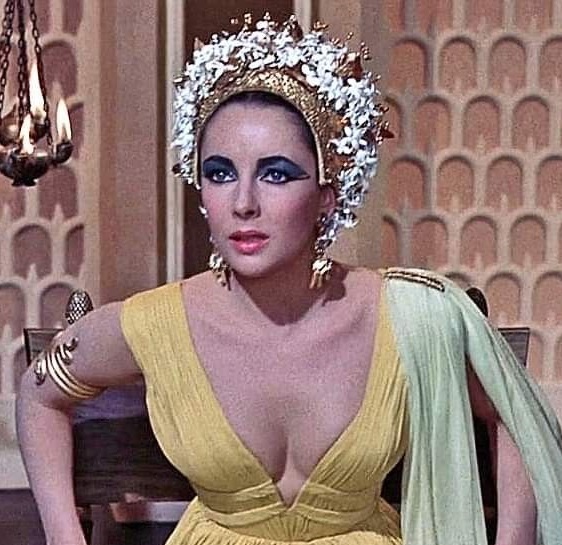
The first time I remember being aware of criticism being leveled at a public figure for his or her weight was when the film “Cleopatra” was released in the midst of all the stories about the on-set romance between Richard Burton and Eddie Fisher’s then wife Elizabeth Taylor. Movie critics hated the film as well as Taylor’s performance, and she was especially singled out as being overweight for the role of Cleopatra. (Today she would be criticized for being too white.)
The criticism was overblown, but it wasn’t wrong. Taylor was also too old to play the seductive Egyptian teenager, well past her “Cat on a Hot Tin Roof” prime, and the costuming emphasized how Liz was heading into middle age, though she was just 31. And, to be fair, there was an element of ad homina in the attacks: people were mad at Taylor for humiliating Fisher with a public affair. Still, actors who are paid exorbitant salaries to star in movies have an obligation to make sure they are in the appropriate physical condition to do the best possible job. If Arnold Schwarzenegger played the Terminator with a pot belly, it wouldn’t be “fat-shaming” to point it out.
The criticism wasn’t “Liz Taylor is bad because she’s fat.” It was “Liz Taylor is too fat to play Cleopatra.” Right or wrong, that’s not fat-shaming. Years later, Orson Welles cast himself as Falstaff in his Shakespeare adaptation, “The Chimes at Midnight.” One critic wrote that he might be the first actor in history too fat to play Falstaff, who is traditionally portrayed as, er, stout. Close call, that: I sensed a gratuitous knock on Welles for his weight, but if the critic found Welles’s obesity a genuine distraction that interfered with the actor’s performance, then it isn’t “fat-shaming.”
Here is another example: the Red Sox have a talented almost-superstar named Rafael Devers. He obviously has a weight problem; he’s carrying excess pounds and has in varying degrees since he was a rookie and they were called “baby fat.” When Devers’ fielding at third base took a downturn last season, a Boston sportswriter who is a friend wrote me in an email: “Let’s face it, he’s too fat.” That wasn’t an aesthetic critique; he meant that Devers’ weight was getting in the way of his doing his job. Criticizing Babe Ruth’s weight, however, when he was the greatest hitter alive, was fat-shaming.
The same principle applies to other personal characteristics. In the film “Trumbo,” Dean O’Gorman plays Kirk Douglas, and does about as good a job as possible at a difficult task. He’s far too slight to be the always-buff Kirk, however, and in the scenes where he’s supposed to be Douglas in “Spartacus,” the actor’s lack of muscle shatters the illusion. That’s a fact. Is pointing out that O’Gorman’s version of Spartacus compared to Kirk’s looks like like the “before” pictures in fitness ads “slight-shaming”? No, it is accurate criticism.
One of the worst casting decisions I’ve ever seen was the casting of Bill Murray as Franklin Delano Roosevelt in “Hyde Park on the Hudson.” Murray was as sensible a choice to play FDR as he would have been to play Eleanor (or as Mrs. Prtizger was to portray Prncess Leia). Is pointing this out Bill Murray-shaming? No. Being Bill Murray is nothing to be ashamed of, just as being fat when you’re Governor of Illinois is nothing to be ashamed of. I like Bill Murray as a performer, when he’s doing things that Bill Murray does well and that other performers can’t do much better. Playing FDR, however, is not one of those things. Bill Murray should not have inflicted his FDR on audiences, just as the Pritzgers should not inflict their inflated Skywalker cosplay on the public.


“Today she would be criticized for being too white“
PWS
You could say the dogs used “blackface” in the cartoon when they covered themselves in soot to disguise themselves as black labs.
Priceless.
I would agree that it is not fat-shaming, but, as a criticism, I think the criticism is sort of irrelevant.
Mind you, I got the joke and I thought that it was funny.
But, this whole photo-op/post/whatever it was likely intended to be whimsical, a light-hearted attempt by an elected official to connect with some segment of its constituency. And, is it safe to say that it was a non-political attempt to connect to a constituency (we could use more of that). But, if they are going to play the “man of the people” type game, yours was a “man of the people” response.
But, you go too far in delving into Cleopatra, Babe Ruth and FDR. In those matters, accuracy is significant. Even in true cosplay, there are good renditions and bad ones; as far as that goes, what they did was good enough for government work.
I just don’t think you had to stray much further beyond “it’s a joke.”
I mean, when Princess Leia asked Luke Skywalker, “”Aren’t you a little short for a Stormtrooper?,” she was definitely height-shaming him because she did not really care how tall he was. But, if Mark Hamill showed up at a Star Wars convention in a Stormtrooper outfit, how many times do you think he would get that line thrown at him? And, it would be a joke. And, how many times do you think he would respond with, “Too fat and too old, as well, if you wanted to know.”? I am not sure, but I would hope it would be a lot.
-Jut
ARGHH! I should have used the “short for a stormtrooper” line! Spot on!
“ I know what fat-shaming is, and that’s not it.”
You obviously do not know what fat shaming is. What you did is absolutely, positively fat shaming.
You ridiculed their weight for a bad joke.
As usual, Bob, your “argument” consists of “no it isn’t” and “don’t confuse me with facts, my mind’s made up.”
(And it was a good joke.)
That’s actually what your argument consists of.
You made fun of their weight with a joke that sounds like it came from a 3rd grader. “Looks it’s FAT Luke and Princess Leia loLzZ”
It can’t be more straightforward than that.
No, Bob. I wrote the post to explain the distinction, and did so clearly. You just don’t read, can’t read, or refuse to process what you read when it doesn’t suit your agenda. Again: fat-shaming is when one implies that an individual is flawed and unable to do their societal function because he or she is fat, or when being fat is used to imply wrongdoing or lack of character. That’s unfair.
Criticizing someone for being unable to perform an accepted task or fulfill an obligation because their weight impedes them is NOT fat-shaming, but legitimate pointed criticism. Being fat doesn’t make Pritzger a bad governor (other factors cause that); it does make him a terrible Luke Skywalker. That’s a fact, not an insult.
I probably should have considered the possibility that the Governor wanted to look ridiculous, in which case he was deliberately playing a fat Luke as a lark. But then if that was his objective, it couldn’t be fat-shaming to mention that he succeeded.
I’m not sure how many times I need to say it but the definition you gave for fat shaming is NOT what fat shaming is.
Maybe in your own head that’s what it means but it’s not what it means in reality.
“Being fat doesn’t make Pritzger a bad governor (other factors cause that); it does make him a terrible Luke Skywalker”
Right, You’re arguing that it’s okay to mock fat people when they dress up or cosplay as skinny characters.
It’s not fair, civil, nice, ethical, obligatory, necessary, needed, or wanted, to mock someone’s weight because they’re not as skinny as the character they’re pretending to be.
That just makes you an asshole. Don’t you have multiple posts about civility?
By your logic it’s totally okay for a fat kid in school to be made fun of by his classmates for dressing up like Superman because he’s a bad Superman.
You weren’t being critical of anything important, you were just being mean.
You’re arguing that it’s okay to mock fat people when they dress up or cosplay as skinny characters.
That’s absolutely correct, and that’s fat-shaming only crazy political correctness ideology, which I reject, mock, and metaphorically fart on. People who are fat are fat, and people who are tall are tall, and people who are short are short. Mentioning such characteristics when it is relevant and germane is not “shaming,” nor is legitimate criticism “shaming.”Your weird concept flows from the belief that no one should be accountable for mistakes, poor performance, foolishness or bad judgment. That’s a bad cultural malady, right now, and this is part of it. If the Governor’s fat Skywalker stunt was at a cosplay convention or an obese governor’s ball, that would be different. This was for general public consumption. If he wasn’t intending to be ridiculous, someone needed to tell him. There are appropriate Star Wars characters he could play credibly…
For the record, since you haven’t picked up on it, my philosophy is that there is no “unimportant.” If you do something do it right, competently, and well. If you don’t do it right, competently and well, you should expect and accept criticism. If that hurts your feelings, then do better.
Wow okay,
So you think it’s totally fine if you have a fat family member like a son or daughter posting their Halloween costume on Instagram dressed up as Han Solo or Princess Leia and then their friend or random person making fun of their weight?
Beyond being cruel and fat shaming, what’s the purpose of commenting on someone’s weight in that situation? To let them know their costume sucks because they’re fat?
It is commenting on the choice to do something that the individual should realize is unwise and foolish. It is not “fat-shaming” to tell someone who is too fat to expect to play the sugar plum fairy that she is too fat to play the sugar plum fairy. You can be as fat as you want to be. Be responsibly fat. Don’t wear speedos at the beach. Don’t go shirtless in public. Don’t wear sleeveless shirts on airplanes. Don’t post photos of yourself dressed up like characters that call attention to your weight. This isn’t even a tough call. The family member hypothetical is a cheap tactic: it’s appealing to a conflict of interest. If a family member is involved, I’m not an objective judge.
if it’s okay to criticize someone for being too fat when they play a role, what’s the conflict of interest?
You’re also dodging the question…you’re totally okay with your fat granddaughter or grandson playing Barbie or Ken in a play, but then their peers or critics mocking them for being too fat?
What about a kid dressing up as Superman for Halloween? It’s okay to make fun of him for being a bad Superman?
What if you go to a play and afterwards the fat actress comes up to you and asks what you thought of her Princess Leia? Would you tell her she’s too fat for the role?
The conflict of interest, as I explained, is that a family is biased in favor of a family member, so “what if your son…” is an unethical tactic. Now you’re leaping to children, a straw man argument. The Governor of Illinois is not a child. The discussion is about adults.
“What if you go to a play and afterwards the fat actress comes up to you and asks what you thought of her Princess Leia? Would you tell her she’s too fat for the role?”
Is she wanted my professional opinion, absolutely. If she just wanted a compliment, that’s a different ethical issue entirely.I have no obligation to give comforting lies to the Governor of Illinois. Once I cast a show and had an auditioner with a terrible stutter. I cast him in the chorus—he could sing. He asked me straight up why I didn’t give him a speaking part. I said, “You stutter, to begin with.” He said was insulted, and quit the show. “Stutter-shaming”?
You also have no obligation to make fun of fat people just trying to have fun, but you seem to think you do.
But just to be clear, you go to a Halloween party, a fat person comes dressed like Princess Leia and she asks you “hey what’s your opinion of my costume?”
You’d tell them, to their face, that they’re too fat in their costume and can’t pull it off?
No, of course not. You really don’t get the public figure/elected official vs. private individual, do you? A public person’s public behavior is open for comment, criticism and evaluation. It doesn’t matter to me how anyone dresses at a private party; even the Governor of Illinois. But public figures are role models,,exemplars and the agents of good vales as well as public trust. They are held to higher standards, and if necessary, ridicule when they deserve it.
Holy cow! If that version/edition of Elizabeth Taylor was too fat… And wasn’t Cleopatra simply supposed to have been alluring? And wasn’t her getting it on with Burton simply part of the publicity campaign for the movie?
Not too fat—too fat for Cleopatra! A lot of the problem was that the costumes weren’t flattering, and Liz was heavier than in her most recent films. Liz Taylor always looked great, but she was competing with herself.
Her face looks fine. And so do the rest.
This is not the late version of Liz T. The Joan Rivers version: “Did you hear what happened to Liz Taylor? She had her ears pierced, and they struck gravy.”
This discussion is not rounding to a more important issue around encouraging/discouraging societally beneficial/detrimental behaviors. Obesity is a, pardon the expression, huge problem in the United States. Obesity kills people, decreases quality of life and over-burdens the country’s public health apparatus. How many Covid deaths actually resulted from obesity and obesity-caused diabetes. But now everyone has to tippy-toe around the issue. Body positivity is the mantra. I’m not obese, I’m expressing my individuality. No, you’re killing yourself, at a lot of other people’s expense. But because too many people can’t keep their pie holes closed, we have to lower the bar to extent the bar is turned into a positive. Being fat is actually good for you! This is analogous to academic standards being lowered to deal with the fact people can’t measure up to prior standards. It’s societal suicide. But by golly, it’s actually white supremacy in action. Who knew.
Last I checked, FDR was a real person. So was Cleopatra, although we’re a lot less sure of what she looked like (q.v. the brouhaha over the casting of that Netflix “documentary” a year or so ago).
But Luke and Leia are fictional (and, presumably, the characters might have aged a little and put on some weight in the years after the events of the movie; if Obi-Wan could grow old, it seems reasonable that they might, too. I must confess that being too fat (or too anything) to dress up, totally for fun, as a fictional character is a new one on me.
Would you have similar objections if the cosplayers were young and attractive, but black or Asian?
He could have dressed up as a really, really huge Obi-Wan Kenobi!
Jabba the Hut.
No, because that wouldn’t look ridiculous or funny. And how did we get into cosplay? It was an official tweet by an elected official. Again I raise the Fred Astaire and Marilyn Monroe costumes with similar sized public figures. No jokes allowed?
Cosplay was the term I used in a previous post to represent enthusiastic fans. The Governor might be a fan, or the Good Idea Fairy got one over on him. It had, I think 11k likes, but I couldn’t read the comments because I don’t tweet. I’m thinking the former but have zero proof other than the tweet. Sorry, not a fan of fat jokes, they just come off as mean.
If Donald Trump dressed as Fat Luke with Melania as Leia, nobody would blink at the jokes which would go on for months. And he would have asked for it—no sympathy. I view this as no different: a public figure looking like a clown, and compelling appropriate mockery.
Fair. I believe my ethical standards wouldn’t allow me to engage in it as there is no value added. I would like to think I would speak against it if encountered (again, no value added) but fully realize I would get shouted down. Your mileage will vary.
Value added? Laughter. It’s the same value all satire and humor has to society and humanity. The scolds want to rob us of that.
I might not have been clear…at a personal level, I see no value added in fat jokes as a political tool. It just seems if you are resorting to them, you have already lost the debate. As you are a stage director, I yield to your expertise regarding satire and humor. Break a leg. Good Day.
Point of order: the Fat Luke and Leia joke had no political content or purpose whatsoever. A joke involving a political figure is not a necessarily a political joke any more than a joke about a business figure is automatically a business joke.
In the future, spare me the “Good day” crap.
Apologies, there might be a couple of replies pending…either I glitched or WordPress did. Your point of order is sustained. I just didn’t find Fat Luke and Leia funny. A balloon of Baby Trump wearing a diaper…funny. Real Men Wear Diapers Trump 2024…funny. Reference to Trump’s hardware…not funny. Apologies if I inadvertently pushed a button. There was no intent to escalate. Simply a closing to indicate I had nothing further to add and to wish you a “Good Day”.
Accepted! “Good Day” has been commonly used as a snarky kiss-off, and I may be a bit hypersensitive given the character of other commenters who have used it to signal their contempt, as with “Bless your heart.”
This post and thread are indicative of some of the problems I feel are plaguing our society and this blog. This thread is an offshoot of the thread for an ethics quiz Jack posted earlier today in which he posed the question:
“Is it responsible for high-ranking elected officials to present themselves to the public looking and acting ridiculous?”
In the post, Jack details how Illinois was suffering under the current governor’s administration. Jack also states,
“It would seem that citizens of a state with such pressing issues would like to see their governor showing that he is working hard to solve these problems rather than farting around.”
Rather than have a substantive discussion on how elected officials should comport themselves in public or even the politician’s poor performance, we are subjected to arguing about what constitutes “fat shaming”. An irrelevant discussion.
But that is what politicians and progressives do. They preach about pronoun usage and such as a distraction to avoid addressing substantive problems plaguing our communities, states, and the country.
Bingo. To be fair, I presented my metaphorical chin when I included the joke, which was tangential to the issue, and I knew what the likely response would be.
I’m going slightly off-topic, and I apologize in advance…
I’m of the opinion that shaming is, to a degree, a good thing. In my opinion, it’s a form of non-physical discipline that emphasizes embarrassment and plays on an individual’s need to be liked and to be more like the collective. It’s a way to manipulate desired behavior using something of a “group intervention.”
A perfect example of this is…well…me. As an elementary student, I had a reputation of being really smart, but also talking out-of-turn an awful lot in class, which was disruptive. My 5th-grade teacher, Mrs. Crooks, sought me out and purposely got my name on her class list. Nobody wanted her as their 5th-grade teacher…she had a terrifying reputation among younger students. I didn’t know it until years later, but she had talked to my parents ahead of time, explaining that I would be her student, and she would break me of my disruptive ways.
And she did her best! I was punished in the most imaginative ways for speaking out of turn, like being ordered to walk around classroom without making a sound for 10 minutes while she taught the other students, or playing the part of the “silent i” in front of the class when learning to spell words like “receive”. She was modestly effective…until the day of “the sign”. I was talking out of turn yet again and Mrs. Crooks told me – in front of the class – that my punishment was to write the words “I’m a big mouth” on a piece of paper, then glue it to a piece of cardboard she gave me with a string in it, then wear it around my neck…outside during our lunch recess with the entire school.
I was horrified. When class was dismissed for lunch, I stayed back and I begged and I pleaded, I cried…please don’t make me wear that sign. I promised her that I would never talk out of turn again, just please don’t make me wear it outside. And Mrs. Crooks conceded just a bit. I still had to wear the sign, but only in the classroom for the afternoon. Then she added something like, “But if I hear another peep from you without a raised hand, you’re wearing it at lunch tomorrow.”
THAT broke me. That sign broke me…and cured me. I never spoke out of turn in her class – or any other class – after that. But it took the realized shame of wearing that sign in front of my classmates, and the perceived threat of being shamed by every other student, to achieve the desired result – a child that submitted to a teacher’s authority, gave others a chance to speak, and didn’t hinder their learning.
I will remember that until the day I die. It didn’t harm me mentally. It didn’t turn me into a serial killer. It made me a better person. It made me more considerate. I became a little less self-centered that day. My narcissism was checked. Shame and embarrassment do that, and both played a pivotal role in my development that day. I walked out of my last day of 5th grade loving Mrs. Crooks. Not only was she creative in methods of shaping my behavior, she was equally creative in her learning methods.
Many of you can take my experience and explain the ins and outs of how shaming can be beneficial – the psychological things that happened to me – and happen today when shame is properly applied. You can also explain how we cripple children when we prevent them from ever being told they’re wrong in front of their friends, when we do everything possible to prevent a child from being embarrassed, scorned, or humiliated. You can highlight how this mentality has created a society that celebrates poor decision-making rather than banding together. using non-violent shaming, to stamp it out. I can’t…my brain power doesn’t allow it.
But I know that incident in 5th grade, and others like it too numerous to mention, changed my life drastically for the better and altered my trajectory.
I never went back and thanked Mrs. Crooks for that sign. I should have, and I regret not doing so. She’s long dead and gone now, but if I see her in Heaven (and I’m pretty sure she’s there…she should be sainted for putting up with the “pre-sign” version of me), it’s the first thing I intend to do.
Yikes. Sounds too much like the rats on Winston Smith’s face for me—I always talked out of turn in the 5th grade, and my teacher was crazy about me. I’ll post this with minimal comment as a COTD and see what the reaction is. Fascinating.
Thanks so much!!
I think…
Only slightly off topic, but if you want Star Wars cringe, HERE’S Star Wars Cringe:
https://twitter.com/i/status/1786765648560890331