From the Ethics Alarms glossary: “Signature Significance: The concept is the creation of baseball statistics genius Bill James, who applied it to baseball performance. Signature significance posits that a single act can be so remarkable that it has predictive and analytical value, and should not be dismissed as statistically insignificant. Thus, in James’ example, certain outstanding pitching performances can prove that the pitcher involved is an outstanding one, because average pitchers literally never reach such levels of excellence, even as a one-time fluke.”
As regular readers here know, Ethics Alarms often employs the term to describe an extreme ethical or unethical act that similarly reveals the true character of the individual responsible for the conduct, and that can be reliably and fairly used to predict future conduct and trustworthiness. To cite a recent example, SCOTUS Justice Sotomayor’s hysterical dissent in Trump v. US is, all by itself, proof that she’s not qualified to be on the Court and a poor jurist. A competent judge wouldn’t write such an opinion, not even one of them. “Well, it’s just one bad dissent” doesn’t let her off the hook. The dissent is so terrible, emotion-wrought, wrong on the law and logically flawed that i a competent Justice couldn’t possibly put her name on such offal, even on the most deranged day of her life. It’s signature significance.
But as baseball giveth, baseball taketh away. Yesterday, the game presented a vivid example of how what seems like signature significance sometimes isn’t.
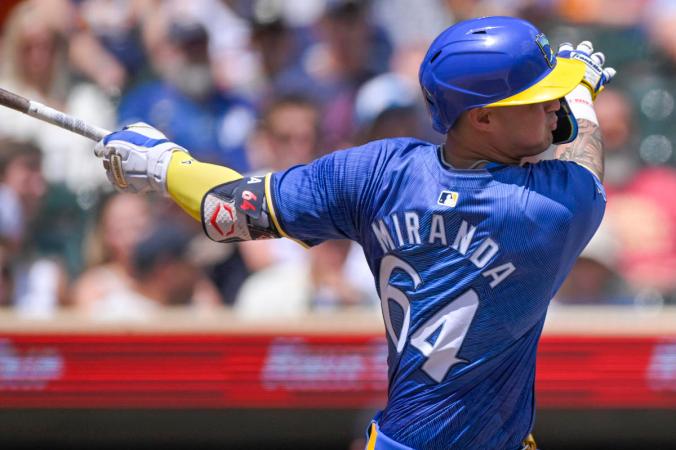
Jose Miranda of the Minnesota Twins, a 25-year old infielder, tied the MLB record for most consecutive hits. He got his 12th hit in a row, raising his batting average to a near league-lading .331. Amazing. No player had done that in 70 years.
Who are the all-time greats who also hold the record along with Jose? Ty Cobb? Ted Williams? Rogers Hornsby? George Brett? Uh, no…
The only other players who hit safely twelve straight times were Walt Dropo, Pinky Higgins, and the immortal Johnny Kling, lifetime BA, .272. Kling was just a solid Cubs catcher early in the 20th century. Dropo had one great year, his rookie season with the Red Sox, and then descended into mediocrity as a journeyman first baseman over a 13 year career. Higgins was the best of the three: he almost made it to 2000 hits, and his lifetime batting average was just short of .300. But nobody ever regarded him as a great hitter.
In this weird instance, then, an amazing batting achievement that one would think could only be reached by the best of the best in fact has never been achieved by any of the best, just three players before Miranda who were, in turn, not bad, okay, and very good. Twelve hits in a row apparently isn’t signature significance as impressive as it is, because no truly great player has done it ever. Even once.
That means the record is a fluke. Jose Miranda should hold up on polishing his Hall of Fame plaque.
I was trying to think of another example of a baseball achievement that one would assume only a great player could achieve that nonetheless fails as “signature significance.” Here’s one: Wouldn’t you think that pitching two no-hitters in a row would be proof positive that the pitcher was a great one? That feat has only been done once, by Johnny Van Der Meer of the Cincinnati Reds in 1938. He had a solid career, winning over a hundred games, but he also lost more than he won.
 Ethics Alarms
Johnny Van Der Meer. One of the great baseball names, or so I’ve always thought. All it means is “Johnny of (or from) the Lake.” Hilarious.
Over a recent dinner with a Chicago friend, he reminded me of Harry Caray saying Charlie Spikes probably had the greatest baseball name of all time.
The Red Sox have a pitcher named Kutter Crawford. And his signature pitch is…the cutter.
And the player most statistically similar to him is the pitcher with my favorite name of all: Van Lingle Mungo.
whew! Too bad it’s not Fungo.
Perfect games are like that, no?
Many great pitchers never get them and, sometimes, mediocre pitchers do.
-Jut
And no-hitters generally. The three pitchers with the most of those, Cy Young, Koufax and Nolan Ryan, were all legitimately great ones, so the rule there appears to be having three or more no-hitters is signature significance. Roger Clemens, Pedro Martinez, Steve Carlton, Greg Maddox and Grover Cleveland Alexander—that one surprised me—never had a no-no, among others.
I could probably understand that Carlton and Maddux wouldn’t have a no-hitter – particularly Maddux. He tended to “pitch to contact”, meaning he figured the hitter was going to put something in play in any given at-bat. Greg just worked ceaselessly to make sure the hitter didn’t hit anything hard, and anything that was hit hard was on the ground.
Steve racked up impressive K totals more due to the fact that frontline pitchers priors to the late 1970s (and the ascendance of closers and saves) regularly threw 300+ innings. I think Nolan Ryan approached 400 innings.
The other guys?…I’m surprised they didn’t. Pedro had Maddux-esque movement on his pitches with better velocity and of course, Clemens was a strikeout machine.
An aside…I was blessed to watch all of Randy Johnson’s perfect game (on TV) against my Braves, and it was a thing of beauty. That game was played in Atlanta and Johnson got a standing ovation from the crowd when it ended.
Well, Pedro had a nine-inning no-no that he lost in extra innings. I still think that should count, but officially, it doesn’t. Lefty Grove also never had one, which is equally amazing. There’s a strong case that he was the greatest lefty of all time. (Also the greatest “Lefty”…)
I would be very curious to read comparing thoughts of Grove to Warren Spahn. And I still have some love for The Big Unit. His numbers in his late 30s were astounding…unless he was taking the “Roger Clemens Shortcuts to Success.”
The one thing I like about having 100+ games per season is that it creates the opportunity for these semi-random events to happen. Statistical analysis of baseball results is probably more exciting for me than the actual game. Now, I’m going to hide before you guys stuff me into a locker.
That’s a valid point. The long season leads to some stats that are nice — such as a 30 HR 30 stolen base season (or 40/40). Some stats like that are indicative of a person’s talent level.
On the other hand home runs, by themselves, are exciting but don’t tell us everything. Roger Maris, even though he held the home run record for 60 years, didn’t make the Hall of Fame. Aaron Judge, if he can stay healthy, almost certainly will.
Incidentally Maris, despite playing an 8 game longer season than Ruth, had almost exactly as many plate appearances 698 vs 691 for Ruth when he hit 60 homers. But Ruth batted 90 points higher, his OPS was 250 points higher. Maris never had an OPS of 1.000 whereas Ruth’s career OPS was 1.164.
What does that mean? Well, Maris had one magical season for home runs.
To be fair, Maris was the MVP the very next year. He was also a very good right-fielder. No, not Hall of Fame level, but in the group just below, good, solid long-time stars. The player most like him statistically was Bob Allison, the long-time Twins slugger who paired nicely with Harmon Killebrew. Nobody looks good compared to Ruth.
That is so true. His career averages would likely be MVP winning numbers. Amazingly, 10 of his homers were inside the park HR’s.
Probably my favorite quote, which is probably apocryphal, is that Ruth was asked once whether he could have hit .400 if he didn’t concentrate on home runs. Ruth responded, “Hell, kid, I’d have hit .500” Probably not true, but definitely sounds Ruthian. And…..would you have wanted to bet against him?
I’ll leave the figuring of what it takes for the median batting average to statistically predict such a record-making streak to others better acquainted with the math.
As a bigger fan of magic performance, I do know it takes over nine hours to get a ten-steak in .5 odds, likely occurring at one coin toss about every five seconds!
I would post a link to the video, but WordPress apparently is unable to press links. “Derren Brown ten heads” ought to find it.
Don Larsen always comes to mind in these instances. In 1956 against the cross time rival Dodgers, the Yankee pitched the only World Series perfect game in MLB history. Don was not even a full time starter, threw from the stretch, and ended up with a career losing record of 81-91. But his control that day was extraordinary.
Pingback: Fantasy Baseball: Yes, you can take seriously the 13K performance of Mackenzie Gore, and more food for the Opening Day – Acymodelisme