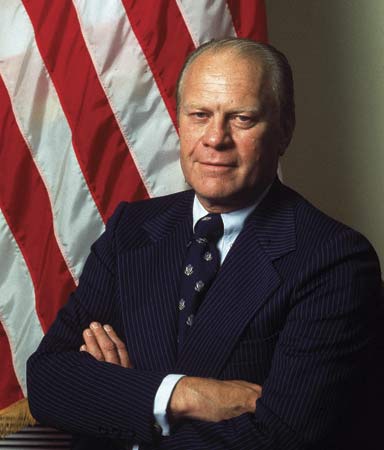
Propitiously enough, August 9 is the anniversary of our first un-elected President of the United States taking office at high noon in 1974. Gerald Ford was never on a Presidential ticket, having been appointed as Vice President upon the resignation of Richard Nixon’s vile VP, Spiro T. Agnew. At least Ford’s ascension came courtesy of a Constitutional amendment: it’s not like he bypassed a democratic nominating process or anything, but who would try something like that?
Let’s see what you can come up with to discuss today….
 Ethics Alarms
https://x.com/physicsgeek/status/1821906351112560736?s=46&t=hYBRdyKc75ixaD6bBbzJZw
Key point but read the whole thread. Seems to be more DNC manipulation
I think you’ve covered this story twice now Jack, but there as been an update out of the text message scandal in colombia. Three deans resigned.
Why can’t the people that support the political left see that all the blatantly obvious fear mongering and propaganda lies coming from their Pravda-USA media outlets and politicians is IMMORAL?!
Has the years of propaganda since the first decade of the 21st century really brainwashed them?
I just don’t understand it.
When the paradigm is will-to-power, then isn’t failing to use every tactic, including fearmongering and Big Lies, immoral? Doesn’t it require a belief in bedrock morality to have a chance at identifying fearmongering and Big Lies as wrong? When we’ve spent decades untethering society from absolute morality in favor of moral relativism, how could one ever figure out what they are doing is immoral? Isn’t it moral because I say it is?
Sent this to Jack as a joke about signature significance on July 23:
https://www.msnbc.com/morning-joe/watch/gov-watz-people-like-jd-vance-know-nothing-about-small-town-america-215470661588
“Since ’72, we’ve made the right pick; we made the right pick with Mondale.”
Should that not disqualify him from holding an office in the Executive Branch. If you think Mondale was the right choice, your mental fitness may be legitimately questioned. 49 states were wrong in picking Reagan?
Then, there is this:
And this: https://www.mprnews.org/episode/2024/07/22/minnesota-governor-tim-walz-doesnt-rule-out-vp-role-as-presidential-nomination-race-is-reset
Walz joked his inclusion in the vice presidential conversation is a “testament to Minnesota. We are the land of vice presidents,” he said, referring to Hubert H. Humphrey and Walter Mondale who both held the title.
-Jut
https://www.yahoo.com/news/young-woman-falls-her-death-100006306.html
Not a child. A 20-year old woman. She chose to go climbing up the treacherous Half Dome at Yosemite National Park. Upon her descent, a sudden rainstorm caused her to slip and she fell to her death.
Her understandably grieving father, whose hand his daughter could not catch as she plummeted off the monument, gives a couple of head-shaking quotes in this article.
On the few wooden slats to serve as footholds that are spaced far apart: “”My daughter’s life was worth way more than a few thousand dollars,” He believes that there should be more footholds added. Perhaps, he’s write. But I can’t help think that, while I agree his daughter’s life was worth more than the cost of modernizing the century-old safety system, perhaps, it was also worth taking a second thought or two about climbing it in the first place.
Telling the park rangers who interviewed him after the tragedy: “[She] died because the cables are unnecessarily dangerous.” No, she died because the mountain is dangerous and she chose to go up and down it without a harness.
Finally: To me, there’s such a commonsense thing that could be done and has not been done,”. There’s that word again, commonsense.
What do you all think?
“Perhaps, he’s write.”
ahem…right. My kingdom for an edit button.
Oh, I second that. I have winced at some of my most inglorious typos and misspellings. Yes, I have.
jvb
A couple of friends and I were hiking in the Bighorn Mountains early one summer. The trail traversed a scree field, not very high up on the trail, but the scree field had a steep slope that went down a couple hundred feet, and then it dropped precipitously several hundred feet to a valley below, where a gorgeous lake glimmered in the sun. On the return trip down from the peak, while cross that scree field a second time, I slipped and rolled head over heels about halfway down that slope. I stopped my descent by ramming my hand into the rocks, and it twisted all my fingers backwards. A small price to pay, perhaps, but there were some spots along the trail where you needed both hands to scramble back up. I was shaken, upset, and hurting, and I have to admit I was a bit short with my trail mates. It took a lot of extra work to haul my sorry hide back to base camp, and I wasn’t exactly invited back next year.
Sometimes we do something dangerous and are very lucky we walked away from it more or less intact. Sometimes, we’re not so lucky. I was fortunate, though I was not at a huge risk of actually careening off the edge. But did I mention that part of the traverse across the scree field was through a snow bank? We could have easily slipped down that snow back quite a ways. (I jammed my hurt fingers deep into the snow to keep a grip, and so had anchorage while icing my hand at the same time!) So what would the reaction had been had one of us died on that trip? We would have been shocked, dismayed, and not a little guilty over the outcome. We might have insisted that some install some kind of basic rope support across that scree field. We would have justified the measure by stating what we were intended was to insure no one ever died like that again.
In reality, we would be trying to assuage our guilt, knowing that the reason one of us died wasn’t because someone else neglected to provide sufficient safety measures. One of us died because we were out there, taking risks. Maybe it is that bargaining phase of grief that drives us to some kind of action. Maybe if we do something to help others, it will make up for what was lost. But it won’t, because that life we really care about has already been lost.
I think that Eagle Scout projects could cover a great deal of repairing the decaying supports, but beyond that, all I would recommend is drawing attention to whatever signage is already in place that the climb is dangerous.
Ryan, I think this is a great reply. The bargaining stage of grief is a good point. Trying to make sense of the loss of a loved one is a powerful motivator.
In 2021, on our trip to Yellowstone, we stopped at Makoshika State Park in Montana after checking in at our hotel. It was early evening. We’d read on the internet that one could actually see dinosaur fossils in the rocks. I fell in love with the place just looking at photos.
When we got there, the Visitor’s Center was already closed, there was a drop box for parking payments on the honor system, as well as small, vaguely noted trail maps.
There were still several people there, so we ventured off on a trail that looked to be about half a mile – an easy walk – on said vague map.
We were wrong. It winded and went up and down. It was pretty rugged. The sun was slowly going down so there was now going to be a light problem soon if we didn’t reach our destination before then.
I was out of breath. To add insult to injury, a family ahead of us was doing quite well. Two or three of the members were younger than we are. Of course, they had also had the presence of mind to bring walking sticks and what appeared to be climbing gear.
We finally reached a set of uneven steps in the rock, reinforced here and there by some wood planks. I could barely walk. The family ahead of us approached a rock wall that appeared to have steps going up, but, perhaps, not anymore secure than the ones we had reached were.
They also had the aforementioned climbing gear.
Sun going down. Family with climbing gear going up. I am falling to pieces physically. Mr. Golden decided then and there that we were stopping where we were and going back.
There was no way we were risking our safety to see some dinosaur bones.
We walked all the way back – got lost once – but made it to the parking lot. We made it back, that is, after I had to crawl up the steps to the parking lot instead of my own two feet.
There were no signs along the trail to indicate the level of endurance needed or about steep climbs. There were no handrails.
At some point, people have to use the brains God gave them.
I was in Zion National Park and was watching people climb up the limestone cliffs. A hiker came in and complained that the rock kept giving way when he put his pitons in. He insisted the park ranger do something to fix it! When the climber left, I mentioned that I was shocked they were trying to climb up such a cliff because that rock was quite soft. He said they were adults and are allowed to take risks. Too many of them think the government can change physics (or install an new cliff?) to make everything safe. To that end, the Clinton administration had put forth new rules that would have banned all access to any of the wilderness that couldn’t be made handicap accessible. For equality, if everyone can’t access it, no one can. Good thing Gore wasn’t elected or those would have gone through.
The problem may be that everything is too safe already. People think that nothing bad can happen to them because ‘the government’ is regulating everything. I believe that concept is behind the acceptance of a lot of the totalitarian policies during COVID. People who thought life was safe were confronted with their own mortality for the first time, freaked out, and were willing to do ANYTHING to return to a state of ‘safety’.
Before this issue was raised I was pondering how completely unsympathetic I was watching the deaths of Mt. Everest climbers in “Everest,” the film about the most deadly storm on the mountain. Morons. These people pay a huge amount of money to be able to impress others (or validate their pointless lives) by saying “I climbed to the top of Mt. Everest!” To which my response is “So what?”The act helps nobody, benefits society not one whit, is a waste of money, puts other people at risk (those you pay to watch and assist you, and is dangerous as well. I would respect someone less after learning they climbed Everest than I did before even if I wasn’t particularly impressed to begin with.
https://x.com/maximlott/status/1821506498062586348?s=46&t=hYBRdyKc75ixaD6bBbzJZw
I asked Gemini AI if Trump was a threat to democracy. This was the response:
https://gemini.google.com/app/b3cbd307ba6a88b3
jvb
Maybe I’m doing something wrong, but this just takes me to a sign-in page. Any chance you could share the answer outside the link?
Politico wants us to know that Walz was the greatest high school teacher ever:
https://www.politico.com/news/magazine/2024/08/08/tim-walz-was-my-teacher-what-i-learned-00173212?utm_source=pocket-newtab-en-us
jvb
The one way I know Walz is an abject dumpster fire of a human being is because all the DNC promoters are going all in on the same fluff piecery they did for Biden when they tried to humanize and make him cool as Obama’s VP.
EC,
As promised, I moved the discussion to the open forum, though much later in the day than I originally hoped. (If anyone else wants to chime in on this discussion, please feel free!)
You wrote:
The suffering I object to, at least in the extreme cases, is the kind where people don’t learn anything from it. They become weaker instead of stronger, they break and fall into disrepair, and even if they were instead to learn and become stronger they wouldn’t be able to improve their situation. What I object to are the downward spirals that people can’t escape. Those aren’t educational and they don’t give anyone the opportunity to develop their character and realize their potential. I think we can do better than that.
There are so many pieces of your response that I have to keep in mind, so forgive me if I completely misrepresent your stance. I believe that you stated elsewhere that you believe that all possible internally consistent universes exist. Would there then be an unbounded number of universes where these hard cases of suffering not only happen, but in theory could happen to every single one of us? Conversely, would there be universes where we do overcome those hardships and grow, and countless others where we fall somewhere in between? Or is there a great deal more nuance that I’m not catching? The reason I ask is because I’m struggling with the ramifications of what you presented.
It would seem to me that if every possible outcome exists, then it follows that if I am suffering in this world, the only response you could make is, “You are suffering more in some universes, and suffering less in other universes. The amount you are suffering now is because you are in this universe.” In addition, coupled with a statement you made before that you don’t really believe in free will, but this myriad of all possible universes, then we don’t really make any choices. We’re in this universe. If you made an awful decision that has wrecked your life, again, it just the luck of the draw that you’re experiencing this universe, not any of the ones where you didn’t muck everything up.
I’m not going to chase that any further, because I think I’m in extreme danger of arguing against the flimsiest of straw men.
Just because all memory of something is erased and its effects come to naught, that doesn’t mean it didn’t happen, nor that what happened didn’t matter.
Actually, if all memory of something is erased, it absolutely is as though it never happened at all. And it cannot matter, because there is no hint of it left. Suppose for a moment that the ultimate fate of the universe is heat death. This means that all matter has decomposed into energy, and all energy is spread out as background radiation that, in the end, is completely unrecoverable. That means that, were some outside observer to attempt to observe our universe, he would be unable to observe anything. There would be nothing to interact with. There would be nothing that could respond to any instrumentation. There would be no trace disturbances that could hint that something had transpired before. The universe could have been one of an unbounded number of possibilities, and that observer would have no means whatsoever to detect what that instance was. Humanity could have risen to astounding heights that would inspire angels, or humanity could have eradicated itself very early on. There would be nothing to distinguish the cases.
The second answer is that I personally don’t believe in the end of all things.
The Catholic viewpoint also holds that there isn’t an end of all things. The spiritual soul survives death, and there is the promise of a new Heaven and Earth that will persist forever, which is not in a state of journeying.
In my personal journey, I looked at an endless succession of lives at first with awe and inspiration, because it seemed that we could always try again. But then, reincarnation lost its appeal for two reasons. First, it could not answer the question: to what end? Because there would be no end. There would also be no guarantee of advance. What would prevent someone from living a rut of rut lives? Is there some termination if you finally keep living bad enough lives, just as there might be nirvana if you lead sufficiently many, progressively better lives? If there is a termination, why would it take innumerable lifetimes to reach it?
Part of me wants to coin some kind of “I just believe in one less turn around the wheel than you,” in a parody of the atheist, “I just believe in one god less than you.” Except I can’t quite get it to work in a direct yet pithy way. I believe in quite a few lives less…
The second difficult I encountered was the extinction of self. Each time someone was reborn, he had no memories of his previous lives. He would have to learn to walk and talk all over again. He would have to learn to share, to give, to love all over again. If his previously good life supposedly gave him such a leg up in his next life, why would he still choose to do bad things? Why would he still make mistakes? How is this any different than having no pre-existence to this life in the first place?
What attracts me most to the Catholic viewpoint is how it best fits our experience. From the philosophical conclusion of a Necessary being, to the doctrine of original sin, to the ability of God to redeem any evil, and God’s willingness to descend to utter God-forsakenness, to the pressing need to make this life matter, because it is given to man to die once, and after that the judgement, to the satisfaction of justice and mercy, the satisfaction of the desire to live forever, and the satisfaction of our desire for supreme joy.
That’s a lot for the moment. I want to ponder your take on what makes a person and the how we influence each other, and then next discuss personhood, if that’s all right.
(Sorry for the delayed response. I’m drafting a reply, but need an uninterrupted block of time to do it justice. I should have that in the next few days.)
Need time to draft a reply? Don’t know what that’s like. Nope. Not one bit.
Hi Ryan,
Sorry for the delay! You made several points, so I’ll try to address them in a logical order.
I suspect that the popular explanations of reincarnation are simplified for lay people, because I don’t subscribe to the idea of a linear series of lives with the same subjective consciousness that may have little in common with previous lifetimes. Rather, I believe that because the thought patterns that define us as individuals occur in other people, those other people are partly us, and we them. Consciousness is the universe examining itself, and sometimes it does so in the same way from two different positions. That’s how karma works: we will not incarnate into someone with wisdom and character until we ourselves go through the subjective process of developing that wisdom and character. It’d be like a gambling addict winning the lottery: they randomly find themselves in a good position without the habits to maintain it.
In an unbounded number of universes, many of them will indeed contain suffering. That’s not for any greater purpose; it just happens. I would consider it worse if someone set up our suffering deliberately against our will as a means to some end. Given the fluid nature of identity and the unbounded number of universes, it is inevitable that eventually each person will subjectively experience themselves overcoming those hardships and growing. Sometimes this process entails finding oneself in a more hospitable environment first. I think eventually we all will end up with eternal life and supreme joy as you say, but probably not after only one round of mortal existence. Rather than entropy, I think that constructive states of being are the great attractors: sooner or later everything and everyone spirals into them.
Buddhists aren’t wrong when they say that suffering is a consequence of desire. Suffering is what happens in our minds when the state of the world and the events happening to us are so different from how we want them to be that our desires yell at us to make the discrepancy go away as soon as possible. Sometimes that means adapting ourselves to accept the status quo, and sometimes that means changing the world to suit our desires. Both of these can be good. I figure it’s fine if we’re making ourselves stronger and the world more hospitable over time, so that we can get more of what we want in the future.
What worried me for a while about this multiversal worldview is the potential for backsliding or making a random bad decision just because the possibility exists somewhere. On reflection, I don’t think those are necessarily part of a consistent universe. There is motivational certainty (identity) and motivational uncertainty (choice). I think that wise and virtuous character, consistently practiced, becomes part of our identity, so that we will not find ourselves spontaneously choosing to do terrible things that contradict our character.
In other words, for all intents and purposes there is no future in which the me that writes this sentence decides to go out and commit crimes, any more than there is a future in which I spontaneously combust. It’s so inconsistent with my established structure and constitution that it’s relegated to the realm of passing fancy, a dream or daydream of no consequence or influence.
I didn’t say I didn’t believe in free will; just that the idea of free will represents uncertainty about motivations. How it works or why we’re uncertain doesn’t matter. Regardless of how far in advance our decisions may or may not have been determined by prior conditions, part of what makes us us is that we can’t know everything in advance. The entire holistic process of us interacting with our environment, exploring our options, and picking the ones we like the most or committing to the ones that represent our strongest aspirations, is free will no matter the mechanism. Even if everything I do is predetermined, if I don’t know my actions in advance, from my perspective nothing’s different. I do what I feel is best.
One way we can create meaning is through the constructive principle of challenge. At the end of our lives, we want to have been awesome. We want to have made things better for people so they can be awesome as well. It’s the experience that matters. If a universe dies and no one is around to remember it, it has still happened. That can’t be undone. People experienced those moments, and what kind of experiences we make for each other are up to us. We don’t need an outside observer to validate us, because we care about what we and others experience and about finding the strength to make the best of what we have. For my time in this set of universes, I’d like to see humans start building a heaven.
Does that all make sense?
That sounds great. If that’s true, then why didn’t we do that instead of bothering with this whole “fallen world” business? “Original Sin” doesn’t answer anything–it was perfectly possible to create free-willed humans who didn’t choose to disobey, or to arrange for more constructive consequences for disobedience than populating a fallen world with billions of people. What I’m hearing is that the deity specifically selected a timeline where all of this suffering plays out, only to end up back in the same paradise we could have had in the first place. Who benefits from this process?
EC,
I hope to respond to the substance your stance sometime in the near future. It would be good to get to the heart of what we each define as an individual, a person, the universe, consciousness, and so on. I want to address the universal consciousness and whether that constitutes to pantheism, or if you have a different idea in mind. There’s a lot to unpack, and I’ll admit I’m not sure I understand all your points.
So briefly, I’ll touch on your response to the Catholic perspective, and then get back to the last-minute, urgent project that dropped on us this week. (22 weeks of work, dropped on 4 engineers with the expectation that it would be ready in 4 weeks. Fun!)
The Catholic thought on the difference between the original paradise in which man existed, and the heavenly destination to which we hope to obtain, are different. The latter is immeasurably greater. How much greater, we don’t know, nor do we fully understand the ramifications of the Fall and the Incarnation, and how mankind is divinized through union with Christ. There’s an admission of mystery here, meaning not only do we not know everything about it, but we can’t know everything about it, because there will always be greater depths to plumb. But in short, God allowed the fall because he could raise mankind up to something greater than had man never fallen, or had God immediately created man in heaven with him.
The general argument for why it is greater examines exactly how free will operates in heaven. We know we’ll never sin again in heaven, but isn’t that a constriction on free will? Catholic thought says no, but has to address why the will is still free if it can’t choose the wrong. Some resolve this problem by saying that in heaven, where we would behold God unveiled, his goodness and beauty would be so great that given any other option, we would still freely choose him. This leads to the conclusion that if God made us in heaven without giving us a chance to truly be capable of rejecting him, then we would never truly exercise our will to love.
However, not to overstress a theological opinion, I will simply conclude that at least one aspect of allowing this journeying through suffering is to accomplish an expansion of our capacity to love and to heighten our dignity in ways that could not happen without that journeying. Creating man in heaven might have him in paradise, but it would be like creating everyone in a state of having finished first place in a race without them ever running.
Finally, there is this question to consider. When we don’t exist, God cannot seek our permission to create us. When we do exist, though, isn’t it better for God to give us the opportunity to reject him, rather than leaving us no choice in the matter?
https://www.netflix.com/title/81681888
We’ve enjoyed this documentary.
But someone said “the dog training center was established after the disasters of 9/11”.
I periodically come across this amoral and unethical crap.
I’m sorry. But crappy cultures violently attacking better cultures and murdering thousands of the better culture’s people isn’t a “disaster” like a damned iceberg or an earthquake.
I’m watching this with my children so I’m not swearing. But a litany of profanity is flowing through my brain that would impress Harry S Truman.
It’s a fun documentary otherwise though.
https://x.com/defiantls/status/1823130125375775074?s=46&t=hYBRdyKc75ixaD6bBbzJZw
Two different reactions from the same news source to similar policy platforms. One when Trump said it. The other after Kamala stole his idea.
I saw it. The news media’s bias has entered Julie Principle territory. When someone argues that the news media isn’t biassed—like our otherwise relatively reasonable George Mason prof while he was in combat here—I really am tempted to just ban them on the grounds of dishonesty or stupidity.