I am having a hard time with this one.
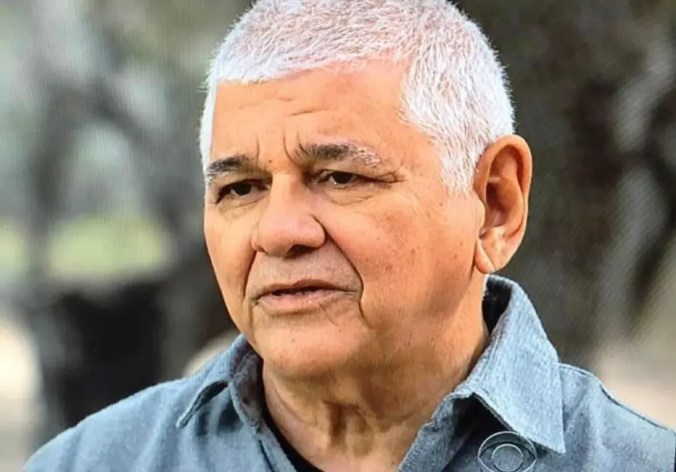
This week the New York Times and other publications gave a hero’s send-off to Eddie Canales, who died on July 30 at the age of 76. No doubt about it, he was a caring, selfless, compassionate man.
Unfortunately, his caring and compassion were applied to assist those seeking to break U.S. law. From the Times obituary:
For over a decade, Mr. Canales placed dozens of water stations — giant blue plastic barrels marked “Agua” filled with gallon water jugs — along the region’s routes for migrants evading a checkpoint on U.S. Route 281, about 70 miles north of the border with Mexico. The migrants, who are usually led (and sometimes abandoned) by smugglers, known as “coyotes,” leave the main road and undertake a perilous journey through featureless scrub and bush to evade the Border Patrol.
Some don’t make it. Those who fail succumb to severe dehydration, hunger and exposure to the unforgiving elements in a semi-desert where temperatures can easily reach 100 degrees in the summer and drop below freezing during the winter. Mr. Canales led a campaign to recover, identify and ensure proper burials for the migrants’ remains. The mission required forcefulness and tact. The land is private and belongs to South Texas ranchers, many indifferent or hostile. Some have created armed posses dressed in military gear to hunt up the migrants and turn them over to the authorities, as shown in a trenchant 2021 documentary about Mr. Canales’s work, “Missing in Brooks County.”
…Mr. Canales successfully placed more than 170 water stations across seven counties, the outposts recognizable from afar by flags with a red cross flown high….
Your Ethics Alarms Ethics Quiz of the Day is….
Is it ethical to honor someone for intentionally facilitating the efforts of others to violate U.S. law?
Isn’t what the compassionate, selfless Mr. Canales did that prompted the Times’ slobbering tribute called “being an accessory?” The Times rigs its account, typically, by blurring the issue: these were just “migrants” who the nice man was helping, after all. The rhetorical dishonesty around illegal immigration fuels the ethical incoherence; I’m sure you are sick of me pointing that out, but some people just can’t comprehend the concept. In this story, about some Denver police fired for making jokes on-line about using illegal immigrants for target practice, we see a jaw-dropping quote: “In a statement, a spokesperson said, “The Denver Police Department is appalled by the subject of the messages, which are contradictory to the mission and values of the Department, and disrespect not only newcomers and our community, but also every other officer working to keep everyone in our community safe.”
Yes, illegal immigrants are “newcomers” now. Of course you welcome newcomers! That’s all Eddie was doing! (“Right?” as Kamala would say.)
Yeah, I’ve made up my mind on this one.
Talk me out of it.
 Ethics Alarms
One could argue that he did not aid and abet their illegal entry. His placement of water 70 miles from the border was a passive action.
An anology that comes to mind is that in the pre Roe/Wade days abortion was illegal in all states, even NY. It was there that I was working as a ambulance attendent (now called paramedics). A common scenario were calls to women who were hemmoraging from abortions. We “rescued” them from the deadly results of that illegal action. So the question, were we aiding and abetting that illegal activity.
More comtemporaneously, procuring on the street drugs is an illegal action. When the procurers OD is administering Narcan to revive them aiding and abetting their illegal activity?
One could argue that, but I’m not buying it. The dangers of the journey to break the law is one aspect of deterrence. Why not food? Transportation? Volunteers to hold a parasol over the heads of the poor border-jumpers?
The Narcan analogy isn’t too bad, but you are talking about an unplanned, spontaneous rescue. The better analogy would be a publicized city policy that “Don’t worry, if you happen to OD while illegally using drugs in defiance of our law, we’ll have someone there to administer Narcan in time to save you. So shoot away!”
“Look for the red flags indicating the best placed to overdose! We’ll be there with Narcan in a flash!”
I think there might be a few “safe injection sites,” already in existence, no?
Yup.
Maryland is pushing the idea that we should all buy a Narcan dose so that we can save a life. I say to our Gov. GFY
I will never use my resources to bail out someone who chooses to engage in dangerous illegal activity and I would only administer Narcan to someone who was accidentally poisoned through no fault of their own.
I also do not want to pay for making rock climbing safer. Such is the responsibility of the person choosing to participate in that activity
This guy is not an ethics hero. He is reducing the known cost of engaging in the illegal entry. My analogy is this is like retailers making it known that they will not stop shoplifters. Once people know this the illegal activity increases.
I would say that the narcan rescue is NOT unplanned since you have it available. Your analogy is indeed fact. Every police car, fire rescue, in some cities libraries, have required Narcan available. One can purchase it on line.
Surely you see the material distinction between having Narcan available for individual spontaneous rescues and prominently broadcasting that society will help you safely break the law? The closer analogy is probably needle exchanges—which I believe is also aiding and abetting crime.
Furthermore, while drug abuse is not victimless, illegal immigration harms and burdens US society and citizens. The aiding and abetting helps the law-breaker while harming others.
The best I can think is that illegal immigration is an ethics zugzwig. People far more powerful and influential than Mr. Canales created the primary conditions that encourage violating the border laws.
Canales began by collecting the bodies of border crossers to give them dignified burial. This, in Christianity, is considered a corporal act of mercy. Even the most hardened sinners are entitled to it (the apostles almost certainly collected Judas off the tree and buried him).
Knowing that your body won’t be eaten by vultures if you die is hardly encouraging or enabling of illegal immigration?
Yet, if one keeps collecting dead bodies, many of whom are in that state for mere wont of water, is setting up water stations reckless encouragement? Or are you trying to protect your own soul from the crushing weight of death?
If the President of the United States of America keeps making reckless statements that encourage people to hike through the desert, that increases the number of bodies you are recovering out of charity, are you at fault for trying to prevent that death in the localist level?
If people were breaking the law passing that location long before you interveved, and will continue to pass through that area long after you die, are you actually offering any meaningful new encouragement? Aiding illegal immigration is not ethical, but preventing death is usually ethical. There is a conflict of ethical values here, and feeling trapped by an intractable political situation shouldn’t require ignoring the latter.
I would agree that the media overtly using his story to undermine immigration law is grossly unethical. But I can’t fault Canales himself for a taking a marginally active roll in preventing a few extra deaths.
This drives me crazy. Part of the time we live thirty miles south of Tucson and twenty-four miles north of the U.S./Mexican border, or as it’s called by the local Hispanic people, “the line,” as in, “I’m going across the line to visit my relatives.” The whole “water station” thing has been a favorite of the Tucson do-gooder Methodists and Unitarians and Episcopalians. Sending people into the Sonoran Desert, even in winter, is murderous. If these do-gooders were serious and not just virtue signaling, they’d set up facilities in Sonora, Mexico providing jobs for would be “migrants.” And given what a terrible, racist place the United States are, they’d be telling these migrants “Stay away! The United States wants to murder you. Stay in your wonderful, diverse, charming, quirky country where everyone is authentic.” But no, they help these vicious drug and human smuggling gangs exploit people who are hardly suited to making it across a Phoenix parking lot in July. Assholes. This guy was a villain.
Why don’t these “migrants” stay home and fix their God damned countries.
Because many of the people with the will and resources to do so have already come here.
Nobody considers the negative effects of expatriation to the other citizens of Mexico. If the country had the organization of a totalitarian regime they’d build their own wall like Berlin.
To the topic, preserving life is always ethical, no matter the sociopolitical framework that placed life in peril. It’s also ethical to inform the authorities where the water stations and migrant trails can be found. Golden rule.
That’s the churchy view. I disagree.
It’s the, “If it can save just one life” rationalization.
Regarding Mexico, changing the place is easier said than done.
To quote Max Weber, “Politics is a strong and slow boring of hard boards.”
Lately I keep recommending to long-suffering friends the following review of a modern classic in political economy, by the late Douglass C. North and two co-authors.
Douglass C. North is a big name in economics and economic history, was co-winner of the Nobel Price in Economics with Robert Fogel. The other two authors I’m not familiar with, which means nothing.
charles w abbott
https://www.econlib.org/archives/2009/05/north_wallis_an.html
I compare it to giving money to homeless drug addicts. Sure, you are ‘helping’ them, but what are you really helping them to do?
Is that a fair comparison? The homeless can (and might) use the money for legal and responsible purchases. The border crossing illegal are by definition using the water to facilitate illegal and unethical conduct, and they know it, and Eddie knew it. He wasn’t thinking, “Well, maybe they’ll take the water home and make Kool-Aid for the kids!”
Giving money to panhandlers is analogous in that the donors think it’s helpful but it’s simply encouraging bad, dangerous and self-destructive behavior. Also analogous in that panhandlers are walking around on streets at intersections, which I’m sure is illegal. They should be ticketed for it, but they’re not. Grrr.
I think you missed the ‘drug addict’ part. I never give money to such people. I will give them food and other assistance, but not money. If someone tells me that they are hungry and I offer them food and they take it gladly, I am pretty sure they were hungry and needed food. If they ask me for money because they are hungry and they argue with me when I try to give them food, I am pretty sue they weren’t going to use it for food. I don’t think I have ever had a drug addict or alcoholic ask me for money to buy food and accept the food I offered. I had a guy curse me out in a store because I picked out a loaf of bread, jar of peanut butter, and a box of plastic knives for him.
Eddie Canales may in fact be a humanitarian in a sense because he didn’t want people to die due to the choices they made that put them in a life threatening situation; however, the man was intentionally providing indirect encouragement to people breaking United States of America immigration law. Canales was intentionally providing material means for those that break USA immigration law to continue their journey to evade authorities beyond the border area and into the interior of the USA. Canales was intentionally trespassing on private lands to accomplish his illegal activities. This person was intentionally aiding and abetting a literal invasion (an incursion by a large number of people or things into a place or sphere of activity) into the United States of America. Why didn’t Canales engage in an effort to stop the physical incursion into the USA of illegal immigrants therefore deterring illegal entry and preventing these people from being in such an unhospitable places needing water to survive, find the illegal immigrants, physically detain them and turn them in to authorities, this would likely have save many more lives.
I vote that what Eddie Canales did was misguided, illegal and unethical. His actions likely put more human lives at risk than he saved. I know, I know; but, but, but his intentions were good therefore in the eyes of the ignorant people he’s a saint.
Eddie Canales made his choice and that choice was to aid an abet illegal activity, choices have consequences. The “saint” Eddie Canales should have been prosecuted for his actions.
Let the anti-Witherspoon ad hominems begin.
Don’t be paranoid. I think that’s the most straightforward analysis.
Jack Marshall wrote, “Don’t be paranoid.”
I’m not really; however, this is one of those perfect stories that would cause an extreme progressive snowflake (like some of the lunatic wacko trolls over on Turley’s blog) to loose their mind and start personally attacking anyone that doesn’t approve of their “saint”.
Jack Marshall wrote, “I think that’s the most straightforward analysis.”
Thanks.
If Eddie Canales did this out of compassion (unlike those armed racist pricks running around on pickup trucks shooting illegal aliens “Mad Max – Thunder Dome” style) he might be an ethics hero. If he did it out of a belief that illegal immigration, isn’t so bad, that US immigration laws are immoral and u just, then he is part of they problem
A local Houston charity provides services to illegal or undocumented immigrants. The founders did it furthering their Catholic beliefs dictated by Matthew, 25: 30-41 (“Lord, when did I feed you. . . ?”) A noble belief but they truly believe in world without borders. They are part of the problem.
jvb
I think motivation is irrelevant, John. It’s bad behavior, regardless of whether it’s done for good or bad reasons. “The road to hell….”
The conduct is the conduct. Motive doesn’t change its ethical content.
This issue leaves me flummoxed.
Protect human lives.
Don’t reward behavior you don’t like
Obey the law.
Don’t turn a blind eye to human suffering.
It feels like an ethnics zugzwang to me.
charles w abbott
rochester NY
There is a Freudian slip.
ethics zugzwang / ethnics zugzwang.
–charles w abbott
I liked it!
I’m thinking if he sent word that “water will be available if you go this route”, that would be aiding and abetting, but I gather that instead he was providing water to people who were going to be there anyway without any guarantee of succor, so I believe his actions were ethical. The flippantly callous part of me thinks that at minimum, he was doing a public service by making sure there were fewer dead bodies to dispose of.
“the outposts recognizable from afar by flags with a red cross flown high….”
It seems to me that with these flags the water stations would be easier to find by the Border Patrol with their planes and drones. Therefore he was assisting the Border Patrol to catch the illegal immigrants while at the same time doing the humanitarian thing by helping keep people alive.
Also, the United States needs to remove the incentives for illegal immigrants to enter the USA by actively prosecuting anyone who employs them.