Pop singing star Katy Perry has one of the longer and less complimentary Ethics Alarms dossiers among overly-influential celebrity types. Let’s see: her last appearance was as an Ethics Dunce in 2023, when she freaked out on “American Idol” over the fact that a contestant had survived a school shooting. Katy screamed, “This is not OK!,” announced that the country had “fucking failed us” and that she was “scared too.” I wrote, in part,
“That’s fine, Katy. Now go along with these nice men in the white coats, and they will help you. This is just the latest example of how celebrities degrade both the level of civic discourse on important issues and the intellectual abilities of anyone foolish enough to take them seriously. I’m pretty sure that no one, literally no one, believes that mass shootings anywhere, not just in schools, are “OK;” Perry was seeking virtue-signaling points for stating the screamingly obvious. Moreover, I am 100% certain that Perry doesn’t have the tiniest clue about how the U.S. has “fucking failed us” because of this school shooting or any schools shooting. What do you want, Katy? Martial law? No Bill of Rights? Everyone stuck going to school via Zoom forever? And if Katy Perry is ‘scared too,’ she should hire better bodyguards.”
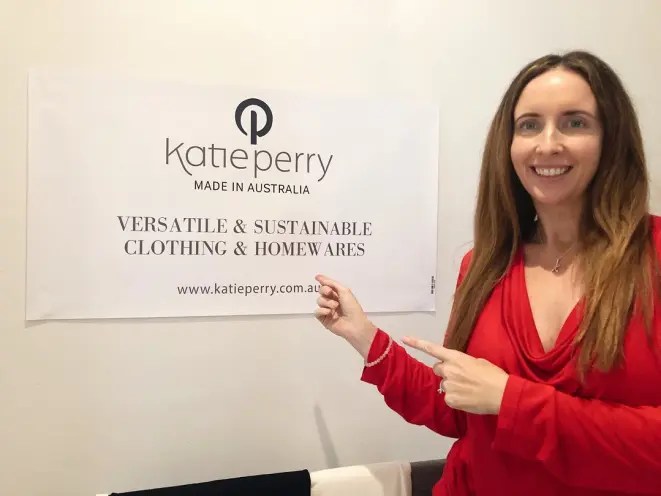
Now Katy is being attacked from the conservative side because of a trademark dispute she won in Australia. The Daily Caller wrote in an editorial that Perry had “successfully bullied a woman in court and won, marking another unfair victory by a pretentious celebrity.” The story: An Australian woman named Katie Perry launched a fashion label using her name. Katy Perry’s real name is Katheryn Elizabeth Hudson, which the Daily Caller seem to think is significant. (It isn’t.) Perry also had a trademark for clothes using Katy Perry, and sued Katie for trademark infringement, not for, as Katie describes it, using her own birth name for her brand. Katie beat Katy in the initial round, but Katy filed an appeal and won. “Now the designer has lost everything she worked so hard to build,” sobs Tucker Carlson’s news and commentary site. “This is everything that’s wrong with Hollywood.”
No, this is everything wrong with conservative media. “An innocent person can no longer operate her long-time business with her own legal name. Fake Katy Perry for the win — seriously?” says the Caller.
Ugh. The Daily Caller chose to leave out some rather important details, I’m guessing because it’s open season on show biz celebrities now that Donald Trump’s win has them seeking exile, BlueSky, or rest homes. Among the relevant facts absent from the editorial:
1. The pop star Perry began using her name as a trademark five years before the other Perry began selling clothes, and already had an “international reputation in her name in music and entertainment if not more broadly.” That’s right: the Australian Perry was exploiting the American Perry’s fame and notoriety. Well, Katie denies that. But in trademark law, if you snooze, you lose.
2. Guess what? Katie Perry usually goes by Katherine Taylor, but decided to use her birth name, Katie Perry, as her designer brand. Gee, I wonder why…
3. The batty original verdict by an Australian court that having “Katie Perry” as her given name in Australia somehow entitles the designer to overcome a previously existing trademark was correctly designated nonsense by the Australian appeals court.
4. Katy Perry had offered in 2009—-yes, this has been going on for 15 years!—-to compromise by allowing Katie to use her trademarked name in Australia, but Taylor/Perry rejected the offer. “In that sense, (Taylor) has brought this result on herself. Unfortunately, it is no longer possible to return to the time of peaceful co-existence,” the appeals court wrote.
The Daily Caller’s verdict as well as that of the New York Post seems to be based on Katie’s powerful sads at getting beaten in court. She told the sympathetic souls at The Guardian,”This case proves a trademark isn’t worth the paper it’s printed on.”
Actually, it proves the opposite.
She went on to say: “My fashion label has been a dream of mine since I was 11 years old and now that dream that I have worked so hard for, since 2006, has been taken away.” Psst, “Katie”: You don’t get to take someone else’s trademark because you dreamed about it.
The other reason the Post and the Daily Caller are siding with Katie is because Perry is in another lawsuit they think is unfair, this one against an 84-year-old veteran named Carl Westcott over the sale of his $15 million California mansion. That lawsuit is unrealted to the trademark matter, and it is completely irrelevant. Even if Perry is persecuting the old goat and threatening him with having to live under a bridge (I have no idea what that dispute is over and for the purposes of this post, don’t care), that has no bearing on her right to protect her own trademark.
 Ethics Alarms
“And if Katy Perry is ‘scared too,’ she should hire better bodyguards.’ ”
Consistency would suggest they’d be unarmed Counselors, am I right?
PWS
I have to assume that singer Perry had filed for an international trademark. That should have come up during a trademark search when the designer Perry filed for the trademark. I do not see how singer Perry can claim infringement if her trademark is not filed for international protection. Nor can I see designer Perry’s ability to market products outside of the area in which she had protection.
Parent and Trademark law gets complicated in the international arena. The fact that singer Perry had developed an international reputation gives credence to her claims of infringement but was that reputation in place when designer Perry filed initially?
A similar situation was a case study in B School involving SONY and a woman who had an electronics store whose last name was Sony and the store was named Sony’s Electronics. The large electronics manufacturer sued the little Japanese woman and won. When names can cause confusion among consumers the courts will give preference to the more well known name no matter who had the name first.
My favorite example is the programmer named Mike Rowe who called his business Mike Rowe Soft.
It appears from other sources that designer Perry filed for trademark protection in 2007 while singer Perry did not rise to fame until 2008. If that is the case then designer Perry’s motivation was not to capture singer Perry’s popularity.
I don’t understand this story at all. Why was Katie so adamant that she fought over this for 15 years, if she didn’t want to get a boost from Katy’s name recognition? Why didn’t she just use her real name? I think the kicker was that Katy offered a compromise and Katie turned it down. Why would she do that, if she wasn’t trying to cash in?
The answer is that designer Perry spent considerable money building a brand before singer Perry became famous. The fact that a singer adopted the same name as a stage name and who later became famous should not require the costs of the other in creating branding be lost by the original trademark owner. If we go down this path, trademarks will become the province of the party with resources to build greater brand power and not first to file. I am not suggesting that designer Perry does not benefit from singer Perry’s name recognition now but that may be more coincidental than planned.
Typically the courts in these cases evaluate based on potential confusion. Could a consumer be fooled into believing that product x is associated with the famous name. Designer Perry is not creating music which is what singer Perry is noted for but now that celebrities license their names to all types of goods the confusion could occur. For me the problem is that singer Perry simply wants to exclude others in other markets to protect her ability to license her name. The other fact is that the spellings are different.
I am not a patent and trademark lawyer but have worked with quite a few in my role as business consultant to tech firms. I can see why the courts ruled the way they did in both cases but I believe the appeals court decided the case based on relative brand awareness (power). If designer Perry had filed for an International trademark in 2007 she should have trademark protection globally. The problem for small firms is the costs become astronomical to create trademark or patent on a global scale. If she only filed in her home country that protection would have been limited only to that country. Singer Perry’s trademarks would have had to carve out that exception as I understand the law in that area.
You ask why didn’t she use her real name could be asked of either party. In this case designer Perry has a stronger case. Designer Perry filed for her trademark in 2007 long before singer Perry was a household name. Designer Perry was also first to offer clothing designs. The Katy Perry line only became viable after she became famous. Maybe the designer should take up music and start recording under her birth name. I wonder how the I Kissed a Girl singer would react.
BTW The USA today article which was cited seems to be in conflict with information regarding singer Perry’s citations in Wikipedia which is not know for its right leaning bias.
The USA Today article suggests that Perry was using her name as a trademark 5 years before designer Perry was selling clothes as well as an international presence. Not so. Katy Perry’s first album was a Christian themed album in 2001 under the name Kate Hudson with Red Hill records which sold only 200 copies.
From Wikipedia:
At 16, Perry released a gospel record titled Katy Hudson (2001) under Red Hill Records, which was commercially unsuccessful. She moved to Los Angeles at 17 to venture into secular music, and later adopted the stage name “Katy Perry” from her mother’s maiden name. She recorded an album while signed to Columbia Records, but was dropped before signing to Capitol Records. . ME: You don’t get dropped if you are an international star.
Perry rose to fame with One of the Boys (2008), a pop rock record containing her debut single “I Kissed a Girl” and follow-up single “Hot n Cold”, which reached number one and three on the U.S. Billboard Hot 100 respectively.
Singer Perry just had better lawyers.
Nothing wrong with that!
I still do not see why Katie insisted on keeping a disputed trademark if she didn’t want to engender confusion. It’s obvious why Katy didn’t use her original name as a trademark—and by the way, I can’t find anywhere whether Katy had her name changed legally or not.
“Maybe the designer should take up music and start recording under her birth name. I wonder how the I Kissed a Girl singer would react.” I’m pretty sure that this would be a copyright violation, but I don’t have time to research it right now.
It still looks like a pretty typical trademark dispute, and jumping on Katy as a “bully” while exonerating Katie because she’s not a “rich celebrity” is still just bias. By 2009, Katie was getting mileage from having a similarly named brand. She got greedy and wouldn’t compromise, though she had other options.
The decision is a very long one as there were many grounds on appeal from both sides. I understand from it that Ms. Hudson prevailed on appeal on the basis that Ms. Taylor should not have obtained her registered trademark based on her application filed in 2009, after Taylor knew of Hudson’s success as Katy Perry in Australia.
The following are helpful paragraphs from the decision:
315 This case is an unfortunate one in the sense that two enterprising women in different countries each adopted their name as a trade mark at a time that each was unaware of the existence of the other. Both women put blood, sweat and tears into developing their businesses. One became an internationally famous entertainer in the music industry, the other, a small Australian fashion designer. As the fame of one grew internationally, the other became aware of her namesake and filed a trade mark application.
316 Although Ms Taylor adopted her mark innocently, by the time she applied for her mark she had knowledge of Ms Hudson, her reputation, and her mark. She also accepted that at the time she filed her application, she knew that it was likely that music artists sold clothing bearing their names at concerts and that celebrities often moved into merchandising. Ms Taylor applied for her mark with knowledge of the matters that ultimately led to Ms Hudson’s success on the s 60 ground.
S. 60 is the cancellation of the mark that was said to be infringed by Katy Perry.
So despite chances to settle and move on, it seems that Ms. Taylor went all in and lost. Like many Anglo-based litigation systems, Australia awards costs to the winning party. OUCH!
There are some interesting parts in relation to joint tortfeasors and the ability to claim as a defense or exception to infringement, the use of one’s own name, even if it is an adopted name. Interestingly this seems to be a personal right for the defense/exception, that does not extend to your licensees.
Very helpful. Thanks.
What would be your objection to martial law?
What if it saved one life?
Always reassuring to see an appellate court correct a lower court. Unfortunately, I’ve been clobbered by some appellate courts who’ve overturned perfectly correct rulings by lower courts. Sigh.
I still do not see why Katie insisted on keeping a disputed trademark if she didn’t want to engender confusion. It’s obvious why Katy didn’t use her original name as a trademark—and by the way, I can’t find anywhere whether Katy had her name changed legally or not.
If you are in the process of building a brand for a product significant resources are spent to create consumer awareness. Having to change what has been built with the resources expended could jeopardize the viability of the firm. Basically you nearly have to start from scratch again. Keep in mind that the singer is not a designer and only licenses her name to other makers of products. Theoretically, the confusion in the consumer’s mind is that the signer designed the apparel when in fact she probably plays as much of a role in the selection of products that bear her name as Donald Trump does.
Sometimes digging in your heels on principle is a reason. If singer Perry did not start licensing her name for apparel until after 2008 it was she who was late to the dance.
“Maybe the designer should take up music and start recording under her birth name. I wonder how the I Kissed a Girl singer would react.” I’m pretty sure that this would be a copyright violation, but I don’t have time to research it right now.
You cannot copyright your name. You can trademark it as this case shows. Copyrights only apply to inanimate works of human endeavor.
I can see both sides of this case and I am not saying the singer is a bully but the irony is that she espouses feminist power in all of her works but spent 15 years trying to muzzle a young woman with her own dreams. It shows she is a fraud when it comes to female empowerment. It seems she is only concerned with her own empowerment.
addendum: There is a women’s clothing line name Ann Taylor so that could be a reason for not using Taylor and choosing Perry. Perry may not have come up in a trademark search using that name.
Oooh…good catch! Very likely.
1. Do you think another singer could have made records and sold them in the 60’s singing under the name of Frank Sinatra? I’m pretty sure you can’t do that. Nor does Stephen King have to copyright his name to stop someone else named Stephen King from publishing horror stories.
2. She didn’t want to have to start from scratch with a new brand name because of the expense, but she thought it made sense to litigate against an international pop star for 15 years? Good plan…
3. “Feminist power” means fighting your own battles. Katy was expressing her own power. It’s up to a woman to fight for her own dreams. I see nothing inconsistent in Katy going toe-to-toe with a business rival—and a again, she offered a compromise that would have allowed Katie to keep her brand.
I never said it was a wise choice. The name issue will fall under the Trademark laws not copyright. All it takes to copyright something is to put the (c) date on the works. It is my understanding the Trademarks must be registered to be enforceable.
I don’t know what the compromise was so I cannot say anything regarding the choices made at the time.
There is no arguing that singer Perry had more money on the line to protect than designer Perry and had more resources to protect them but she champions leftist ideals and rails against the power elite. That was where I was coming from it just seems hypocritical but I suppose in todays world one’s expressed ideals are transitory when your own money is on the line.