The old TV show “Naked City” used to intone at the end of every episode, “There are eight million stories in the naked city. This has been one of them.” There are far more than eight million ethics stories in our country’s rich and surprising history. This is one of those, and I pass it along to you.
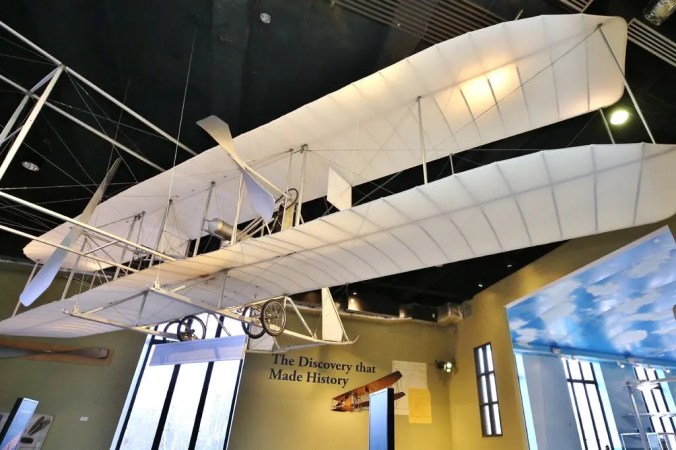
The Franklin Institute, a museum in Philadelphia inspired by the work of Ben Franklin and dedicated to the study of science, exhibits a plane built in 1911 by the Wright brothers. It was, they say, a gift from Grover C. Bergdoll, a strange man with a strange history who was once an infamous national figure but who is now forgotten.
He was a wealthy playboy who was heir to a Philadelphia beer brewing fortune. He dodged the Great War draft in 1917, failing to report for military service. He was already known for his irresponsible conduct, taking flying lessons from Orville Wright and buying a plane from the Wright brothers that he used to buzz buildings among other stunts. He had multiple accidents and traffic violations in automobile as a teenager, and served two months in jail after a head-on crash in 1913. Since he was rich and well known, the government decided to an example of him to discourage draft-dodgers, It distributing wanted posters with his face and name, and when the soldier who supposedly was drafted to take Bergdoll’s place died in combat, the New York had a front page headline, “Died Hero in Battle in Bergdoll’s Place.”
The story gets stranger. Bergdoll was finally captured in 1920 after an ongoing manhunt, and sentenced to prison for five years. He escaped after less than a year. He convinced authorities to temporarily release him from prison to help them find a “pot of gold” that he claimed to have buried. Bergdahl escaped while his two U.S. Army escorts became distracted (they were playing pool at his family mansion), fleeing in his chauffeur-driven car to Canada, from which he travelled to Germany. He married there, but often returned secretly to the United States. Reported sightings of Grover were headlines news.
Bergdoll’s property was seized under the federal “Trading With the Enemy Act,” in 1921. Meanwhile, Bergdoll had to foil two attempts to kidnap him and bring him back to the U.S.: in one of them, he bit off the thumb of a kidnapper and shot another dead.
Bergdoll’s wife and children had emigrated to the United States from Germany in the Thirties to escape Hitler, and the aging playboy soon followed, broke, fat, and with a German accent. He was arrested upon his arrival in New York Harbor and served four years at Leavenworth. Bergdoll was able to recover most of the $535,000 in property, but he couldn’t stay out of trouble. In 1946 he was charged with attacking his butler. He died in a mental institution at 72.
Berdoll never sought to recover his historic airplane. The Franklin Museum claimed that he had given the plane to the institution while he was in Germany, with a letter conveying ownership. But when his children approached the museum, challenging their claim and seeking to recover the valuable artifact, the museum directors admitted that no letter existed. Grover had given the museum his airplane “orally.” “From your own knowledge of Mr. Bergdoll and his background,” a museum curator, Susannah Carroll, wrote to Timothy W. Lake, the author of a biography of this colorful character, “you should understand why neither he nor The Institute would desire to have anything in writing documenting the oral gift. Bergdoll was still a fugitive and his assets had been and continued to be subject to government seizure.”
Uh huh. Lake and the Bergdoll family are dubious. They never inquired about the plane because they believed the museum’s account of a gift; by the time Grover Bergdoll returned to America in 1939, he had more important concerns than repossessing his plane Lake says it is odd that an institution as celebrated as the Franklin “could accept the airplane from a third party without a written transfer document.” Katharina Bergdoll adds, “Getting a verbal agreement — how was it possible when my father was a fugitive at the time in Germany? You could not have reached him. That was the first impossibility. The second: It was technically in the government’s possession at the time. He could not have legally transferred it.”
Family members want the museum to return the plane, or to play the family an appropriate amount to keep it as its most prized exhibit. Katharina Bergdoll also wants the museum to “own up to the facts of how it was obtained.”
That would be nice! This strange case seems destined for the courts.
 Ethics Alarms
Most likely course of action: federal authorities intervene to retroactively claim it as seized property, and arrange for it stay to the museum as a gift or loan.
…or an FBI agent and an AUSA could crash it while ‘transporting it to another impound lot’ and the courts tell everyone that ‘too bad, so sad, when the FBI destroys your stuff, you cannot recover damages’.
That would be an apt end to such a convoluted tale.
Any relation to Beau Bergdoll, the creepy deserter the Bidens gave back a bunch of murderers for?
Oooo.Good question!
…though Bowe spelled his last name “BergDAHL” But they still might be related. Does avoiding military service run in families?