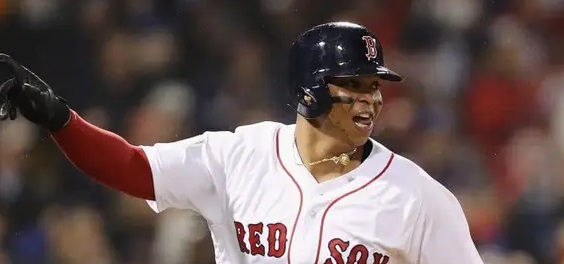
“The King’s Pass” is #11 on the EA Rationalizations List, where it is described as follows:
One will often hear unethical behavior excused because the person involved is so important, so accomplished, and has done such great things for so many people that we should look the other way, just this once. This is a terribly dangerous mindset, because celebrities and powerful public figures come to depend on it. Their achievements, in their own minds and those of their supporters and fans, have earned them a more lenient ethical standard. This pass for bad behavior is as insidious as it is pervasive, and should be recognized and rejected whenever it raises its slimy head. In fact, the more respectable and accomplished an individual is, the more damage he or she can do through unethical conduct, because such individuals engender great trust.
Sports teams, both professional and amateur, are among the organizations most vulnerable to The King’s Pass, which is also called “The Star Syndrome.” Thus it is particularly satisfying to see the only sports team I care about, the Boston Red Sox, take a strong stand against the rationalization in one of the most vivid anti-#11 moves within memory by any organization in sports or out.
Last night, soon after thrilling the team’s fans with a sweep of the hated New York Yankees with the assistance of a home run by Rafael Devers, Boston’s best hitter, the Red Sox traded Devers and his 10-year, $313.5 million contract to the San Francisco Giants. A team trying to get to baseball’s play-offs in a year of high expectations (so far unrealized) does not usually trade its alleged superstar mid-season, but that’s what the Red Sox did.
Why? Because their best hitter and alleged superstar had revealed himself as a lousy team player and a toxic jerk, defying his manager, general manager, and the best interests of his team because he assumed he could get away with it.
Devers had thrown a tantrum when the team told him in February that new free agent Alex Bregman, a superior fielder, would take over Devers’ job at third base. Devers had some legitimate grounds for protest, as I explained in this post, but in the end, he was being paid almost a third of a billion dollars to do everything he could to help the Red Sox win and that, as the saying goes, was that. Devers settled in at Designated Hitter, then disaster struck in the form of a season-ending injury to the team’s young, power-hitting first baseman, Tristan Casas. The solution for the Red Sox was obvious: now Devers could play first base, which had the added advantage of freeing up the DH slot for some good hitters the team was having trouble getting into the line-up.
Devers flatly refused. Third basemen usually play first well after some adjustment; it’s a corner position and not as difficult as the “hot corner” across the diamond. But even though he was asked to play the field by his manager and the team’s general manager, Craig Breslow, Devers decided that defying them would be his revenge for their taking him off third against his wishes.
In the good old days when managers weren’t beholden to star players who made ten and twenty times more than they did (or more), a player doing this would be benched, suspended, and fined. Those days are long past. Devers was secure in the belief that his offensive value to the team and his contract (few teams will take on such a huge financial commitment) guaranteed him the King’s Pass.
Devers was wrong. Breslow traded him anyway as soon as it found another team so desperate to win that it would reward an asshole, trade some useful pitchers and prospects for the privilege, and accept responsibility for the remaining 250 million bucks on his mega-contract. As usual, almost no fans and sportswriters comprehend the move, but I do.
The Boston Red Sox just made a statement that it would not only expect but require all of its players to do what they were asked to do for the good of the team, and if they did not, they would not be on the team very long. In the long run, and maybe even in the short term, this will make the Boston Red Sox stronger.
UPDATE: As discussed here, the Red Sox substantially confirmed my analysis regarding why Devers was traded, and, in their view, had to be.
 Ethics Alarms
Dad sent me a text last night about the trade and assumed it was the result of the exactly what you mentioned. Nowadays, top-notch players sometimes believe they can get away with insubordination or a self-centered refusal to help a fellow player or a team. Breslow’s move proved it doesn’t happen all the time.
Those kinds of moves are small steps that help purify the world’s best game. Breslow sent the message…hopefully it is received.
Nice. I just read several stories on this trade at MLB.com. One or two mentioned the club house turmoil with Devers, although not coming at it with quite the same angle.
Naturally the talk over at MLB.com centered more on how this trade would affect the Giants and the Red Sox. Interestingly it was seen as potentially good for Boston, at least long term. They got some good players but the most impactful thing is that they freed up a whole pot of money allocated to Devers. The key for the Red Sox will be to see what they do with that money.
The Giants obviously will benefit short term — the feeling was that they’ve been looking for someone to replace Buster Posey for years and now they’ve got him. But longer term being stuck with this contract along with another major long term contract that they already had could really squeeze the Giants in a couple years.
One important note is that the Giants are picking up the whole cost of Devers contract. This is unusual when someone with a 10 year contract gets traded (it’s possible the Rangers are still paying the Yankees for Alex Rodriguez for his 2004 trade). One comment I saw said that anytime a club trades someone after two years of a ten year contract, that’s a plus for the team. Devers was only halfway through his second year.
The other thing was that it’s a potential problem to have this much money tied up in a man who will only play DH. Not so much today but (as always) down the road in a 10 year contract.
So. Interesting times in Red Sox land, and more ahead. I predict that sharper attention will be paid in a few days when the Red Sox and Giants play each other.
What great timing!
And the trade made it to the front screen of the WSJ. Here is how their sports writer opens the story:
The news broke Sunday that the Boston Red Sox had sent Devers to the San Francisco Giants for what amounts to little more than a box of Cracker Jack
The Journal’s sports writer is…how shall we say it?…otnay ootay ightbray.
The Red Sox need bullpen help badly: Harrison and Hicks can step in immediately…and Harrison can start and has been reasonably effective in that role, though his BB-rate is a bit high. Tibbs is a ways off, but has some power and significantly cut his K-rate from last year to this. He’s getting the hang of things at the professional levels. A .250 hitter at the top level that can hit 25 homers and doesn’t strike out like Kingman is a winner. Bello is very intriguing, though he’s a long ways off.
The biggest wins for the Red Sox are the two arms…and the obvious “addition by subtraction”. Though Devers is an outstanding player, Boston clears out a clubhouse troublemaker that was costing about $30mil/yr.
All that, plus the fact that Boston – while dealing from a position of relative weakness – gets SF to pay all the money is far better than a “box of Cracker Jack.”
Yeah, he does get to a little actual analysis by the end of the story, but how many readers are going to stop after the first paragraph (unless, of course, they read on to find out what a Cracker Jack is)?
It’s disappointing, considering that his other columns are better than that.
Yes, that was ignorant and moronic. $250 million is a hell of a lot of Crackerjacks. But WSJ writers are Yankee fans, and Yankee fans don’t know ethics from tumbleweeds.
There are wags in New England sharing memes of Bruins GM Don Sweeney looking happy, along with captions indicating that he’s delighted for no longer being the most hated GM in the market. For the non-hockey fans here, Sweeney traded away a number of key Boston players at the trade deadline – including Brad Marchand – who, at the age of 37, is kicking ass and taking names for the Florida Panthers in the Stanley Cup Finals.
I find it curious how many sports fans fail to take the long view. In Marchand’s case, he was at an impasse with a contract extension and the Bruins actually did a favor by engineering a trade to Florida that could’ve amounted to little more than a bag of pucks but which had clauses turning into a first-round draft pick next year based on Marchand’s performance during the playoffs. That deal looks smarter every day, and Marchand is clearly having a ball right now in Florida.
Devers, however, never impressed me. Yes, he’s got skills, but he’s also always sorta struck me as a jerk. Now we find out how much of a jerk. Good riddance, even if it means the Red Sox end up at the bottom of the AL East. Live in New England long enough, you get used to that.
Good hockey analogy. Fans are amazingly dumb, even in Boston, about the realities of management. Red Sox bone-heads are bitching again about Mookie Betts—whom the Sox had to try to get something for in a trade before he fled as a free agent—and Xander Bogaerts, who signed an absurd long-term contract that San Diego must regret every day. Trading Devers now was the smart and necessary move, and I guarantee Boston’s record after the trade will be better than it was before it. And I’ll take all wagers.
And I note that in unrelated (but still baseball) news, MLB is fixing to start a pilot program to have a computer decide what is or is not a checked swing. Somewhat like the automated balls and strikes program they were testing this year, but only in the beginning phases.
I think the one thing everyone can agree on is that no one can really describe exactly what a checked swing is. You know it when you see it is perhaps the best description. The law is what the Supreme Court says it is — a swing is what the umpire says it is.
Or: “If it’s that close that I don’t know if you swung or not, you swung,” Emmel [retired MLB umpire] said. “Why is your poor hitting my problem?”
I have to say that, if you are looking for a long and meaningful career, perhaps baseball umpire might not be the best choice.
Is it just me, but if I was being paid over a a quateer of billion odllars the only words out of my mouth is where do you want me boss.
Maybe the Hose are simply writing off this year, shedding an onerous contract and moving into rebuilding mode. They’re not anywhere near being in contention for even a wildcard.
Forget it, Jack? It’s baseball?
Au Contraire!: they are a half-game out of the final wild card slot, and only 6.5 games out of first place with more than half a season to go.
Paraphrasing Pardon The Interruption’s Tony Kornheiser:
“They traded him out of the division, they traded him out of the American League, and they traded him to a city as far away from them as it could possibly get, and said “See Ya.’ “
PWS