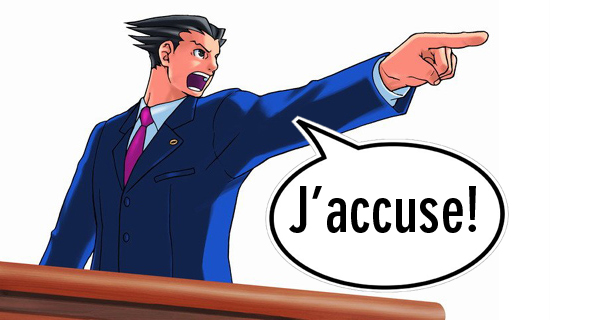
 Bad ethicist. BAD ethicist!
I don’t understand what warped ethics dimension the latest column [Gift link!] from “The Ethicist” hails from, but I wouldn’t recommend going there.
An inquirer wants to know if she should alert a new renter of a neighborhood home that the previous tenants left after telling her that the place has black mold, which can be deadly. “Our concern is that we’ve seen families with small children looking at the house. We believe that we might be in legal jeopardy if we were to inform prospective tenants about the mold issue, but what is our moral obligation?” she asks.
The inquirer means ethical obligation, though “Love thy neighbor (and thus don’t let him walk into a death trap)” is part of the most famous moral code of them all.
But I digress. After his usual long discourse, Prof. Appiah says, “You’re not under a moral obligation to act, and you wouldn’t be wrong to stay out of it.”
The inquirer would be absolutely 100% wrong, just as “the Ethicist” is! Of course there’s an obligation here: The Golden Rule, or reciprocity, dictates warning the new neighbor. So do absolutist principles, which hold human life to be the highest priority. We all share ethical responsibilities for our fellow human beings’ health and welfare. How many analogies do we need here? “Should I tell my new neighbor that I think I saw an escaped mass murderer in the house’s window?” “Should I tell my neighbor that I think I saw his landlord burying a body in the back yard?”
All the inquirer has to say is: “The previous tenant said that she believed your house is infested with black mold. I have no idea if that’s true, but I thought you should know.” There’s no legal jeopardy, and even if there were, the ethical mandate is to be principled and courageous: the health and welfare of innocent parties are at stake.
The supposed expert is paid to opine on ethics and reaches this indefensible conclusion? The New York Times need to find a new columnist for “The Ethicist.”
 Ethics Alarms
This is just being a good neighbor. The Letter Writer can surely tell the neighbor what he or she was told by the previous tenant. With your wording, the writer certainly has any liability covered and can leave it up to the new tenants to determine what to do next.
Since this is a rental, I’d say this goes way beyond warning the prospective new tenants.
The ethical mandate is to inform the OWNER of the property, who in turn has an ethical mandate to investigate.
Why are we dealing in the currency of “So-and-so said X” at all?!?
Either the house has mold or it doesn’t. This is a fact and not an opinion. FIND OUT!!!
If it does, deal with it. If it doesn’t, then all is well.
–Dwayne
But DZ, it isn’t the inquirer’s duty to deal with the home-owner, who has the responsibility himself (or herself) to ensure the property is safe. The renter has a right to know what the inquirer heard from the previous renter. How to handle that information is the new renter’s problem….but he absolutely needs to know there is a problem.
Sure, but my position is twofold:
1) It’s stupid to be dealing with “So-and-so said X” when you could instead be dealing with the actual fact of the matter.
2) If there actually is mold, then the person in position to fix the problem is the owner. If, ethically, the new renter needs to know then the owner also does–probably more.
This issue is complicated by our not really knowing who the letter-writer is in this situation or how she is connected (if at all) to the old renters, the new renters, or the owner.
Perhaps the advice should take a different form, such as telling the old renters “make sure you tell the owner.” But I still don’t see any scenario where leaving the owner out of the loop is the right way to go.
–Dwayne
Doesn’t this issue tonight for. Also rely on relative sensitivity to mold? I have live in many buildings of various conditions many of which mold could be observed. Some people have, now we know(or think we know) a hyper sensativity. But untul mold knowledge becomes establshed, should not its niche importance diminish ethical obligation?