That’s a quote from the late futurist Herman Kahn, the smartest person I ever talked to (which is saying something). Herman was always optimistic about the future, but regularly warned that his rosy predictions were always subject to being derailed by the 1% contingency of bad management and bad luck. Indeed virtually every disaster in history can be explained by that 1% contingency.
I thought about this today as I read the infuriating Washington Post story, “Kerr County did not use its most far-reaching alert system in deadly Texas floods…Local officials used the system more than two days after the recorded height of the floods.”
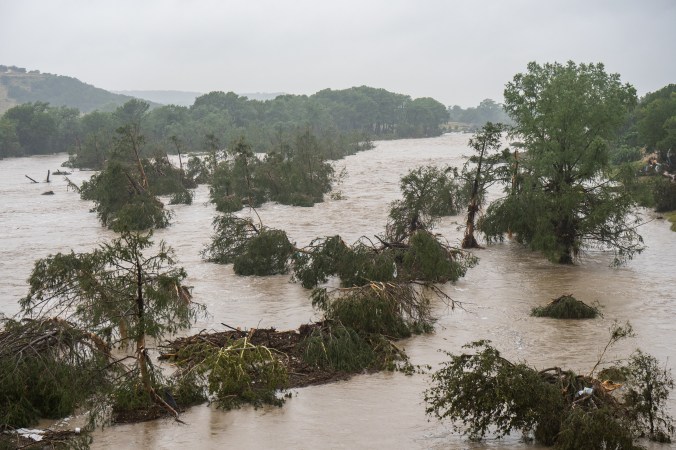
The short version is that officials had at their disposal the technology to turn every cellphone in the river valley into a screaming alarm, but, inexplicably didn’t use it before river levels rose to record heights, causing widespread destruction and killing more than a hundred people. Why? So far, nobody is talking. Two days after the rain storm that caused the river to rise 30 feet, Kerr County officials used the system to warn residents that there could be another round of river flooding. This is akin to Pompeii officials going house to house to warn survivors that Mt. Vesuvius might erupt again. But no county officials have responded to emails, texts and other requests from The Post to explain what happened. State and local officials said in a statement that county leaders have been focusing on rescue and reunification and are “committed to a transparent and full review of processes and protocols.”
I doubt that the deadly failure of local officials will get much traction in news reports, since the objective is to find ways to blame the tragedy on climate change and President Trump. We saw the same phenomenon after the Uvalde, Texas school shooting, which occurred while police quivered outside the building as gunshots sounded from inside the school and the shooter executed 19 kids and two teachers. The tragedy could have been vastly mitigated or even prevented with competent police work, but the Left wanted an anti-gun narrative, so that’s what we got.
The current episode reminded me of another quote, this one from my father, who memorably said to me when I was 12, “Son, this is important. The world is run by idiots. They outnumber those of us who aren’t idiots by overwhelming numbers, and the best we can do is try to mitigate the damage they do. But never deceive yourself that there are not idiots involved in everything you experience and have to deal with in life. If you understand that now, it will save you a lot of frustration going forward. Just remember that it is the duty of the non-idiots to clean up after the idiots have made a mess of things. They can’t help it.”
 Ethics Alarms
Did you mean that to be “nor do so”?
Fixed. Some extra words crept in there that I missed in proofreading. Thanks.
Not saying there wasnt incompetence, ignorance or stupidity. But how often does anyone pay attention to the “Amber Alerts” or other such system wide texts pushed to our phones. If this was the 12th or more time this year it had been used, how many would have done anything? From what has been put out, there were many dead zones along that river(not punny). Hindsight is a great way to punish the survivors for moral unluck. such disasters always end up being a bunch of things that went wrong or were unusual.
The river rose 20 feet in under an hour. The sytem that is being discussed would likely need more than that to get approved to be used….
This one supposedly sets the cell phones beeping. Even I would pay attention to that! There’s also a big difference between “Somebody’s kid is missing!” and “You’re going to DIE!”
A massive flash flood during sleeping hours is going to kill people no matter how much taxpayer money was spent before hand.
It’s all partisan finger pointing after that. If this flood nets 150 deaths- *we* *will* *NEVER* *know* if more spending would have resulted in fewer deaths or more deaths or if less spending would have resulted in fewer or more. All we know is disaster struck at exactly the worst time it could have. The government sent out a warning the day before. Some people took heed others didn’t.
And that’s life.
“ThEy bUiLt iN tHe 100-YeAr FloOd pLAiN!!!! tHiS iS sOmEhOw DuMb CaPiTaLiSm fAuLt!!!1!1!”
This is 100% fascinating. *ALL* of my progressive friends on Facebook are 100% asserting that Kerr County had absolutely no way of warning their people of danger because Texas Republicans and Kerr County republicans specifically blocked a “modestly priced” warning system for the county.
My suspicion – since it’s the government it’s probably bureaucracy. There is probably a 10 page policy on notifying the public; when the lower level drone was going through the policy this situation wasn’t correctly planned for or identified as a reason to send the “every phone” notification. To add to that, in my experience people in general are bad at planning for when things go wrong; they often aren’t very creative at considering possible failures or disasters or underestimate the impact of those. So the creation of these policies and plans are often reactions to previous events, not foresight about future events. And there is no real incentive to make better plans – I predict that there will be a lot of talk about failure to foresee this disaster, but no real blame for that.
The constructive principle of preparation is based on evaluating various assumptions, looking at what happens when those assumptions stop holding up, and deciding what to put in place so that we get a desirable outcome anyway. The trick is that putting things in place take resources, effort, learning new skills, and changing habits. We could do it if we really wanted to, but most people are too comfortable for that. However, in my experience people are a lot more inclined to do the work if they can do it together.