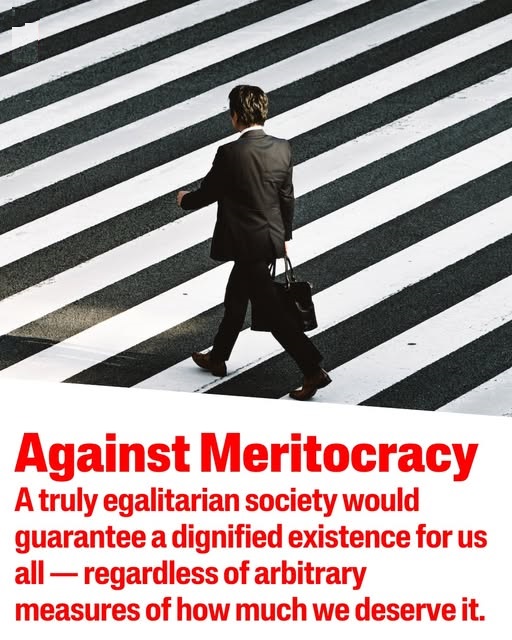
…that ridiculous meme, spotted today on social media. The Ethics Alarm’s “Imagine” Award is named after John Lennon’s worst song—well, depending on how you feel about “The Ballad of John and Yoko”—and the absurd utopian fantasy delusions it represents. (John wasn’t even serious about it, but progressives still get misty-eyed when they hear his con-job.)
Ah yes, the perfect society, where everyone succeeds regardless of effort, ability or character! Also where money grows on trees, nobody dies, food and mansions are free, children run and play and never are sad, and pigs fly. Some smart people really think about this crap.
Whoever led them to waste their time, passion and energy bemoaning the fact that up is up, down is down, life is unfair and human beings can never create perfect anythings has a lot to answer for, and yes, I include Jesus and Karl Marx in that group.
 Ethics Alarms
Participation trophies have really screwed up the brains of multiple generations.
What does Jesus have to answer for?
Yeah, Jesus was not a socialist or “progressive” as modern people would judge the terms. He advocated personal charity, not government intervention. In the famous Prodigal Son parable, the title character tries to party hard without thinking of his future, and when his money runs out, no one gives him anything except a job feeding pigs. The hardship is the catalyst for him realizing he screwed up. Then you got Luke 12:13-15, where somebody asks Jesus to talk his brother into helping with an inheritance dispute, and gets a lecture on covetousness. It takes a very selective reading of the scriptures to get “Imagination” from Jesus’ teachings.
Indeed, Jesus said in this world, you WILL have tribulation – some translations use the word trouble, but tribulation is a better descriptor, imo – as we all know and have experienced times when simple trouble would be welcome relief.
And James tells us to count it all joy when we encounter trials – again, a very telling word.
And not to be surprised when we’re hated for his names sake.
If there was an antithesis of the stupidest song ever written, it is literally Jesus.
The Ethics Alarm’s “Imagine” Award is named after John Lennon’s worst song—well, depending on how you feel about “The Ballad of John and Yoko”
I didn’t like “The Ballad of John and Yoko,” but I wouldn’t rank it anywhere near as bad as “Imagine.” Wasn’t great, but at least it was one of the last two true collaborations between Lennon and McCartney (who recorded all of the tracks without either Harrison or Starr).
Deep listens of Lennon’s post-Beatles work shows many songs that are a lot worse than “Imagine.” Not because of their content – they’re just not good pop/rock songs that are interesting to listen to.
Fact is that Lennon needed McCartney to rein him in. And in fairness, McCartney needed Lennon to cut the bullshit. Far as I’m concerned, the best work McCartney has done since Lennon’s death was the songs he co-wrote with Elvis Costello – who, like Lennon, could also pour acid over McCartney’s treacle and make the whole thing tasty.
I don’t know why “The Ballad of John and Yoko” was the competitor I latched onto: “Revolution #9” is obviously John’s worst “song” by far. Amusingly, last night someone called up a show on “The Beatles Channel” and requested it, and the hosts refused. “The Ballad” just annoyed the hell out of me: for a super-rich, idolized international celebrity to claim to be “crucified” for deliberately making a spectacle of himself was Lennon at his worst.
How does any society guarantee “a dignified existence for all?” How do you even guarantee enough food, unless some people are forced to work to produce it? And if those people are forced to work, how are they equal with the people who eat without work, or with the people doing the forcing?
Yes, the heart surgeon, pilot, dentist, and defense attorney should all follow this meme’s idea of dignity: “Hurry up – NEXT!” Dignity and meritocracy are not mutually exclusive; for example, look at Scandinavia. Meritocracies generate the wealth that funds social safety nets. Here’s a better meme: Got a brain? Then don’t trash meritocracy. Improve it.
“Arbitrary”? Meritocracy is “arbitrary”? That’s the windmill they want to tilt at? Oh, boy.
“Dignified” and “deserve” are also glittering generalities. I’ve nailed down a functional definition of “deserve”, being “the world would be better if we tried to give this sort of person this sort of reward/punishment.” It’s mostly aspirational, but I like to make the point that people might deserve to suffer, but they deserve to deserve better.
I generally think of dignity as something one practices, but I can see where one can be treated with dignity and provided a dignified environment.
That said, I can pick out some value in what they’re trying to say. “People who achieve positions of influence and authority, regardless of how they attained it, should not exploit everyone else or create conditions where we can’t get basic necessities.” That’s an actionable principle we can build on. They just picked almost the worst way possible to say it while still using intellectual language.
One of Jesus’ central messages is the people *cannot* manufacture perfection in this world.
OK, I’ll confess to throwing Jesus in there to stir the pot, EXCEPT that most of the comments on that meme in both cases of its posting (that I saw) came from either professed Christians or those who were attacking Trump’s policies as being un-Christian. Furthermore, defenders of DEI frequently argue that it is a “Christian” policy.
Yeah, sometimes I think Christians get a little confused by the whole social justice/DEI thing. DEI as we see it implemented is little more than discrimination based on skin color, which I’m pretty sure doesn’t align with the nature of Jesus, who wasn’t really focused on humanity’s genetic idiosyncrasies. In His time on earth – given what was written down – Jesus spent precious little time discussing anything DEI-related.
One could make a stronger argument that He was anti-DEI. If one wanted to be His follower, the first requirement was to what?…deny oneself…give up what YOU want. Sound equitable? Not just anyone could walk through the door. To be in his “kingdom”, one needed to realize he/she was wrong about pretty much all of reality and believe His message. A person believing whatever he/she wanted didn’t qualify…all “spiritual” roads definitely didn’t lead to the same destination. Sound diverse? Then He said that both the gate and the road to that kingdom were narrow and few would find them. Sound inclusive?
His talks on social justice were mostly about how to live within existing political/social systems as opposed to radical change to what was in place. In fact, He said His kingdom was not of this world, meaning if one wanted satisfaction/peace/prosperity in this life, one was merely tilting at windmills.
Frankly, we couldn’t keep utopia when it was “one man and one woman in a perfect environment faced with a single temptation.” There is no way – humanly speaking – we will ever approach a utopian society. But I’ll bet the mortgage we have the ability to make this one MUCH worse.
And we will…
Interesting…I gather as an outsider to organized religion that a pitched battle for the soul of the Christian church in the U.S. has been raging for at least 60 years but with special intensity since the early 2000s. (I guess those pesky evangelicals and their voting habits were inconvenient for somebody.)
Author Megan Basham has documented in her posts and book(s) that funding streams for what has been labeled as The Christian Left and Progressive Christianity trace to the same ‘usual suspect’ coffers that bankroll much of radical left U.S. politics.
I gather that Progressive Christian leaders, exemplified by David French, argue that true Christians — cool, nuanced Christians — must necessarily embrace the policies and worldviews pushed by the U.S. Left.
Meanwhile, more traditional voices point out that those specific policies and more generally those worldviews often conflict directly and explicitly with the Bible.
It sounds as though the Progressive Christian movement on FB is vocal.
Well written!
Thank you.
Yes, there can only be trade-offs.
“People who achieve positions of influence and authority, regardless of how they attained it, should not exploit everyone else or create conditions where we can’t get basic necessities.”
I’m interested in how you define “exploit” and necessities. To me exploit means to take advantage of differential values. Our entire market system is based on that. People trade dollars for things because to consumers the dollars provide little satisfaction in and of itself, and to producers the goods they offer do little for them so each exploits the differential valuations.
I have to assume that when you use the term “exploit” you mean that people of positions and authority are “cheating” or abusing lesser people because they have the ability to withhold these “necessities” for their own gain. Couldn’t we also say that our open border policies that allowed up to 30 million people come for a better life drove up the prices for all those necessities like housing and food when the demand outstripped the supply of affordable housing and food? In this case who is exploiting whom? Are the poor migrants seeking a better life exploiting existing residents by consuming what is available while simultaneously making them pay for it through their taxes. Is the political parties who benefit from increases it the electorate? Or, is the builders who have always been willing to build more at higher prices to cover ever increasing costs that result from diminishing returns?
I am really confused about what constitutes a necessity today when I see so many lower middle class sporting thousands of dollars worth of body art while talking on a $1500 IPhone. It used to be that necessities meant you paid your rent and groceries first and then decided what other valuable things you wanted to consume. Today the government subsidizes groceries – even nutritionally deficient goods – as well as housing and medical care. This frees up lots of resources for the consumer to have the latest cell phone, tats, or even a leased high end auto.
It seems to me that the people being “exploited” are the ones who are playing by the old notions of working to create value who subsidize others who do not. The word for them is “chumps”.
Great thoughts, Chris! …and something of an “ouch!” with regards to the final paragraph. I’m feeling rather chumpish all of a sudden.
That’s also a valid definition of exploit, and I don’t necessarily object to people doing that. Exploit can also refer to utilizing available resources, hacking computer code, or notable accomplishments, and those can be fine as well (depending on if you have permission to use the code exploits).
To exploit a person in the unethical sense of the word, it means that someone is in a desperate situation and offering you something you value, and you’re taking advantage of their desperation to compensate them in a way that is not merely less than they could otherwise demand from you, but so little that they cannot change their desperate situation, only maintain it. It’s extra exploitative if you use the resources at your disposal to block options they might otherwise have.
The existence of exploitation is why many human societies have a blanket prohibition on monetarily compensating organ donation and sexual acts. It’s also why things like unions, overtime laws, PTO, and yes, the minimum wage exist. Leonine contracts can be ruled unconscionable and unenforceable. What makes exploitation interesting is that defining laws against it is subjective and controversial (or at least, more than in normal lawmaking).
By definition, exploitation involves voluntary transactions. This is where ethics stops being black and white and starts being grayscale. If you’re used to paying $10 to have your lawn mowed, but a homeless person comes along and because of their desperate position you negotiate them down to $1, that’s not a crime. You’re not taking something from them against their will, but you are denying them an opportunity to improve their situation in order to save money you’d otherwise have little trouble parting with. You’re using the existing imbalance of power to prevent a person from reducing that imbalance of power.
Ethics isn’t just about doing no harm. It’s about looking for opportunities to help people improve their positions, so they have more options and more bargaining power. That’s part of building trust, which is what ethics boils down to. The responsibility is still theirs to take advantage of those opportunities, and you’re not required sacrifice any significant value. At some point, though, the Golden Rule (or the Rawlsian Veil of Ignorance) applies. Would you trust people of higher socioeconomic status if you knew you could earn their level but they never gave you the opportunity to prove it? What about if you get paid barely enough to survive, not because your work isn’t useful or necessary, but because you need your employer more than your employer needs you, and they want that power imbalance to keep growing.
The lesson here is, “good or bad, don’t we want to do better than this?”
Does that make more sense?