I started writing this as a comment to the lively thread that has followed last night’s post, but decided to make it a separate post because the discussion raises its own ethical issues.
The Kirk denigration since the Turning Point USA founder’s death resembles that old kids game “telephone.” You would whisper a statement into the ear of the kid next to you who would pass it along down a line of ten or more and finally compare the original message to what the last one in the line heard. Hilarity usually ensued, as the vagaries of oral communication and the reception thereof resulted in “Mikey has a crush on Sue Brandeberry” turning into “Nike is suing someone who smeared crushed berries on its brand.” “Telephone” is a benign interpretation of a lot of the slander and libel against Kirk’s character and legacy; the non-benign interpretation is that people are just lying.
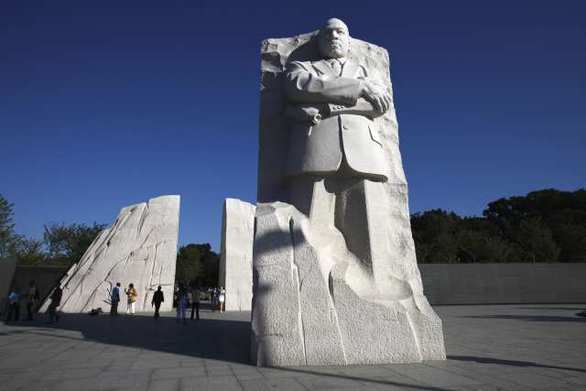
In the thread, a respected commenter here sparked some angry responses by answering my repeated question in the original post [“What did Kirk do or say that could possibly justify these freakouts?”] thusly: “At a guess, it might be his statement that passing the Civil Rights Act of 1964 was a mistake that might have been an issue. Or his highly uncomplimentary statements about Martin Luther King Jr and the approval of his assassination. Freedom of speech and all that.”
I have heard or read several equivalent versions of that answer since Kirk’s death, and they are worth clarifying and discussing.
Re: The Civil Rights Act. I have spoken to many libertarians who take the position that provisions of the 1964 Civil Rights Act violate personal autonomy and the freedom of association, and therefore the law itself was fatally flawed, “a mistake.” Senator Rand Paul has said this, following the lead of his even more radical father. It is not a racist statement but it is a naive one, like so many of the extreme positions pure libertarians maintain.
Sure, in theory, every business proprietor should be able to refuse to serve any potential customer for any reason, just as any home owner has complete control over his or her own domain. In reality, allowing individuals operating restaurants, hospitals, grocery stores, pharmacies and other “public accommodations” to refuse to serve American citizens on the basis of race, religion, gender, ethnicity or, I adamantly insist, political or social viewpoints is dangerously divisive and destructive to a functioning aspiring democracy. Separate is unequal, as Brown v. Board of Education taught us, and obviously so.
Far from being a mistake, LBJ’s signature legislation was essential to preserving and advancing our nation and the Founders’ ideals, even if they themselves did not understand (in the 18th Century) how and why racial equality was essential to their bold concept for a new nation. Just saying that the Civil Rights Act was “a mistake” is irresponsible, because it gives racists and morons plausible support. It is also, as I said, just flat out wrong: I don’t even want to imagine what this place would be like now if that law hadn’t been passed. Anyone taking the “mistake” position had better explain their reasoning clearly, and I haven’t seen any evidence that Kirk did. (The Pauls, in contrast, have at least tried.) If so, shame on Kirk for letting a racist “dog whistle” go out without clarification. However, criticizing the Act is not racist, despite the Left’s unfortunately successful efforts to frame any opposition to any aspect of their civil rights demands as racism.
Re: MLK. I just spent 20 minutes on Google and AI trying to find evidence of Kirk’s “approval” of MLK’s assassination. It looks to me as if the characterization is based on the one negative statement Kirk made about King, and therefore is an unfair extrapolation.
In a January 2024 show, Kirk said, obviously being provocative to spark debate,
“We want your thoughts, and I wanted to make sure that, you know, after that conversation, we talk about the positives, and then we also get into some of the other implications of this. We’re a truth-seeking show, but I can say declaratively this guy is not worthy of a national holiday. He is not worthy of godlike status. In fact, I think it’s really harmful.
I wish I could find out what Kirk thought was “really harmful” about the MLK holiday. A slippery slope, perhaps? Ethics Alarms has argued that the recently sanctified Juneteenth implicitly creates a holiday for one group of citizens in which the rest of the population may feel excluded. I have the same opinion of all the “months” honoring gays, women, blacks, etc. All Americans honored and celebrated the ending of slavery when Abe Lincoln’s birthday was a observed, and that was the healthy and “inclusive” way to do it.
With a conservative Christian like Kirk, it is understandable that King would seem “unworthy” of a national holiday, and it is reasonable that Kirk felt that no one was worthy of “godlike status” except, you know, God. King was a very flawed human being (there is credible scholarship that he took part in a group rape, for example), but we honor American heroes for the great and important things that they did and leave their sins, if possible, out of the equation. It was the political Left that decided to reject that principle when it went on its nauseating statue-toppling and building renaming binge. Criticizing King at this point is little more than sticking a thumb in the metaphorical eyes of the many black Americans who have virtually deified him, and I see no virtue in it. All the assertion accomplishes is to upset his admirers, though there is value in examining the issues an academic (or ethics) exercise among those capable of doing so rationally. Nonetheless, criticizing King for conduct that has nothing to do with his race is not racism, and certainly is not justifying his assassination.
Let’s talk about the Jefferson Memorial, shall we?
 Ethics Alarms
“If so, shame on Kirk for letting a racist “dog whistle” go out without clarification.”
This is my biggest complaint, thus far, after having watched three Kirk videos this morning. There are very clear ways to express one’s position. Doing so seems to be a particular conundrum to conservatives. At a time at which clear communication is essential, they don’t seem to want to learn how to do this.
“However, criticizing the Act is not racist, despite the Left’s unfortunately successful efforts to frame any opposition to any aspect of their civil rights demands as racism.”
I agree wholeheartedly.
Progressives have the same problem with clear communication, as our host had documented on numerous occasions. Both sides tend to engage in what’s called the mott-and-bailey fallacy, named after an early medival castle design. The bailey is the courtyard, typically surrounded by a moat and wooden walls. It’s where you find the workshops, the stables, etc. where people do their day-to-day business. When the palisade is breached, they run to the motte, a stone structure serving as a primitive keep, where they make their last stand. Ideological groups, by default, stick to their sound bites, jokes, and virtue signaling that makes perfect sense in their “baileys”, without need for caveats or clarifications. but when challenged from the outside on their most controversial ideas or statements they run to the “motte”, where they put up their best defense: “This is what we meant in context…of course we don’t actually support [offensive idea] why would you think we would?” Then when they perceive the threat has passed, they go right back to the bailey, circulating their slogans in their echo chambers with no thought for how it looks to outsiders, until the bailey wall is breached again by a strong enough attack.
Allowing the racist dog whistle to be heard by the listener would almost certainly have an inflammatory impact. However, given Kirk’s angle, to provoke discussion, nothing discusses better than poor listening skills and a hasty rush to judgement. The controversy concerning his comments about the CRA and MLK faked up by haters seems to be a repeat of the Charlottesville “good people on both sides” playbook.
Just saying that the Civil Rights Act was “a mistake” is irresponsible, because it gives racists and morons plausible support. It is also, as I said, just flat out wrong: I don’t even want to imagine what this place would be like now if that law hadn’t been passed.
Imagine that the CRA instead “merely” outlawed de jure and de facto discrimination by race, and nothing more.
Would the US in general, and blacks in particular, be better off today?
Until he died, I never knew the name Charlie Kirk. I knew what he looked like, I knew a few things of what he was saying, but I had no idea of his name, having only started to read transcripts of his campus talks (I hate watching videos but like reading transcripts) about three days prior to his assassination, looking into more of them as I found them interesting. So I am no expert on Charlie Kirk. However, at one point I had read a transcript about his arguments on the Civil Rights Act. Now, I can’t find that anymore, so I can’t verify that this is really what he said and not something someone edited later, but in that transcript, Charlie stated that he thought that the Civil Rights Act was well intentioned, but poorly drafted. He agreed that what it did for Blacks was essential at the time, but left too many large loopholes in the law, allowing for rampant abuse. He was against affirmative action as we understand it today, which he felt was a result of poor wording in the law. He disliked the usage of the Civil Rights Act for allowing a large amount of people to fall under a “victim” class, which is something he argued was ever increasing. It was clear that unless you cherry picked his quotes, that he was no racist in this regard. All of this assuming of course, that I got a correct transcript that I can no longer find on the black hole that is the internet.
I suspect that if someone really wanted to give me any negative label they wished, they could record things I said until they could take a sound bite without context to prove anything. I am not a public speaker who would speak extemporaneously for hours at a time. With that in mind, I am positive that most of the clips of Charlie Kirk saying something offensive are exactly that. Everything I have seen so far has been easily defended when another five minutes of audio/video can be seen giving context to his remarks.
I went to Turning Point USA’s website this morning. I don’t know if those videos are edited either but, at least, I know that they aren’t edited to say he approves of MLK’s assassination!
Jack, did ZoeBrain’s comment on this post get deleted by accident? I’m seeing responses to it, but not her comment.
This is an addendum to the previous post. Zeobrain’s comment is on that entry.
Never mind, I was confusing this with the original train wreck post.
It is often said that if you hear the dog whistle, the most likely reason is that you are the dog. So if some statement is called a racist dog whistle, who is making racist assumptions, the speaker or the listener who picks up on the whistle?
Charlie Kirk debated ideas, and in order to have a fruitful debate you need to question those ideas that everything believes are true, in a provocative way. Only by debating these ideas you can arrive at the truth, and understand why things are true. Let’s assume that Charlie Kirk is 90% wrong on the Civil Rights Act, and 10% correct, then you can still benefit from the debate as it forces everybody to question their assumptions, study history, and find good arguments pro and contra the CRA. The end result is a better understanding of civil rights history, the reasons behind certain laws, how these laws have worked out since the LBJ administration, plus the drawbacks of these laws.
Putting labels (such as “racist”) on people whom you disagree with is a lazy form of arguing, and it precludes meaningful debate about ideas.
The Supreme Court is at this moment discussing the Voting Rights Act, related to redrawing the electoral maps of Louisiana. So it is not that legal legacy of the LBJ administration related to civil rights is beyond review. No law is sacrosanct.
As for “freedom of association”, this is in the First Amendment, and a while ago we had a discussion at Ethics Alarms about whether it is OK to have a gay man’s choir. It is good to understand what this clause in the First Amendment means, how the CRA relates to this, and what the intend and scope of both laws are.
Charlie Kirk was mostly just a name to me until he was assassinated. The name vaguely rang a bell, but it’s unlikely I saw much if any video of him until after his death.
Some of my friends are very dismissive and critical of him. Other friends of mine are “fans” or supporters or followers. Charlie’s statement about the Civil Rights Act and Martin Luther King is one main reasons he seems to be polarizing.
Charlie Kirk seems to have made more than one or two “howlers” that can be trotted out by those who really dislike the guy. These “howlers” are especially effective when taken out of context. For lack of a better term, I call them “howlers”–though howlers are often comical mistakes. Charlie’s were more controversial than funny, and sometimes involved race issues in the USA–or issues that are “racialized” in our political system.
Some “howlers” are mentioned by the BBC
https://www.bbc.com/news/articles/cdxqnkwerj7o
Additionally, I think there is a lot of animosity toward him because he was two things at once.
First, he was a thoughtful if argumentative person who cared about higher education and wanted to advocate for his values, which included evangelical Christianity.
Second, he was a partisan political figure who was extremely effective in motivating younger cohorts (especially men) to vote Republican. Because Trump won the election and Republicans now control all three branches of the federal government, Charlie is one figure to blame by those who strongly dislike our current administration and the current Republican party.
Having said that…
I dug up some criticisms of the Civil Rights Act. I’m not a lawyer and interpretations of the Civil Rights Act and its overall significance are beyond me.
The most interesting criticism of the CRA that turned up without much effort was this:
https://mises.org/mises-wire/charlie-kirk-and-sacred-totem-civil-rights
cheers!
charles w abbott
rochester NY