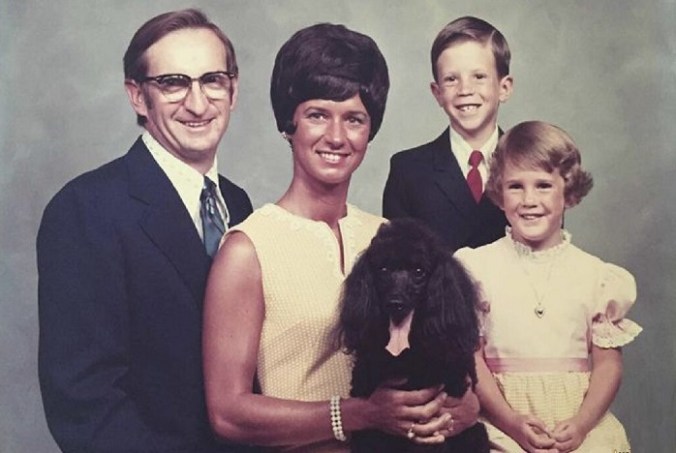
Being raised in the Sixties, I was naturally curious about the article in Media Feed titled “The ’60s parenting practices we now know were terrible for kids’ brains.” What I discovered, as one usually will with social science essays with an agenda, is carefully cherry-picked research being used to support an author’s already pre-determined position. You know, “Science!”
“Science” has been so thoroughly polluted by the political left to justify its objectives and claim absolute authority for propositions that are far from determined (or determinable) that the public should be conditioned to doubt any claim that begins, as this one does, “This article explores a dozen once-standard practices and uses modern research to explain why they were tough on a child’s developing brain, emotional health, and long-term well-being.” Here is what modern research as revealed in recent years: it can’t be trusted. It can’t be trusted because researchers and scientists can’t be trusted, and interlocutors like Kaitlyn Farley, the gullible (or dishonest) author, don’t know enough about science to interpret studies with appropriate skepticism. (I just checked: Kaitlyn claims to be, among other things, an AI trainer who specializes in “content creation.” That explains a lot about the article.)
Remember all of those devastating hurricanes we saw this hurricane season because of global warming? Neither do I. Remember all those people driving in cars while wearing useless paper masks while politicians like Gavin Newsom were taking away our rights to liberty and the pursuit of happiness because of non-existtent “science”?
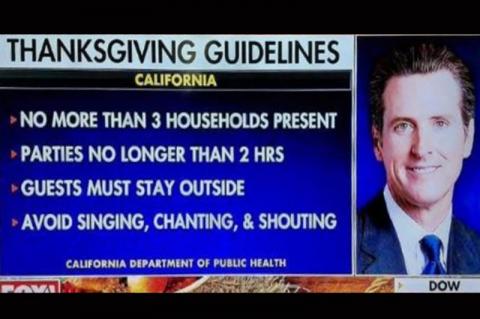 Now THAT I do remember.
Science! Now let’s look at those terrible child-rearing practices of the 1960s…
Practice 1: “Children Should Be Seen and Not Heard”
“This adage normalized emotional suppression and the idea that children’s thoughts and feelings were secondary to adult convenience,” we are told. The article’s ethics breach here is misrepresentation, to begin with. The adage, as taken by parents with common sense, simply meant that children need to learn that they don’t know enough to spout off their every thought when adults are in charge. My sister and I were taught to listen, to parents, neighbors, teachers and guests. “We now know that the ability to articulate and process emotions (emotional regulation) is a key function of the prefrontal cortex, which is still developing in children,” Kaitlin somberly explains, citing, as she does throughout her essay, a single study. As you might discern from reading this blog, my ability to express my feelings was not stunted, nor did I ever feel that my parents wouldn’t hear me when I was in distress. The kind of emotion-based political nonsense we hear from our more recent generations shows the danger of not teaching children early in life that they need to actually know something before their outbursts are worth listening to.
Practice 2: No-Seatbelt, Free-Range Car Riding
A cheap addition having nothing to do with child-rearing. Adults didn’t wear seat belts: nobody did. This is presentism: “Wow, wasn’t everybody stupid back then not to realize what we know now.” When I read things like this in an article, the whole piece loses credibility. The lack of seatbelts didn’t retard the developments of kids’ brains unless a crash splattered them all over the car.
Practice 3: Using Fear-Based Discipline
“Modern Research: Repeated exposure to fear and shame activates the body’s stress hormones (cortisol and adrenaline). Chronic activation of this stress response can alter neural pathways, potentially shrinking areas of the brain responsible for executive function and emotional processing. The shift today is toward gentle boundaries and emotional coaching, which focuses on teaching a child why a behavior is wrong, rather than simply punishing the outcome.”
Horse hockey. And this is why progressives today want social workers patrolling the streets rather than police, and preach “restorative justice” instead of prison for criminals. “Fear-based discipline” is a pejorative way of saying “negative consequences.”
Practice 4: Smoking Around Children Constantly
Oh look, more presentism and padding! Even Kaitlyn admits that “the awareness simply didn’t exist that secondhand smoke contains thousands of toxic chemical” so this wasn’t a “parenting practice,” but what we called “life.” Meanwhile, I’ll see Kaitlin’s second-hand smoke and raise her later decades’ parents shrugging off their childrens’ recreational drug use.
Practice 5: Letting Kids Roam Unsupervised All Day
“This freedom undeniably fostered independence and creative problem-solving. Risk: However, it also exposed some children to the neurological risks of chronic stress due to unsafe or high-risk situations (abductions, injuries, exposure). Today’s balance seeks to offer freedom with intentional safety awareness, allowing exploration while still providing a secure, reliable base that keeps the nervous system regulated.”
Wrong. Today’s overly risk-averse parents rob childhood of its wonder and adventure, and infantilizes many kids so that they are far less ready for life at advanced ages. Today’s kids’ lives are frequent;y scheduled into oblivion. For example, I never had my parents set up a “play date” in my life. I decided what friends I wanted to see and when. The boys in “Stand By Me” faced stressful situations, but they learned lessons that made them better and more resilient human beings. How do you measure that in a study?
Practice 6: Ignoring Kids’ Emotional Struggles
“Anxiety, grief, sadness, and trauma were often brushed off as ‘phases,’ a character flaw, or simply something to ‘get over’.”
Really? Who says? Mine weren’t. Most of my friends had caring parents who didn’t brush off their kids’ feelings. Have any of these scientists watched the sitcoms of the period, most of which were about parenting? If parents ignored their children’s emotional struggles, why was June Cleaver always telling Ward, “I’ve worried about the Beaver”? “Father Knows Best,” “Bachelor Father,” “The Donna Reed Show,” “The Danny Thomas Show,” “The Andy Griffith Show,” even “The Rifleman” were all about parenting. They accurately reflected best practices of the era, and the children’s emotional needs were not ignored. Hey, I watched those show, Kaitlin. Did you? What do you know about how we were raised?
Practice 7: Minimal Involvement in School or Academics
“It was often assumed that kids should “figure it out” academically; parental involvement was limited to signing report cards.”
I regard this as an outright lie or at best an irresponsible assumption. My parents and the parents of everyone I knew regularly met with teachers and participated in the PTA. Public schools were far, far better at teaching in the Sixties. Parental apathy after that has led to the rot of the educational system we see today.
Practice 8: Feeding Kids Ultra-Processed Convenience Foods
“The explosion of convenience foods—TV dinners, sugary cereals, canned everything—dominated the post-war diet.” So now it’s microwave entrees. And there were no fast food chains in the Sixties. This one is just generational chauvinism.
I’d like to see the “science” that shows that today’s kids’ diets are better than mine was. If that’s so, why are kids fatter today? My father worked all day, and my mom took care of us: we had hot breakfasts, packed lunches and a healthy dinner ready for Dad when he got home, and for the rest of us too. Feminism and “progress” has meant that few kids grow up with a parent at home to take care of them. Funny, none of the research cited in the article covers the effects of that.
Practice 9: Zero Focus on Sleep Hygiene
Again, who says? Every kid I knew had regular bed times. “Late-night TV, inconsistent bedtimes, and a lack of awareness about sleep’s importance were common,” says the article. Where did that information come from? She cites studies about the importance of sleep, but no data at all proving her basic assertion.
Practice 10: Strict Gender Roles Limiting Activities
“Boys were often discouraged from emotional expression; girls were subtly pushed away from high-level science, competitive sports, or aggressive play.’
“Often.” Now there’s a scientific measurement! Again, this has less to do with parenting than families reflecting the culture they existed in. Girls were encouraged to regard motherhood as worthy life goal, along with being in a loving husband-wife relationship. Today that is less the norm, and can we say that society is better off for it? Birth rates are down, marriage rates are down, and children are increasingly raised by nannies and other third parties. This alleged parenting flaw, we are told, “meant a significant loss of diverse experiences, which are necessary to strengthen cognitive flexibility and different neural circuits.” Oh yeah? Prove it. Prove that girls in the Sixties didn’t have enough “diverse experiences.” They had different diverse experience than many boys, but I had girls in all of my high school clubs—chess, theater, science, the school newspaper. Science has yet to demonstrate that the traditional division of gender roles created a worse society than whatever the current culture is. Yeah, children were taught that boys suddenly deciding they were really girls and vice-versa, or using plural pronouns for individuals was weird.
It is weird.
Practice 11: No Sunscreen, Hats, or Real Outdoor Safety
“Kids routinely spent hours baking in the sun without protection..the immediate risk of heat exhaustion and severe sunburn was underestimated. These events put unnecessary stress on a developing body’s regulatory systems. Today’s awareness emphasizes protection for both the skin and overall internal health, including hydration and thermal regulation.”
Authority, please. We spent a lot of time at the beach, living near the shore, as did every family we knew. We all used lotion. We all had parents who watched us to make sure we didn’t get sunburned. Outside in the summer, we usually wore caps and hats. “Real outdoor safety” in this article means “We do it the right way, now, unlike you ignoramuses.” Yeah, bite me. Just wait and see what “science” says about you 50 years from now.
Practice 12: Expecting Kids to “Tough It Out”
“Emotional hurt, minor illnesses, or injuries were often minimized or met with the expectation to “tough it out” and not complain.”
Again with the unsubstantiated “often”! The pattern is clear by now: the whole article is a declaration that today’s woke parents know best, despite the studies that say today’s children are more unhappy and anxious, not to mention less able to cope with the world, than ever.
The entire article consists of dubious science claims being used as cultural propaganda to carry out a thinly-veiled attack on Boomers. If there is any genuine scholarship that can show my generation grew up more anxious, cognitively crippled and unable to function in society than our current crop of wokified, indoctrinated weenies, I haven’t seen it.
 Ethics Alarms
Regarding cigarette smoking and secondhand smoke in the ’60s when we were growing up. It was SCIENCE! that underwrote the military’s decision to give WWII soldiers and sailors cigarettes at no charge as part of their rations. Mrs. OB’s father, a Navy enlistee injured in a plane crash in New Guinea, smoked Camels during the war and for his entire life thereafter. Mrs. OB’s mother insisted Charlie smoke only in the basement when in the house. So, of course, Mrs. OB would hang out in the basement with her father. Charlie died at 85 of lung cancer and obstructive heart failure. Mrs. OB has never smoked but both her brother and sister did, although they quit in later life.
Did any of this woman’s scientific studies analyze the effects of surviving WWII on child rearing in the ’60s? I’m fairly convinced the Vietnam War was an echo war, as if the guys who survived WWII (and were the senior political and military leaders during the Vietnam War) found an opportunity to say to the Baby Boom generation, “Hey guys. Guess what! It’s your turn. You can see for yourselves what war is like.”
And of course, we shouldn’t forget the same Greatest Generation also fought the Korean War, a largely forgotten killer.
Practice 2: No-Seatbelt, Free-Range Car Riding and Practice 11: No Sunscreen, Hats, or Real Outdoor Safety
PWS
I recommend reading “The Anxious Generation” by Jonathan Haidt to the author. Jonathan Haidt explains that anxiety of today’s youth is related to a) helicopter parenting b) safetyism c) too much time online. The unsupervised play time and higher level of risk involved in physical play we had in the seventies and eighties served to make the children antifragile and better equiped to solve problems on their own.
Calling our own fouls in basketball and umpiring our own games in baseball and touch football. Good practice.
“I recommend reading ‘The Anxious Generation’ by Jonathan Haidt“
Along those same lines, by the same author, in collaboration with Greg Lukianoff:
The Coddling of the American Mind: How Good Intentions and Bad Ideas are Setting up a Generation for Failure
PWS
Item #5 made me want to eat my hat in frustration. To think there are people who call themselves scientists who are so emotionally controlled is terrifying.
She’s the lady who would bring my kids back to my front door (scaring the living daylights out of them) to let me know my kids were playing unsupervised. “Yeah, I know,” was not a good enough answer for Karen McStunted.
And to justify this insane, inane, and unscientific point by saying that kids were stressed out by the threat of abduction? Head exploded.
No one ever explained to us why we were supposed to be afraid of strangers giving us candy. So, I never worried about it.
Maybe the candy was poisoned? That seemed kind of intriguing.
Nor did I, growing up in the 90s. You know what I was freaked out about though? Fires in my home, thanks to the elementary school teaching me about fire safety.
Nowadays it’s “active shooters.” I never worried about an active shooter, and my child doesn’t need to worry about an active shooter (any more than he needs to worry about being attacked by a bear, getting struck by lightning, or dying in a car accident on the way to school, which is the only thing remotely likely to happen of the four). But all my kids have expressed concerns about school shootings, thanks to my school administrators.
If the only ones transmitting concern to your kids are school administrators, than I’m guessing you are fortunate enough to live in an area that has not had a high profile school shooting.
People who live in my area (and their children) are quite aware of the dangers thanks to the 1998 Thurston shooting, which killed 2 and injured 25. This leaves a permanent imprint (I’ve had one of the survivors in my classes). I also have a connection to the shooter (who also killed his parents, who taught at a local high school and the Community College).
The same is true for the Denver area after the Columbine Shooting (13 students and 1 teacher dead). My brother in law was one of the officers who responded. Not something he will ever forget. Has it affected his concerns about safety for his children and now his grandchildren? It would be rather strange if it didn’t, right?
These events have a deep and broad impact, well beyond the students who attend the targeted school and their immediate families.
Should we let it, though? Speak cavalierly about the pain those events caused; of course not.
But I would expect professionals to be professional and, to the extent possible, not let their biases and trauma inform their approach to sensitive topics.
We would do very well as a society to be more analytical about the risks facing us and our children. The approach we are taking now, which is driven by emotion, has resulted in entire generation with children who are raised by fear and hidden from healthy risk.
Decreasing risk via sensible behavior doesn’t seem like a problem to me:
being attacked by a bear: informing people (including children) about best practices in bear territory to decrease the likelihood of a bear attack seems sensible to me
If you don’t spend time in bear territory, not relevant
getting struck by lightning: informing people (including children) about best practices when caught outside in a thunderstorm seems sensible to me
If you don’t live in an area prone to thunderstorms (I don’t), not relevant
dying in a car accident on the way to school: well, if we are including adolescents with driver’s licenses, I DO think some reasonable fear about the danger of driving distracted is warranted (car accidents being a leading cause of death among adolescents)
Relevant for adolescents who drive
Gun safety training for children/teens who have access to firearms and active shooter drills in countries in which firearms are the leading cause of death for children (yup, that’s us!)
and yes, fire drills and other kinds of safety drills where relevant seems sensible to me. As a child in Libya our school had a presentation on leaving any bomb shaped objects we might discover alone–unexploded munitions from WWII were an actual danger
The video of gruesome injuries from bombs did make a big impression on me, and had I encountered a bomb-like object, I’m confident I would have been afraid and left it alone! I also think the bomb video was a reasonable tradeoff (did some kids have nightmares? possibly?) — kids are curious, and we were ALL “free range” kids then, prone to roam and investigate anything that looked interesting.
My parents often didn’t know where I was outside school hours, and they were fine with this, and it turns out I was fine too. Presumably they would have searched for us if we failed to reappear by dinner time!
So I support both the free range approach AND warnings about actual risks in different contexts.
I’m also glad I grew up in times and places where school shootings were pretty much unheard of …
Or call Child Protected Services….
https://reason.com/2025/08/09/child-protective-services-investigated-her-4-times-because-she-let-her-kids-play-outside/