As I have stated periodically here, few things make my heart soar like a hawk more than when I awaken feeling punk and have the comforting knowledge that a worthy Comment of the Day awaits to be posted, giving me precious hours to become coherent, if not wise.
Thus I am thrilled to post 77Zoomie‘s invaluable and informed commentary on the controversy surrounding the deaths of two apparent drug smugglers. [I am sorely tempted to note that the Axis of Unethical Conduct is routinely outraged at the well-earned fates of illegal immigrant criminals and drug runners, but have been oddly reluctant to express similar concern for the many citizen victims of illegals who never should have been allowed enter and stay in our country. But I won’t…
Anyway, here is 77Zoomie’s Comment of the Day in response to “On the Venezuelan Drug Boat ‘Double-Tap’ Controversy”…
***
Former JAG here–I’ve taught the Law of Armed Conflict and Operational Law to active duty special operators at one of our special operations schools, as well as advised on use of force to some local commanders. A couple of observations:
I don’t want to sound like a conspiracy theorist, but this appears to be some kind of shaping operation directed at not just the President, but members of the armed forces. The original report of this incident was back in September in a publication called “The Intercept.” That report lay dormant until the National Lawyers Guild, a far left legal organization, published an information piece on the military’s obligation to disobey “unlawful” orders, on November 11. The tendentious video by the six congressmen followed shortly thereafter, followed immediately by the posting of billboards outside several major U.S. military installations urging soldiers to question the legality of their orders. This was immediately followed by the pick-up of the Intercept story and its publication by the corporate press. Draw your own conclusions.
A key point in this discussion that seems to have been omitted by most if not all commentators is that we are engaging our military forces against a state-sponsored narco-terrorism operation. The Maduro government is supporting, sponsoring, and profiting from drug importation into the US, and is working hand in glove with Venezuelan cartels. In other words, this is not a law enforcement operation but rather a state-versus-state confrontation involving what are effectively unlawful combatants on one side.
Unlawful combatants do not have the same protections under the laws of war that regular forces do. But there are still some universal principles that apply to US forces, mainly on the basis of US adoption of these principles in either military law, Rules of Engagement, or in the US Code.
One of these principles is that individuals engaged in combat operations, lawful or not, are not to be the object of attack if they are trying to surrender, wounded such that they cannot further engage in combat operations, or otherwise in a helpless position.
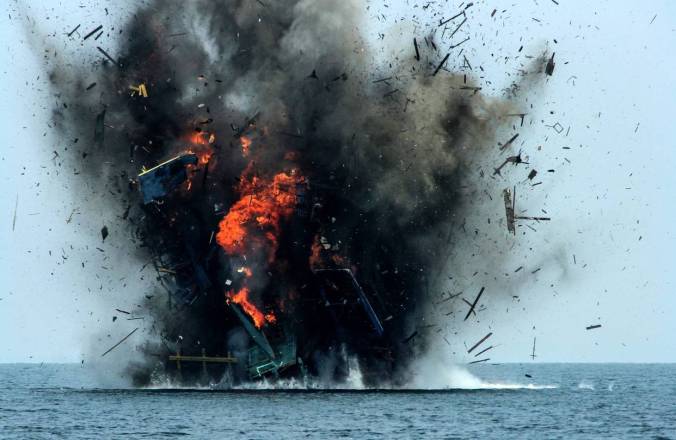
The same prohibition does not apply, however, to the means of combat operations, specifically equipment and logistical support. There is, at least to my understanding, no prohibition on a policy of sinking enemy vessels or destroying enemy logistics, by appropriate and proportionate means. And while the likely injury or death to individuals in the vicinity of legitimate targets may be a consideration, it’s not a prohibition.
I should note that we still don’t have a complete picture of every circumstance surrounding this operation and are unlikely to get one because of the classified nature of our intelligence gathering that provided context to the decision to undertake this attack. But I can tell you that nothing like this is undertaken without significant effort spent on assessing the legality of the action, and would be lawyered from the very top on down. I’m also confident that a bald order to kill survivors clinging to a wrecked boat (versus an order to completely sink any target and destroy any associated cargo) would almost certainly be challenged at multiple levels down the chain of command.
Finally, I’ve had the pleasure of getting an order from the Secretary of Defense overturned and declared unlawful through litigation. I would never use a public forum to imply generally that orders coming from the president are illegal as these idiotic Congressmen did. To do so is conduct detrimental to good order and discipline.
 Ethics Alarms
Very informational post!
Gotta love, “double tap.” Funny how these euphemisms hop right into the lexicon.
Does anyone know the human source that chose to reveal specific details about this specific drug boat attack that took two strikes to sink it? This sounds to me like a prosecutable leak, at least prosecutable under military law.
Thank you, Jack. As I’ve said before, this is my one go-to site every day. Happy to make a small contribution to this excellent forum.
And, the other 4 of us are happy you are here.
-Jut
…and I want to be listed as a sub-commenter under one of “the Five”…thanks.
Zoomie, that was excellent commentary and I share your sentiments about this being the one “go-to” site every day. Usually many times per day.
The (fill_in_the_blank) regular EA commentariat’s going to ride this wave all the way to the beach…and beyond!
Well, you know, it was a hanging curve ball, and we are morally obliged to hit it out of the park.
Make that the other 5 commenters.
jvb
This clarifying and compelling comment (along with many other excellent comments from the original discussion thread) addresses my concerns about the strikes on the drug boats.
It sounds like the major issue on the Left is that based on what they’ve observed (and what they’ve been told) about the Trump administration, they don’t trust the Trump administration to do their due diligence before taking actions that will harm people in the name of Making America Great. (It does make obvious sense that we need to keep our methods of detection secret so cartels don’t subvert them.)
It’d be nice if we could somehow collect drug samples from the wreckage of the boat afterward, if for no other reason than to confirm the nature of the shipment. That also gets into trust, though–it’s easy enough for a government to produce a drug and make claims about where they found it.
It would go a long way towards building trust if the Trump administration made a serious and coherent statement about the harm that drug cartels do to the United States and to their own countries, and about how we want to avoid collateral damage but can’t allow cartels to hide behind innocents because that would just put more people in danger, or something. Something to illustrate that this policy was developed thoughtfully rather than from an attitude of “kill the bad guys, blam blam!”
Failing that, I think that acknowledging people’s concerns and then providing the explanations discussed here on Ethics Alarms would help. I’m also interested in hearing from the Left about how they would go about addressing concerns about drug cartels.
“It would go a long way towards building trust if the Trump administration made a serious and coherent statement about the harm that drug cartels do to the United States and to their own countries, and about how we want to avoid collateral damage but can’t allow cartels to hide behind innocents because that would just put more people in danger, or something. ”
I cannot believe that I read this. Who the hell does not understand what harm the drug cartels are doing inside the U.S. It would go a long way to building trust if progressive thinkers would acknowledge the fact that we have a group of people who want to make a quick buck at the expense of others and could not care less about the carnage and human destruction they create in the process and that they do not deserve to live in polite society.
It should be pointed out that all those persons seeking asylum from Central America were claiming to be escaping not political persecution but the cartels. Cartels are operating with impunity from Mexico to Venezuela. What has that cost us? El Salvador has made tremendous progress in curtailing the gangs associated with the cartels yet we fight like hell to keep a known trafficker of drugs and humans from being sent back to his home country of El Salvador. Senator Van Hollin made a pilgrimage to the country to seek his release. This was theatrics to gin up hatred toward the administration’s policies regarding deportations.
Lets start with the costs of interdiction which requires a tremendous amount of manpower, equipment and money 24/7/365. If we actually do catch a boat then we have to prosecute, convict and house the persons caught. But we interdict only a fraction of what is exported to the U.S. Once the drugs make their way into the cities and towns we have to deal with the gangs that control territories. What price do we put on the lives of those who die from overdosing on illicit narcotics; $1 or $1mm. What are the costs associated we dealing with gun shot victims who don’t die but must be treated in trauma centers when deals go bad or someone is protecting their drug turf. Ultimately we have to deal with the secondary crimes such as armed robbery, burglary and theft by users who steal to get the money to buy the next fix. Women users, typical sell their bodies to get money for drugs and often wind up pregnant or positive for HIV or some other STD. Hell, I am just scratching the surface. Just how much of the mental health issues that cause people to douse others with gas and set them ablaze or push someone in front of the oncoming subway train can be attributed to long term drug use. Black on black crime is directly related to the prevalence of drugs on our streets. The culture that has developed in which young people stomp on people’s heads or kick them as the victim lies motionless on the ground is part and parcel of the drug culture. Drugs are a means to escape the pain of feeling helpless and the use of drugs which is popularized by those who they follow is why they feel helpless. Harming others gives people a sense of power they otherwise don’t think they possess
We don’t have a school to prison pipeline we have a drug culture pipeline. Every person incarcerated costs taxpayers upwards of 40 grand per year to lock them up. Contrary to popular opinion we do not lock up people smoking a blunt or even distributing weed. We do however, imprison dealers of narcotics many of whom have been led to believe that the only way to a high standard of living for them is through drug sales because they have been taught that systemic racism prevents them from achieving anything legally.
As for not trusting the Trump administration for not doing their due diligence that might cause harm to Americans while making America great I should point out that many Democrat politicians have determined without any evidence other than the debunked WAPO article that Hegseth committed a war crime. Declaring guilt from corrupt sources is a hallmark of totalitarian regimes.
Thanks for elaborating, Chris! That’s a great explanation. It expresses compelling concerns that deserve to be addressed. A lot of people don’t know about those concerns, or they forgot about them because they got hyperfocused on their own concerns. The most helpful and persuasive conversations take place when we let go of our assumptions about what’s obvious and dig into what we care about.
“Drugs are not a victimless crime. Drug cartels are violent and push drugs which damage people’s minds and cause them to funnel more money to the cartels. They are aggressive and we need to respond proactively.” That’s a perspective that need to understand so that we don’t allow things to get worse.
Thank you EC. I would think that most people would see the downstream effects of narcotic distribution. The hue and cry about OxyContin and the civil and criminal cases against a legal maker should have made the issues obvious to everyone.
One minor correction…
The Left doesn’t care whether the Trump Administration does due diligence or not. They do not care. They will scream “illegal, unprecedented, unconstitutional, impeachable!” at every action, regardless of how much or little homework the Administration does.
TDC. They. Don’t. Care.
The actions last September (blowing up that boat) would be somewhat akin to us discovering the 9/11 pilots and their helpers before 9/11 and killing them before they killed 3,000 people with fuel-filled jets.
What if, instead of drugs (probably laced with Fentanyl), the men in that boat had been carrying a low-yield nuclear device, intent on delivering it to members of a sleeper cell hiding in our country who wanted to detonate it outside a football stadium some Sunday at noon? Our current version of the Left would probably still whine…because TDC.
In my opinion, when all is said and done, we killed some people before they could kill a bunch of our people (some of them kids and teenagers) while getting paid for it. And unlike 9/11, these guys didn’t get through, which maybe means we are now acting on some of the intelligence we’re getting.
I heard someone (I can’t recall who said it, but . . . ) that the distinction here is that SecDef gave instructions to destroy materiel and/or equipment and/or vehicles. The boat didn’t sink after the first blast so a second missile was sent to sink the floating carcass. That people were clilnging to it seems collateral damage to the primary purposes of destroying the boat. I am not a military law/war expert but that distinction seems important. Aside from the fact that terrorists do not enjoy the Geneva Convention protections and proscriptions.
jvb
One of these principles is that individuals engaged in combat operations, lawful or not, are not to be the object of attack if they are trying to surrender, wounded such that they cannot further engage in combat operations, or otherwise in a helpless position.
Based on what I remember of LOAC training (annual requirement for F-111 pilots), that principle frequently doesn’t hold. For instance, a pilot bailing out over friendly territory may be machine gunned in the parachute, but if bailing out over enemy territory may not. Similarly, if a submarine torpedoed a troop ship, it may kill survivors because the sub could not capture and imprison those survivors, who could well be rescued by their own side, and continue to the battle.
Something else that seems missing from this is any discussion of our war aim: disruption of drug smuggling from South America through the Caribbean islands and into the US. To that end (for geographic and logistical reasons) that is most effectively accomplished by targeting not the smuggling boats, nor their cargo; both are cheap compared to the cargos’ value. That they are destroyed is incidental.
The critical node is the crews: enough must be killed to deter further participants. It seems singularly odd that the a principle of armed conflict could stand in the way of pursuing the most important element of the target set, which inevitably means reducing the deterrent effect that is essential to success.
Of course, the way around this problem is using two Hellfires instead of just one.
Well, it’s been a while since F-111s were a thing and I suspect our ROE might have changed after you stopped screaming through the night sky at 100 feet and 650 indicated (and hats off to you for doing that mission, I flew like that one time in Oman and that was enough for this Zoomie). I can tell you that unless there are some very limited and extenuating circumstances, shooting parachuting aircrew who abandoned their airplane would be a violation. So would gunning shipwrecked survivors as the object of an attack. The troopship example might be one special situation, as would drug mules clinging to a wreck but using a sat phone to call on assistance to recover the cargo (which apparently happened in the subject attack). And while I agree that killing the couriers is a legitimate national objective, we are not allowed to engage in acts of perfidy, of which an unrestricted order to kill enemy combatants under all circumstances is a prime example.
77Zoomie: I can tell you that unless there are some very limited and extenuating circumstances, shooting parachuting aircrew who abandoned their airplane would be a violation.
That is incorrect. A German pilot machine gunning an RAF pilot over England is not a violation, because the RAF pilot could have returned to combat later that day, whereas over Germany, the RAF pilot would be captured and imprisoned.
The same reasoning applies to killing ship wreck survivors. If they would be rescued by their own side, then they remain combatants.
Hors de combat is very contingent on circumstances — reasonable ability to capture and detain until such time as the conflict ends, or there is a prisoner exchange.
And while I agree that killing the couriers is a legitimate national objective, we are not allowed to engage in acts of perfidy, of which an unrestricted order to kill enemy combatants under all circumstances is a prime example.
Most elements of the LOAC are based in self interest. Giving quarter is a perfect example — failing to do so might well cost the victors more lives, time, and resources than otherwise.
And the LOAC is also the result of conflicts between sovereigns over territory and relative power: per Clausewitz, politics by different means.
This isn’t that. As far as I know, there is nothing in the text, history, or tradition of the Constitution that would include what we are doing as “war”. We are acting outside any border, not in opposition to any sovereign, to enforce our laws because no other means are effective.
That is why I don’t believe the LOAC applies. There is no reciprocity to be had, and it is best for us if potential smuggler crews are convinced there will be no quarter, and no survivors.
I believe my posts contain the responses to your assertions, so I won’t repeat them here. But I might want to have a word with your LOAC instructor…
Regards,
77Zoomie, you are correct in saying I was incorrect when I said you are incorrect.
I “reasoned” my way into a conclusion I felt was true, and failed to do anything like check to make sure.
Considering my last LOAC training (and application) was in 1992, it is safe to say my attempt at memory absolves the instructor of any blame.
Sir.
And my hat’s still off to you for flying that airframe.
From what I understand, a person who is hors de combat (i.e. no longer in the fight) but is still attached to a legitimate military objective (i.e. an enemy drug boat that is disabled and not destroyed) it would more likely than not be legally permissible to attack the target regardless of the helpless enemies still attached.
I also understand that commanders on the scene should assess if the destruction of the objective is more militarily valuable than the likely loss of lives as a result of the attack. If the loss of life would be excessive to the value of the objective, then the strike should not happen.
Bottom line: if they were on a disabled but not destroyed military objective, and the military benefit of completely destroying the objective outweighs the likelihood and severity of taking the lives of combatants hors de combat, there is no legal prohibition to executing a second attack on the target.
Obviously, a “no quarter” (i.e. Kill them all!) order, if it actually were given, would be a war crime, even if it were not executed.
I also understand that commanders on the scene should assess if the destruction of the objective is more militarily valuable than the likely loss of lives as a result of the attack. If the loss of life would be excessive to the value of the objective, then the strike should not happen.
Exactly. Couldn’t have said it better myself.
To conclude otherwise would invite very odd results. Hypothetical: Smugglers figure out a way to control the “flipper boat”* while being towed from a sufficient distance behind it to be outside Hellfire blast radius. Say we hit the cargo first. Are the smugglers now HDC, and now immune to attack? So, instead, we go for the crew first?
The LOAC, imho, has nothing to say regarding any smugglers surviving the destruction of their skipper boat and cargo. That decision should be predicated only on concluding that doing so advances our objectives.
* (also known as “go-fast” boats or “ghost gliders”) are specific types of vessels used for drug smuggling, particularly in the Caribbean and Pacific, due to their high speed and low profile.
This just keeps getting better and better:
“ABC’s Martha Raddatz on Wednesday’s ‘World News Tonight’ about drug boat-gate: “And tonight, new information: According to a source familiar with the incident, the two survivors climbed back on to the boat after the initial strike. They were believed to be potentially in communication with others, and salvaging some of the drugs. Because of that, it was determined they were still in the fight and valid targets. A JAG officer was also giving legal advice. So, again, David, that video will be key and Admiral Bradley will be on the Hill tomorrow behind closed doors.”
https://x.com/CurtisHouck/status/1996369433569161520?t=-LrgdwjAb8FjjhT8g0ybpw&s=19