We’ve had some interesting discussions here about “experts” here of late, notably this post. I am rapidly reaching the point where anyone who appeals to authority to justify his or her position, particularly if the authority is a study, a report, an “expert” or a scientist, immediately inspires my skepticism and even suspicion. Now what?
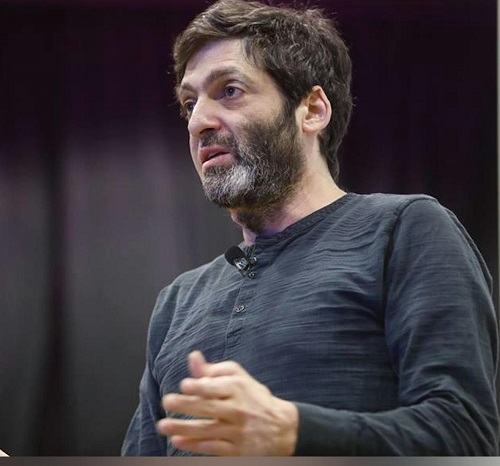
Once again, Duke professor and researcher Dan Ariely is in the news, and not in a good way. Ariely, professor of business administration in the Fuqua School of Business is named 636 times in the more than 3 million additional Epstein files released on January 30. He may be innocent of any wrong-doing and he and Epstein may have just played in a Fantasy Baseball league together, but the problem this creates for me is that I have been using Ariely’s work as authority in my ethics seminars for as long as I can remember.
For more than a decade, I told incoming members of the D.C. Bar as part of their mandatory ethics training that such sessions as mine were essential to making their ethics alarms ring. To support that thesis, I related the finding of research performed by Dan Ariely when he was at M.I.T. Ariely created an experiment that was the most publicized part of his best-selling book “Predictably Irrational,” giving Harvard Business School students a test that had an obvious way to cheat built into it and offering small rewarde for the students who got the highest scores. He tracked how many students, with that (small) incentive to be unethical, cheated. He also varied the experiment by asking some students to do simple tasks before they took the test: name five baseball teams, or state capitals, or U.S. Presidents.
None of these pre-test questions had any effect on the students’ likelihood of cheating, except for one question, which had a dramatic effect. He discovered that students who were asked to recite a few of the Ten Commandments, unlike any of the other groups, never cheated at all. Never. None of them. Ariely told an NPR interviewer that he had periodically repeated the experiment elsewhere, with the same results. No individual who was asked to search his memory for a few of the Ten Commandments has ever cheated on Ariely’s test, though the percentage of cheaters among the rest of the testees is consistently in double figures. This result has held true, he said, regardless of the individual’s faith, ethnic background, or even whether they could name one Commandment correctly.
The classic moral rules, he concluded, reminded the students to consider right and wrong. It wasn’t the content of the Commandments that affected them, but what they represent: being good, or one culture’s formula for doing good. The phenomenon is called priming, and Ariely’s research eventually made me decide to start “The Ethics Scoreboard” and later this ethics blog.
 Ethics Alarms
It’s my understanding that Stalin used to pressure his scientists to come up with the approved result of experiments and research, regardless of what the actual results were.
And, I suppose, trying to explain the science behind genetics to Adolf Hitler regarding how people are born with blond hair and blue eyes wouldn’t have worked either. When bias – political bias, racial bias, religious bias – enters the picture, no one is immune.
Ever heard of the Institute in Basic Life Principles? During the ’80s and ’90s, conservative churches were all agog about it. It’s founder, Bill Gothard, would stand on stages in convention centers across the south and the Midwest, chalk in his hand as he colored a beautiful nature picture on a large paper pad while breaking down the principles that lead to a properly working Christian home where kids don’t rebel and divorce doesn’t happen.
I attended one of his seminars, invited by my father and stepmother who were attending with a large group from their church. I listened to reasonable messages about teaching children about making wise choices so they aren’t influenced by peer pressure. About how their researchers had demonstrated that music with certain beats – aka rock music – was unnatural and had an adverse affect on plant growth; whereas, classical music and traditional hymns caused plants to thrive.
Yeah, he was old-fashioned. He thought women should stay home and birth as many kids as God let them. He opposed even men going to college because of the radical atmosphere on campuses.
I sat next to him once, purely by accident, at a local church event. He wondered why I was attending college. It wasn’t mean or harsh, just more of a gentle rebuke. I just figured he was a man of his time who hadn’t yet realized that some ideas were best left in the past.
The Duggars followed some of his teachings. You remember them. 19 kids they exploited on a TV show while following Bill’s teachings to own your own business so you aren’t forced to work on Sundays or follow sinful corporate HR guidelines. Their oldest son is in prison; two or three of his sisters have written books about learning to adult on their own. I understand Jim-Bob Duggar is kinda, sorta running the Institute now.
Because Bill got into trouble grooming teenage girls who worked and studied at his campuses.
I can’t say it’s a surprise. I got that vibe from him during that one brief Sunday I sat next to him. But it’s disappointing when authorities you look to in order to bolster the worldview upon which you base your life fail miserably.
Especially, when it came out that the music/plant experiment was bogus and the researchers for the Institute just told Bill what he wanted to hear. Uncle Joe would have been proud.
The ramifications of the realization that “experts” cannot be faithfully trusted extends far further to many many things. Can the presentation of history we receive be trusted? Can our understanding of our own present be trusted? Can we, or should we, distrust our own self (the way we see things, etc.)
My rather cynical view is that to the degree there is “ownership interest” is the degree to which that owner will naturally pervert or distort the truth.
The risk is that to be taught to believe we must first believe in some fact we are taught.
When the fact we were taught is disproved we retain our ability to believe in something which invisible was at least purported to be embodied by the fact. If the fact is always disproven prior to learning to believe, we fail to believe in belief and develop a disproportionate drive to disbelieve in everything other than our immediate self perception.
I am very worried about the degradation of peer review and the destruction of science. They go hand-in-hand, but aren’t exactly the same thing.
What I believe is the cause: We let too many schools offer advanced degrees. University Presidents wanted the prestige and (more importantly) the overhead money that comes with scientific research, so they petitioned to be allowed to offer graduate programs in science. Politicians went along with it because they got prestige in their districts and they were probably told that more science=more progress. The problem is, I believe the opposite is true. Most research professors will never do anything that really is useful or changes things in the world. The reason for this is that they aren’t capable of it. I have met dozens of people who did things that changed the world (at least a little) and what I noticed is that they are all smarter than I am by a noticeable amount. The professors on my level or below just do derivative research that is good enough to get published, but it isn’t original enough to really matter. To really do original work, not only do they need to be that intelligent, they need to be surrounded by other people of equal intelligence to bounce ideas off of and to criticize them. This is what led me to not try to be a research faculty member and to focus on teaching. I guesstimate that you need to at least have an IQ above 170 to do real, creative science that matters and I am just not there.
When you increase the number of Ph.D. granting institutions, you are diluting the pool of your really creative and intelligent people. They can’t do as much because they aren’t surrounded by the talent pool anymore. Also, when you let in the less talented people, they start doing administrative stuff, requiring everyone to fill out long forms, go thought lengthy evaluation processes every year, spend weeks in pointless meetings, etc, which kills productivity. They also bring in DEI and you start forcing out your best faculty because they have the wrong skin color, genitals, or sexual preferences.
Increasing the number of Ph.D. granting institutions also dilutes the grant money. The best people get less money, the best grad students are teaching 2 lab sections/week instead of in the lab getting results as RA’s.
Increasing the number of Ph.D. granting institutions increases the number of publications, but decreases the number of publications that matter. The noise in the journals far outweighs the signal. It becomes hard to find useful information amidst the derivative articles.
When a researcher publishes a paper, they also become a reviewer for papers. Having these lesser reviewers is bad. They tend to not be confident enough to point out mistakes. They worry that they just don’t understand the paper enough and don’t want to be exposed as a fraud, so they say nothing. Then papers with massive flaws get through, making the flood of noise even worse. Not only does the paper not matter, it isn’t even right!
Even 40 years ago, science was a small field. You could go to meetings and find that you knew who all the research professors were in your area. Everyone knew everyone else. This really helped when reviewing articles. People had friends, competitors, and enemies. Journal editors knew who these all were and could strategically assign reviewers to get good, quality feedback on the articles before publication. Now, it is all anonymous. I see ‘peer reviewed’ articles that are worse than my students’ lab reports.
Don’t get me started on the damage the ‘cooperative science’ of environmental science did. Don’t even get me started on the damage the Education field has done to education.
So now I can’t trust the journals. If I can’t trust the journals, what can I trust? Who can I trust? I can’t do everything myself. I can’t research everything myself. We had the greatest research system the world has ever seen and we destroyed it in 30 years with demands for mediocrity. We really can’t support more than 100 graduate granting institutions in the country, maybe fewer.
Thanks for this comment.
In your copious spare time you may enjoy Charles Murray’s book _Human Accomplishment_. If I recall correctly, he considers it one of his more important and substantial books. Murray doesn’t limit himself to modern science but modern science is one domain he examines.
He said (perhaps quoting someone) that to make a genuine new and valuable accomplishment it often involved three things, a triad of sorts.
1. Ability
2. Zeal
and
3. Capacity for hard labor.
In many instances all three of those things are necessary. Or, it helps to have all three. It may be that the triad is more essential in bench science and less essential for some of the creative arts such as literature.
Thanks for reading!
charles w abbott
rochester NY
Isn’t the basis of “science” or “experts” is skepticism? Science is rarely settled, ¿right? There are theories, some proven to a degree that leads to valid conclusions. That sort of leads to consensus, ¿right? All scientists tend to agree that light travels at approximately 1,000,000,000 meters per hour or 671,000,000 miles per hour, and that it takes 8 minutes for light leaving the Sun to reach Earth. Those are given, measured, and proven results that can be called scientific truths. But, they are measurable and can be tested for accuracy.
Social sciences, though, are by definition, not subject to that same sort of measurable results. We have seen and read lots of times that social science experiments have been proven either wrong or the methodology is flawed or downright skewed toward a given result.
But, as Michael R eloquently wrote above, when you have a flood of Ph.Ds out there promoting their work, the likelihood of someone doing real, novel, groundbreaking work diminishes. It does take an extraordinary mind to rise above the fray. Also, with some much research, those tasked with reviewing and challenging the results are probably overwhelmed by the sheer volume and simply do not have the time and/or resources to analyze the results and conclusions.
Take, for example, rock musicians. There are, per capita, more rock guitarists than there are bassists, drummers, or keyboardists/pianists. It, then, is much harder for a guitar player to swim to the top to be counted among the truly great guitarists. Alex Lifeson is a prime example of that. Not so with bassists, drummers, and keyboardists/pianists because the pool of members is smaller. That does not mean that Neil Peart or Geddy Lee are not phenomenal musicians in their respective fields and have not earned their places among the greats, and I certainly would not dismiss their talents or impact on their instruments – not at all; it’s just that it is easier to standout among the crowd when someone comes along with skill, talent, and style.
Not sure where I was going with this but it seemed logical at the time. Maybe I just wanted to write something about my Beloved Canadian Triumvirate. Maybe my thought is that the sheer volume of “stuff” makes it imposssible to know if the results of a given study are valid or not. Sarah B the other day wrote a wonderful and very insightful essay on the limits of experts. But, she took the time and energy to look at the topic and test the theories. Her essay was, simply put, terrific.
Maybe the expression – “”Never meet your heroes” applies to experts, too?
jvb
“Another toy that helped destroy
The elder race of man…”
–RUSH in _2112_
charles w abbott
Indeed. My introduction to the Canadian Triumvirate in 1976.
jvb
When I was in graduate school, the six members of my research group would read all the relevant journals each month. Each of us needed to cover about 5 journals. Each month, we would find between 2 and 8 articles that were useful/interesting/significant. Today, each of us would probably have to cover 20+ journals and on average we would each find 0-1 article useful/interesting/significant.
Think about the amount of time it takes to sort through that much junk. Then, if you find something interesting/significant/relevant, there is a high chance it is WRONG because the reviewers couldn’t/didn’t do their job. So now, YOU have to review the article yourself and see if it has any glaring flaws that you can find. That will discourage you from looking at the literature, finding new ideas to use, finding new ways to do things. Think about what that does, it makes you not want to look at the literature.
So, what is the point of all this research if it doesn’t give us new knowledge? Aren’t we just wasting our time and money? Aren’t we generating a bunch of noise in the literature just to satisfy the vanity of the promotion committees and universities? How is this preparing the next generation of top-notch minds we will need to solve our ever-more complex problems? We are just using barely trained grad students to turn out nothing journal articles so their professors can get tenure and grants. Then, those same poorly trained students are given Ph.D.’s and you see the drain swirling.
Does anyone even know how anything works anymore? I see computer science programs that don’t even offer a single low-level programming language class. No C, no Fortran, definitely no assembly. I see new Ph.D.’s in my field that have such a narrow focus of advanced knowledge that they have trouble teaching undergraduate labs because it is beyond their experience. I had to help a Ph.D. dilute a solution a few years ago. My undergraduate students go out into the world and find that they understand what their lab is doing better than the Ph.D. in charge in many cases. My brother took a very challenging class his senior year in college. A few years later, he noticed that the class had been moved up a graduate class. A few years after that, it was gone. He asked why. He was told that none of the graduate students could handle it and the last professor who knew how to teach it was retiring soon.
This, our suicidal empathy, and our guilt about our culture being better than others will end our civilization.
The science wing of the commentariat needs to do regular guest posts on science.
I also have reached a conclusion about trusting anyone. For a number of years, I trusted this site to provide a forum for a solid discussion of important ethical issues. (The privacy violation several years ago followed by an apology probably isn’t relevant here.)
Now, here, quantity defeats quality and unrecognized confirmation bias rules. We begin to examine an issue, and suddenly, there are many more issues that have overwhelmed the sock drawer, most of which can be ignored, but are not ignored, either because they are easy targets, or because there is an obligation to confront. We raise a legitimate objection, and it is immediately dismissed so we can move on and lambaste the next blatherer.
A memorable moment from my second career as a high school teacher — after one of the all too frequent breaks from working with kids: “Did you miss us?” My response, “Just as much as I missed you.”
This is not high school. I truly miss the interaction with kids whose minds were much more questioning than assertive. There is no doubt; we missed each other, mostly, and I still miss them, because they were willing to consider other viewpoints.
So, I’m on a break from here. I’ll look in occasionally to decide if I’m on a break, or if I am retired from this site which now seems to me to be mostly, and fatally, one-sided.
Comment of the Day!
Once again, someone from the other side decides to call it a day, then blame those remaining for frequenting a place that’s become too one-sided.
I’m sorry you feel the way you do, but it’s your fault – along with the fault of dozens and dozens of others like you that pack up and leave when others don’t agree with you – that you perceive this cul-de-sac the way you do. After all, we stick around…and you apparently won’t.
All the best and see you again sometime…maybe.
“Here’s Johnny” is not one-sided partisan. I’d categorize him as one who is alienated by the concept that sometimes one position is right and the other position is indefensible and shouldn’t be pandered to. We have other commenters here who adhere to that philosophy. I’ll have more to say on the topic when I post HJ’s fairwell as a COTD.
Farewell, or see you later. TBD.
Ah, yes. We’re all one side or the other. There is no middle.
I’m hoping you’d post your 95 theses before officially breaking with EA, so we could talk specifics, but at the same time, there’s no obligation to read EA or post comments, so what you decide is the most valuable use of your time is up to you. I’ll state flatly that most of the time I don’t agree with your assessment of the issues. For example, I really disagree with how you portrayed the suggestion that “bringing a loaded gun to a protest is imprudent” as saying “we check our rights at the door when ICE is involved.” But I appreciate reading commenters with different ideas than I have, or that our host has. Take that as you will.
Well, Ryan, I ain’t gone yet, just roaming (hat tip to Randy). Just wavering. Your comments are among those few that help make the site worthwhile and keep me on the fence.
HJ, please do stay. I enjoy reading counterposts that challenge me to think and rethink my positions. I tend center-right/conservative, but I am open to challenges to my arguments. Except where Rush is concerned – in that case, I am ALWAYS right about the Canadian Triumvirate.
jvb
Thanks, John. Sometimes I try to see and argue both sides of a disagreement. As I learned from the Jesuits in college, there may be no logical resolution. Instead, we resort to belief, or, what they termed ‘mystery of faith’.
Indeed. The Jesuits formed my reasoning skills in high school.
jvb
Georgetown University is one of the most shamelessly and hypocritically biased schools in the U.S. So much for Jesuits…
Thanks, JVB. You’re right about the value of counterposts, of course; my apparent disparagement of them was wrong.
P.s., Ryan, I am awed by the very idea that I might have 95!!
Let’s see the 95 points!
–charles w abbott
rochester NY
HJ, thanks for the complement. As for 95, maybe that’s a few too many (and Martin Luther WAS a little neurotic…), so maybe just 27 (the number of grievances in the Declaration of Independence)?
I want to say something about expertise before this comment window “times out.” Whatever it’s called. Before the “comments to this post are closed.”
1. Nassim Nicholas Taleb, in his book _The black swan_, says that “Some fields don’t have experts.”
In a Google search window I typed the search string
“The black swan” some fields don’t have experts
And got pretty good results. Your mileage may vary.
= – = – =
You might also try
2. Paul Meehl’s concept of “clinical vs. actuarial prediction”
(see Wikipedia for details)
and
3. the books _Superforecasters_ (Dan Gardner and Philip Tetlock) and _Expert political judgement_. (Philip Tetlock.
Thanks for reading.
charles w abbott
rochester NY
(I almost never close comments.The last time I did was when another blog sicced a hoard of trolls on a post. That hasn’t happened since.)