This topic is almost tangential to ethics, but not entirely. I give Althouse credit for raising it: she sometimes comments on crossword puzzles—I hate crossword puzzles and have never finished one in my life—and was set off into one of her tangents by the clue, “8 letters: “Poem so beloved by Abraham Lincoln that he carried it in his pocket and memorized it.” As it happens, I know the answer (Ann did not): it’s Poe’s “The Raven.” No surprise there: Abe was a depressive, and that dark poem about lingering suicidal thoughts fits his character and also his taste in poetry. I think “The Raven” is doggerel, and so were Lincoln’s poems: yes, he wrote poems, and was always puzzling to me that such a poetic writer would write such pedestrian poetry. He’s nt the only one who fits that description: Herman Melville’s poems, save for the one that ends “Billy Budd, ” is also shockingly bad. But I digress…
Ann guessed that the poem was “Invictus,” which would make sense if Abe favored a poem that inspired him, as, I believe, many of us do. That one ends with the famous verse,
“It matters not how strait the gate,
How charged with punishments the scroll,
I am the master of my fate,
I am the captain of my soul.”
Teddy Roosevelt loved that one, as you might guess. The topic got me thinking about how our schools used to teach ethics as well as literature, not to mention mental acuity, by requiring us to memorize poems. I’m sure they don’t do this now, and I’m also confident that the declining ethical instincts as well as literary competence of today’s youth are in part rooted in this sad development.
Poetry is becoming a dead genre. Althouse excluded songs from her musings about what favorite poems say about our values and character, and I find that strange. Song lyrics are poems, at least the best of them. No unscored poem touches me as much as Irving Kahal’s lyrics to Sammy Fain’s haunting melody, one of my late wife’s favorites….
I’ll be seeing you
In all the old familiar places
That this heart of mine embraces
All day through
In that small cafe
The park across the way
The children’s carousel
The chestnut tree, the wishing well
I’ll be seeing you
In every lovely summer’s day
In everything that’s light and gay
I’ll always think of you that way
I’ll find you in the morning sun
And when the night is new
I’ll be looking at the moon
But I’ll be seeing you…
Similarly, the touching Longfellow poem about his depression during the Civil War over the death of his wife, the wounding of his son and the conflict dividing his country was set to music, making it classic Christmas song that has endured in the culture beyond most of his poems. Putting a poem to music shouldn’t disqualify the poem as a poem, though the melody can enhance its power and popularly.
My favorite poems were narrative poems the celebrated heroism, courage, sacrifice, devotion and nobility. I have written several times about my father’s favorite poem, Rudyard Kipling’s “If” : the lines “If you can meet with Triumph and Disaster…And treat those two impostors just the same”; has become my credo over the years, and served me well. This past Halloween I posted my favorite poem, “The Highwayman,” which I memorized when I was 10 and have recited to audiences many times since. It is about a young woman who gives her life to warn her lover. I also memorized Longfellow’s “Paul Revere’s Ride,” an inspiring poem about an American patriot.
 Ethics Alarms
I listenened to a podcast recently about the ancient epic poets, like Homer, who would wonder countryside entertaining communities with there long tales. I had often wondered how these poets memorized such tales, but according to what I heard, their goal was never rote memorization, but a dynamic tale retold to match the interests of the particular audience. In the world before the written word, there was no way of knowing if a story were told exactly the same, nor did any care!
The rhyme and meter of the helped the poet recreate the tale as he recorded it, added or substracting sections by chance or in in response to the audience’s enthusiasm or boredom. It was, in essence, an improve act.
When Homer’s Illiad and Oddessy were finally written down, uncountable variations had already existed. The poet retelling the tales before the scribe simply added in every possible tangent and side quest he could muster so they could be preserved for posterity, resulting in many twists and turns and redundancies.
This got me thinking about a short snippet of a Shakespearean play I had to memorize in the 8th grade, Puck’s soliloquy at the end of Midsomer Night’s Dream.
At the time, I’m pretty sure I brute force memorized rotely for my recitation. I soon forgot most of it. But thinking back decades later, I could still hear the rhythm and rhyme in me head. Below is my raw Homeresque creation from memory; I’m pretty sure these paragraphs are largely correct, though I’m also sure I missed one or two:
As 13 year old boy in middle school, thought poetry was kind of stupid, and wondered what value there was in memorizing Puck. In high school, the Oddessy was so bloated, that it was the one book I resorted to using Cliff Notes summaries on, because I just could not read and follow along such dense material. It makes so much more sense now that no sane ancient audience would or could patiently sit through today’s unabridged version!
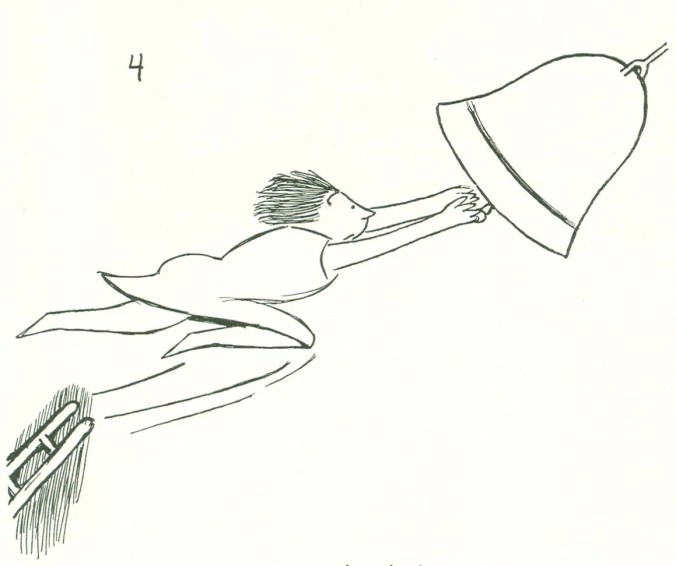
I can see now that poetry in isolation doesn’t mean much. Rather it can only be understood as a way of preserving and communicating values across generations and connecting people. Iambic pentometer is cute and all by itself, but its value as a means of helping memorization was never brought up in school! Poems about a woman climbing up into a giant bell to muffle its toll would be so much more awesome than a fairy apologizing the preceding play being kind of trite. It is really a shame poetry is being taught in such a superficial manner these days, if it’s being taught at all.
It would be miraculous if Invictus was Abe Lincoln’s favorite poem.
You mean because it was written 10 years after Ford’s theater? Yeah, Ann acknowledged that. What I find depressing is that although the poem was quoted by Winston Churchill, Rep. John Lewis, Nelson Mandella, Barack Obama and others, the first hit on Google if you search for it is the middling Clint Eastwood movie named after it.
The fascinating aspect of the Raven being his favorite poem is that the Raven is just under 200 years old for us so it’s historical. But just under 20 years for Lincoln so it’s contemporary.
It would be like a modern American president carrying a copy of Blackhawk Down or No Country for Old Men or the Eternal Sunshine of the Spotless Mind to watch regularly.
I rather like The Simpsons animation of the Raven, read by James Earl Jones.
(Tried to link the YouTube video; tried twice but Nevermore)
-Jut
I don’t know – Poe’s Raven has one of my favorite lines; it isn’t at all profound, but it is profoundly delightful to speak and to allow to roll over the brain like a cool river. I memorized the entire poem when I was a teen in the late 70’s and can still recite it. But for the life of me, I can’t remember the “new” neighbor’s names, even though they have been here five or six years. Their dog is Annie. My priorities are laid bare, I suppose.
“And the silken, sad, uncertain rustling of each purple curtain thrills me, fills me with fantastic terrors never felt before.”
There may be errors in there. I write it from memory alone.
Poetry makes equals of us all. From Bukowski to Shakespeare. They speak to each person in their own way.
A teenaged me painted the prologue to Thomas Wolfe’s “Look Homeward, Angel” on the back of my closet door; my private and quiet rebellion to a mother very similar to Eugene Gant’s mother. There is still a desperate and layered division between us at 63 and 83 years of age….
“Naked and alone we came into exile. In her dark womb we did not know our mother’s face; from the prison of her flesh have we come into the unspeakable and incommunicable prison of this earth….”
It goes on, but I will allow the readers to discover the rest on their own. It spoke to me, a schizoid, of the utter and undeniable loneliness of life. That book was my “Catcher In the Rye”. It forever changed me. I haven’t read it since my 30’s. I am so afraid that it will no longer move me the way it did in my youth. Some poetry speaks to a time or generation, or a time of life. It can go from profundity to perversion to puling as the decades pile on.
Speaking of poetry, Renee Good was a poet. She received the Academy of American Poets Award. Her writings are now a small and intimate part of her legacy to the world. I lack the skill to copy the poem in its correct format, but I will provide the link:
http://2020 Academy of American Poets Prize | Academy of American Poets https://share.google/m0g4WZTXwRMRMVe9r
Your “Curfew Must Not Ring Tonight” protagonist reminds me a bit of her. I suppose it speaks to us in different ways.
Tim Minchin is undoubtedly genius, a true polymath. His writing, music, comedy, acting and message has evolved from the convention mocking bite of his early works to the haunting and sobering, albeit less confrontational songs “Apart Together” and the tribute to his wife “I’ll Take Lonely Tonight.”
We are all just so fragile, precious and fleeting on this planet. We should seek to always be The Helpers. To contribute far more than we collect. I came from dis-opportunity. I never attended a college, but I never stopped learning and growing. I live on the edges of poverty, I have never had a new car, a designer bag, a house with a view, a savings account…but I, unlike the accumulaters of wealth and power, kinow that these are not how a man is measured. It is not about standing victorious on the bodies of those you ruined. We are lifted up, not by the machinations of despots and dollars, that thirst can never be quenched, but by living in empathy and altruism.
What a rich, thoughtful post, Lisa. Comment of the Day. Thank-you.
Thank you! I am honored.
I’ve not memorized very many poems (or at least, not many outside of Shel Silverstein…), but one that caught my fancy and inspired me to commit to memory is G.K. Chesteron’s “Ballad of Lepanto”. It is not just that it is a Catholic poem commemorating the victory of the Holy League over the Ottoman Turks in one of the greatest naval battles of history, but that fact that it was so inspiring that British troops in the trenches of World War I would recite passages of it to each other. The poem was written in 1911, so at that time of the Great War it was only a handful of years old, instead of the 20 years old The Raven was to President Lincoln. Here’s an excerpt, and I only had to correct two words when comparing with the official text: