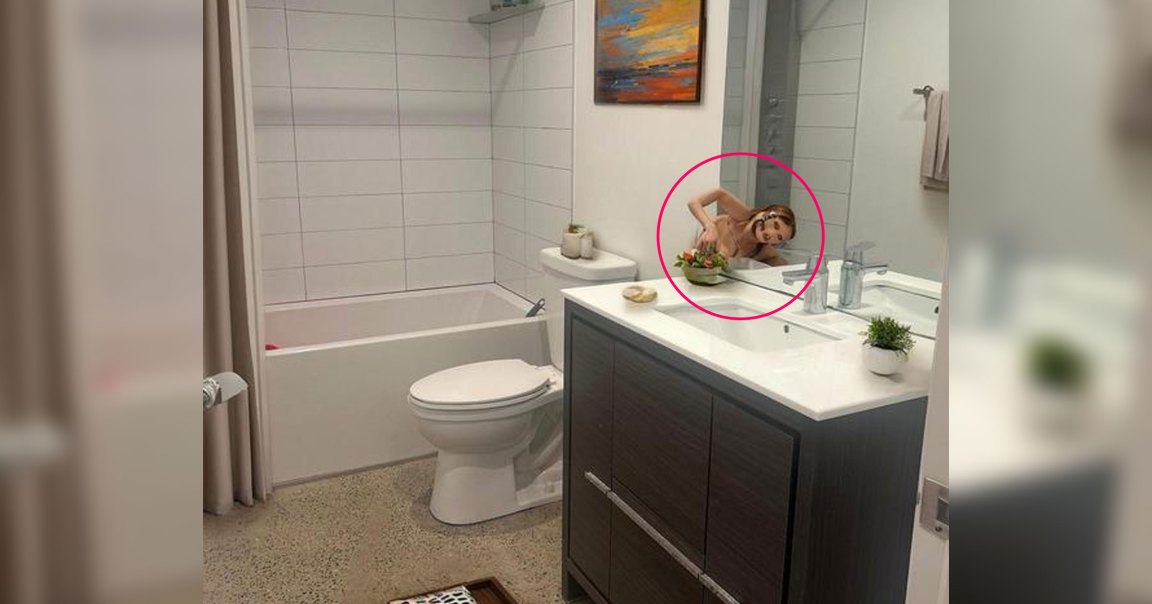
Since AI bots are gradually corrupting everything from funny dog videos to legal briefs, it should not surprise anyone to learn that the little buggers are making real estate ads unreliable too. “Realtors Are Using AI Images of Homes They’re Selling. Comparing Them to the Real Thing Will Make You Mad as Hell” lays out this revolting development. “Future” writes,
“Realtors have made extensive use of the tech, manipulating photos of properties beyond recognition by giving facades and interiors a heavy coat of AI-generated paint. Text descriptions of properties have turned into a heap of ChatGPT-generated buzzwords, devolving an already frustrating house hunt into a genuinely exasperating experience. Making sense of what a rental apartment actually looks like in the real world has regressed into a guessing game. We’ve already come across bizarre listings of inexplicably classified houses with smoothed-over architectural features, misplaced trees, nonsensically rearranged furniture, and mangled props.”
Fortunately, the people most likely to cheat using AI are also the ones who have exceeded their Peter Principle ceilings and are incompetent at their chosen fields, hence the felt need to used bots to try to fool others who probably are smarter than they are. The ethics values are incompetence and dishonesty.
And thus we have the risible tale of the listing for a property in Fort Totten, a suburb in northern Washington, D.C., that has been taken down from Apartments.com. While the ad was up, it seemingly promised that for just $1,800 a month, a lucky renter could have her own bathroom Hell-spawn. See it in the photo above, crawling onto the bathroom sink?
Giraffe360, an AI image editing tool for real estate photos, points out on its website that real estate organizations “consistently prohibit” edits that remove or alter structural elements, erase or modify views, or digitally renovate or upgrade interiors or exteriors. “Here’s a simple test: if an edit would require physical renovation to achieve in real life, it shouldn’t be in an MLS listing photo,” it advises. But there is a loophole: edits that create H.P. Lovecraft creature features on the property probably should also be taboo.
“How do you not notice the melted demon crawling out of the wall before you hit publish?” one user wrote, attempting to rebut the presumption that AI image editing tools were involved. That’s an easy question that regular Ethics Alarms readers can answer by quoting The Waco Kid: “You know. Morons!”
 Ethics Alarms
Let me ask an ethics question here. If you sell your house, do you have the obligation to disclose any paranormal activity? What about dark history of the house, such as murders and suicides? Seeing that devil crawling out of that wall would give me the creeps as a potential buyer; I could picture horror film type of events happening in the future such as in Poltergeist or the Amityville Horror.
You can look that one up on Ethics Alarms! I’ve written about the issue a couple of times. Some states mandate informing purchasers about murders and other horrible occurrences at a property, other only require realtors to tell the truth if asked. I can find no legal backing for a “haunted house” disclosure.
Not AI, but using a wide-angle lens for listing pics makes rooms look larger than they really are. This also helps to get the entire room into one photo, but I’m sure agents don’t mind the effect. Pictures taken from a lower viewing position have some of the same effect.