
This is a “rest of the story” post but I don’t need Paul Harvey. That image is how I feel right now.
The story began when I posted this meme…
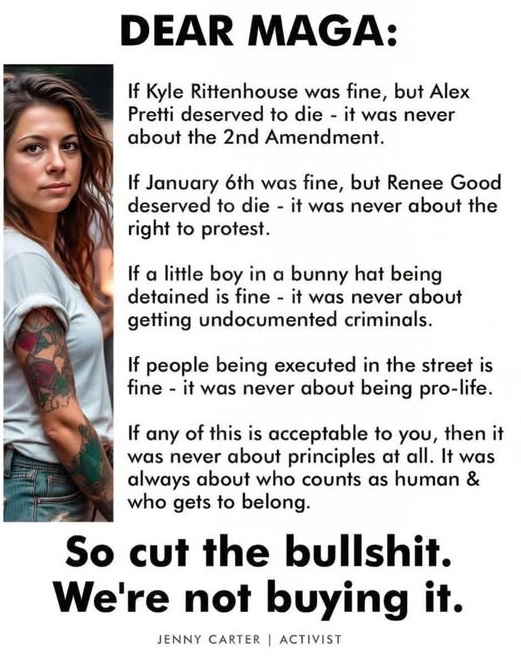
…that had been endorsed on Facebook by a dear friend, a religious and smart woman, whom I have known for decades in many capacities. Naturally the thing attracted the usual “likes” and “loves” on the platform despite being, as you can see, moronic, dishonest, arrogant and offensive. I posted a very brief summary in reply admonishing my friend for spreading ignorance. I got a disappointing response from her suggesting that I wasn’t “caring” enough, which is emotional blackmail, and several other really stupid replies from her pals, including one that said she hoped I was “comfortable with” my “lies.”
I had challenged the Ethics Alarms commentariate to dive into a thorough fisking of the meme, as I was not in the mood. As evidenced by his subsequent Comment of the Day post, Ryan Harkins responded with an ethics tour-de-force that was civil, thorough and devastating.
I decided to confront my friend and her bubble by posting Ryan’s masterpiece along with a long, also civil and measured, introduction as a further response to the stupid meme. I waited to see how the Bubble would respond. I waited to see how my friend would respond. Was there a rational, substantive retort to Ryan’s work?
 Ethics Alarms
I tried EC’s engagement techniques with a masked woman outside a very one sided “round table” hosted by April McLain Delaney (D 6th MD) and Governor Moore on the ICE facility proposed to be constructed here in Washington County.
This youngish white woman held her sign saying NO ICE when she walked up After hearing the standard talking points that ICE makes us less safe and that she worried that her black child would be taken by ICE. She then went on about being low income and that the government had a duty to care for the disabled. She made quite a few declarations but could not provide any evidence to back up her claim other than she new two citizens were taken by ICE but when I asked her who they were for me to verify her claims she said she said she could not trust me. on our conversation I asked her why she was masked when she had a problem with masked ICE agents and she said she had a cough and did not want to infect others. When I asked her whether there might be a reason these agents are masked and she said fear of retribution. I asked imany question and when I pointed out several inconsistencies she decided to claim I personalized behaviors to her and it was not her fault. When I said she mis heard me because I was speaking in generalities and never used the word you except to say “I heard you say”. She then claimed I was prejudiced against the hearing disabled which she then claimed to be one. I said that might account for the misunderstanding to which she replied “I heard what you said”,
What I have learned from this encounter is never give an inch because they will use it against you because their mind is made up so you are always wrong. EC’s methods have merit but not with bigoted opinions from people with limited understanding and your position undermines their fundamental needs for safety. Self actualization is an illusion for them and is in reality either unattainable given their limited ability to process information or undesired.
Charles Krauthammer once said that conservatives think that liberals are stupid and liberals believe that conservatives are evil. If you believe that your opponent is stupid, you are willing to engage in debate in order to teach and change minds. If you believe that your opponent is evil than you do not consider your opponent worthy of debate as evil cannot be reasoned with; only resistance and condemnation are in place.
The brain state of many of the Trump deranged resembles that of cult members. Scientology. Heaven’s Gate. Children of God. The Nazis. Hamas. It is a brain disease. People’s self regard and identity is tied up with the cult. It can only be cured by death or true repentance.
I have become convinced that the vast majority of what we would consider ideas, phrases or words which we think we have constructed to communicate some point of understanding or incite are all merely treated by listeners as a multitude of tiny independent shibboleths any of which, upon cursory attention being found objectionable, leads to the objectors guillotine because the only reason you would use that one word out of your other 10k is because you are intrinsically bad.
I want to largely blame this on mental illness due to insulin resistance and metabolic dysfunction in the brain. I have yet to meet anyone who consumes a high(65%) saturated fat diet and 0% carbohydrates who is even rude.
Yet, all of the people I know who post to Facebook nonsense similar to what you have described are by nature hyper emotionally expressive and have always only posted content that mirrors their feelings.
New category: “Run-on sentence of the day:” “I have become convinced that the vast majority of what we would consider ideas, phrases or words which we think we have constructed to communicate some point of understanding or incite are all merely treated by listeners as a multitude of tiny independent shibboleths any of which, upon cursory attention being found objectionable, leads to the objectors guillotine because the only reason you would use that one word out of your other 10k is because you are intrinsically bad.” That one ran over me and kept going. But I absolutely agree with it. It’s not what you’re saying, it’s what teams your words signal you’re on.
Run on sentences as sport!
Marathon-on sentence doesn’t exactly roll off the tongue.
As war!
Jack, I’m shocked, shocked! that my rebuttal received such a cold reception. But then, as was noted by James Harrison, my efforts were aimed at showing the audience a logical response. Trying to change the mind of the original activist or those who liked and reposted the meme is too often an exercise in futility. But I’m also really honored that you offered my response as something for your friend to consider. Thank you.
In deference to EC, I do think describing his position as “all sides are legitimate” is not quite accurate. While I do think EC’s tactics are not applicable to a decent swath of the Left (especially those who are deep into using the Alinsky’s tactics to radically change society), because the those kinds of people will use EC’s conciliatory, bridge-building efforts against him, he does have a very valid point that in order to genuinely dialogue with someone, you have to acknowledge what they think, believe, fear, and hope for, even if all of that is grossly misguided. I would like to believe that a genuine Socratic approach to these difficulties would yield deeper dialogue and a willingness to wrestle with the nuances of the disagreements we have. Unfortunately, we don’t seem to have a culture anymore that wants to wrestle with issues and tease out all the ramifications of one point or another. Our culture seems to want easy answers, neatly packaged.
What do we do about this? How do we handle a vast swath of people who want to exist in their comfortable bubbles and never be challenged on their perceptions or beliefs? I do think this extends to the Right as well as the Left. I know I tend to frequent news sites and blogs that are more in line with my thinking, because the aggravation I experience reading someone who is so obviously wrong is often more distressing than I can afford. I do have my job, my wife, and my children to worry about, and I have to decide where to allocate my scant remaining time.
I think EC has some good tools for handling the situation. Ask questions. Show interest in what the other person thinks. Find common ground. Ask what solutions might look like This does not mean legitimizing their viewpoints. But people typically respond positively when you ask them to express themselves, and then don’t interrupt when they are doing so. (I have also seen this advice in dating. Ask your date to talk about herself, and don’t talk yourself up so much, and she’ll be flattered by how much you seem to be interested in her.) Questions should be geared towards clarification. Gently inquire about what seems to be contradictory thoughts.
This sort of direction seems to imitate St. Paul, who says, “To the Jew I become a Jew, to win the Jews. To a Greek I become a Greek. I become all things to all men so that by all means I might save some.” St. Paul’s method was to walk with those whom he was trying to evangelize, talking to them in language they understand, guiding them to see how what they held dear actually pointed to Christ. I think the tactic is worthy of emulation, though that was certainly not how I wrote my rebuttal. The catharsis of my response may be personally satisfying, but it isn’t the best at changing minds or winning hearts.
A heart-winning argument might begin by stating, “I think it is a tragedy that Good and Pretti were killed. That should never have happened. The situation that has us pitting law-enforcement against compassionate people who want to give illegal immigrants a chance to live their dreams should never have happened.” From there, we could ask questions as to whether it is better for people to obey laws and not have to live in fear of the authorities, and then to ask what a better policy would look like. Asking questions tens to make people want to come up with answers, because they are being prompted to make a show of their thoughts and values. Maybe it could work with the Trump-Deranged. I’m skeptical, but I don’t see any other ethical course of action.
I appreciate the support, Ryan! Your heart-winning argument about ICE is off to an excellent start, and I’d love to hear how people respond to it and what you come up with together.
I should clarify that one reason it’s so important to start by understanding one’s own values is that it’s much easier to concede things as a gesture of goodwill when you know where you draw the line and can explain exactly why it’s there.
Understanding our own values at the foundational level also helps us find ways to address others’ concerns that don’t threaten our values. It helps us peel back our assumptions about the outcomes we want and how we achieve them, so that we can explore possibilities that might turn out better than what we had in mind.
In the worst case, if other people respond to our good-faith suggestions with ever more contrived concerns to justify their exacting demands, those people reveal their concerns to be a pretense for more selfish motivations or blind stubbornness. Perhaps we suspected it all along, but our willingness to have the conversation allows other people watching the discussion to see it as well.
That said, it’s important not to assume everyone holding an opposing position is doing so for selfish reasons. The people who aren’t will reveal themselves by being open to alternatives.
The thing about the official who shot to Good is bound up in the fact that, some time before, another person had dragged him along in the car that was getting away. So, taking human psychology into account, he had some good reason to 1) be especially apprehensive in the second that the car started to move, and 2) desired to take a shot at an enemy. The entire way that events are being framed is through the *enemy distinction*. And that distinction is made on this blog regularly by those who inhabit a political stance that they regard as ‘absolutely and undeniably right’.
Once you have established the *enemy distinction* in certain senses it does not matter if you are *wrong*. I will try to explain. The base of many conflicts has to do with the powerful aggressor who has decided that they want and must have something and seek ways to grab and claim it. The view of the political Left is that by allowing all immigration, legal or not, that they will gain the demographic upper hand is not at all a bad strategy. And all those who seek to limit immigration, and illegal immigration, are by that definition on the wrong side. This is how power works. The argument about if it is ‘just’ or not or right or wrong is irrelevant.
So in one sense at least the reason Jack’s former friend or contact erased the entire discussion, simply jettisoned it from her awareness and so it no longer even had to be thought about, makes a good deal of sense (given the acute differences that are operative in this present time).
Similarly, it does not matter if the police had ‘sound reasons’ or did not have sound reasons when they shot Pretti, not in the eyes of those who support resistance to Federal agents. Because the value-set that they advocate for overrides the ‘justifiable cause’ of those officers, and indeed (seen from that angle) even though technically the Federal police can conduct operations in the domain of the states, still (from this viewpoint) they are serving and pursuing what is for them an evil and undesirable result. So the ‘enemy’ distinction rules their view. You can argue and reason until the cow jumps the moon and you’ll get no where.
Another example that is interesting to consider is one that has been best defined here on EA: It is the view that ‘unless something is done’ to arrest decay (defined as lack of ability to reason; lack of understanding of political values expressed in the Constitution; and going full forward in trying to modify culture and even civilization with radical ideological projects) that the country will be lost forever. This is the language that has been used. The declarations have been made. And with Trump (it has been stated) the reversal has been started.
Curiously the ground for radical shifts has also been defined by American ‘progressives’ who have written books on a New Reality that is approaching when the POC outnumber the declining European stock (White people though I admit to feeling slightly criminal using that designation). It is just around the corner, they say, and they desire this to happen because, I guess, they feel that this will result in a ‘good’.
So obviously, those who desire to *preserve them selves* by that desire reveal that they are not on the side of ‘good’ and naturally more inclined to the bad side, and to the evil side(because any definitions based on race preservation has been made to be understood to be an evil)(and even the Conservatives on this blog are of that opinion, generally speaking).
It seem to me almost childish (I cannot stop thinking of the video clips of Mr Rogers the kindergarten teacher with his soft pleasing voice) to imagine that in the present time of cultural conflicts that ‘mature dialog’ is possible.
Now here is a more curious aspect that (at least in my view) illustrates the realness of underlying dynamic: Just recently the US attacked and took captive the president of another country and drag him back to the courtroom to ‘stand trial’. I only mean to point out that ‘power does what power determines it must’ and then it constructs justifications. Some (here) will say “Clearly there was justification!” (blah blah blah). But all should see, and all should be completely honest: There was no justification. There was only power doing what power desires. And for its own reasons.
Now consider how those in the camp of enemy (the enemy distinction) view YOU. “They do what they want without justification (that we recognize) so WE will do what we dammed well please and will give no consideration to what they feel is just, right or good!”
I have not even touched the issue of “invading a sovereign country” killing its leaders bombing its oil tanks sinking its ships and all the rest.
Certainly you must see?! This is not a time of Mr Rogers dialog and ‘listening to the other’ and ‘being sensitive to their feelings’ and feeling any sort of ‘justice’ in one own opinion or value-set. It is a time of brutal attempts by Power to achieve ends favored by it.
Please, tell me your-plural thoughts. I am interested in some sort of counter-opinion.
Oh and please, a few references to “Normandy” (etc etc) will earn some points. 😉
They admit Pretti was trying to help a woman who was knocked down by CBP agents.
They therefore admit Pretti was disrupting law enforcement
I recall all the ranting and raving of this type on Usenet newsgroups twenty-five years ago.
Here is an example.
https://groups.google.com/g/alt.conspiracy/c/hId66uf6y7Q/m/f-gL8CdAL9wJ
Who would have thought that a major political party would cater to these people?
I’m sorry this happened to you, but surprise I do not have. I used to be very deep into the world of “friends” who I thought I could have debates with. I used to intentionally friend people on Facebook I met in debate groups to try to create a free speech area. I had a few posts that garnered a lot of attention, and I even moderated a little bit and told people to be respectful, even when they were on my side.
What came of that (though not universally) was either people deleting me, blocking me from seeing their feed, or them just not engaging with ANYTHING I would post, even if it wasn’t political. I could’ve posted that I had found a cure to cancer, and people still wouldn’t engage. I do believe it is more prevalent on the left because that’s been the people I had the most runs in with, but I’m sure some people on the right have done this as well.
Those people you think are smart and all of that sometimes are just very polite and well-behaved in group settings, but their bias and irrationality is now more openly rewarded because of how biased the left has become, so you are seeing the more truly than you did before.
It could also be the case they have a terrible case of TDS and hopefully they come back to their senses.
I do know some of the most “educated” people I know have some of the most unhinged takes.
I don’t know which is the case, but of the people who deleted me (or haven’t but don’t engage), I’ve seen absolutely no change and only more bias.
I had to go through a lot of acceptance when I began to realize a large portion of liberals are actually very vengeful, mean-spirited people. You have to agree with them on almost everything or you are an “unsafe” person.
It’s happened to my own mom now, and it kills me.
I had to go through a lot of acceptance when I began to realize a large portion of liberals are actually very vengeful, mean-spirited people. You have to agree with them on almost everything or you are an “unsafe” person.
The thing is (I realized this when studying how American students study WWll and then always ask “Why didn’t somebody do something?” because they back-project themselves to the imagination of them selves in that time and, “surely I would have resisted”. They see themselves as “righteous children of the Lord” even if there is no God they serve. They remain (in their eyes) metaphysically aligned with goodness. They were taught that they were so. And consider how the adults and children of the North see all those of the South (civil war conflict).
The “righteous” project and see themselves as avengers. Here is an illustration:
https://youtu.be/ZCZyxZYgKIg?si=Utr5JZlZ1GJUV1Gz
So that mean-spirited, intolerant, and aggressive American progressive had been trained to react against injustice with the full focus of their spirit. The injust “insect” deserves no consideration.
This is a very human reaction and attitude, of course, but it is especially dominant in American culture. I think it began with the framing established in the Civil War — the North’s first military adventure of “nation building” (i.e. destroying and ruining the conquered nation). It got power in the 1960’s with millions & millions of “Gods own righteous children” who would “change the world” and when Marxist praxis became a tool — run away!
I’m very sorry this has happened to you. Unfortunately, you have experienced what has become common to many of us already: the deleting, the hiding, the blocking, the unfriending.
I wish I could give you better advice. This will get worse before it gets better. We’re going to have to be patient because, as I’ve mentioned before, you can’t reason people out of ideas they didn’t reason themselves into.
As I was reading this piece – and especially Chris’ response – I thought about that exact statement. I recalled you writing it on another occasion and am so glad you mention it again. You saved me a lengthy search.
So concise while simultaneously insightful.
“(Y)ou can’t reason people out of ideas they didn’t reason themselves into.”
Exhibit A:
PWS
My response to the accusations would have been:
“Thank you for accusing me of racism, but you are the one who brought up the topic of race, a concept I don’t even believe in. Also, you are using ‘pleading voice’ when arguing with me. Even if reasoning were to accompany your accusations, I would remain unconvinced simply because you sound like you are begging me to agree with you. Thank you for your attention to this matter.”
“OFFENDED” because she doesn’t “FEEL” the White Privilege “THING“?
I’m without words, though I’d be interested to hear how Dane County neighbor (I think) Extradimensional Cephalopod would…um…approach this.
PWS
It sounds like there’s a side of the story she’s not so passionate about hearing.
The tradeoff at the crux of this conflict is trust.
I’m going to steelman Mayor Johnson here, because the points she makes deserve better representation than she is capable of giving them.
Mayor Johnson apparently doesn’t trust that a decision-making body will effectively serve the needs of ethnic groups who are not represented within the body. She may fear that the body will not be not aware of their needs, or will not consider those needs important. To be fair, human governments are infamous for exactly those problems, even in ethnically homogeneous regions.
People who subscribe to the idea of “white privilege” may fear that those who do not will judge other ethnicities unfairly, without regard for various socioeconomic factors that have affected their opportunities, skills, mental and emotional health, and ability to communicate. Many of these factors are aftereffects from various forms of systematic oppression. Poor white people still have the advantage of a shared cultural background and higher default trust with rich people (most of whom are white), which affords them opportunities they may assume everyone has equal access to. People are afraid that a person of pallor who is hired by someone of the same ethnicity will assume that they must be more skilled than all the other applicants, when in reality they were just a “better fit for the team”. That can mean it’s more convenient or more fun to interact with them, or they are perceived as less of an HR risk because they won’t complain about discrimination.
As far as I can tell, when people refer to “white privilege” it isn’t because they believe that people should be treated differently based on their ethnicity, but because they want people to be aware that others have probably been treated differently based on their ethnicity, and keep that in mind when interacting with them, forming opinions about them, and making decisions that affect them. It’s a subtle distinction that took even me a while to work out. When a human who only understands the concept intuitively is called on to justify it in words, they get defensive.
These are valid concerns and deserves to be addressed. In the process of addressing them her way, here are some points I think the mayor overlooks:
I believe that people can communicate and learn from each other in order to more effectively interact with and help each other out. Decision-making bodies must be able to do that, even if they match the ethnicities of the people they are responsible for serving. After all, people don’t automatically understand or care about the needs of people within their own ethnic group. Furthermore, it’s impossible for every organization to have one of every ethnic, sexual, and disability community on staff.
Furthermore, I think that we can learn to understand each other well enough to judge each other sufficiently fairly, acknowledging there will always be factors we’re not aware of. People who deny me the right to form critical opinions about them and offer suggestions are evading accountability for their behavior, which makes it impossible to trust them or regard them as equal adults. Granted, it’s hard for them to trust that anyone is judging them with an open mind. They may not know what that looks like.
I actively give people opportunities prove my assumptions about them wrong, even when I start taking cues from those assumptions. I don’t assume a person’s mental capabilities based on their education level. I do expect people to be willing to learn things, but I understand that other people can be in stressful situations can make the effort of learning difficult.
I used to get very angry when anyone told me, “you don’t have my experiences, and can’t possibly understand my point of view!” Eventually I developed an answer for it. “Maybe I can’t understand you perfectly. That’s not really my goal. I’m trying to understand you well enough to treat you with respect and deliver what you need as much as is feasible. If you’re telling me that because I can’t understand you, I have to do what you say without question, then you’re out of luck. By the same reasoning, you can’t understand me enough to demand anything of me. If we truly can’t understand each other at all, then we can’t have any meaningful discussion. The outcome of our dispute will be decided by power, which you believe gives me the advantage. Or perhaps you would like to introduce violence, in which case you will become a pointless martyr. If you want your needs met, you must be willing to make yourself understood. I can help with that.”
On another note, when ignorant people use the word “racist” to mean “racially insensitive” they discredit themselves and the point they’re making in the eyes of the people whose behavior they’re trying to change. Most people still understand “racism” to refer to racial prejudice or a believe in racial superiority, and it still carries that emotional association. Using it to describe a faux pas, a miscommunication, or a good-faith disagreement is a good way not to be taken seriously.
So, what can the city board do moving forward? Find ways to build trust. Practice communication. They can reach out to communities, learn about them, and demonstrate their understanding through future interactions and decisions. They need to be transparent about the criteria they use to form opinions and make decisions. Every government has to deal with these challenges. If they have trouble finding the words to describe those criteria and why they matter, that’s what I’m here for.
Sorry for the disorganized response; these sorts of issues have a lot to unpack. Does that all make sense?
“When a human who only understands the concept intuitively is called on to justify it in words, they get defensive.”
That’s because it’s not a concept, but a rationalization: “you should feel guilty and be submissive to my needs because you had certain real or perceived advantages that allowed you to be more successful/happier/wealthier/skilled/ valuable to society than me.” It’s an individual abdicating responsibility for his or her own life. I understand it and its appeal, but I reject the emotional blackmail it represents.
There will absolutely be people who aren’t prepared to handle the possibility that they’re wrong. I recognize those people when their responses don’t engage with what I’m saying, no matter how many times I repeat the question. They’ll reply with non sequiturs, strawmen, or simple repetition. Even the most basic and reasonable questions, asked with complete respect, will slide right off of their mind.
Those people are not the low-hanging fruit. We can disregard them for the time being. Someone else can create an environment where they feel safe enough to let go of the dogma they cling to, but that doesn’t need to happen right now.
Part of why I use the values reconciliation method on everyone is that if I don’t, everyone looks like that to me. Barking at people just starts an endless circle of barking. Mutual defensiveness creates the illusion of intractable conflict. I wrote an article about that: https://ginnungagapfoundation.wordpress.com/2025/12/12/how-can-we-stop-chihuahua-rhetoric/.
There is almost no possibility that a person will start thinking reasonably if the approach I use, no matter how solid the logic, appears to threaten their values. Instead, I work to create conditions that reward people for reflecting.
I understand the concern that listening to someone may make them more convinced they’re right. As someone who works hard at finding ways to combat ignorance, I find that listening is far more effective at getting someone comfortable with opening their mind to the possibility that they’re wrong. It tells them I’m worth listening to in turn. If I criticize them right away, for all they know I’m just biased against them, and they’re more convinced they’re right. However, if I prove I understand their point of view and still have concerns about it, they wonder if there’s something they’re missing.
As I build trust by showing my support for what they care about, I don’t have to endorse any facts I’m certain are wrong. Conditional statements are the key here. “Antarctican lizard people are kidnapping our bees!” “That sounds bad. I don’t want that to happen. Bees are important for the ecosystem, so we want to make sure there are enough of them around. If lizard people are threatening the bees, then I would want that to stop.” Then we can look at how they arrived at their conclusions, and what might point to a different conclusion.
Should people examine their beliefs of their own initiative? Yes. Not doing so makes them worse at being people. Can we get them to be better people by telling them how awful they are? Not usually, no. That’s disappointing, because telling people they’re awful is fun and easy. Challenging people to be better and having it work is itself a challenge. I find it’s worth it, though.
You are due for another Comment of the Day, EC, and this is a good one. Remember, you still have an outstanding invitation to have a regular column…
Question for you, EC, since I respect your goals and methodology:
How do you deal with people who are sensitive to things that you don’t value? For example, if someone tells me to not say “you guys” when speaking to a group of people since it may make women feel excluded, how do you deal with these problems under your framework?
I would imagine listening to their concerns and trying to understand why they’d feel that way won’t help at all if you truly don’t care about the fear they have. I don’t see any other resolution to this type of situation outside of “I’m sorry you feel that way, but it’s not something I track.”
Here’s my answer to those situations: “Please do your political correctness policing elsewhere. I do not acknowledge the validity of your complaint.” I was once corrected by a woke friend for using the term “black” to describe someone who was black. He admonished me, “Of color!” I told him I did not agree to jump through arbitrary rhetorical hoops by people wanting to show their power. It’s like the Redskins nonsense. Now, if an individual tells me how he or she (or “they”) want to be referred to, I’ll probably conform as long as they are nice about it.
Friend wanted you to say “colored”?
That’s an excellent question. This example involves the tradeoff called habits. In this case, some key questions are, “how do we prefer to communicate, how do other people prefer to be communicated with, and how do we think our communication approaches might influence people’s behavior?”
I myself will sometimes use “you guys” or “these guys” as a convenient way to refer to a group, regardless of gender. “Guy” sometimes specifically refers to a male but nowadays may also refer to a person whose gender is unspecified or irrelevant, or even to an inanimate object. (Requiring a reference to gender in situations where it’s irrelevant is one of the many things I will criticize about a language. A lot of European languages assign genders to any and all nouns, which I find utterly insane, but I digress.)
The newer use of “guy” with unspecified gender is something I believe people should get used to, and some people have. I’ve heard women calling other women “dude.”
Still, that’s just a preference for me. What I really value is having an easy informal gender-neutral plural for people in the second and third person. I don’t care what it is, as long as I can learn to say it easily and it doesn’t sound too distracting.
I might ask if the person in your example has any alternatives they’d prefer, such as “you all,” “y’all,” “you folks,” “yous,” “you people” (“What do you mean, ‘you people’?!”), “ladies, gentlemen, and others,” “team,” “you [number of people],” “fellows,” “friends,” “neighbors,” “comrades,” “you Earthlings,” et cetera. Obviously not all of these phrases fit my criteria, but it helps to get people thinking about more than just “I don’t like this; make it stop.”
The opposing concern is also very important. I don’t want people to feel like I’m leaving them out of my consideration. I also don’t want to make it easier for other people to develop the habit of ignoring women. Would the use of words that could be interpreted as referring only to men cause that to happen?
There are a few options here. I could find alternative words. I could take an active hand in shaping language by using the phrase “you guys” in situations where I am explicitly acknowledging the perspectives and contributions of women. I could consider whether I think the problem is as worth my effort to address as this peson believes it to be. We could ask around and see how other people interpret “you guys”. We might advise them to accept that “you guys” doesn’t indicate a problem.
Part of politics mindset is deciding how much effort to invest to make people comfortable. That decision can vary based on many factors, including the context, the person, what they’re asking for, and what they can offer in exchange.
For a different example, if someone asks me to write “13” as “12a” or something because they have triskaidekaphobia, I’ll probably give them a spiel about all the reasons why that’s nonsensical and tell them to watch a physics video if they want to know how to predict and influence events using numbers. If I felt like it, I could run some experiments for them with dice or something to show that their fear is unfounded, but that would take time.
There are points where I will say, “You can get over it, or you can leave. I am not accommodating you on this. Good luck finding someone who will.” I just make a habit of listening and getting creative first. It earns people’s respect even if my answer is ultimately “get over it”, which means they’re more likely to take my advice seriously. It’s also something that humans will need to learn to do more often if they want to have a healthy, cohesive society without needing a common enemy to unite against.
Does that answer your question?
Dear E.C.,
I much enjoyed your thoughts at your blog, the essay entitled “how can we stop Chihuahua rhetoric.”
You reached out to me and invited me to your blog and that particular essay there is of considerable value.
Alas my ability to comment on blogs at the is limited.
For all the great people here, the essay E.C. refers to is worth reading.
Methinks I have another comment to make separately. It’s largely a link to a blog post someone wrote on Substack.
charles w abbott
rochester NY
Thanks, Charles; glad you like the article! I’ll check out the links you provided as well.
This comment is largely aimed at Jack Marshall, but many of us can benefit from it.
Jack seems to think that the people on Facebook who post the things we are discussing here…Jack seems to think the people he finds himself are arguing with are on some sort of quest for truth. They want to know the truth, they dislike error, they are seeking to get a little bit closer to the truth.
Consider, in contrast, that many people (especially when making publicly visible statements such as on Facebook) are simply positioning themselves in some political and ideological space. They are signaling where they stand, who they align with, which “team” they are on, etc.
This became far clearer to me when I read the essay at the following link. For some of us it is essentially mind-altering.
Essay: “Because it’s wrong” by Mark Atwood.
https://markatwood.substack.com/p/because-its-wrong?utm_source=share&utm_medium=android&r=3sshb&triedRedirect=true
thanks for reading.
charles w abbott
rochester NY
As for Facebook in particular, it is in many ways a monstrosity.
The Zvi has a nice post about “What Is Wrong With Facebook” at his old blog, before he went over to substack.
https://thezvi.wordpress.com/2017/09/23/out-to-get-you/
= – = – = – =
A longer exposition is here:
https://thezvi.wordpress.com/2017/04/22/against-facebook/
At this second post, he elaborates why Facebook deliberately obscures information, and jumbles up the order of who said what and when and in response to who.