Heard outside the Collin County Courthouse today, after Karmelo Anthony was found guilty of murder (because he was) from the rabble-rousing Black Panthers: “We got to tell our kids the truth that this is a racist ass country. We gotta tell them the truth.”
Of course it isn’t the truth, but many unethical people, teachers, politicians, activists and organizations have made great strides toward creating the illusion that the U.S. is racist, and the efforts have accelerated over the past decade. One of the villains was Barack Obama, whom I am convinced will eventually be recognized for the divisive, destructive, corrupt and devious President he was. Another was Black Lives Matter, which is hardly a startling revelation. Of course we had the lazy, fearful, enablers of BLM, all of the companies, non-profits, local governments and pandering institutions that groveled at BLM’s metaphorical feet, with solemn “in these difficult times” ads and open letters, banners, and nauseating virtue-signaling.
Perhaps as despicable as the worst of them— Ta-Nehisi Coates, Al Sharpton, Charles M. Blow, the Democratic National Committee, which declared that the only reason Kamala Harris wasn’t elected President is because U.S. voters are racists—were the New York Times and its fake historian Nikole Hannah-Jones’ dishonest “1619 Project,” which contrived the lie that the main purpose of the American Revolution was to preserve slavery. Naturally the pathetic Pulitzer Prize people rewarded the Times and its reporter for their libel.
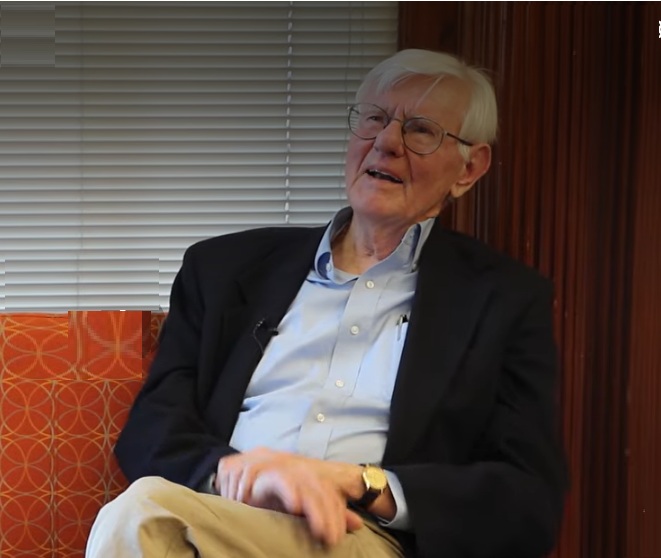
Even though that false framing was debunked forcefully and repeatedly by real historians, U.S. schools have been teaching the “1619 Project” anyway. Gordon Wood died this week. He was a Professor of History emeritus at Brown University and author of the acclaimed book “The Radicalism of the American Revolution,” as well as “Empire of Liberty: A History of the Early Republic, 1789–1815.” Wood was recognized as one of the most eminent authorities on this nation’s founding, and in 2019, in his courtly, understated way, gave a lively interview explaining just how full of garbage the Times’ anti-American propaganda was. Revealing that Hannah-Jones’ “racist America” trope was hooey was politically incorrect in 2019, so Wood had to go all the way to the World Socialist Web Site to have his analysis published. (The Times, if it weren’t such a biased disgrace, would have interviewed him.)
Here is the whole interview. It doesn’t matter who the interviewer was, but the “A” signifies Prof. Wood’s replies. The result is long but fascinating; I learned a lot, and perhaps you will too.
As we know, however, Facts Don’t Matter…


EXCELLENT, informative read!
PWS
But its systematic racism Jack! The kind you white people can’t see!
Oh and it’s also the microaggressions! Which no matter how well you behave will always be up to the self-described aggrieved to define on your behalf!
“But its systematic racism Jack! The kind you white people can’t see!“
It may be worse than that: Structurally Institutionalized Systemically Intersectional Fragility…
PWS
I understand what “Structurally Institutionalized Systemically Intersectional Fragility” means.
But, what does PWS mean?
WordPress has diligently refused to allow me to post under my real name Paul William Schlecht.
They won, I gave up trying; but the PWS is to flip them off.
PWS
Great read. Thanks Jack
“Of course, I think the ultimate turning point for both sections is the Missouri crisis of 1819–1820. Up to that point, both sections lived with illusions. The Missouri crisis causes the scales to fall away from the eyes of both northerners and southerners. Northerners come to realize that the South really intended to perpetuate slavery and extend it into the West. And southerners come to realize that the North is so opposed to slavery that it will attempt to block them from extending it into the West. From that moment on I think the Civil War became inevitable.”
Enter the Democrat Party. A party founded as a coalition of handful of minority interest groups – southern planters, disaffected southern whites and disaffected northerners – it was able to cobble together enough of a voting bloc to appeal to the members of the coalition to allow them to avoid the larger discussion – slavery.
Kicking the can down the road became the hallmark of the anti-abolition Democrat strategy. The Civil War (or some sort of decisive event regarding slavery) could have happened in the late 1820s when it would have been far less impactful overall (though there’s a greater change the anti-slavery forces don’t prevail). No, the Democrats, avoiding the important discussion of the day, ensured that the decision on slavery would occur in a bloodier industrial affair much later.
Always a treat to hear great professors profess. Brilliant minds being brilliant. And authoritative. They speak in paragraphs, the way people in the seventeenth and early eighteenth centuries wrote and evidently spoke.
“the Revolution, I think, as essentially a conservative event”
It was sort of conservative, sort of radical. The Founder’s fundamentally believed they were fighting for a “time before” when their rights as Englishmen were respected in opposition to the “time now” when their rights had been trampled. They were not radical like the French revolution that, instead of seeking to *return* to an ideal, sought to completely change society and even human nature, leading to that bloody repudiation of premises. But it was radical (for the time) in the form of government it ultimately settled on.
Excellent post. It gives me a different perspective on the country at the time of the Revolution and its early decades.
Thanks for posting it.