Ew.
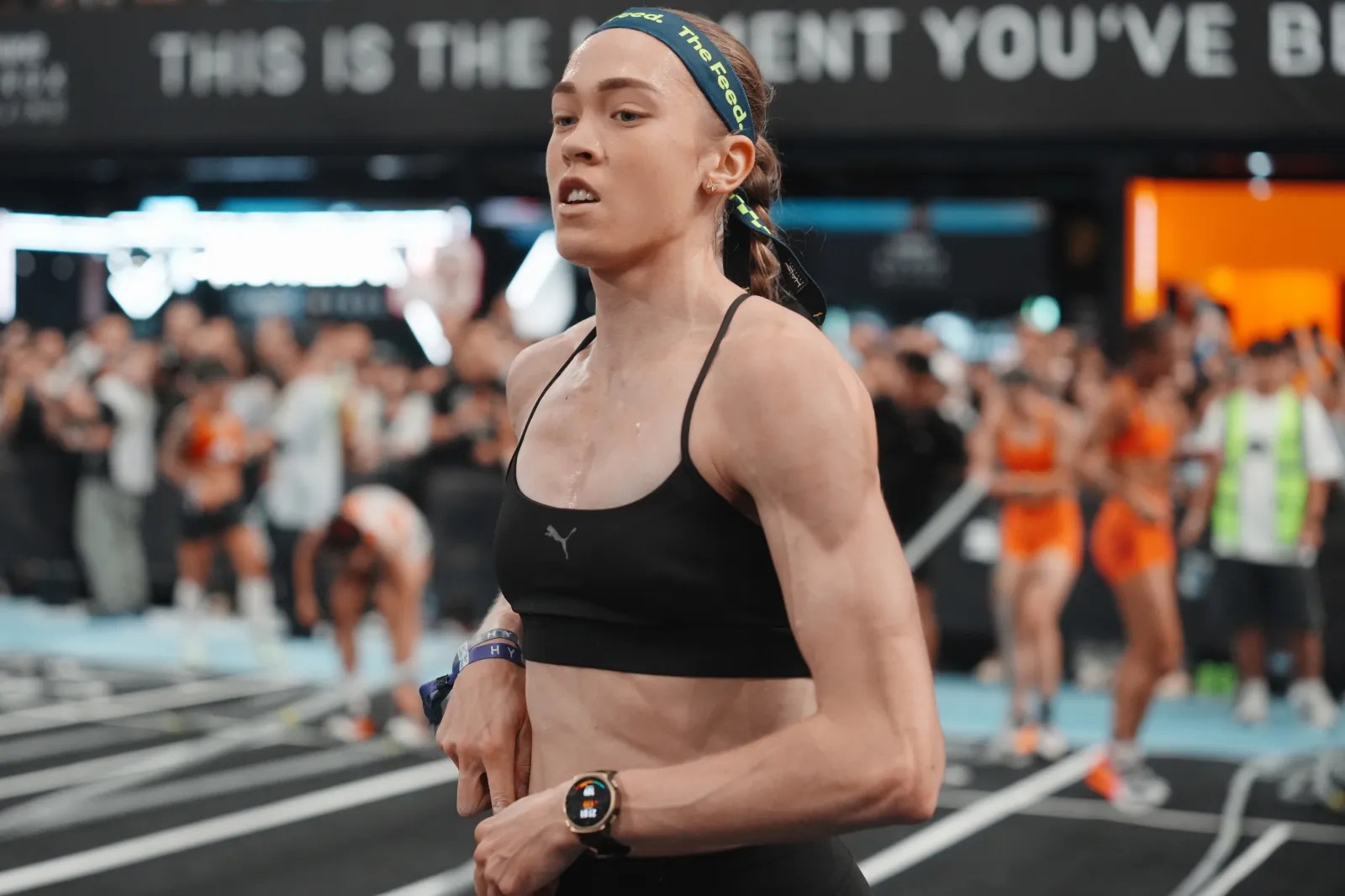
Joanna Wietrzyk is the world champion of Hyrox, a sport I had never heard of before today and was not the worse for it. It is an indoor fitness competition where athletes alternate between completing eight 1km runs and eight workout stations until they win or drop. Wietrzyk won the age 16-24 elite event in Beijing over the weekend, but the stress of the ordeal caused her to have a diarrhea attack mid-race. Video online shows Wietrzyk with brown stuff running down her legs as she ran.
It isn’t that rare for athletes to have such accidents while competing in high-stress endurance events. Severe stomach cramps forced Paula Radcliffe, a champion marathon runner, to, uh, relieve herself by the side of the road during the 2005 London Marathon. In 1998, Ireland’s Catherina McKiernan had the same mishap while winning the same race. It isn’t only the endurance competitions either where such involuntary occurances happen. Kansas City Royals pitcher Craig Kimbrel vomited on the pitcher’s mound this month while playing baseball in extreme heat.
Oddly, participants and fans of an athletic event that they know puts competitors under extreme conditions revealed themselves as weenies after the Wietrzyk episode. One male competitor in Beijing wrote on Instagram: “For people who were exposed to that situation, there could be genuine physical and psychological consequences. I paid Hyrox to provide a professionally organised and safe event. [Yes, competitors pay an entrance fee] So while I understand the athlete perspective, ultimately my contract and expectation is with Hyrox. If the organisation accepts that something went wrong, why not offer affected participants refunds, credits, or some meaningful form of compensation?”
Other social media mobsters attacked the organizers and Joanna Wietrzyk. What, exactly, did they expect the competition to do in the name of avoiding “genuine physical and psychological consequences”? Drop a tarp over her? Call in a HAZMAT team? Hose her down as she ran?


I dunno. I guess it is an “ick” factor more than anything.
Having almost suffered a similar calamity in the London Marathon in 1998 (thank heavens for those ever-present portopotties! One does learn to “puckerr and sprint”) I don’t see this is either a fault of the competitor or the organizers. Those complaining should grow up and face rreality. Extreme sports competitions do wreak havoc on one’s body. I suspect this competitor suffered stomach issues because she was in a new country, out of her routine, and ate things that she was not accustomed to eating prior to competing. I say kuddos to her for finishing and winning. I would worry about dehydration more than anything during a competition like that.
jvb
Welcome the the messy world of biology. I think she should have kept the post. The ‘I didn’t stop because of some inconvenience’ is integral to sports, even if I think it goes to far. People have competed with broken bones. Tiger woods won the 2008 US Open with a torn ACL and multiple stress fractures in his legs. She should have gotten a lot of support for that post. The fact that she deleted it suggests that she did not. I worry about the current generation.
I agree; she should have kept the post up. She was right, the critics were wrong.
I’m curious. If the main actor in a stage play had a bad case of the runs with no understudy, what happens? I believe it is “the show must go on”. Is there an alternative option?
I see no substantive difference except the sports competitor is outside and thus is more sanitary than any accidents in an indoor theatre.
“Make a bit out of it.”
An interesting anecdote:
Last week, The Warning (I’ve written about them before, the Mexican power trio consisting of 3 sisters) celebrated the release of their fifth album, “Everything’s Falling” with a string of 3 ssoldout shows in LA. As luck would have, the lead singer and guitarist suffered a malady that left her voiceless or in danger of being voiceless for the last show, risking cancellation and a debacle for the release of the album. They did something creative – first, the other sisters stepped up and sang lead vocals on many of their songs (the bassist is the youngest of the three but does not like to sing lead vocals, causing the internet to melt down because Alejandra sang lead vocals); second, they asked singers from other bands on the bill to help with siinging their songs.
From the videos I have seen, the guitarist felt well enough to rock on the guitar and the guest singers did veryy well, which gave the crowd in attendance at the final show something special to enjoy.
I say kudos to all involved.
jvb
Here is a link of Alejandra joking about being the leader of The Warning at that show:
https://x.com/warning_token/status/2098972266554151053?s=20
Shades of the NFL!!
Of course extreme sports competitions wreak havoc on the body. That’s part of why they are entertaining. And, by the way, very attractive to their participants.
I’ve already defended the NFL once, at length, but I can’t resist noting the double standard here. And before anyone goes there, the risks to your body in exertion so excessive that your normal functions go haywire are life threatening. Just like the risks from other dangerous and popular sports, like stock car racing, Formula 1, high diving, sky diving, big wave surfing, etc. Not to mention the combative sports.
So I would expect our group here to condemn this woman, and all who watched her or participated. I’ll wait.
Wow. What an awful analogy!
1. Hyrox competitors pay to make themselves sick, nobody entices them to do it. I’d compare it to people paying 20,000 to risk dying on Mt. Everest.
2. The NFL, in contrast, pays large amounts to make its player risk catastrophic brain damage and early death.
3. I risk diarrhea every time I eat chili. I would not risk brain damage and death.
4. Get back to me when competitors start dying at the competitions, or when the stats show that competitors have a 25% likelihood of becoming vegetables in their 50s.
Ethics verdict: This has no relevance to the NFL and football whatsoever.
Your principal ethical objection is that the NFL players are paid to risk their health? Good heavens, Jack–even a brief look at the Hyrox endorsements shows that people are paid, a lot, for participating.
“The HYROX athlete endorsement landscape transformed significantly, fueled by a massive global expansion and multi-year corporate partnerships. [1] (https://suffercityaz.com/blogs/news/hype-rox-can-hyrox-survive-the-gap-between-fitness-and-sport), [2] (https://www.sportspro.com/news/sponsorship-marketing/hyrox-puma-sponsorship-footwear-apparel/)The biggest catalyst for athlete endorsements was PUMA signing a massive deal to become the Official Apparel and Footwear Partner of HYROX. Under this umbrella, major athletic brands, nutrition companies, and recovery tech providers dramatically scaled up direct individual endorsements for top-tier competitors, specifically targeting the Elite 15 field. [1] (https://www.sportspro.com/news/sponsorship-marketing/hyrox-puma-sponsorship-footwear-apparel/), [2] (https://suffercityaz.com/blogs/news/hype-rox-can-hyrox-survive-the-gap-between-fitness-and-sport)👟 Major Athlete Endorsement DealsWith major sportswear brands locking down individual competitors, top athletes signed high-profile individual ambassador deals:Hunter McIntyre: The three-time HYROX World Champion and men’s pro world record holder headlined PUMA’s premier athlete roster.Megan Jacoby: The 2024 HYROX World Champion signed as a prominent global ambassador for PUMA.Jake Williamson: The Men’s Open Doubles world record holder joined the global brand ambassador team.Joanna Wietrzyk: Renowned as Australia’s fastest female and Women’s Pro Doubles world record holder, she secured a major partnership with PUMA.Hidde Weersma: The Dutch athlete and Men’s Pro 25-29 World Champion was integrated into top-tier footwear and apparel backing. [1] (https://endurance.biz/2025/industry-news/puma-early-renews-and-extends-hyrox-partnership-until-2030/), [2] (https://sgbonline.com/puma-extends-partnership-with-hyrox-series-to-2030/)📊 Endorsement Categories & Key BrandsWhile PUMA controlled a dominant share of the elite field (mandating the use of their technical footwear like the Deviate Nitro series for sponsored athletes), other brands aggressively entered the space to sponsor participants: [1] (https://www.marketingbrew.com/stories/2025/12/17/fitness-sponsorships-hyrox-usaa), [2] (https://www.sportspro.com/news/sponsorship-marketing/hyrox-puma-sponsorship-footwear-apparel/), [3] (https://suffercityaz.com/blogs/news/hype-rox-can-hyrox-survive-the-gap-between-fitness-and-sport)CategoryKey Brands Endorsing ParticipantsSportswear & FootwearPUMA (Primary), with emerging competitive roster pushes from Adidas, Nike, and Joma.Nutrition & SupplementsCentr, MyProtein, Xendurance, and Wod Powders.Media & EventsRed Bull (featuring top athletes in documentary content) and Eurosport.🏋️ Everyday Participant “Micro-Endorsements”Endorsements in HYROX extend well beyond the Elite 15. Because HYROX is heavily community-driven, brands increasingly focused on micro-influencer and everyday athlete ambassador programs. Local gym networks, training apparel lines (such as Reprimo UK), and recovery brands leveraged everyday racers to generate peer-to-peer recommendations on social media. [1] (https://www.sgieurope.com/consumer/hyrox-becomes-a-brand-battlefield/119782.article), [2] (https://www.sportspro.com/news/sponsorship-marketing/hyrox-puma-sponsorship-footwear-apparel/), [3] (https://www.facebook.com/fb-answers/hyrox-athlete-sponsorship-deals/)
And the 25% number you toss out is obviously wrong, as the critiques of the study (sample size, self-selection bias) have repeatedly noted. But that misses the point–you are applying a double standard here.
There have been two Hyrox deaths this year alone, during participation. No one has died in an NFL contest since 1971, while people die in marathons and other endurance contests annually.
Short answer–if you are attacking the NFL for being unethical because of the serious health risks (willingly undertaken by the participants for millions of dollars), then you are on the slippery slope that leads to ethical attacks on virtually all extreme sports.
Double standard.
Not even related standards. That champion hyroxer has earned a grand total of $60,000 in prize money this year. And she’s the most successful one. That’s worth the embarrassment of a bowel malfunction, but not death and dementia. The average NFL player gets $5.2M to $5.5M a year. That’s enough to entice players to cripple themselves. And your acceptance of the NFL apologists is…troubling. 90% of the brains of NFL players examined have shown evidence of CTE, and even the brains of college players show damage. The 25% figure is likely to be underestimated. Is it ethical to pay someone to risk their life and the welfare of their family for your profit only, depending on the non-ethical consideration of money and short term gratification to overcome their obligations to themselves and loved ones? No.
I could make a disgusting joke about your imaginary slippery slope from diarrhea to brain death, but I won’t.
As I mentioned, I think this phenomenon often goes too far, but that doesn’t change the fact that it is integral to sports. The Kerri Strug vault in the 1996 Olympics is really on the line for me. If it had happened in her earlier Olympics, it would have definitely crossed the line. It looks like she was 18 when this happened. This is technically an adult, but that was a serious injury. She ‘retired’ from the sport after this. I can’t tell if it is because of the injury, but it is not unreasonable. Others have pointed out that women often aren’t competitive in gymnastics at that age. I have to wonder why we allow such sports that would require children and either can’t be done by adults or that destroy their bodies by adulthood. So this heroic vault very possibly ended her gymnastics career at 18. Was it worth it? I think that is a very debatable point.
There are a lot of things about sports that I question. However, ‘playing while hurt’ is a longstanding tradition and (if not take to an extreme) one of the selfless and noble traditions of sports.
neither ick or ethics. In my mind, purely inconsequential and irrelevant to society in general.
Basically I agree. There is an overriding issue of these kinds of extreme sport competitions, though, as Zoomie alluded to above. I am still on the fence about the ethics of marathons, triathlons, and/or Iron Man competitions. I guess having run a dozen or so marathons, the ethics is a non-issue to me.
All of the competitions have been professional, sanctioned events in big cities capable of handling them. They are well-organized, the streets where the races are run are in good condition, and there is a paramount importance placed on keeping the participants safe with strategically place first responders throughout the course. Water stations are available at every mile marker offering water, electolytes, Gator Aid, etc. Spectators are encouraged to cheer on the runners (and around 20 miles or so you need that from someone who sees you are struggling). Spectators tend to be respectful of the course, the rules, and the runners’ safety, which is kind of cool because it is impossible to “rope off” a 26.2 mile course, yet spectators are friendly and pooches are usually kept on leashes.*
jvb
*Ed. Note: Except that time when a spectator’s pooch wandered out into the course and trotted along side me for a bit until the wise canine recognized that I didn’t have a snack, that long-distance running is a crazy idea, we humans do really dumb things, and walked back to his ward, to the merriment of many as well as yours truly.
When I first read the headlines, I thought it was about Hydrox cookies, those second rate versions of Oreos…
Haha, me too. That perhaps deserves its own study. Oreos are the imitation, but better than the original. Why does no one think of Hydrox?
Or this: https://en.wikipedia.org/wiki/Hyrax
I have not seen HYDROX on any supermarket shelf in years.
Metamucil, ex-lax, run, run, run!