Early voting is, EA holds without doubts, a breach of election integrity, a system that deliberately appeals to the blind, apathetic, knee-jerk partisan voter. The reason should be obvious: the campaign period is a time to learn about the character and positions of candidates, and not infrequently information arises during that period relevant to the voter’s determination of who is worthy of trust and support. In my case, a campaign ad in which a candidate lies or makes a statement that I consider disqualifying will potentially change my vote.
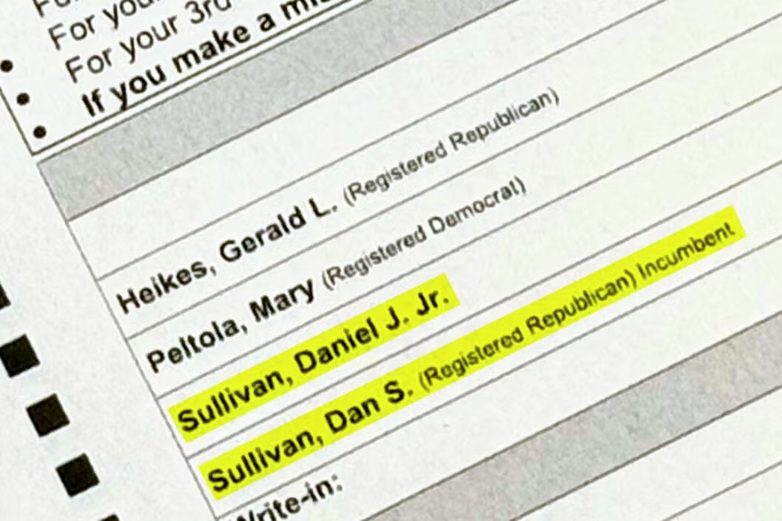
In the current election, two revelations came to light that should, or at least could cause a discerning voter to change his or her mind. One is the accumulating evidence that Rep. Omar engaged in immigration fraud. The other is the New York Times report that Alaska U.S. Senate candidate Mary Peltola’s campaign deliberately sought to confuse voters by recruiting a second Dan Sullivan—that’s the GOP Senate candidate’s name— to appear on Alaska’s ballot.


It doesn’t matter that recruiting a candidate with a similar name to a rival candidate should, in theory, only fool idiots. The tactic of trying to confuse voters at the ballot box is a confession that the Peltola campaign doesn’t think they can win hearts and minds honestly. If the deception succeeds with any voters, then that’s an unfair advantage.
I’ll admit that ranked choice voting wouldn’t solve this particular problem, both because people who are genuinely confused about the candidates probably couldn’t figure out how to solve the issue by ranking their choices, and because even if they did, there’s still no guarantee the decoy candidate would be the first one eliminated.