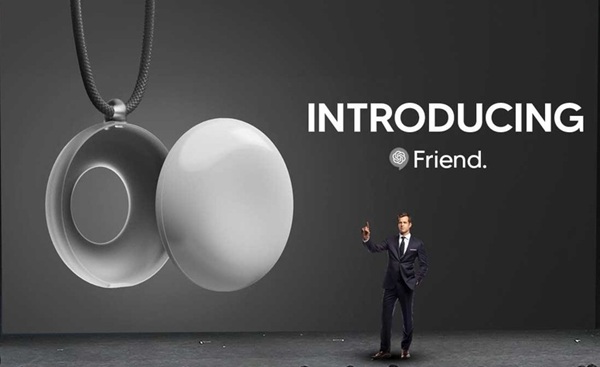
This is the latest question from an ethics-challenged boob that “The Ethicist” (the New York Times Magazine’s ethics advice columnist, Kwame Anthony Appiah) thinks is worthy of discussion and publication:
“Can I Have an A.I. Chatbot Field My Mother’s Endless Complaints?” “Would using a chatbot as an emotional buffer be compassionate, or would we be failing in our filial duty by substituting an algorithm for a child’s attention?”—Name Withheld
Wow. No wonder you withheld your name from being attached to that disgusting suggestion, Whoever You Are. If you didn’t, everyone with an ethical brain cell left would know you’re a heartless asshole.
The answer is “No!” Sure, you can do it, just as you can set the neighbor’s dog on fire. But it’s obviously unethical, wrong, unforgivable, and a terrible idea. Of course it is. Gee, would it be all right to substitute a bot for actual parenting when your child is upset? Oooh, tough one! Would it be ethical to have chatbot in the confession booth while the priest takes a nap?
I wrote this before bothering to read what good ol’ Kwame wrote. Let’s see…
Ugh. “The Ethicist” actually thinks this abdication of family duty might be justifiable! He writes,
“The fact that a chatbot is no substitute for human companionship doesn’t mean it can’t play a useful role when other people aren’t available. You owe your mother attention and companionship, but not in unlimited quantities. It’s relevant that you and your brother are feeling exhausted by emotional demands that exceed what you can reasonably supply. If your mother would feel better having an A.I. chat partner, that counts as a reason to provide one.”
The last sentence is a despicable cheat. “If your mother would feel like she was getting exactly the same amount of attention and loving concern from a machine that she obviously needs from her children, then why not?” That’s a self-ratifying proposition. It would be just as valid if you substituted “trained snail” or “inanimate carbon rod” for “machine.”
If my parents , or my wife or my sister, or my son felt the need to talk to me, and especially me, for any reason important to them, I would be there for them, and they knew it. There was no limit. There would never be a limit. The same is true of any friend. (My clients, on the other hand, pay for the privilege) If I were running short of time due to other commitments, I would say so with apologies, but promise to be available as soon as possible. What I would never say is, “Hey, here’s a bot you can talk to. Good luck!”
You can read the whole exchange here. If I were you, I’d use my time more judiciously.


What in the hell is wrong with these people? My late mother would have asked, with disdain, “Were you raised by wolves?”
I find myself wondering this same thing daily, or sometimes multiple times per day.
I strive to be a good example and a ready resource of reason to my grandsons. Obviously others aren’t setting the bar very high,
Apparently everyone is as sick of The Ethicist as I am, given the lack of views on this post (even for a Saturday, when tumble weeds roll down the streets of EA. I guess I should shelve the “Ethicist” posts, which have been a tradition through four hosts of the column. Lately, the number of genuinely interesting topics has been thin indeed.
I mean, my answer would be to learn to set boundaries and tell their mother they need more space.
Jack, have you never had to set boundaries before? Has no one ever wanted to spend more time with you than you wanted to spend with them? (It’s rare for me, but it has happened.)
Boundaries is one thing: rejecting friends and relatives in need is something else. And saying “I don’t have time to talk to you, but talk to my robot” is something else again.
Nobody wants to spend time with me….
Based on the phrase “endless complaints”, it seems clear to me that the questioner is fairly certain that their mother isn’t “in need” most of the time. Even if she were, it’s not psychologically sustainable to expect her child to be there for all of that time. They have their own life, and not allowing them to live it defeats the point of being a parent.
That’s probably because whenever someone disagrees with you on something you think is important, you rapidly make up your mind that they’re a stupid or bad person and nothing can convince you otherwise. I suggest learning to see things in terms of, “I understand why you think that’s a good idea. Here’s what I think will happen if you do that, and I don’t think that’s what you want. Would it work better if we did it this way instead?” That’s the most effective way I’ve learned to deal with disagreement, and I’m still boggled that it hasn’t become standard practice.
Yeah—they don’t have “tongue in cheek” on your planet, maybe because you have no tongues or cheeks. In reality, I have more people who want to spend time with me than I can handle, and always have. I still wouldn’t tell them to talk to a Jackbot instead.
But thanks for the gratuitous insults…(See, that’s tongue-in-cheek again)
Insults? You don’t think that’s simply an accurate description of your approach to disagreement?
I admit I’m surprised people tolerate it, but maybe they’ve just never disagreed with you on something you consider an ethical issue, or maybe, as with the friend you mentioned in a previous post, you choose to remain silent because don’t know how to express your disagreement without offending them.
You really are from another planet, aren’t you? I am easily convinced of a new and opposing opinion when someone has more than emotion and ignorance to offer. There are dozens of examples on this blog.You take an idealized position in the abstract that people who have unreasonable and illogical positions—which are simply unsupported opinions—will be convinced by reason and logic. Most can’t or won’t. No, I hold that unsupported and unsupportable opinions should be aggressively rejected and that there be sufficient negative reinforcement to convince them to do better. Such passive aggressive or fake diplomacy as “I hear you” or “let’s agree to disagree” just achieves status quo incompetence.
And this, my arrogant friend, is bullshit: “you choose to remain silent because don’t know how to express your disagreement without offending them.” No, as I said, I choose to remain silent because she’s nuts,, proclaims that anyone who doesn’t share her bizarre world view is by definition not worthy of association with her, and she needs friends because she’s desperately unhappy. I know how to express my positions with consistent effectiveness, and have in the past crushed a debate adversary so flat that they ducked me for days or more. In the final analysis, anyone who resents the one who proves them wrong isn’t a very good candidate for open communication. I’m not afraid of offending anyone: heaven knows I’ve done it enough. Nor do I doubt my persuasive skills. I have learned that being kind, considerate, tolerant and prudent is often a better course than winning an argument when whether someone agrees with me matters less than continuing what is otherwise an enjoyable relationship.
“I am easily convinced of a new and opposing opinion when someone has more than emotion and ignorance to offer.”Everyone believes that about themselves. The whole point of bias is that it looks like pure reason until you step completely outside it so you can see the value of what you’re dismissing. If someone fails to convince you, obviously their arguments were just emotion and ignorance. I’ve seen you draw that conclusion without indicating any understanding of the positions you dismiss. We don’t overcome our biases like that, let alone persuade other people to overcome their own biases. Your assumptions may be good, but you will never know how good they are until you can suspend them and rederive them from scratch.
“You take an idealized position in the abstract that people who have unreasonable and illogical positions—which are simply unsupported opinions—will be convinced by reason and logic.”
Not by reason and logic alone, as you seem to think. One part that you’re missing is to create a space where they feel safe enough to suspend their own assumptions and step outside of their own biases. You don’t seem to know how to do that. Another issue is that priorities precede logic. Logic is how we accomplish what we care about, but it doesn’t tell us what we should care about in the first place. Remember, you can’t derive an ought from an is. You need to start with an ought. When two people prioritize different things, you need to learn how to suspend judgment long enough to figure out ways to resolve the conflict other than “they need to accept they’re wrong and give up what they think matters.”
“No, I hold that unsupported and unsupportable opinions should be aggressively rejected and that there be sufficient negative reinforcement to convince them to do better.”
And what outcomes do you see from that approach?
“Such passive aggressive or fake diplomacy as “I hear you” or “let’s agree to disagree” just achieves status quo incompetence.”
I agree completely. Organizations, institutions, and society in general have to make decisions together about how to respond to problems. We can’t just ignore or paper over our disagreements about how to solve those problems. (That’s why uniting people against the common enemy doesn’t help. People may agree on what policies to oppose, but not what policies to replace them with.)
My approach is specifically geared towards helping people find solutions they can unite behind, not just playing nice with each other. Playing nice with each other is just a precondition for finding mutual agreeable solutions.
“I know how to express my positions with consistent effectiveness, and have in the past crushed a debate adversary so flat that they ducked me for days or more.”
What did they do to make you think that you successfully persuaded them you were correct? How do you know they weren’t just avoiding you because you think people who disagree with you are (at least partially) idiots and treat them with disdain?
“In the final analysis, anyone who resents the one who proves them wrong isn’t a very good candidate for open communication. I’m not afraid of offending anyone…”
Again, if you’re not afraid of offending anyone, why do you think that the reason people resent you is because you “proved them wrong”?
I should clarify: My point wasn’t that you were afraid of offending people. My point was that your current skill set gives you a choice between remaining silent or offending the people you disagree with. Which option you choose depends on how much you value a relationship and how important you think it is that the person changes their mind.
But you seem to have a vested interest in disbelieving the possibility of making your disagreements known, and even being quite persuasive, without offending or “crushing” anyone, even if they are prone to taking offense or feeling crushed by being proven wrong. In my experience, this approach is far more persuasive, because I’m not fighting past someone’s ego to get to their critical reasoning skills. Ironically, the people I’ve had the least success with are you and some of your “rational” readers.
“Nor do I doubt my persuasive skills.”
I suggest you start.
My point was that your current skill set gives you a choice between remaining silent or offending the people you disagree with.
And it was a misbegotten point.
I suggest you start.
Similarly mistaken and ignorant. As just one example, I make my living in part as an expert witness. My winning record is impressive. I have prevailed in 7 hour hostile depositions. My persuasive skills have served me very well the vast majority of the time. As an artist, I have undertaken projects that virtually nobody believed could succeed, and am known for persuading skeptical artists to join me. And so on. One reason I can persuade people is that I have a track record of being right when nobody else agreed with me. Here as well.
I suggest you take your…never mind, sorry. I suggest you get out of the judging business when you don’t have sufficient information and perspective to render an opinion.
If I understand this correctly (and making some inferences based on prior context), you’re saying that you’re able to convince lawyers that your interpretation of legal ethics is the correct one? (I’ll hold off on commenting further on this point until I understand better.)
That’s seriously impressive. How do you usually do that? I’m fairly certain it calls for a very different approach than getting people to take your political perspectives seriously, but I admit that I was too broad in impugning your persuasive skills. I apologize.
What happens when in a situation where you can’t rely on that asset, either because your track record isn’t relevant or because someone doesn’t trust it?
I should elaborate. If you’re persuading someone to participate in a production, you probably respect them very much. If you are participating in a hostile deposition, you might not respect the person you’re talking to at all, but you don’t need to, because they’re not allowed to just walk away and ignore you.
In a political discussion, anyone you don’t treat with respect can walk away and ignore you. I have seen zero evidence that you’re prepared to deal with that situation other than remaining silent. Do you know how to express seriously disagreement respectfully in a way that other people can understand and appreciate?
If I understand this correctly (and making some inferences based on prior context), you’re saying that you’re able to convince lawyers that your interpretation of legal ethics is the correct one?
Not how it works on this planet. My opinions have to convince judges, arbitrators and juries, plus the occasional disciplinary committee.
In that case, it sounds like the person who is wrong (and sometimes “crushed”) isn’t actually the person you’re convincing. They didn’t have to acknowledge defeat, because someone else decided it for them. Open communication with the person who was wrong was never part of the process. On the flip side, I’m guessing at no point did you have a reason to tell the people you were trying to convince that their position was stupid. Am I right?
The people I have to convince theoretically didn’t have a position.
Those situations are irrelevant to the issue anyway. The issue is: how does one convince someone with a counter-factual position who will not give up fealty to that position regardless of what is said, to reconsider what they have adopted irrationally? The answer usually is, “You can’t.” Because reason and logic have nothing to do with the problem. If you demonstrate respect for a non-respectable argument, then you 1) give positive reinforcement to bad reasoning and 2) you still won’t change their minds. Pointing out that the position makes no sense and that you have lost respect for the position’s holder at least has the advantage of revealing the downside of holding ignorant or unsupportable opinions. If they are subject to validation or disproof, at least in retrospect that individual will concede. “Heck, he was right after all.” and learn a lesson. If even then the individual will stick to a position that has been proven false, that individual is hopeless, and has shown that debating him or her is futile regardless of the strategy. If it’s just a matter of adamant belief without reason: “abortion has no moral or ethical angles except a woman’s “choice” or “blacks are inferior to whites’, again, persuasion is useless and the attempt is just frustrating. I once interrupted a debate on TV between an atheist and a Catholic because it was pointless. They listened to each other, but since neither’s belief system would allow genuine consideration of the other’s position, it was obviously going to be deadlock.
Debating a position for the benefit of third parties who are undecided is a different matter: I’ll take on that challenge with pleasure. But I do not see how “listening” to someone who insists that President trump is a racist because “he just is and everybody knows it” is productive. At least “That’s not an argument, it’s just a conviction without evidence” correctly characterizes the position correctly and honestly, as uncomplimentary as it may be.
First and foremost, I wholeheartedly agree that we should not allow wrong people to think they’re right. There are a lot of bad ideas and I want to rip them out of people’s heads. That’s why I spent so much time developing an approach with the greatest chance of disabusing people of their delusions. I wish your way worked, because contemptuously mocking people is faster and more fun than what I do.
First of all, how did you arrive at this conclusion? Have you ever actually demonstrated respect for a non-respectable argument and observed the results? If they were somehow more convinced that they were right because you listened to them, how would you notice?
Second, not listening to someone is a very reliable way of convincing them that they’re correct, especially about abstract and divisive issues like public policy. If you voiced support for a policy you thought was a good idea, and someone else called you an idiot without listening to your reasoning, would you see any reason to seriously consider their criticism, or would you conclude that they were one of the many people who disagree with you because they are ignorant and selfish?
Every conflict resolution expert will tell you listening is important. That doesn’t change just because someone is factually wrong. Listening is not a favor we do for people. It serves several practical purposes, and one of those purposes is to build your credibility in the minds of people who have no prior reason to trust your judgment and who can walk away from you if they decide you’re a waste of their time.
When I listen to people who are wrong and prove I understand them, that removes their instinct to defend their perspective. It also plants a seed in their head: “If this person understands my perspective and still disagrees, maybe there’s something I’m missing.” They’re willing to seriously consider what I have to say and walk back their more extreme sentiments. They start their journey towards a more reasonable position.
In the process of demonstrating my understanding of their position, I reframe it in a way that resonates with them while also stripping away the assumptions that cause problems. I give them unassailable core values to hold onto, values that require no justification, that neither attack nor be attacked. When they have a reasonable way to define what they care about, they feel safe listening to reasons why they should choose a different way of achieving it.
That’s not even mentioning the possibility that your policy position has an easily corrected flaw that you wouldn’t be aware of if you didn’t listen someone who opposed it long enough to figure out what their underlying concern was. When that happens, you can remove their reason for opposing your policy without compromising the goals of the policy itself.
The likely outcome of treating people with contempt is that they will be more convinced they are right. The likely outcome of treating people with respect is they will be more likely to listen to reasons they are wrong. (Getting them to accept those reasons requires another step and a few more concepts, but respect is the precondition that makes it possible.)
As always, you also have the option to walk away if you don’t think your time and effort will accomplish anything worthwhile. Just keep in mind that changing a specific person’s mind isn’t the only possible benefit of listening to them. You may also a) change the minds of people observing the discussion, b) learn more about the person’s point of view so you will be prepared to persuade others with similar points of view, c) better understand and express your own position by hearing criticism and reevaluating your goals and reasoning, and d) improve your command over the technique.
You’re right. I should clarify–my listening is not passive or silent. I get people to define the outcomes they care about. Have you heard of verbal judo? Judo is a martial art that emphasizes using a person’s momentum against them. In other words, you don’t try to stop a punch. You redirect it and get them to overextend themselves. My approach just does so in a way that doesn’t freak them out, because unlike real judo, a person can raise their mental forcefields and disappear once they feel they’re losing.
In your situation, I would frame it as an issue of trust. Racist is as racist does. The person doesn’t care about your interpretation of the evidence that means Trump is technically not a racist. The person does not trust that Trump’s actions will avoid causing problems for struggling ethnic groups. “Racist” is just sloppy shorthand for that. So what are they concerned that Trump will do? Then, how would we know if the problem was solved? One way is Trump leaves office, but if he’s still in office, what could he do differently? Or what could we set up so that we don’t need to trust him?
I will admit to using an encouraging tone while getting people to examine their reasoning. They’re more willing to let go of bad arguments if they feel that a supportive audience is confident that they can come up with something good. And I am confident; it’s just that what I’m helping them come up with isn’t a proof that they’re right, but a those unassailable values I mentioned. They need to be allowed to feel negatively about a policy, even a necessary one, before they are willing to explore better ways to respond to their feelings.
As you make them think about all these things, their certainty in their conclusions will start to bleed away. You then have an opportunity to replace those conclusions with something that addresses their concerns more constructively. That’s slightly more advanced, but I do find that looking for win-win outcomes (even if you have to think long-term) helps avoid the problem where you’ve listened to each other’s concerns, see only the obvious zero-sum solutions, and start arguing about whose concerns are more important.
This is how I get people to rethink their policy positions when they have no obligation to sit and listen to me criticize them. Now, where am I wrong?
I don’t know about the rest of you, but I’ve had enough of this Dunning-Kruger crap.
Extradimensional Cephalopod wrote, “Everyone believes that about themselves.”
That is an absolute and you don’t know what the hell you’re talking about. The self esteem of average people is generally so low that they simply can’t do what Jack wrote. You might want to take some time out of your busy schedule and actually read a few graduate level psychology books regarding what people actually believe about themselves. It appears to me that you made that up to try and undermine the value of what Jack wrote.
Maybe you should do a little self evaluation because I don’t think you’re effectively practicing the communication tools that you routinely preach about, at least it doesn’t appear that you’re able to effectively put them into practice.
Extradimensional Cephalopod wrote, “The whole point of bias is that it looks like pure reason until you step completely outside it so you can see the value of what you’re dismissing.”
PRACTICE WHAT YOU PREACH, EC!
It appears to me that that is something that your bias, yes you are biased, has prevented you from doing honestly. You don’t seem to be able to step completely outside your bias tunnel vision and honestly see the value of what you yourself are dismissing. Based on the communication steps that you’ve talked about routinely around here, it appears that you’re being hypocritical.
Extradimensional Cephalopod wrote, “If someone fails to convince you, obviously their arguments were just emotion and ignorance.”
That is an unsupportable personal insult and a direct challenge to Jack’s integrity. In fact, most of your comment follows along those lines.
Are you trying to get banned?
This is likely the last thing I’m ever going to write to you. Your comprehension of what Jack does around here is a bit like this; Jack writes in clearly understandable English (typos excluded) but you’re reading in dumbass. Now that may be really harsh but it’s now my opinion.
I’m not buying your Dunning-Kruger crap any longer.
I’m openly considering that you may actually be trolling.
I’ve noticed that if I read something and fire back a response in anger, I usually later find out I misread something that I could have caught if I made another pass while calm. Part of why I phrase things with humility is because that way I can be confident that when I do make a point I won’t be making a fool of myself. All that is to say, if you think I’m an idiot or a troll, you should take a break and reread to make sure you didn’t miss anything.
When I said “Everyone believes that about themselves” I was referring solely to the line I quoted immediately before: “I am easily convinced of a new and opposing opinion when someone has more than emotion and ignorance to offer.” That’s standard practice on this blog: quote, and response. I was not referring to Jack’s whole description of his legitimately impressive accomplishments.
You are correct that I exaggerated. More precisely, most people believe they are easily swayed by logic and reason, but they’re not always correct. I’m fairly certain you believe this, because regular people in the Democratic Party firmly believe that they’re aligned with logic and reason (yes, and empathy as well), and I doubt you think they’re correct about them having logic or reason on their side. (I may be wrong; you may think they secretly don’t care about logic or reason at all and are just lying about how much sense they believe they make and how irrational and ignorant they find Republicans. If so, that would only show that you don’t understand Democrats. Source: I have many Democrat friends. The things they say about you are similar to the things you say about them.)
If your entire invective was about that line “Everyone believes that about themselves”, then I hope I’ve cleared up that misunderstanding.
If you’re upset about my other comments in which I strongly suggest that Jack’s command over hard logic in legal settings and his well-honed charisma in theatre has given him a false impression of his ability to discuss politics constructively and persuasively with political opponents he thinks are morons…
I dunno. Feel how you want to feel. Believe what you want about me. I appreciate that you won’t make me hear whatever you’ve come up with. I’ll thank you to refrain from making indirect third-person remarks about me as well.
Extradimensional Cephalopod wrote, “I appreciate that you won’t make me hear whatever you’ve come up with.”
There you go again, reading through that tunnel visioned biased filter I wrote about that’s skewing your comprehension. No EC, I didn’t write I “won’t”, I wrote it’s not “likely”, do you understand the difference? You just can’t stop reading through that bias filter of yours that seems to convince you that you’re the smartest person in the room.
Extradimensional Cephalopod wrote, “When I said “Everyone believes that about themselves” I was referring solely to the line I quoted immediately before: “I am easily convinced of a new and opposing opinion when someone has more than emotion and ignorance to offer.” That’s standard practice on this blog: quote, and response. I was not referring to Jack’s whole description of his legitimately impressive accomplishments.“ (Bold Sentence For Emphasis)
No shit Sherlock; I wasn’t referring to that either. You sticking that in is signature significant.
See Sherlock, I knew full well that what I was quoting was a statement that was specifically about Jack’s sentence that you quoted and that is exactly why I wrote what I did; but nooooo, that comprehension filter of yours kicked in and you understood something that simply wasn’t there.
Extradimensional Cephalopod wrote, “I usually later find out I misread something…”
You seem to be reading things between the lines that simply don’t exist, your comprehension is skewed because of it, and your bias appears to be the driving force behind it. You’ve done this before and I’ve pointed it out before.
Extradimensional Cephalopod wrote, “I’ll thank you to refrain from making indirect third-person remarks about me as well.”
You’re willingly walking into the kitchen but you don’t want the heat?
Hmmm.
I overlooked the word “likely”; that’s on me. Case in point: I was hasty in responding and assumed that the only reason you would use words like “the last thing I’m ever going to write to you” is because you were committing to self-restraint. I apologize for misreading your comment.
Wait, signature significant of what, dare I ask? I thought (apparently in error) that you thought I was saying Jack was deluded about his competence, and I was trying to emphasize that I’m don’t doubt Jack’s accomplishments. What I doubt is that they give him authority or expertise in the field of productive political discussions. Is that what you’re complaining about?
The last sentence is a despicable cheat. “If your mother would feel like she was getting exactly the same amount of attention and loving concern from a machine that she obviously needs from her children, then why not?” That’s a self-ratifying proposition. It would be just as valid if you substituted “trained snail” or “inanimate carbon rod” for “machine.”
What? This is even more irrresponsible now that we’re finding that people who turn to AI as a companion are often worse off.
https://news.stanford.edu/stories/2026/08/ai-companions-chatbots-loneliness-research
I am not surprised that someone asked this question. There are clear generational differences in the ways people relate to and approach the digital age. I can imagine a scenario in which the adult child is tech savvy, glued to a phone or computer screen, whose communications with others is rarely face-to-face – with a parent who doesn’t perceive digital communication as real or loving. Mom or Dad might be persistently needy because the family emotional bond has been fractured by bits and bytes.
In this particular case I would ask about the frequency and proximity of communication. Quite literally, is Mom getting enough hugs from her children? Does she think they are truly listening, or just brushing her off? Or does she suffer from some dementia and doesn’t recall conversations? Maybe Mom is annoyingly needy. But maybe short episodes of eye-to-eye, hand holding, active listening conversation will help her feel ‘heard’ and loved. It wouldn’t hurt.