The Nurturing Of Race Hate, Part Two: The Daniele Watts Saga

daniele-watts

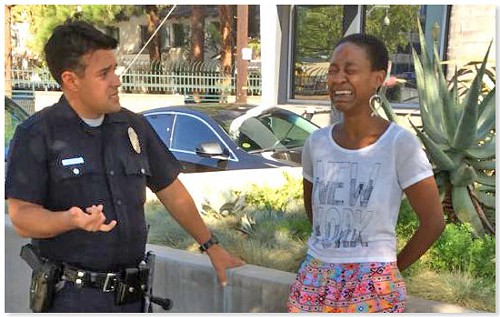
Last September, African-American actress Daniele Watts (“Django Unchained”) engaged in lewd, if non-felonious, public conduct, then exploited the tensions arising out of Ferguson to claim victim status, police harassment and race prejudice. When the police were exonerated by the recording of her arrest and she was ordered to apologize by a judge (and asked to apologize by civil rights leaders, who were embarrassed after they rallied to her support only to find that she had played the race card without  justification), she failed—twice—to deliver a sincere apology. She is defiant and intoxicated by her martyrdom, another young African American who has been convinced of her entitlement to be an anti-white racist.

To appreciate the tale, we have to go back to September 11, 2014, when the actress and her white boyfriend, a “celebrity chef,” were visibly engaged in sexual conduct in their car in broad daylight on an LA street. Neighbors complained—we have not yet reached the point where rutting in public is legal and acceptable, but give progressives time—and police responded. Naturally, as this was at the height of the Ferguson controversy, the news media immediately reported the story as more police harassment of black citizens, this time for “kissing while black.” Here’s a typical account from  September 14: Continue reading →

The Nurturing Of Race Hate And The News Media’s Complicity, Part One: The False Lessons of Nick Kristof

alison-parker-vester-flanagan-adam-ward-640x480

When it was reported that Vester Lee Flanagan II had accused one of his victims, Alison Parker, of making racist statements,  Baltimore BlackLivesMatter activist Kwame Rose tweeted that he hoped the accusation would be investigated, because it is white racism that causes blacks like Flanagan to turn against society. Now we have Rose’s answer (not that he’ll accept it, being a professional race-baiter): the shooter had been offended when the white reporter had talked about “going out into the field,” taking it as a reference to cotton fields. When a watermelon was bought by a TV station exec for the staff to share on a summer day, Flanagan thought it was a racist gesture aimed at him.The race hate that many in the black and progressive community have been working overtime to embed in the nation—brings out the base to vote, you know—bore deadly fruit in Vester Lee Flanagan. And he will not be the last.

A man with a successful and famous father who could never find success, Flanagan had absorbed the false assertion being aggressively pushed by political leaders and activists in the black community that the United States is so hostile to African Americans that none of his failures were due o his own choices, problems or conduct. His expanding racial paranoia made it impossible for him to keep a job, and ultimately led to murder and suicide.

Well done Continue reading →

Law vs. Ethics: A Snatched Bar Mitzvah Gift, A Leaky AG, An Embarrassing Scoreboard, and”OINK”

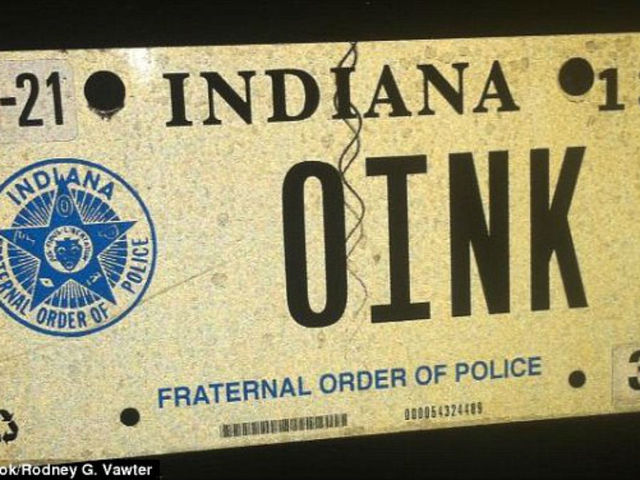
Oink

I try to keep my legal ethics seminars up-to-the-minute, so while preparing for yesterday’s session with the Appellate Section of the Indiana Bar, I came across a bunch of entertaining stories in which the ethics were a lot clearer than the law, or vice-versa. All of them could and perhaps should sustain separate posts; indeed, I could probably devote the blog entirely to such cases.

Here are my four favorites from the past week’s legal news, involving a mother-son lawsuit, a brazenly unethical attorney general, a college scoreboard named after a crook, and police officer’s sense of humor: Continue reading →

KABOOM! Political Correctness Makes The University Of Tennessee Go Nuts!

headexplode

This isn’t a joke. I wish it was. If it was a joke, I wouldn’t need a rag on a long stick to wipe my brains off the ceiling.

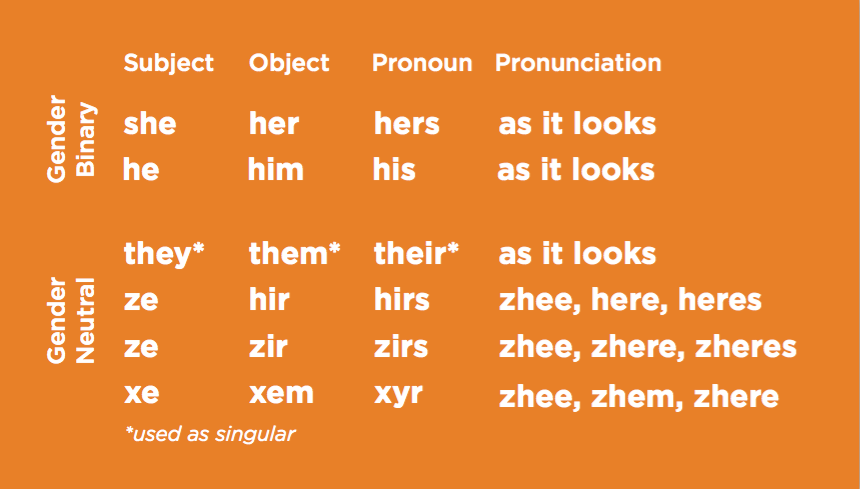
The University of Tennessee told its staff and students to stop calling each other ‘he’, ‘she’, ‘him’ and ‘her’, in order to “alleviates a heavy burden for persons already marginalized by their gender expression or identity. Instead they are to start referring to one another with terms like ‘xe’, ‘zir’ and ‘xyr.’  Like this…

gender-pronouns

Yes, they are quite, quite mad. If any UT student is still sane enough to understand how batty this is, in the sage words of the Amityville House,

“GET OUT!!!” Continue reading →

The Next Time You See One Of Those Opera Commercials About Selling Structured Settlements, Think About “Rose”

Rose

Because I worked as the general counsel for the late Richard Halpern, a kind and brilliant man, I know a lot about structured settlement, and also about the slimy businesses that conspire to destroy them. Richard’s company, The Halpern Group, worked with trial lawyers to develop structured settlements for successful plaintiffs who had won long-term damages for catastrophic injuries due to medical negligence, product liability or other torts. Most of these clients were poor, and if their millions in damages, designed to help them survive the rest of their lives, were awarded in lump sums, the result would almost always be catastrophic. These were poor people, for the most part, with poor families and poor friends and neighbors, none of whom had any experience or success managing money.  Drop millions on someone who has never had luxuries of any kind, and a spending spree as well and handouts to needy or greedy friends and acquaintances were sure to follow. For their own protection (or the protection of minors needing lifetime medical care), these plaintiffs of Rich’s lawyer clients were advised to forgo a big lump sum in favor of an annuity which would pay out regular amounts over time.

The plaintiffs own the income stream, but not the annuity itself. With assured income developed according to projected needs, the plaintiffs and their families could be assured of security and relative comfort and well-being—relative, because damages can seldom make up for broken bodies, minds and lives. Let me take over for myself here, from a post I wrote on this topic almost exactly six years ago.

Once they are on their own, however, the compensated victims are targeted by viatical settlement companies, both those with cute opera-singing commercials and those without. They undermine the sound advice of the attorneys with slogans like “It’s your money!” and try to persuade the former plaintiffs to unstructure the structured settlement by selling the annuity’s income stream to the viatical settlement company at a deep discount. Result: the annuity company gets the regular income at bargain rates, and the victims get a new, smaller lump sum to dissipate in exchange. The statistics say that the customer of the viatical settlement company will run out of cash long before he or she runs out of the need for it. But for the company, it’s a sweet deal.

It’s also despicable. The viatical settlement industry like to use lottery winnings, which are usually paid out in annuities like structured settlements, to justify their business. Lottery winning are windfall funds; while the same dissipation  hold for those lump sums (most multi-million dollar lottery winners have no money left after five years), the winners are usually no worse of after the money has been blown than they were before their number came up. When the money is a settlement for an injury, however, losing it is calamity. I would consider a viatical settlement company that only bought the income stream from lottery annuities ethical. There is no such company, however. The victims with structured settlements are a much larger and more lucrative market.

I have written about these legal but unethical businesses more than once. The first time, on The Ethics Scoreboard, I described a viatical settlement company only by using quotes from its own website, and explained what it meant, accurately. The company’s lawyers demanded that I take down the post, claiming that I had disparaged them (by using their own words and making it clear how they made their money.) I was in no position, with a family, a struggling business and aging parents, to engage in a legal battle of principle (though I suspected the company was bluffing, and I didn’t know Ken White and Marc Randazza then, both courageous blogging lawyers who assist bloggers who are threatened, like I was being threatened, to silence them. I took down the post. Continue reading →
Ethics Verdict: The New York Daily News WDBJ Shooting Front Page Isn’t “Tasteless” or Unethical; It’s Journalism

Virginia shooting

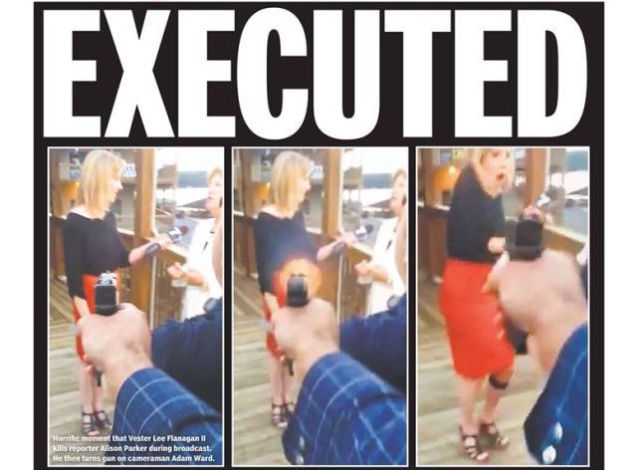
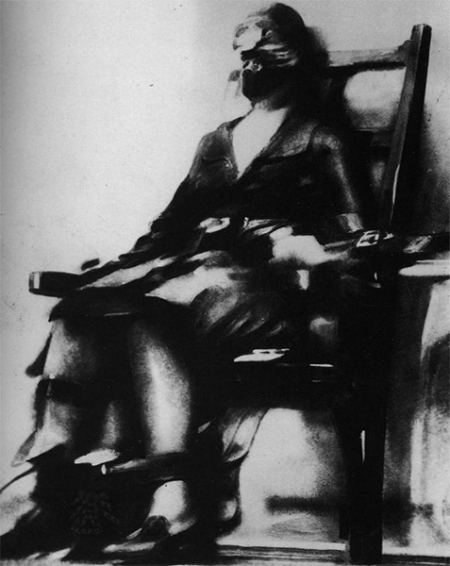
Honestly, I don’t get it. The horrible photos of the exact moment deranged racist Vester Lee Flanagan opened fire on Alison Parker convey what happened in specificity and clarity that no mere verbal description could. If your issue is gun violence, this shows it. If you want to see and understand what tragedy is “up close and personal” and even if you don’t want to understand it, this is how we learn. The furious criticism being focused on the Daily News is traditional Daily News hate, as far as I can determine. That paper has been criticized for having the guts to show raw images for a century now: one of its first outrages was a surreptitious photo of murderess Ruth Snyder being electrocuted:

Snyder_chair

Now that photo is history. Today’s front page will be history too.

At the journalism ethics site of the Poynter Institute, Kelly McBride, Poynter’s vice president for academic programs and a media ethicist, argues against using the unedited pictures, saying that “the problem with it is that it a deeply intimate image. It is a moment of someone’s death.”

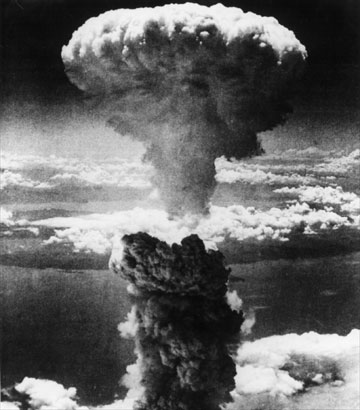
You mean like….. this?

Nagasaki

That’s just thousands of people being incinerated in Nagasaki, but from a distance, so it’s tasteful, is that the idea? Well, what about this award winner… Continue reading →

Update: More Abortion Advocate Struggles With Ethics In The Midst Of The Planned Parenthood Videos Revelations

panda

As the pro-abortion lobby has rushed to defuse the ticking time bomb of comprehension that might make lazy and inattentive American think. “Wait, that’s what happens in an abortion?,” its dishonest, desperate, and unethical arguments have been as revealing as the videos themselves, and as damning.

Frankly, I’ve been surprised: they really don’t have much that makes ethical sense, just “it’s legal!” and “It’s Our Bodies And We’ll Kill If We Want To!” (a little known B-side flop by the recently departed Leslie Gore.)  I recently wrote about their defenses in the posts Planned Parenthood Videos Surprise: Forced To Defend Abortion Ethics Acknowledging The Existence Of A Second Human Life In The Equation, Advocates Run Out Of Arguments (Part One) and Part Two: Bad Analogies. As I wrote in the latter: “If an advocate has persuasive, honest, strong arguments not based on fallacies and rationalizations, I assume that those would be the ones he or she would use.”

More evidence that they don’t possess them and also don’t care to have an honest debate recently came to light.

The most bizarre was an article in the Washington Post ostensibly about the ongoing drama at the National Zoo in Washington, D.C. The female panda there gave birth to twins (“Awwwww!”) then abandoned and neglected the smaller one (“OH NO!!!”) which soon died. Before the little panda’s demise, those clever abortion advocates of the Post saw an opportunity, and had a female reporter, Sarah Kaplan, author an article which the Post titled “The perfectly sensible reason why panda mothers and other creatures selectively abandon babies.”

If you want to think it’s a coincidence, go ahead. I don’t. To Kaplan’s credit, she avoided any overt analogies to human beings, and played it straight, as she always does. (She’s a terrific reporter.) Still, there is that headline. It’s sensible to “abandon” babies that will be too difficult for the mother to care for, “abandon” in the wild being the equivalent of “kill.” This points to  Rationalization #51—the latest on the Ethics Alarms list-–as a defense for abortion: “It’s natural.” Continue reading →

Ethics Observations On The WDBJ Shooting

Shooter

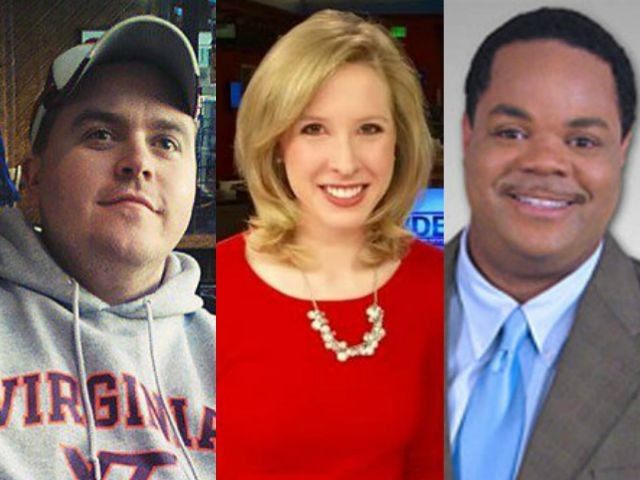
As you know by now, a reporter and her cameraman were shot and killed Wednesday on live TV in Roanoke, Virginia. The shooter was a a former reporter at the same station his victims, 24-year-old WDBJ7 reporter Alison Parker and 27-year-old photographer Adam Ward, worked for. Another woman was shot at the scene and apparently will recover. The shooter, Vester Lee Flanagan II, 41, fatally shot himself in his car after fleeing. He had used Bryce Williams as his professional name.

Later it was learned that Flanagan had successfully sued the station (it settled), which had fired him in 2013 after he had worked there briefly. Earlier he’d been employed at several other stations across the country, and had sued some of them as well. He tweeted prior to his rampage that Parker had used a racist term in his presence.

ABC then reported:

“A man claiming to be Bryce Williams called ABC News over the last few weeks, saying he wanted to pitch a story and wanted to fax information. He never told ABC News what the story was.This morning, a fax was in the machine (time stamped 8:26 a.m.) almost two hours after the shooting. A little after 10 a.m., he called again, and introduced himself as Bryce, but also said his legal name was Vester Lee Flanagan, and that he shot two people this morning. While on the phone, he said authorities are “after me,” and “all over the place.” He hung up. ABC News contacted the authorities immediately and provided them with the fax.”

The 23 page fax included such comments as…

  • “MY NAME IS BRYCE WILLIAMS. Why did I do it? I put down a deposit for a gun on 6/19/15. The Church shooting in Charleston happened on 6/17/15”
  • “What sent me over the top was the church shooting,” referring to June’s mass shooting at the  Emanuel African Methodist Episcopal Church in Charleston, S.C.
  • “And my hollow point bullets have the victims’ initials on them.”
  • “As for [Charleston shooting suspect] Dylann Roof? You [censored]! You want a race war [censored]? BRING IT THEN YOU WHITE …[censored]!!!”
  • “I was influenced by [ Virginia Tech shooter] Seung–Hui Cho….That’s my boy right there. He got NEARLY double the amount that Eric Harris and Dylann Klebold got…just sayin.”

A few observations: Continue reading →

Translation: “OK, Lying And Denying Responsibility Haven’t Worked; Let’s Try Lying And Accepting SOME Responsibility.”

Said Candidate Hillary Clinton at a campaign stop in Iowa:

“I know people have raised questions about my email use as secretary of state, and I understand why. I get it. (1) So here’s what I want the American people to know: My use of personal email was allowed by the State Department. (2) It clearly wasn’t the best choice. (3) I should’ve used two emails: one personal, one for work. I take responsibility for that decision, and I want to be as transparent as possible, which is why I turned over 55,000 pages (4), why I’ve turned over my server (5), why I’ve agreed to — in fact, been asking to — and have finally gotten a date to testify before a congressional committee in October. (6) I’m confident that this process will prove that I never sent, nor received, any email that was marked classified. (7).

Notes: Continue reading →

Comment of the Day #2: Advice From A Father To His Hypothetical College Freshman Son, In Reaction To “Ethics Observations On The Old Dominion University Signa Nu Fraternity Freakout”

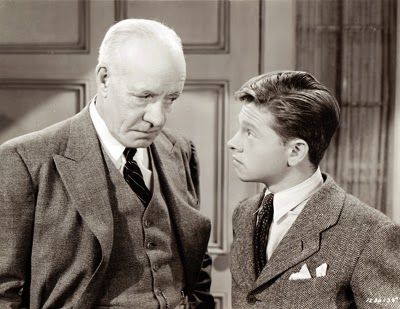
Judge Hardy would have approved.

Judge Hardy would have approved.

As with the first Comment of the Day posted today, Steve-O-in-NJ  takes an Ethics Alarms essay in a new direction, as he uses my post about Old Dominion University’s treating an ill-considered episode of frat boy sexual innuendo as the equivalent of threatened rape and sexual violence. His Comment of the Day is his advice to a college-entering hypothetical son, in light of the dangers inherent in the modern campus culture.

It also begins with an assertion that is vital but that none of the Presidential candidates—or the President— discussing the issues of student loans and the cost of college ever seem to make, which is that the purpose of college is to learn to think, become educated, broaden intellectual horizons and be socialized as a blossoming adult and productive citizen. Instead, we, and they, are told that a degree is essential to get a job and make as much money as possible, regardless of whether or not that piece of paper stands for any increased knowledge and skill. Often it doesn’t. Usually it doesn’t. It was over this issue—promoting education as a work credential rather than as a life enhancement and necessity—that I resigned as president of an education promoting non-profit many years ago. The situation has only gotten worse since. This warping of purpose also warps student ethics: if the piece of paper is without substance, why not cheat to obtain it?

Here is the Comment of the Day by Steve-O-in-NJ on the post Ethics Observations On The Old Dominion University Signa Nu Fraternity Freakout: Continue reading →