Unethical Quote of the Month: Vince Beiser, Professor Frances DeLaurentis and “Georgetown Law Magazine”

One of the main occupational hazards of being an ethicist and writing this blog is that my ethics Spidey-sense can’t be turned off. This is why anything from TV commercials to an old re-run of “Three’s Company” to a kid leaving an e-scooter by the side of the road can trigger an ethical analysis. This is not a fun way to go through life, but “this is the life I have chosen.”

It may be that the passage in the Georgetown Law Center alumni magazine started my head clanging like the crocodile’s in “Peter Pan” when the alarm clock he swallowed goes off wouldn’t have bothered me if I had I not just reviewed all the unethical quotes of 2023 an hour before reading “AI and the Law” in the Fall 2023 issue (which just arrived last week, a full season late). I don’t think so, however. Here it is:

“Students might well use the [AI]technology to cheat, but at this point stopping them is difficult….And in any case, students have always cheated; in a way, AI may even help level the playing field. ‘AI puts kids who don’t have Uncle Alito to call for help with their take-home exam on an equal footing with those who do,’ says [Prof. Frances] DeLaurentis.”

Continue reading →

Everybody SING! “Trump’s Deranged for Christmas…You Can Count on He…”

...Trump might blow the race to Joe
By acting crazily.
Christmas Eve found Donald
Roasting no chestnut
Trump’s deranged for Christmas
He’s in a nasty rut
!

Here is what the man who wants to be trusted to hold the most powerful job on earth sends out to the public…

Continue reading →

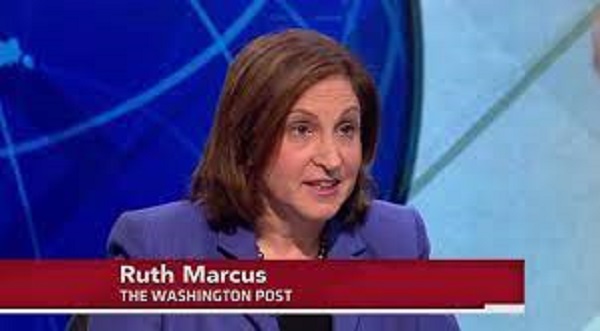
Unethical Quote of the Month: Washington Post Associate Editor Ruth Marcus [Link Restored]

“This was not my original instinct. I thought, and continue to believe, that Gay’s accusers and their allies were motivated more by conservative ideology and the desire to score points against the most elite of institutions than by any commitment to academic rigor. This was, and is, accompanied by no small dose of racism, and the conviction that a Black woman couldn’t possibly be qualified to lead Harvard.”

—Washington Post columnist and associate editor Ruth Marcus, a Harvard Law grad, in an opinion piece titled, “Harvard’s Claudine Gay should resign.”

Marcus, who has one of the thickest and damning dossiers of any pundit on Ethics Alarms, usually strikes me as a dim and predictable partisan analyst, but this is disgusting even by her bottom-of-the barrel standards.

You see what she’s doing there? She agrees with the conservatives who have called for Harvard president Claudine Gay to be fired or resign, but while in Marcus’s case, the conclusion is honorable, considered, rational and pure, conservatives who reached the exact same conclusion did so because of bias and bigotry.

Continue reading →

“A Christmas Carol”

-A-Christmas-Carol2

The entire text of “A Christmas Carol” is and has been for a long time listed under Inspirations on the Ethics Alarms homepage. If you haven’t read it (preferably out loud, to your family) recently, I urge you to do so. It is wonderful, and still, after all the movies and TV specials and songs and rival Christmas-themed stories, the best of the genre. It is also delightful literature, and, because I am an incurable romantic, a sap, and a Christmas addict, the story and Dickens’ telling of it gets to me every time.

I just realized that the last time I directed a production that wasn’t my own, it was a staged reading of “A Christmas Carol.” I miss directing greatly—no one has been clamoring for my comeback—so it that was my last hurrah, I can live with that. “A Christmas Carol” is, after all, one of the greatest ethics tales of all.

The first version of the film adaptations of “A Christmas Carol” I saw when I was knee-high to Robert Reich was the version starring Alistair Sim. Many aficionados of “A Christmas Carol” movies think it is still the best, and I won’t argue with them. Because the movie is in black and white and has been superseded by so many other versions, it is hard to find it on TV now except for the streaming services. Even the much inferior version starring Reginald Owen (with the entire Lockhart family, including young pre-“Lassie,” pre-“Lost in Space” June, as the Cratchits) is shown more than the classic Sim film. In these cynical times, the version of “A Christmas Carol” most likely to be available, sort of, is Bill Murray’s “Scooged.” It’s not the worst version—the musical starring Albert Finney wins that booby prize (“Thank you very much! Thank you very much!” Yecchh.)—but cynicism and dark humor really don’t belong in this story

My personal choice for the best adaptation goes to the 1984 George C. Scott version, if you don’t count “Mr. Magoo’s Christmas Carol,” and you probably shouldn’t, though I love it. The 1984 film has David Warner as Bob; Edward Woodward is the best (and tallest) Ghost of Christmas Present ever; and I think this is the scariest version of Marley.

Here it is…

Last Minute Christmas Eve Ethics Shopping, 12/24/2023

Dean Martin’s renditions of popular Christmas songs like the one above, along with “Let It Snow,” “Baby It’s Cold Outside” and “Rudolph the Red-Nosed Reindeer” (among others) just make me smile. Dean wasn’t the right singer for the carols, but I’m convinced his recordings and his memory will endure because of the innate sense of fun and irreverence he brought to the lighter ballads. Who fills that niche today? I can’t think of anyone.

Since I mentioned Frank Loesser’s controversial contribution to the popular holiday canon, “Baby It’s Cold Outside,” allow me to digress. It seems like the withering away of #MeToo as a result of the revealed hypocrisy of the movement social justice warrior advocates has restored this unfairly maligned song (which won an Academy Award!) to respectability. If so good, and I hope John Legend’s certifiably awful politically correct version (with lines like “It’s your body and your choice!”) is mocked mercilessly forever more. Yesterday, I heard one of the gay male hosts on the Sirius Broadway channel (all the men on that channel appear to be trying to sound as gay as possible) talking about the song, and saying that the context of the lyrics are everything. Then he said that the version he was going to play (from “Glee’) was a perfect example of how the song, in the right context, could be sweet and inoffensive. It was sung by two gay men, not that thee’s anything wrong with that, but as far as I could determine, it was no different in “context” from any version in which a male is desperately trying to talk a woman into a winter sleepover.

1. Speaking of LRTBQ+ matters, this would seem to be a superfluous headline: “Study shows sex could be a better predictor of sports performance than gender identity.” Gee, ya think? I wonder if feminists will ever have the integrity to support Ethics Heroes like Riley Gaines, the collegiate swimmer who has become a vocal advocate for keeping trans-males out of women’s sports. I didn’t get around to highlighting her testimony in Congress, in which another incompetent member, Democratic Pennsylvania Rep. Summer Lee, accused Gaines of engaging in “transphobic bigotry.” Gaines, who is gutsy and outspoken, returned fire by calling Lee a misogynist, goading Lee into making an ass of herself when she stopped the testimony to demand that Gaines’ insult be stricken from the record. (Statements that are unwelcome to Democrats and progressives are “hate speech,” you see.)

2. Regarding the previous post: my Harvard alumna sister opined that beleaguered president Gay will be able to hold on for enough time that Harvard can credibly claim her withdrawal for “personal reasons” isn’t the result of pressure from the Evil Right. I agreed with her at the time, but now I’m not so sure. The mockery of the school is wide ranging, sharp and effective…

..and the ridicule of Gay herself is apparently irresistible, as with this parody letter of resignation by the plagiarizing scholar:

[Source: Power Line]

Continue reading →

Harvard’s Claudine Gay Scandal Just Keeps Getting Better, Though I Guess We Shouldn’t Be Surprised That An Unethical University Uses Unethical Lawyers

It’s really a shame that I have to post this today, when the Ethics Alarms traffic consists largely of metaphorical tumbleweeds blowing down the empty dusty streets. However, we know most of the news media is trying to bury the series of revelations that prove that the leader of higher education rot hired an unqualified president because she was black, female, and a DEI agent, and that because she is black and female, Harvard is employing lies, excuses and rationalizations to avoid dumping her when a white male president who had been revealed as a plagiarist in scholarship and a blathering fool before Congress would have been fired in a flash.

I know this blog is a small, tinny voice in the vast wilderness, but it’s something.

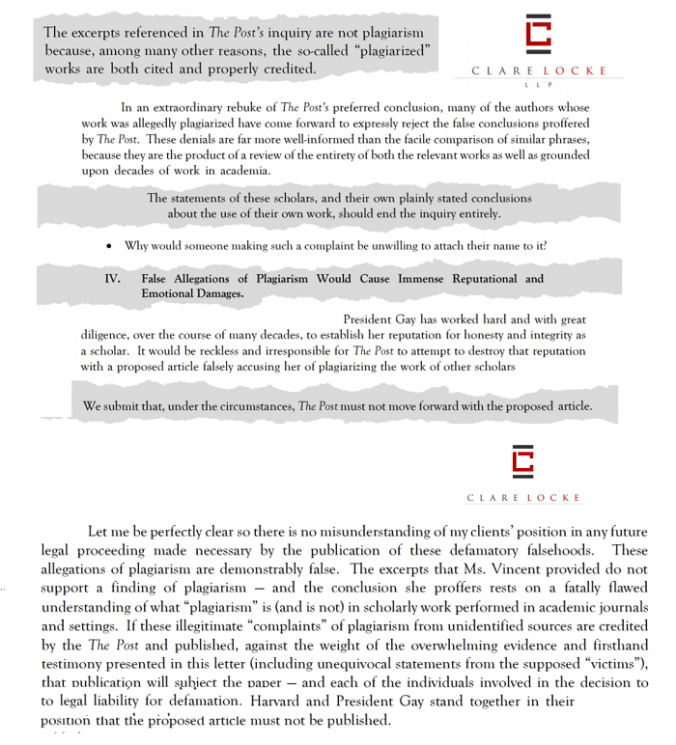
Above you see excerpts from a 15 page letter sent to the New York Post threatening to sue on Harvard’s behalf if the paper continued to report the discovery by conservative reporter Christopher Rufo and others that Gay had plagiarized the works of other scholars by using their words and ideas as her own without attribution in dozens of instances, including her Harvard dissertation. The Post points out that Harvard, through its attorneys at Clare Locke, stated that there was no plagiarism and that the allegations were false before Harvard had bothered to investigate the claims. This also means that Gay approved of the letter, which she knew was itself “demonstrably false”:

Continue reading →

Why Hasn’t Everybody Already Learned About Bass Reeves?

Nothing says Christmas like a late 19th century black Deputy Federal Marshal in the Indian Territory. As I watched the Paramount+ video series “Lawmen: Bass Reeves.” I was struck by what an inspiring and unifying this remarkable man’s story would be for school children, and wondered not only why it isn’t taught today, but why it wasn’t taught while I was in school. Not only hadn’t I heard of Reeves before last night, I assumed the film was just another race- or gender-flipped Western, like “Django Unchained or The Hateful Eight.” It’s an amazing story, and a true one.

Bass Reeves (1838–1910) was born as a slave in Arkansas, then lived in Lamar and Grayson counties, Texas, where he belonged to Col. George R. Reeves, who later become the Speaker of the House in the Texas legislature. Reeves escaped north into the Indian Territory (now Oklahoma), where he had dealings with the Cherokee, Creek, and Seminole tribes, learning enough of their languages to be useful to him later. He fought with the Union Indian Home Guard Regiments during the Civil War, then settled in Arkansas as a farmer. To make extra money, Reeves served as a guide, scout and tracker for the deputy U.S. marshals who worked in the Indian Territory (like Rooster Cogburn in “True Grit”!) out of “Hanging Judge” Parker’s federal court at Fort Smith. Judge Parker commissioned Reeves as the first black deputy U.S. marshal west of the Mississippi River.

He worked for thirty-two years as a deputy marshal in the Indian Territory, arresting an estimated 3,000 lawbreakers and shooting 14 of them dead in self defense. (It helped considerably that he was 6’2,” remarkably strong, and a dead shot with pistol or rifle.) Reeves was never wounded himself, though his hat was shot off a few times (they show this in the series). Reeves demonstrated his integrity when he brought his own son in for murder once a warrant was issued.

Continue reading →

If You Are Troubled By The Ferguson Effect, Wait Until The Aurora Effect Kicks In

The surge in homicides following the Michael Brown fiasco in Ferguson, Missouri sparked a debate about whether the demonizing of police by the news media, lawyers seeking quick liability pay-outs every time a perp was killed in a confrontation with police, and progressive politicians demonstrations, and the anti-police hostility they engendered triggered the murder spike. City Journal contributing editor Heather Mac Donald, among others, identified a “Ferguson Effect,” in which police were pushed into passive law enforcement for fear of criminal prosecutions primed by political factors and the kind of life- and career-wrecking publicity that savaged Officer Darren Wilson, who was found by a grand jury to be blameless in Brown’s shooting. Since that 2014 ethics train wreck, the Ferguson Effect has metastasized thanks to the George Floyd freakout, the Black Lives Matters riots, and the conviction and imprisonment of the group officers involved. It is indisputable that proactive law enforcement is dangerous now both in the streets and in the aftereffects when events turn ugly.If police are going to be sitting ducks for moral luck prosecutions, it requires a martyr or a fool to take the kinds of risks today’s social and legal climate engenders.

Next up on the metaphorical social justice shooting gallery: paramedics.

Continue reading →

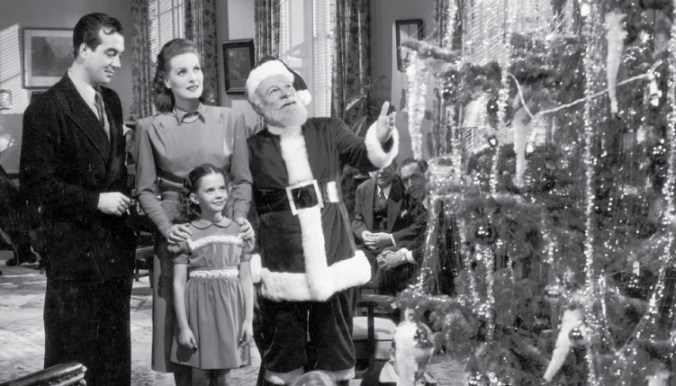
The 2023 Ethics Companion To “Miracle On 34th Street” [Updated and Expanded]

2023 Introduction

What makes “Miracle on 34th Street” the most appropriate classic Christmas film for 2023 is its theme: the importance of conquering cynicism and  pessimism, and always keeping one’s mind and heart open to hope. This has been a truly awful year, not one of the worst in our history but to a lot of Americans it seems that way (because they “don’t know much about history,” like Sam Cooke), but bad enough that we should be glad to see it go. I know my year has been especially miserable on multiple fronts. Nonetheless, I remain, at heart, about 12 years old. The same things make me laugh; my level of optimism remains high; I believe in this nation’s miraculous ability to somehow get out of the fixes it gets itself into; I’m still a romantic, and, yes, I think with a little luck and one more starting pitcher, the Boston Red Sox can make it to the World Series next year. I am being constantly confronted with old friends, some much younger than me, who have suddenly decided to be old: they think old, they act old, and they seem to have given up the future as irrelevant. The Santa Claus myth represents faith in the possible, or rather the impossible. Yes, its easier when you are a child, but it is worth the fight to never lose the part of you that still believes in magic and miracles. Kris Kringle really isn’t Santa Clause: he’s nuts, basically. But somehow that tiny wisp of a hope that he might be the real Santa is alive at the end of the movie. It’s really quite wonderful. It’s also important.

The production of “Miracle on 34th Street” itself epitomizes the ethical values of competence and integrity. Watch any of the attempts to remake the film over the years; some aren’t bad, but none equal the original, or even justify a remake that places the story in contemporary times.There have been four remakes starring, as Kris Kringle, Thomas Mitchell, Ed Wynn, Sebastian Cabot, and Richard Attenborough. That’s a distinguished crew to be sure. Mitchell was one of the greatest character actors in Hollywood history. Wynn was nominated for an Academy Award (for “The Diary of Ann Frank”) and Attenborough won one, Best Supporting Actor Award in 1967 for “The Sand Pebbles.” Cabot wasn’t quite in their class, but he was a solid pro, and looked more like Santa Clause than Mitchell,  Wynn, or Attenborough.

None of them, however, were as convincing as Edmund Gwenn. He made many movies—all without a white beard— and had a distinguished career in films and on stage, but even audience members who knew his work had a hard time reminding themselves that he wasn’t Kris Kringle while they watched the movie. I still have a hard time.

 The film is one more example of the special, unappreciated talent of Maureen O’Hara, who never was quite regarded as a top rank a movie star, as lovely and strong an on-screen presence as she was. Her ability to anchor great movies while never dominating them is the epitome of the “collaborative art” they always blather about during the Oscars, but which is seldom truly honored.  O’Hara was the female lead in four genuine classics: “The Hunchback of Notre Dame,” “The Quiet Man,” “How Green Was My Valley,” and “Miracle on 34th Street.” She also starred in the original “The Parent Trap” for Disney.

“Miracle on 34th Street” is an ethics movie in part because its artists committed to telling a magical story and charming audiences by working as an ensemble selflessly and  efficiently. John Payne, as the idealistic lawyer in love with Maureen, is never flashy, just completely convincing. One reason may have been that, as he told an interviewer once, the role of Fred Gaily perfectly matched his own ideals and beliefs.  This is the magic of performing talent: they make audiences suspend disbelief because they seem to believe in the story and characters too. The director,  George Seaton (who also directed “Airport,” which is NOT an ethics movie), also wrote the script that won him an Oscar. He cast his movie brilliantly, and making the correct but bold decision to stick with a matter-of-fact, realistic, unadorned style that keeps the story grounded. There are none of the corny features or inexplicable gaffes in this film that make other holiday-themed classics inherently unbelievable, like the cheesy battlefield sets in “White Christmas” or the heavenly dialogues in “It’s a Wonderful Life.”

“Miracle on 34th Street” is, as I said at the start, about the importance of believing in good things, hopeful things, even impossible things. Today many of my friends, colleagues and associates are depressed and fearful of the future—their future, the future of the nation, even the future of the planet. (The planet will be fine…the rest? As Samuel L. Jackson says in “Jurassic Park, “Hold on to your butts.”) “Miracle on 34th Street” reminds us that wonderful things can happen even when they seem impossible, and that life is better when we believe that every day of our lives. Of course, some days are easier than others.

Never mind. As the Fairy Godmother in the musical version of “Cinderella” sings, “Impossible things are happening every day.” Continue reading →
For Your Christmas Weekend Reading Pleasure…

Well, few are visiting EA today. I guess it is a holiday of sorts, so I won’t take it personally. As a thank-you to those who do drop by, here is a post I encountered on the new substack, “Ramparts.” “War and Christmas:Christmas and the enduring spirit of Freedom” focuses on two important and inspiring Christmases in our nation’s history, both occurring while the nation was at war.

The second has special significance for me. My father, Jack Anderson Marshall, Sr., fought on thatChristmas day in 1944, having just been released from the Army hospital after having half his foot blown off earlier in the year, before D-Day. After my parents moved from Arlington, Mass. to Arlington, Virginia, I would accompany my father every year around this time on his pilgrimage to the Battle of the Bulge veterans memorial at Arlington National Cemetery, just a short walk from the Tomb of the Unknown Soldier. The year he died on my birthday in 2009, Dad had skipped the reunion of BOTB veterans for the first time. The dwindling numbers made him too sad, he said.