“Yeccch!” Ethics, The Saint’s Excuse, and Shotgun Shock PSAs

crap poster

The above poster is being used by the Bristol, England, city council to get dog owners to pick up after their pets.

My reaction:

Yecccch! Ack!!! Gag!

Also this: What a lazy, inconsiderate, unfair and unethical assault on the majority in order to make an impact on a minority. Given the choice between wiping dog poop off my shoe or having my stomach turned by the image of a child eating it, I’m not sure which I’d take, or who I hate more, the inconsiderate dog owner, or the jerk who is willing to sicken me to get at him.

Good, noble, arrogant, self-righteous advocates for responsible behavior increasingly behave as if any collateral damage is acceptable, while their dubiously effective advocacy gets more shrill and ugly. Every time that current TV ad featuring the croaking, hideously disfigured ex-smoker talking while a photo of her lovely pre-cancer visage shows us the ravages of tobacco, I literally dive for the remote, just as I do when the animal cruelty spots begin bombarding me with images of sad-eyed, neglected and abused cats and dogs.

(I also do this when Piers Morgan, Nancy Grace, Donald Trump, Sean Hannity or Al Sharpton flash on the screen, but I digress.) Continue reading

Ethics Quiz: The Harley Tragedy

I’m sure PETA thinks this is fair; I’m not sure that I do.

No goldfish for you!

No goldfish for you!

Tammy Brown,47, a disabled Moon Lake, Florida woman trying to make ends meet on her $508-a-month government check, argued that she was not able to afford veterinary care for Harley, her 14-year-old dog who had a painful ear infection as well as skin problems, periodic tumors, heartworms and ear mites. Because she did not get treatment for Harley, however—the fact that she tried to treat the dog’s problems with over the counter ointments wasn’t enough to mollify the judge— Brown was convicted of felony animal cruelty. She spent more than a month in jail awaiting sentencing, and then received six months of house arrest, 300 hours of community service, three years of probation, and $1,000 in court costs. Circuit Judge William Webb also commanded, “I don’t want you to own any animals. Not even a goldfish!” (Hartley had been euthanized.)

Apparently Harley’s physical condition was shockingly poor, so much so that jurors found photos hard to look at. An Animal Services officer testified that Harley couldn’t stand up without support. The prosecutor wanted Brown imprisoned.

Has society become so animal-sensitive that it has lost its priorities? Your Ethics Alarms Ethics Quiz is this: Assuming that Harley’s lack of treatment was due to lack of resources and neglect rather than malice…

Was Tammy Brown’s sentence fair, or was it excessive and cruel? Continue reading

“Beyond the Myth”: Disturbing and Revealing Lessons About More Than Pit Bulls

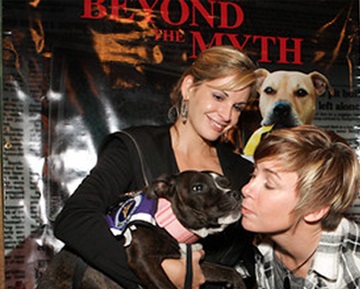
Beyond the Myth

“Beyond the Myth” is a 2012 documentary that provides a vivid, troubling and often moving account of “breed specific legislation” in the U.S., which primarily involves states and municipalities banning “pit bull-like dogs,’ a.k.a. “vicious dogs,” though the dogs such legislation targets are usually not vicious and often are not even pit bulls.  If you are one of the misinformed who have been convinced by biased reports and public hysteria that pit bulls are any more dangerous or vicious than any other breed, you owe it to yourself, your children, and the dog owners in your community to watch this film, which is available on Netflix.

Long-time readers of Ethics Alarms know that the site has visited the issue of anti-pit bull cruelty and bigotry frequently, most recently here. For those who have read and absorbed what I have written and the references I provided, there will be much that is familiar in “Beyond the Myth,”; nevertheless, I found the documentary shocking. I had no idea how pit bull bans worked in cities like San Francisco and Miami, with Gestapo-like raids on private homes culminating in harmless and beloved family pets being confiscated and slated for death if a police officer concluded that they have “5 out of 8” physical traits identified with pit bulls. Nor was I aware of how many of these dogs were being euthanized—tens of thousands every year—for being born with a broad  head or a deep chest that meant they were legally branded as “vicious.”

The stories of the individual dog owners who have organized, lobbied, sued, and in some cases had to move out of their homes to protect a loving canine companion are also inspiring, if astounding. Wounded veterans have even had their service dogs taken from them. The most illuminating aspects of the documentary, however, are: Continue reading

From Connecticut State Rep. Ernest Hewett (D): The Most Inappropriate Public Utterance By An Elected Official Ever?

Wow.

Just…wow.

"Hi...I'm a friend of Rep Hewett? He invited me to attend the hearing...could you direct me to his desk, please?"

“Hi…I’m a friend of Rep Hewett.  He invited me to attend the hearing…could you direct me to his desk, please?”

The late Donald Shaefer, former governor of Maryland and mayor of Baltimore, certainly had his moments of outrageous, and often sexist, candor, and foot-in-mouth disease has certainly marred the legacies of many a politician, but this seems like a scene out of a Will Farrell movie. An unbelievable scene.

On February 21, a 17-year-old female intern at the Connecticut Science Center was testifying before the Connecticut legislature. Among those questioning her about her work was Hewett, the deputy speaker and a former mayor of New London in his fifth term in the House. The intern was discussing the benefits of her work, and told the lawmakers, “I am usually a very shy person, and now I am more outgoing. I was able to teach those children about certain things like snakes that we have and the turtles that we have… ,” she said. “I want to do something toward that, working with children when I get older.”

Hewett responded—and I’m not making this up…

“If you’re bashful I got a snake sitting under my desk here!” Continue reading

Dog Owner Ethics: The Suicide and the Pitcher

Does one of these nice creatures not belong in this picture? Ontario says yes. The correct answer is  no.

Does one of these nice creatures not belong in this picture? Ontario says yes. The correct answer is no.

Our life-changing events often become crises for our canine companions. In the news today: ethical  and unethical responses in such circumstances, by two individuals in the public eye.

The Unethical

Mindy McReady, the troubled country music star, committed suicide Sunday on the front porch of the home she shared with her boyfriend, who had recently committed suicide there as well. She apparently killed the couple’s dog before taking her own life. McReady’s friends insist that she didn’t kill the dog out of malice, but because she didn’t want to leave the dog alone. Granted, McReady deserves consideration and compassion, since her actions that day were not those dictated by a healthy or fully functioning mind. Still, I read of dog owners doing this a lot, and I’ve known a few—not committing suicide, but killing their dogs when they knew they wouldn’t be able to keep them any more, on the theory that the dog would be happier dead than with new owners. Continue reading

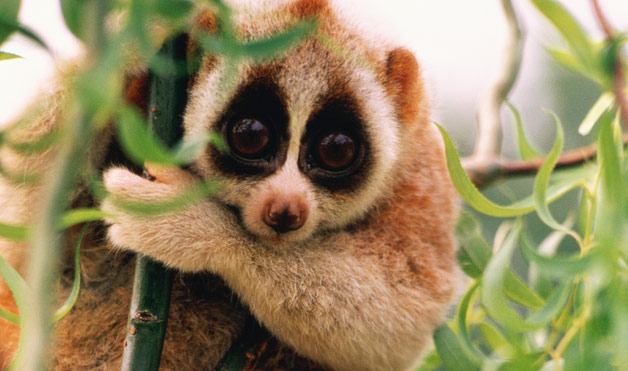
Slow Loris Ethics: Great, Now Even The Smithsonian is Hyping!

Slow Loris

If we can’t even trust the Smithsonian not to lie to us, what hope is there?

The February issue of the Smithsonian magazine arrived, full of articles about origins and evolution. I immediately gravitated to the essay about komodo dragons, whose bite, as those of you who have been bitten by one know, is poisonous. In a colorful sidebar to the main article was a smaller note about the wide range of other animals that poison their victims, titled “Pick Your Poison.”

“The komodo dragon may be the newest addition to the elite corps of predators that kill with chemistry, but the venomous world is already more diverse than people realize,” it began. The note was illustrated by photos of a duck-billed platypus (owner of a leg spur with a poison gland that gives the thing quite a kick); the tiny Pacific cone snail, which can kill a human; the black mamba, the snake that had a co-starring role as an assassin in “Kill Bill, Part 2,” and…a slow loris???

The little, big-eyed, furry, cute Asian primate is venomous? That was a surprise. The article included no details, just noting that the slow loris was the only “venomous primate.” I managed to pass along this information as fact to my wife and two friends before bedtime (it takes so little to excite me these days!), and this morning dived into the web to learn the details of the slow loris’s poison. What I discovered was even more shocking than the original note. The Smithsonian magazine was hyping, and badly at that.

To begin with, there is a difference between venomous animals and poisonous ones. “Venomous” means that the creature injects toxin into its prey, through a sting, a bite, or other means. “Poisonous” means that the animal carries some kind of toxin that the prey ingests, absorbs or inhales, occasionally fatally. The Smithsonian article ignores this distinction for sensational purposes, as the title “Pick Your Poison” suggests. But the slow loris, which is definitely not venomous,. and  it isn’t really poisonous either. Continue reading

Dog Racism Update: A Definitive Defense of Pit Bulls

Nanny dog1

Ethics Alarms has discussed the unfairness, bigotry and ignorance behind the vilification of pit bulls and related breeds on many occasions: here, here, here , here, and here. Now Joshua Holland has written an excellent primer in Salon for the pit bull-phobics to chew on, and he did a superb job of debunking the illusion that this is a monstrous breed rather than what it really is, an uncommonly delightful one.

Among the highlights…

  • “Pit bulls are the dog of choice for irresponsible breeders, dog-fighters, people who want a tough-looking dog to tie up in their yard and those who refuse to have their male dogs… 86% of fatal canine attacks involve an unneutered male, according to the American Humane Society.”
  • “A 2009 study in the Journal of Forensic Science, found that the owners of vicious dogs, regardless of the breed, had “significantly more criminal behaviors than other dog owners”…According to the ASPCA, “Pit Bulls often attract the worst kind of dog owners.”
  • “We have tragically betrayed our children’s beloved nanny-dogs, raising them irresponsibly, training them to be aggressive and then turning them into pariahs when they behave as any dog would in similar circumstances.” Continue reading

Donald Trump’s Loathsome Lawsuit

Maher-Trump-Oran

Normally the result of a tiff between Donald Trump and Bill Maher would interest me about as much as I would be invested in the  winner of a battle between Godzilla and Megalon.  Trump’s lawsuit against Maher in retaliation for an obvious joke, however, is unethical and indefensible no matter how much I enjoy seeing Maher, who could only avoid being the most obnoxious human being in world containing the likes of Trump, suffer.

Maher joked to Jay Leno last month that he would pay $5 million to Trump’s charity of choice if Trump could prove that his birth wasn’t the result his mother having sex with orangutan. I missed it, Jay having joined David Letterman and Jimmy Kimmel in my talk-show host Hall of Ethics Shame, but the line did make me laugh, I confess. Maher’s faux challenge was an obvious riff on the offensive offer Trump made to President Barack Obama during the presidential campaign, in which Trump raised the birther canard again and offered $5 million to the President’s charity of choice if  Obama released his college records and definitive proof that he was really born in the U.S.A.

Nonetheless, Trump decided to behave as if it were a real offer. He had his lawyers send the verification to Maher (Trump’s father, the brains of the family, was a legendary real estate innovator and mogul), and now Trump is suing for the $5 million on the pretense that the comic welched on a legitimate and enforceable unilateral contract. “I don’t know whether this case will be won or lost, but I felt a major obligation to bring it on behalf of the charities,” Trump said. Continue reading

Ethics Elephant In The Room: The ASPCA Was Wrong, And Should Admit It

circus-elephants-

The  Association for the Prevention of  Cruelty to Animals finally capitulated and has agreed to pay over 9 million dollars in damages to the Ringling Bros. Barnum & Bailey Circus. Way back in 2000, the ASPCA and other animal advocacy groups sued the circus company’s owners, alleging cruel treatment of elephants. The problem was, courts found, that the law suit had been built on the claims and testimony of a former Ringling barn helper who had been paid at least $190,000 for his participation in the lawsuit. This meant that the suit was dead.

Ringling Bros. Barnum & Bailey Circus counter-sued, as would I, as would you. I don’t doubt that elephants are abused sometimes in the circus; I’m sensitive to the argument that putting elephants in a circus is inherent abuse. It seems clear that a lot of dedicated, well-meaning people who care deeply about animals and their treatment couldn’t press their claims persuasively without help, so, essentially, they cheated. You can’t pay witnesses, whether the witness is telling the truth or not. It’s unfair. It’s illegal. It corrupts the justice system. Continue reading

Ethics Dunce: CBS Tampa

Today’s canine bigotry, misinformation and blatantly terrible reporting prize goes to the CBS affiliate in Tampa. It reported a story involving  a man who left a 10-month old baby alone in a home to go out drinking, with only a dog in charge of the child. But the CBS headline was “Man Leaves Pit Bull To Babysit Infant Child,” and included this stock photo of a snarling pit bull:

FILES - Picture taken 24 August 2000 inThe implication of both the headline and the photo is that the child’s peril was increased by its being left alone with a vicious dog. Actually, the child was probably safer with a pit bull than any other breed: this is a breed, after all, that was known as “the nanny dog” for much of the 20th Century. If the mention of the breed had been intended as possible mitigation for the jerk that left the baby without human supervision, that might be legitimate reporting, but what CBS did was pure sensationalism and distortion based on the ignorance of the reporter and the editor. The headline invoked the irrational fear of pit bulls, based on ignorance stoked by reporting like CBS’s. The photo didn’t depict the actual dog involved, which just as easily might look like this…

smiling-pit-bull-dog

… and was intentionally chosen to create the impression that the man, in addition to deserting the baby, left it at the mercy of a dangerous beast. Would the headline have mentioned the breed of dog if it had been a Labrador or a poodle? The breed was only relevant to the story if you believe that it placed the child in more danger than just being left home alone. Journalism is supposed to make us better informed, not more ignorant than we already are. This requires, however, responsible and intelligent journalists.

____________________________

Source and Graphic: CBS