An Appropriate Limit on the First Amendment Right To Be A Total Jerk

"Pardon? I'm not sure I understood that last remark."

If you peruse the various debates on Ethics Alarms, you will note that every time someone writes or says something cruel, dishonest or uncivil that appropriately brings down criticism or worse on the miscreant’s noggin, he and his defenders  will argue that the First Amendment should render them immune from the consequences of their words. This is not what the First Amendment is about, however. It is about the government not being able to punish them for what they say, with some exceptions. Even then, it is possible to be so inarticulate in your jerkish expression that your utterances are beyond even that constitutional protection.

For example, when you bark like a dog.

Or to be more accurate, when you set out to tease and annoy a police dog by barking. Mason, Ohio has an  ordinance making it a crime to “willfully and maliciously taunt, torment, [or] tease … any dog used by the Police Department in the performance of the functions or duties of such Department.” That’s exactly what Mason Police Officer Brad Walker found a drunken Ryan Stephens doing to Timber, a K-9 German Shepard behind a screen in his police cruiser. Continue reading

Murder House Ethics and the Validity of Feelings

We last visited the issue of the ethical selling of murder houses in February, when  the Jon Benet Ramsey house went on sale. I opined that even though Colorado doesn’t have a legal requirement that a seller must reveal the history of the house as long as it has no structural implications, there is an ethical obligation to let prospective buyers know about house-related events that might cause them to reconsider their decision to buy it:

“The truth is still this: there is something about the $2,300,000 house that makes it undesirable to a lot of prospects, and that means that even if the law doesn’t require the seller to tell interested house-hunters the story of the little dead girl in the basement, fairness and the Golden Rule do.”

The debate over this issue was unexpectedly intense. Ethics Alarms’ resident rational humanist “tgt” objected strenuously, writing,

“I don’t see how you can avoid the slippery slope question. Your basis is 50% of the population having a desire. Is that the cutoff? I think over 50% of people would prefer to live in a house where there hasn’t been child abuse. Go back a few years, and I bet a significant portion of the population would prefer to live in a house that had never had black occupants. Back in today’s world, more than 50% of the population doesn’t want to live in a haunted house. If a previous tenant thought the house was haunted, does the complete nonexistence of ghosts make not mentioning this a material representation? If an event is uncommon, does a realtor need to take a poll before deciding what is material and what isn’t?”

Karl Penny, however, bolstered my position:

“…the question is, does the realtor have an ethical obligation to fully reveal the history of this house. Well, the funny thing about behaving ethically is, it often requires us to act in ways that are not in our own immediate best interest… this may give a potential buyer a leverage point to negotiate a lower price for the house, to the detriment of the realtor, who could end up taking a lower commission as a result. No surprise, then, that the realtor would love to find a reason not to opt for full disclosure. But, if that realtor successfully conceals the house’s history from an actual buyer, one who would not have bought had they known otherwise? The realtor had a simple, human duty to disclose, even if it cost him money (and, yes, even if it cost me money, were I the realtor)….Jack’s right: this is Golden Rule time. If I am willing to treat with someone else in a way that I would not want anyone to treat with me, is that logically consistent (much less ethically consistent)? And would any of us want to live in the resulting society should everyone behave in that fashion?”

Now another house with a Hitchcock-worthy past is on the market: 9337 Columbia Boulevard in Silver Spring, Maryland, a state that also doesn’t require its realtors to disclose when a house has been the scene of a murder…or, in this case, three murders in the last decade. Continue reading

Lying to Dogs

Could you lie to this dog?

I am looking at a box of “premium dog treats” that my sister gave Rugby, my Jack Russell Terrier. (All right, she gave the stuff to me to give to Rugby.) The box says that they are “ridiculously delicious.” I have just offered him one of the “natural wellness nuggets” because we are temporarily out of regular dog biscuits and he is clamoring for his afternoon snack, driving me crazy in the process. You don’t want to be in the room when a Jack Russell clamors.

He refuses to touch it. In the past, he has spat them out; occasionally he will throw them around the house like an Olympic discus thrower would do if he had no arms and could only use his mouth. Clearly, Rugby doesn’t believe the damn things are edible. Continue reading

Ten Lessons from the “Dog Wars” Debate

Wait! Calm down! This is a CARTOON dog.

The “Dog Wars” Android phone app is apparently down for the count, the victim of too many complaints, threats and accusations that it was evil and irresponsible and promotes real, live dog-fighting, even though almost nobody sane makes similar claims about other video games. As with the subject of most posts on Ethics Alarms, however, the ethics issue lingers on, whether or not the specific incident that sparked the commentary has been resolved.

The comments, often passionate, that this post elicited have been fascinating, and had much to teach, even when the comments themselves were dubious. Here are ten lessons from the debate over the game and the Ethics Alarms commentary about it.

1. Ethics alarms aren’t always right. So many comments about “Dog Wars”, here and around the web, consist of various versions of, “That’s just wrong!” Well, why is it “just wrong”? Continue reading

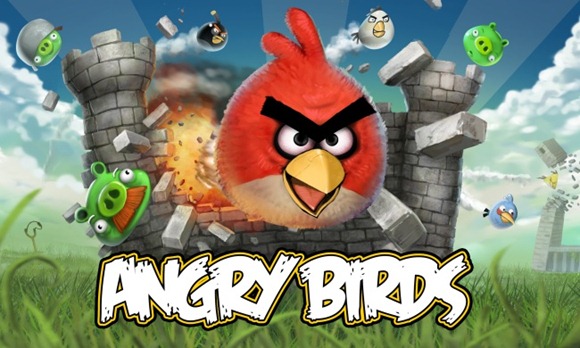
Imaginary Bird Cruelty: Ethical; Imaginary Dog Cruelty….?

If you think the birds are angry, wait til you hear the anti-dog-fighting activists.

We’re just keeping our finger crossed that Michael Vick doesn’t have this app on his phone.

“Dog Wars,” a new video game available free of charge on the Android smart phone market. The game allows players to choose, feed, train and fight virtual dogs against the dogs of other players. Predictably, animal rights, anti-dog fighting groups and social critics want the app dropped.

“Dog Wars” may be in poor taste, but it’s not unethical. Guiding pixels shaped as dogs in tiny phone screen-size battles has no more to do with cruelty to animals than biting the head off of a chocolate Easter Bunny or eating animal crackers.  Critics are saying that the game teaches people how to prepare real dogs for real fights? Right…and “Risk” teaches people how to take over the world. Continue reading

Ethics Hero, Non-Human Division: The Guardian Deer of Forest Lawn

Bambi's mother would understand.

Animal ethics are not a major topic here, in part because there is continuing scientific controversy over whether animals are capable of ethical impulses. The pros seem to have the upper hand over the cons, however, due to observations of altruistic conduct exhibited by primates in the wild and other evidence. How a wild deer, at last report standing guard over a widowed goose and her brood at Forest Lawn Cemetery in Buffalo, NY, fits into the debate is for others to decide, but it’s an inspiring tale.

A mother goose has lost her mate (geese bond for life, it seems) and now must tend to her nest in the cemetery, which is home to many varieties of wildlife.  She spends the day sheltering her eggs inside an empty urn. The job of her deceased mate was to guard the home, and discourage predators, which, as you know if you have ever had a run-in with a goose (as I have), he would have been very capable of doing. Without a guardian, the prospects for the future goslings are not good

An adult deer, however, has come to the rescue and had assumed the role of protector. Continue reading

Ethics Quiz: The Home As Billboard—“Ick!” or Unethical?

The Ad firm Adzookie will make their monthly mortgage payments for people willing to turn their homes into billboards. According to the company’s  CEO, it has received over 1,000 applications from people willing to have their houses turned into something like the eye-sore in the photo.

Your Ethics Quiz: Is this unethical conduct by the company, or merely disgusting, provoking our “Ick!” reflex?

For the Unethical side, consider: Continue reading

PETA’s Definition of Being Ethical to Animals: Kill Them

Good...play dead, and maybe PETA will leave you alone...

I have long believed that PETA, the Norfolk, Virginia-based “People for the Ethical Treatment of Animals,” not only gave ethics a bad name, but also people, and you might as well throw in pita bread while you’re at it. This conviction was partially based on such stunts as PETA’s using Michelle Obama in ads without her permission and offering to pay Octomom money to put a billboard on her lawn comparing herself to an overly fecund pet.

Then there is PETA’s fondness for killing puppies and kittens. Continue reading

Comment of the Day: “The Tears of Keith Ellison”

Less to do with the original post and more concerned with weightier matters is this thoughtful comment by blameblakeart, the Comment of the Day:

“This event in Japan has crystalized for me Jack – we as Humanity, as Earthlings – are all in this together, side of the aisle being probably the least of our worries. We need to use our smarts and our will to manifest a better, more abundant, more perfect world, all together, not just for a chosen few.

“10000+ years ago there were hundreds of species that basically cease to exist. What the 8.9 Japanese earthquake tells at least me is that life is tremendously fleeting, but intensely beautiful, magic, and precious, of all things, Human and Of this Earth. I don’t know why there are those out there trying to distract us from these simple truths with all these bogus, hateful, incendiary tactics.”

Now THIS is Incivility…

The Victim

University of St. Thomas math professor Douglas Dokken is a devoted University of Minnesota fan, but the school mascot’s hijinks became just a little too annoying for him during  a men’s gymnastics meet Saturday night. When Goldy Gopher tapped him on the shoulder one time too many, Dokken wheeled around in his seat and punched him right in the kisser.

The  professor, though sincerely remorseful over his stuffed-animal abuse and bad manners, has been banned from the University of Minnesota’s Sports Pavilion and Williams Arena for a year. Goldy’s face needs some stitches, and he was left speechless. But then Goldie never says anything anyway. After all, he’s a gopher.

Physical violence is not the answer, even to a dumb question like, “How do you stop a guy in a 7-foot gopher suit from bugging you?”