Incompetent Elected Official of the Month: Indiana State Senator Dennis Kruse

Time to reconsider the Greek Gods...because the oldest theories are the best theories.

Indiana State Senator Dennis Kruse is responsible for Senate Bill 89, recently passed by the Indiana Senate, which would allow schools to teach “creation science” — the oxymoron that really means “The Bible” —as an alternative to the scientific Theory of Evolution. Of course, the U.S. Supreme Court specifically outlawed this fundamentalist aganda in the 1987 court decision Edwards v. Aguillard. Kruse however, thinks that the bill could lead to a court challenge, and a Supreme Court reversal. “This is a different Supreme Court,” he has said. “This Supreme Court could rule differently.”

It isn’t that different, Senator. They all have law degrees, they’ve all read the Constitution,they’ve all seen “Jurassic Park.” They all have IQs above freezing, unlike…well, never mind. By the way, Kruse is a Republican, as if you hadn’t guessed. Continue reading

The Runway and The Snowy Owl: An Ethics Conflict Tale

“One showed up at the airport in Hawaii, and they shot it,” Denver Holt, director of the Owl Research Institute in Montana, told the New York Times.“It’s the first ever in Hawaii and they shot it!” Holt was expressing his dismay at the sad news that a snowy owl, one of the most magnificent of all American birds, had journeyed from its Arctic home all the way to Hawaii and been shot dead for its effort. He was quoted in a Times story about the sudden, mysterious surge in snowy owl sightings all over the country, giving people a chance to see the huge, white predators in places where they had never appeared before. Like Hawaii.

“Aloha!”

Bang!

Here is a lesson in the value of waiting to get the full story before making assumptions. I saw the Times story, and had sketched out a post on the doomed Hawaii visitor, something about mankind’s unethical impulse to destroy beautiful living things to make beautiful dead things like fur coats, trophies and stuffed snowy owls. But my travel travails made it impossible for me to finish it, and it’s a good thing. Honolulu Civil Beat had the rest of the story. Continue reading

Now THIS Is Professional Misconduct!


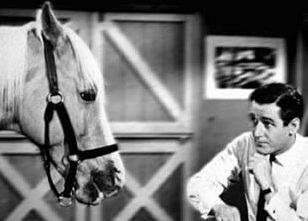
"Ed, you have to stop blaming yourself...you did nothing wrong!"

Dr. Thomas Wilson is accused of breaching professional ethical standards by having sexual relations with a patient while the doctor was still a student in Oklahoma. Normally a student’s misconduct would not result in sanctions almost two years later, after graduation and certification, but, you see, Wilson is a veterinarian, and his patient at the time of their illicit relationship was a horse.

The good doctor, who now practices at an animal hospital in Pennsylvania, is charged in Oklahoma with a “crime against nature,” but the ethical aspects of what he did go far beyond that. It is a breach of the trust with a patient incapable of  informed consent.  It is an abuse of power. It is animal cruelty. It is really, really, icky.

Are there such things as registered animal-sex offenders? I certainly hope so. Dr. Wilson should not be allowed within 100 yards of a race track, a rodeo, a farm, the Central Park carriages, or the set of AMC’s “Hell on Wheels.” The idea that he will be able to just pay a fine, go to some therapy sessions, and then blithely return to his equine practice without having to tell Mr. Ed’s owner that be has a record of horse-rape is unthinkable. Please tell me, Pennsylvania, that some kind of law protects your horses against sexual predators in sheep’s clothing?

[Thanks, I think, to Drew Curtis’s Fark for the link]

Poll: 84% Don’t Have a Clue What “Ethical” Means

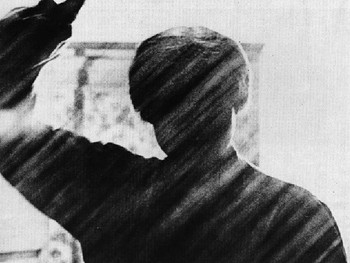
Was Norman Bates unethical or sentimental? Well..wait, WHAT?

OK, that was a somewhat misleading headline. According to a poll run by ABC News, 84% of the public thinks that cloning dead pets is unethical. But since there is absolutely nothing unethical about cloning dead pets, I think the headline above is accurate. Well, maybe 84% accurate.

The story is over at Sodahead, which is dedicated to dumb polls. The analysis of the poll, if one can call it analysis, is almost totally bereft of anything remotely connected with ethics or ethical theory. In a previous poll on the subject, Sodahead asked those polled to choose whether the practice was “unethical” or “sentimental”, which is a choice akin to, “Do you like baseball, or can you swim?” Of course cloning a pet is sentimental—why else would someone do it? Who came up with the boneheaded idea that sentimental and unethical were mutually exclusive? Norman Bates dressing up as his beloved mother and killing people was sentimental, but I’d also say it was less than ethical. Continue reading

Please Kill My Dog

“The Ethicist,” whom I have not harassed for a while, a.k.a Ariel Kaminer, handles this week an odd query from a woman who has been asked by an elderly friend to pledge to euthanize her dog after she dies. Kaminer, as she often does, makes the issue more complicated than it is and muddles things by implying some kind of inconsistency on the part of pet owners who find the request unethical but who will dine on cooked animal flesh this evening. She even had to consult Peter Singer, the controversial Princeton ethicist, about whether an animal has a “right to life.”

Every living thing has a right to life, and also a right to live, which is why eating other animals as humans have evolved to do is not incontrovertibly  unethical. Killing an animal just because you can, or because it makes you happy, or because you have convinced yourself that it wants to die when in fact it doesn’t, however, is incontrovertibly unethical. Continue reading

Now THIS Is An Offensive Team Name

The London, Ontario independent baseball team has decided to rename itself “The London Rippers.”
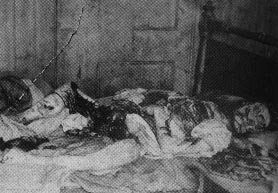
Jack's last victim: a logo, perhaps?

The city’s mayor has expressed concerns about the name, and good for him. This isn’t a manufactured political correctness complaint, based on the dubious logic that it demeans a group to honor it with an athletic team name. This is the opposite: a team name that honors a serial killer who disemboweled poor women in the slums of London in 1888. Misogyny isn’t cute or funny, and anyone who thinks that making Jack the Ripper a team symbol is anything but one more outrage perpetrated against his pathetic victims but gets indignant over the Atlanta Braves has his head on upside-down and backwards.

Now, I suppose it’s possible that an association of serial killers will protest that the name “London Rippers” dehumanizes them and puts them in the same category with lions, tigers and bears. In such an eventuality, I would side with the associations of lions, tigers and bears protesting that the name denigrates them. Sportswriting lawyer Craig Calcaterra, a sharp baseball mind whose NBC column alerted me to this story, somehow misses the point by a mile, writing:

“…Jack the Ripper did his work, like, 130 years ago. Murder is murder and it’s always awful, but at what point has enough time passed to where this kind of thing isn’t a problem?  And yes, I note the mayor’s nod to ending violence against women, but does a reference to a 19th century British serial killer who is more often fictionalized today than dealt with in his brutal reality really undermine those laudable aims?
I’m not saying it’s 100% fabulous. But really, kids were singing about Lizzie Borden taking an axe and giving her mother 40 whacks within a few years of that going down. Is it really too soon to be able to use a  long-dead historical figure as a mascot? There are a bunch teams called “crusaders” and the crusades were brutal. We still have Chief Wahoo around, and you can make an argument that the thinking behind that mascot (i.e. Indians are somehow less-than-human) represented way more death and destruction than anything Jack the Ripper did.”

Ugh. How many rationalizations are in this passage? Playground chants about Lizzie Borden (or the Black Plague, which is what “Ring around the rosey” is about) are not remotely comparable to naming a community’s baseball team after a serial killer. Playground refrains don’t become part of a community’s identity, and they don’t in any way bestow prestige on the dark subjects of their rhymes. Teams named after crusaders, warriors, braves and pirates don’t aspire to honor the deaths caused by these groups, any more than teams are named the Lions or Tigers because they have mauled people, or the Cardinals and Orioles are so named because the birds poop on our heads. There one reason, and only one, Jack the Ripper is famous. He slit the throats of desperate prostitutes and dissected them,: in the case of Mary Kelly, he minced his victim, leaving her internal organs on her night table. The London Ripper sent body parts of one victim to police, and taunted them. He didn’t possess a single admirable quality to justify a connection to a sports team, unless there are professional misogyny, mayhem or maniac leagues somewhere.

And Craig’s argument that is an expiration date on the offensiveness of trivializing tragedy is the worst of all. Seriously, Craig? So Penn State can call its wrestling team “the Molesters” in 100 years or so? What he’s really endorsing is ignorance. Kids who chant about the bubonic plague don’t realize it, and neither do their parents. That a lot of people don’t know the truth behind all the fictional Jack the Ripper tales is an argument for enlightening them, not pretending that killing prostitutes is just fun and games.

The mayor of London is right, Craig  is wrong, and if there ever was an inappropriate and harmful  team name, the London Rippers is it.
Comment of the Day: “Slaves, Whales, Humphrey the Hippo, and Captive Animal Ethics”

Marleen contributes a short and pointed comment to today’s post about PETA’s lawsuit alleging, absurdly, that Sea World’s performing whales are victims of slavery under the definition in the Thirteenth Amendment. Her commentary touches on a rich theme that has been explored on Ethics Alarms in the past: the obligation of issue advocates not to undermine the credibility of an important ethical argument by associating it with unfair, irresponsible or dishonest tactics.

Here is Marlene’s’ Comment of the Day, on “Slaves, Whales, Humphrey the Hippo, and Captive Animal Ethics”;

“PETA makes it difficult for me as a proponent of animal welfare. Pointing to PETA’s ridiculous antics (and this latest one really takes the cake) has become a trump card or Godwin’s Law of sorts when I occasionally discuss animal welfare topics with people. Rants about PETA ensue and the conversation is effectively killed.

“It distresses me that the only strategy they can come up with is to bastardize the courts and the Constitution for some publicity. Shout from the rooftops that captive cetaceans don’t afford us a true ability for observation and study because of the massive (and documented!) ill effects on their health and that it debases us to sacrifice them for our amusement. Play videos of orcas turning on their handlers non-stop. Don’t pull out a cockamamie argument that’s deeply insulting to any peoples familiar with true subjugation.”

Slaves, Whales, Humphrey the Hippo, and Captive Animal Ethics

The beginning of the end for this barbaric practice began with the publication of "Uncle Shamu's Cabin"...

Whether or not it is excessively cruel to killer whales to keep them at Sea World and train them to do tricks is an interesting ethical issue that turns on utilitarian principles: are whales as a species better served by the public learning to appreciate them through close contact in zoos than by having them be accessible only in the wild, and does this result justify keeping some whales in captivity, performing like seals? Good question. What isn’t a good question is posed by People for the Ethical Treatment of Animal’s lawsuit against Sea World, suggesting that it violates the Thirteenth Amendment to keep performing whales, because the practice constitutes slavery.

It’s a stupid question. It’s a silly question. It’s an offensive question, equating aquatic mammals with African-Americans. Continue reading

My 15 Hollywood Cures For A Paterno-Penn State-Sandusky Hangover, Part 2

Part 1 listed the first seven of my 15 cinematic remedies for Penn State-inspired ethics ennui. Part 2 includes the final eight. Please don’t take the order too seriously; I could have shuffled the whole batch. I also tried to include as many genres as possible. When it comes to ethics, good lists can be compiled using all Westerns, all sports movies, all war movies, courtroom drama or science fiction. Here we go…

8Spartacus (196o)

The raw history is inspiring enough: an escaped gladiator led an army of slaves to multiple victories over the Roman legions in one of the greatest underdog triumphs ever recorded. Stanley Kubrick’s sword-and-sandal classic has many inspiring sequences, none more so than the moment when Spartacus’s defeated army chooses death rather than to allow him to identify himself to their Roman captors (“I am Spartacus!”)

Ethical issues highlighted: Liberty, slavery, sacrifice, trust, politics, courage, determination, the duty to resist abusive power, revolution, love, loyalty.

Favorite quote: “When a free man dies, he loses the pleasure of life. A slave loses his pain. Death is the only freedom a slave knows. That’s why he’s not afraid of it. That’s why we’ll win.” [Spartacus (Kirk Douglas)] Continue reading

Affronts to Animal Dignity

"Boy, will you look at those idiots watching this? Where is their sense of dignity?"

The Washington Post recently published a photo of an oddball attraction at a minor league baseball game in Harrisburg, PA. A capuchin monkey, garbed in jockey attire, was riding a border collie—really, really stupid, though “really stupid” is the frequent standard of minor league baseball promotions generally. This means that when a club executive suggests, “Hey, howzabout we have some monkeys riding on dogs, like in little saddles?” and the response from the management team is, “That’s really stupid, Ed,” he’ll say, “Great! Then it’s a go!”

I found the picture rather grotesque, but it never occurred to me that the gimmick was unethical. Oh, I assumed that PETA would find it unethical, but PETA believes it’s unethical that animals aren’t allowed to vote.  Several indignant readers wrote to the Post, however, protesting that the photo was “offensive” because it celebrated unethical conduct, the conduct being, apparently,“insulting the natural identity of these animals.” “Monkeys riding boarder collies is just wrong,” wrote one of the outraged. Continue reading