A guest post by texagg04
[The following is a rare guest post. The author is a previous winner of an Ethics Alarms commenter of the year award, which comes with the privilege of a guest post, though no winners have ever cashed their prize in. I decided this effort warranted special status beyond a Comment of the Day, in part because of its length, in part because of its immediacy, and in part because I think it should be read. Only Paul Peterson, the child performer advocate and a personal hero and friend, has been a guest commenter in the past.]
This topic fatigues me every time it arises. Watching the videos of the concert-goers simultaneously brought out two emotions, one of compassion and sympathy for the victims of the crime, and one of sheer “pre-exhaustion” knowing I’d be called upon to rehash all the same, solid arguments to counteract the emotion-driven “do-something-ism.” I’ve resisted wading into the debates because it is all so tiresome, though I have chimed in on occasion. But that doesn’t mean my mind hasn’t been wrestling with this crime, the 2nd Amendment, and the deeper philosophy behind it.
There are a handful of questions this debate inevitably boil down to. I will dispense with any notions that the 2nd Amendment exists for hunting or for fun, though those topics will arise shortly. No, we’ll start off on the honest premise that the 2nd Amendment exists as a democratization of force, where the Constitution, in a sideways manner, supplements the three branched checks-and-balances division of power, with a three tiered “balance of force”, where the National level retained control over the standing army, the States retained control over the Militias (when called out), and the People, armed, represented the lowest rung. And I am of the firm belief that the 2nd Amendment is STILL ultimately essential to liberty.
But that is really the first set of questions that the debate boils down to:
- Can good modern governments still go bad or can we trust modern republics to not go bad?
- How does one fix a bad government or a government on the way to becoming bad?
- Can the citizenry oppose and correct those governments without force or threat of force?
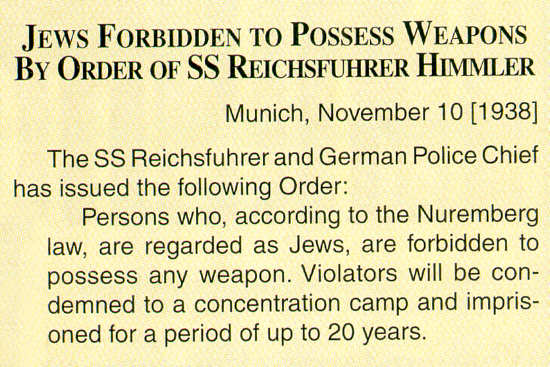
I think that a perusal of the modern history of Western Civilization would tend to show us that yes, governments can most certainly go bad. The blood-letting of Europe from 1917-1945 and the follow-on competition that ended in the early 90s is proof that democracies and republics can flip rapidly into tyrannies. I think a simple survey of contemporary nations will show us that a large number of people are subjugated beneath the yokes of dictatorships. But what of the “good” nations that have disarmed their citizens? They don’t seem to be tyrannical, they seem quite free without a mass of armed citizens forever poised to check them.
I can easily concede that they are relying on the benevolence of their current leadership. It is working fine. For them. Right now.
Still, the essential check on malevolent people with force is the actions benevolent people with force. European nations currently have generally benevolent people with authority over them. We already know, however, that this condition can change and can change rapidly. The peoples of other nations that descended into t oppression, as their culture and governments changed, thought they also lived in modern enlightened times, where tyrannies couldn’t happen to them. I’m moving to this segue because I think checks on these malign forces aren’t merely internal, but external as well. When the European central powers slipped into malevolent rulership, it was EXTERNAL forces of good that came and broke the dictatorships apart and restored the bad actors to republicanism.
I think a certain amount of “momentum” is maintaining that check on the rise of tyrannies in these disarmed nations with “benevolent” governments. That is, I think there’s still an aura of protection provided by the United States that deters any truly awful government from rising in Europe. Then again, that depends upon the presence of a benevolent people willing to use force to check the rise of a bad government. What then if the United States or other good actors stopped being good? I would submit that, disarmed, the people of Europe would have not one bit of ability to stop the rise of tyranny in their own nations.
So why does the United States seem to keep a government that is mostly good? (and it does, you naysayers) The answer is that it has a perpetual check against its getting out of hand: the armed populace. Does this political check absolutely require violent force or the threat of violent force? What about merely electing good actors to replace bad? What about protesting tyrants when they arise? What about petitioning the government for redress of grievances? What about speaking out freely against the dictators when they rise?
Those are all good measures to take when a citizenry must ensure it is in the right before a society slides past a point from which it cannot return from. All of them, however, rely upon a generally benevolent government that will pause and consider the grievances listed by its people. History shows that a rising dictatorship will not care, requiring the people to be more forceful in their demands than mere words can accomplish
Yes: governments, regardless of the advancement of the culture they preside over can still go bad. Yes, there are steps before a government goes bad to rectify the government without violence. No, if the government goes too far, the citizenry cannot fix the problem without violence or threat of violence. And if that the fix cannot come from benevolent outsiders, such as France aiding the colonists in 1776 or the United States and other Allies in World War II, then the citizenry is on its own. Sans firearms, the citizenry will have little recourse, for tyrants don’t care about protests.
This leads to other questions. Are some cultures content with domineering governments that we would consider overbearing at the cost of our security against tyranny? If so, would it be a solution to our “gun problems” to become more like those cultures? Are some cultures more vibrant and energetic and assertive, in such away that all the positives that derive from that vibrancy and assertiveness are inherently accompanied by a set of negatives such as violence and discontent? If it is necessary to solve the violence and discontent by also throwing out the vibrancy and assertiveness worth the trade off?
I don’t want to dive into this too deeply here. It just seems obvious that our culture promotes assertiveness and vibrancy, which generally inculcates an attitude in its people that the government needs to primarily keep out of our business. That attitude, taken to the extreme, is ultimately manifested in a people that must be armed to check the government, as per the opening paragraphs of this essay. Is the violence we see more often in this nation than in others a negative by-product of assertiveness, ambition or individualism? Now, before our resident Europhiles complain, yes, many Europeans are similar, but in general, (and I’ve been to Europe), I’m not impressed. Make no mistake, they enjoy their culture, I’m not expecting them to change it, I just don’t think it’s a culture we want to adopt here, and it’s certainly not one that is any position to oppose a government that decided to overstep its bounds.
That being said, the violence in our nation, though on average now decreasing, still produces extremely violent acts.
(To be clear, I’m speaking of American culture as those values it has traditionally held to, not the “objective” culture that vast swathes of progressives would love us to morph into, a culture which is essentially European in flavor).
Where these two lines of questions collide—that is, the necessity of the 2nd Amendment, and the mass killings that occur at disturbing frequency—it probably is worth revisiting the concept of “Arms” and the right to bear them. I am certain that the ability of the citizenry to check the government is worth the gun violence in America. But can any real steps be taken to alleviate the scope of the violence when it occurs? Because make no mistake, that’s really all we’re discussing when we discuss disarmament: “Fewer people are killed by a mass murderer with a knife than with a machine gun”. Got it. The dude’s still a mass murderer, and you are only trying to keep the kill count down.
There is something to that logic. Yet even though preservation of life is BUT ONE value among many that our Republic perpetually balances, it really doesn’t possess trump-card power over other values. So, if we are to seek “minimization” of casualties as a goal, it can ONLY be found within a solution that preserves the 2nd Amendment’s goals.
Before proceeding, I’m going to take a moment to rehash an essay that I wrote a while back, which discusses the 2nd Amendment (bolded line was not bolded in original):
““A well regulated Militia, being necessary to the security of a free State, the right of the people to keep and bear Arms, shall not be infringed.”
We know the final clause “the right of the people to keep and bear Arms, shall not be infringed” is, on its face, fairly plain-spoken. That these words are hotly debated is baffling, they seem clear and obvious to me. Certainly, an amount of ambiguity exists about “What did the Founders mean by ‘Arms’”? Other arguments can be made about the meaning of “people”…did the founders mean to speak to a collection of individuals with individual rights or to directly to collection itself. But those ambiguities aside, the clause is concise and clear — the people have a right to bear arms; by extension of the philosophy enshrouded in the Declaration of Independence, it would be a natural right.
A review of contemporary documents would show that the term “keep and bear arms” does apply to individuals separately, that bear arms means to carry and use (for a variety of purposes). If this meaning does apply to individuals, then we have the meaning of the term “people”. As for the Founder’s meaning of “Arms”, that debate can rage on. A reading of the Federalist papers and scant few other documents and understanding them would indicate that the Founders intent in the balance of force is that the common man certainly at a minimum has the right to bear an equal firearm to the standard infantryman. It would seem the heavier weapons were relegated to the control of the separate states and to the national army (although the vagueness of Arms at the time does allow a wider definition – but even I don’t think their vision meant for the private citizen to own a tank or a nuke).
The prior phrase “….A well-regulated Militia, being necessary to the security of a free State..” is where I think the Founders are truly eloquent and packed a ton of meaning into 13 words.
Some would tell us that the strong full time army is enough to secure our country from invaders, therefore a ‘militia’ is no longer necessary, therefore the people no longer need the right to bear arms. But the Founders didn’t say “a military necessary to repel invaders”, they said “security of a free State.”They knew all too well that an unchecked central army can easily secure a State… but they wanted a free State. They knew from firsthand experience that centralized force is the primary tool of tyranny, and that only a heavily armed populace was a check against that.
Alexander Hamilton states in Federalist #29: “but if circumstances should at any time oblige the government to form an army of any magnitude that army can never be formidable to the liberties of the people while there is a large body of citizens, little, if at all, inferior to them in discipline and the use of arms, who stand ready to defend their own rights and those of their fellow-citizens.”
Some would tell us the militias existed because the nation couldn’t fund a large full time military. The Founders didn’t say “…Militia, being necessary to alleviate the financial burden of a large Army, and at which point it becomes financially viable, we will say ‘the Army, being necessary for the security of a free State.”
In the same Federalist Paper, Hamilton does assert that the militia does alleviate the financial and social burden of a large standing army, while immediately following with assertions that even should a large standing army exist, the militia would continue as a check against it.
Some would tell us the Militia was meant to be just a supplement. And, yes, all though that is one role of the Militia, that is not what the clause “being necessary” implies. They knew that a free State CANNOT exist WITHOUT a Militia at all! The phrase doesn’t say “A well regulated Militia, sometimes helps for the security of a free State…”. The Founders distinctly say the Militia is NECESSARY to the security of a free State. Because free States are not just attacked from without, but also from within.
What do we glean simply from “…Militia, being necessary to the security of a free State….”
A) the Founders, based on their experience, knew that security means secure from the outside AND the inside
B) the Founders specified precisely what is being secured…a *free* State
C) the Founders specified a non-military entity known as the “Militia”
D) the Founders didn’t just say the Militia was useful, but NECESSARY
E) the Founders considered that no *free* State can exist without the Militia.
Why all the emphasis on the militia and the citizen soldier versus a standing professional army? What is this “Militia”, what did the Founders mean by “A well regulated Militia…”?
The founders were certainly speaking about an organization of the separate people as a collected entity. But they understood that entity to be composed of everyone (yes, I know women and slaves etc didn’t count, but the spirit of the militia was that it was every individual). This, the collected, yet dispersed, force of *every* individual citizen, was the final force that was meant to be a check against the centralizing forces. A constant reminder to those wishing to impose non-republican and non-democratic will on the people, the militia and the right to bear arms (as individuals part of the whole) was viewed as indispensable to Liberty as the 1st Amendment, and all the others.
Since the earliest definitions of the militia clearly point to the notion that it is the entire body of the people derived from an INNATE duty of all individual citizens to safeguard the liberty of nation, I certainly do not think the National Guard or the Reserves or any of the armed federal agencies are the Militia. The various Acts and Laws forming those entities merely established professional standing armies, while co-opting the term “militia”. The militia – in terms of the necessary civic spirit of a vigorously liberty oriented people in opposition to the slightest pretext of centralizing and freedom-usurping forces – still and must exist.”
Okay, back on track:
I’m loathe to mention any compromises as the Left has demonstrated, for reason that a compromise today will merely be the next point to begin compromising tomorrow. I think that we can seek some fair solutions to minimizing the casualties wrought by bad actors while still preserving the 2nd Amendment. I won’t call these “common sense” regulations, as I think the term is employed as a dirty trick of the Left to avoid having to make an argument. And fellow Libertarians, follow with me here and don’t get angry, as I’m stifling a certain amount of anger merely pondering this.
Let’s assume a premise, that yes, as Americans we shouldn’t have to be told what we can do with our possessions nor should we have to be told we can’t have something we want. I get it. I get that firearms have traditionally fallen into that category, but I also think that modern generations look at firearms much more differently than the Founders did.
[I feel it: you’re already bristling that I’m about to suggest that indeed, within the category of firearms, there may be more than just machine guns that the government can tell us we don’t need to have.]
Our modern culture has increased the “recreational” aspect of firearms to probably a level that the Founders would have found somewhat…troubling…? I personally don’t think it’s troubling, because MOST people can be trusted to shoot recreationally. But then again, Firearms at their essence are TOOLS of VIOLENCE, originally for sustenance and defense (against Criminals of all types). We have, as a consequence of our material and territorial success, been able to increasingly spend more time shooting for fun, such as targetry or hunting, than we have needed to spend shooting for defense, or for essential sustenance. Nevertheless, you can’t divorce the modern luxury of shooting from its essential purpose. Any sport and recreation derived from that purpose still arises from practicing the skills necessary to utilize firearms as a TOOL of VIOLENCE. Though the guns are “fun”, this does mean they are in a different class of “possession” than, say, your car, or your house, or your laptop. It does mean that maybe they need to be thought about as different sort of property, and a kind that doesn’t get the automatic fruits of liberty pass of “I don’t need the government telling me what I can and cannot have”.
Though the firearms are private possessions and are…kind of fun…we can’t deny that there have to be some limits to firepower and potential destructive force individual can possess, at without expensive permits and registration: Crew served machine guns…rockets…missiles…grenades… etc. Perhaps even these kinds of “potential casualty” considerations can apply to our small arms as well.
Now that I’ve lost most of my libertarian friends, the few hangers-on can possibly let out a sigh of relief, because the compromises I’m going to suggest are going to be seen partly as grossly stupid by the Left and partly as something that may be workable. Conceded: here must be a balance between the 2nd Amendment and the casualties that can come from misuse of firearms.
First, magazines.
You don’t need a 100 round drum…you don’t need a belt fed bullet backpack. Yes, they are fun. Yes, they support recreationally blazing away a lot of bullets without a reload. And I get it, I know you don’t need someone telling you what you don’t need, but, no, you don’t need them as part of the armed citizenry checking the power of an increasingly tyrannical government, which is the goal of the 2nd Amendment. In fact, I’d submit, you only need what an average infantryman carries: which is 7-10 x 30 round magazines. This will probably cause vapors among the Left who wouldn’t be content with anything more than a 3 or 5 round magazine, while simultaneously causing vapors among libertarians who don’t want any limitations in this regard.
Tough. Your objections mean neither of you are considering the purpose of the 2nd Amendment. How does one actually enforce a limitation, not merely on magazine capacity, but on total magazines owned? I’m not sure yet, but maybe it’s possible. I’m more certain that magazine capacity CAN be easily limited to 30 round. I don’t think total magazines owned could ever be limited due to the ubiquity of them across the community, but that may be made moot by a later suggestion.
Rate of fire modifications.
Much has been discussed of “bump firing” or “bump stocks” after the Las Vegas massacre. Yes, they are fun. Yes, they support recreationally blazing away a lot of bullets. And it’s crazy fun. Yes, I know you don’t need someone telling you what you don’t need. But, no, you don’t need modifications that replicate fully automatic firing as part of the armed citizenry checking the power of an increasingly tyrannical government. The primary infantry weapon carried has 2 firing modes: single shot and three round burst (and I only ever heard leaders telling their men to use single shot mode and to make every shot count). If the day ever came that armed insurrection is necessary, it will not consist of Johnny Rambo and his machine gun blazing down uniformed lines of cops; it will consist of many citizens likely with the backing of local or state governments. Those groups of rebels will operate effectively enough with weapons firing at a rate typical of semi-automatic weapons. This will probably piss off the Left, who would rather us be limited to bolt action weapons, this will probably annoy libertarians. But I submit that you aren’t considering the purpose of the 2nd Amendment, and balancing that purpose against bad people killing a lot of innocent people. I think this would be noticeably easier to enforce than the first suggestion, certainly there will be ingenious people who will make their own modifications, but it isn’t that simple.
Now it’s time to really piss off some people:
Ammunition possession.
Could there be a way to limit the total amount of ammunition possessed at any one time, without the burdensome “barcoded” ammunition that has been proposed? I don’t know. I do know that you don’t need 10,000 rounds of ammunition stockpiled. Yes, it’s fun. Yes, it supports the recreational ability to burn off rounds all day long without pause. Yes, I know you don’t need someone telling you what you don’t need. But, no, you don’t need enough ammunition to replenish a battalion through several firefights at any one time. I think, during the Founder’s era, anyone, as a member of the militia, would have been expected to have an ample amount of ammunition—for themselves—to last through a sustained firefight. I don’t know the numbers, but my guess is that would range anywhere from 30-60 rounds of ammunition. But those were different weapons and different standards of “firefight”. I could see a modern argument being made that the average soldier would need about 2-3 “battle loads” available…with a battle load being about 210 rounds of ammunition. Could there be a way to limit citizens to possessing at any one time 500-600 rounds of ammunition, without imposing onerous and invasive regulations? If so, then I could support that limitation. So far, I haven’t envisioned such a scheme. If that makes you angry, I don’t think you understand the purpose of the 2nd Amendment.
I do know this much, whatever schemes are in place, I would NEVER support them if they didn’t support anonymity of individual gun owners. With the rabidity of the Left’s hostility to guns, I would never trust a list of gun-owners to be collected anywhere. But, for example, if a limitation were placed on ammunition possession such that individual’s purchases were tracked and summed up, I would expect some sort of system would be in place to protect the identity of the purchaser unless the limit was reached. Maybe every gun owner has a type of license, with a unique identification number, such that, when an ammunition purchase is made, the unique identification number along with quantity of ammunition is passed on to the regulators, but no names are passed on. Unless at some point the unique ID number has associated with it, MORE ammunition that permitted, then that may trigger going down to the ammo supplier and getting the name of the individual (which would be on any receipts) and determining if there is reason to pursue legal measures. Of course, I have no way of figuring out how the ammo purchaser would reduce the number of rounds on their account based on firing them off so that they stay below or at the permitted amount when they purchase new. It might be completely unworkable.
Those are a handful of random brain-stormed ideas regarding the hardware of the 2nd Amendment that might work to protect the purpose of the 2nd Amendment while minimizing the potential casualties wrought by bad actors. Even then, I think the compromises still fall on the side of us just having to accept a certain level of killing as being the price of our freedom. All of the suggestions really unworkable, in which case, I’ll always default closer to the absolutist 2nd Amendment side of the debate every time, because checking the government that is also the world’s last great hope is WORTH IT.
What about the behavioral side of the 2nd Amendment?
As much as “mental health checks” prior to gun ownership sounds good, I don’t think I could get on board. I can foresee a future in which all manner of questions could be asked specifically to deny the maximum amount of people the ability to own firearms. It’s too easy to abuse and too easy to make the questions politically (or even religiously) flavored.
“Do you think the 2nd Amendment’s purpose is for the possible overthrow of the government?”
“Yes”
“You’re a nutjob, license denied”
or
“No”
“Ok, then you don’t need a firearm. Next!”
I think responsible exposure to and education about firearms from an early age IS a key component of people respecting the role of guns in society, and avoiding that dangerous fantasy that they are some sexy way to go out in a blaze of glory. Would mandatory firearms classes in middle school and high school be so bad? I don’t think so. In fact, I don’t think you can be a responsible and complete citizen if you aren’t at least familiar with the function and employment of firearms.
Should gun owners periodically demonstrate safe handling, possession, and use of firearms? Yes. But I can only back such a requirement if anonymity is maintained at the lowest level possible. That is to say, the only people who know you are due for a “firearms test” are the locals. I cannot support this if aggregated lists of gun owners were made state wide, or national.
Beyond these possible measures I have suggested— I’m not even satisfied by them, as they may be oo difficult to enforce or too easy to become tomorrow’s benchmark for the next round of “common sense” compromises leading us ever closer to total confiscation— I doubt there are many others that are enforceable without the country becoming a police state. That we cannot allow. We may have to live with periodic casualties of liberty.