Ethics Dunce: Marwan Barghouti, The Snacking Hunger Striker

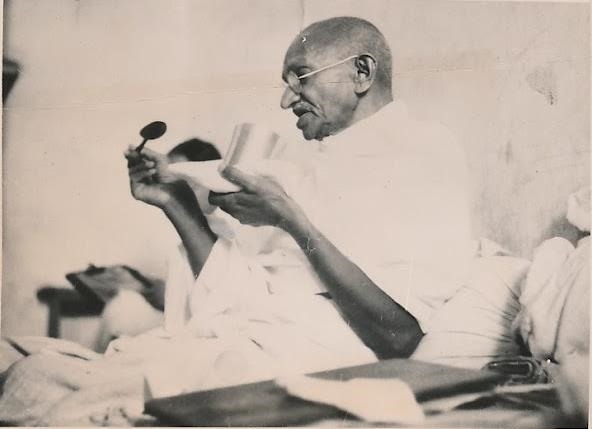
See, this is the thing: if you are secretly snacking while leading a hunger strike, you’re doing it all wrong. Gandhi didn’t do this. At least we don’t think he did.

 Over a thousand Palestinian prisoners in Israeli jails are in the third week of a mass hunger strike, demanding better conditions. Now the leader of the strike, terrorist Marwan Barghouti who i being  held in solitary confinement at the Kishon prison, has been caught on camera eating cookies and a candy bar.  Israel released videos of the would-be martyr sneaking snacks in his cell, and naturally  Palestinian leaders called foul, dismissing the videos as fakes aimed at demoralizing his hungry followers. The problem is that Barghouti has cheated before.

In 2004, leading another hunger strike, he was caught on camera eating while his fellow prisoners were refraining from food like good hunger strikers. Not knowing he was being surveilled,  the Palestinian leader covered the door and window of his cell,  washed his hands and chowed down after asking wardens for food.  The Israeali Prison Services spokesman said that cameras were set up to show the fasting prisoners how their leader was behaving. “Barghouti is sitting on a pot of meat and he sends his friends to die,” the spokesman said at the time. Continue reading

Comment Of The Day: “Comment Of The Day: ‘No, Insurance Companies Treating People With Pre-Existing Conditions Differently From Other Customers Is Not Discrimination.’”

The health care/ACA/AHCA commentary from readers continues to be uniformly excellent. (It was originally spurred by the post, No, Insurance Companies Treating People With Pre-Existing Conditions Differently From Other Customers Is Not “Discrimination.”Spartan’s Comment of the Day on the topic has itself sparked its own Comment Of The Day, this one authored by Charles Green.

By fortune’s smiles, I was able to finally meet Charlie last week face to face, as he kindly alerted me that he would be passing through my neighborhood. Finally having personal contact with an Ethics Alarms reader is always a revealing and enjoyable experience, and this time especially so. I think you would all enjoy Charlie; I certainly did. Maybe I need to hold an Ethics Alarms convention.

Here is his Comment of the Day on the post, Comment Of The Day: “No, Insurance Companies Treating People With Pre-Existing Conditions Differently From Other Customers Is Not ‘Discrimination’.”

…The claim that “a free market system” and “freedom of choice” is the solution to all that ails us is a mindless mantra that is only occasionally true, but not always.

It’s important to be clear about when free market solutions are good, and when they are not. It’s not all that hard to sort out. Basically:

Free market solutions ought to be the presumptive default. Unless there is good reason to the contrary, they ought to be the rule.

1. Exception Number 1: Natural monopolies. It makes no sense to have competition for municipal water supplies; airports; multiple-gauge railroads; fishing grounds; groundwater; or police departments. The basic reason is the putative economic benefit is either simply not there, or is absurdly overwhelmed by the social confusion engendered by multiple suppliers.
In these cases, a form of regulated monopoly is desirable. (By the way, the airline industry at a national level is precisely this kind of market; we do not have too little competition there, but too little regulation).

2. Exception Number 2a: Wallet-driven market power monopolies. It’s strategy 101 in business schools that the way to be successful is to be #1 or #2, and the best way to do that is to get more market share than your competition, so you can drive them out of business. The one guaranteed way to do that is to cut prices so low that no one else can compete. Think Walmart. Think Amazon. Think Japanese in the 60s and 70s in any industry.
The reason we have anti-monopoly laws is to reset the playing field when a competitor dominates the market too strongly.

3. Exception Number 2b: Product-driven market power monopolies. Where the product is so obscure, expensive, infinitely variable, and difficult to understand that the producers are de facto in control, because it is too confusing and too dangerous to challenge them.
Drug prescriptions are an interesting example. The ‘free market solution’ to high drug prices was (partly) to let drug companies advertise, and to loosen up the definition of what constituted a ‘new’ drug. What did we get? New diseases like RLS, new definitions of ‘new’ (moving ‘off label’ to ‘on label’) and even higher drug company profits. Because who’s still going to argue with your doc? Especially when he or she gets side benefits from giving in to the latest DTC ads on network news programs?

Continue reading

France And Ireland Remind Us Of Two More Reasons To Be Proud And Grateful To Be An American…

News Item:

France sought to keep a computer hack of frontrunner Emmanuel Macron’s campaign emails from influencing the outcome of the presidential election, with the electoral commission warning on Saturday that it may be a criminal offence to republish the data. Macron’s team said a “massive” hack had dumped emails, documents and campaign financing information online just before campaigning ended on Friday and France entered a quiet period, effectively forbidding politicians from commenting on the leak.

Polls have been predicting that Macron, a former investment banker and economy minister, is on course for a comfortable win over far-right leader Marine Le Pen in Sunday’s election, with the last surveys showing his lead widening to around 62 percent to 38.

…The election commission, which supervises the electoral process, warned social and traditional media not to publish the hacked emails lest they influence the vote outcome…

“On the eve of the most important election for our institutions, the commission calls on everyone present on internet sites and social networks, primarily the media, but also all citizens, to show responsibility and not to pass on this content, so as not to distort the sincerity of the ballot,” the commission said in a statement on Saturday.

“The commission stresses that publication or republication of these data…could be a criminal offence,” it said.

That’s right: withholding information from the voters because they can’t be trusted to be fair and discerning about what is relevant to their vote and what isn’t is to preserve “the sincerity of the ballot.” This is how they reason in countries without guaranteed freedom of speech, and freedom of the press. Florian Philippot, deputy leader of Le Pen’s National Front party, tweeted “Will Macronleaks teach us something that investigative journalism has deliberately kept silent?” Good question. Continue reading

Well, Waddya Know! Both President Trump And Barack Obama Are Interfering With The French Election!

See. when we do it, it’s ethical.

It’s small wonder that the rest of the world sees the United States as the most arrogant nation imaginable. Hot on the heals of  elected officials from both parties declaiming the outrageous conduct of Russia to “interfere in an American election,” with Democrats, depending on which excuse has been chalked on the blackboard as Hillary’s excuse du jour, even claiming that Vladamir Putin’s e-machinations stole the election, President Trump endorsed far-right French presidential candidate Marine Le Pen. Oh, as usual with this President, it was a confusing endorsement with a touch of deceit: in an interview with The Associated Press, Trump said although he was not offering an endorsement,  Le Pen is “strongest on borders, and she’s the strongest on what’s been going on in France.” In other words, he endorsed her by saying she was the best candidate. The translation of Trump’s statement: “I won’t endorse her, but I’m endorsing her.”

Typical. Unfortunately.

Two weeks later, ex-President Obama directly and formally endorsed Le Pen’s opponent, Emmanuel Macron, saying  a video announcing his support..

“I know that you face many challenges, and I want all of my friends in France to know how much I am rooting for your success.Because of how important this election is, I also want you to know I am supporting Emmanuel Macron to lead you forward. En March! Vive la France!”

Also typical, also unfortunate.

Obama’s latest exploits should be called his Hypocrisy Tour: first the man who led the party that condemned the corruption of big money in politics immediately cashes in witb a staggering post-presidency book deal and two $400,000 speaking fees, and now the icon of the party that has been shaking its fist at the skies about foreign interference in U.S. elections openly interferes in the election of an American ally. …because, you see, when we do it, it’s a good thing.

This shouldn’t be hard to grasp. Any efforts by a foreign country, government, official, leaders, former leaders, corporations, organizations or media organs to influence the results of another nation’s elections are wrong, per se and always, no exceptions.

Some forms of outside and illicit influence are worse than others, but they all are wrong: endorsements, contributions, fake news, hacking…all of it. This should be obvious, and it is not a partisan observation. The refusal to admit it, however, IS partisan. The United States cannot protest credibly when its elections are messed with as long as its leaders and others persist in interfering with the democracy of other nations themselves. It doesn’t matter if the meddler is a former President who has been anointed with an unearned, permanent presumption of virtue regardless of reality, or a current President whose conduct is automatically assumed to be sinister by those unalterably biased against him. It is wrong in either case, or any other.

This embodies an international application of the Golden Rule. Democratic elections are nobody’s business but the citizens of the nation holding them. The United States resents outside interference with our elections—some Democrats called the Russian involvement with letting us know just how corrupt the Clinton campaign was the equivalent of an act of war—so we should understand why for us to do the same is similarly wrong.

I admit it: I trolled my Angry Left Facebook friends with this post a couple of days ago:

Barack Obama just endorsed Macron in the French election. Boy, don’t you just hate it when foreign governments and officials try to influence elections?

Continue reading

Ethics Heroes: 18,000 Canadians

 Canadian country music star Brett Kissel was supposed to sing the U.S. and Canadian national anthems before Game 3  of the NHL play-offs between the Anaheim Ducks and Edmonton Oilers over the weekend, but his microphone malfunctioned. He couldn’t be heard.

The estimated crowd of 18000 took over, and sang both national anthems. They really belted out “The Star Spangled Banner” too. Now that’s being a good neighbor.

Would a US crowd so enthusiastically croon “O Canada”?

I wonder.

I hope so.

Ethics Quiz: Never Mind Breastfeeding In Church, What About Gus the Asparagus Man?

If churchgoers’ sensibilities regarding mothers breastfeeding during a religious service are worthy of respect and deference, what about their sensibilities regarding people dressed like vegetables?

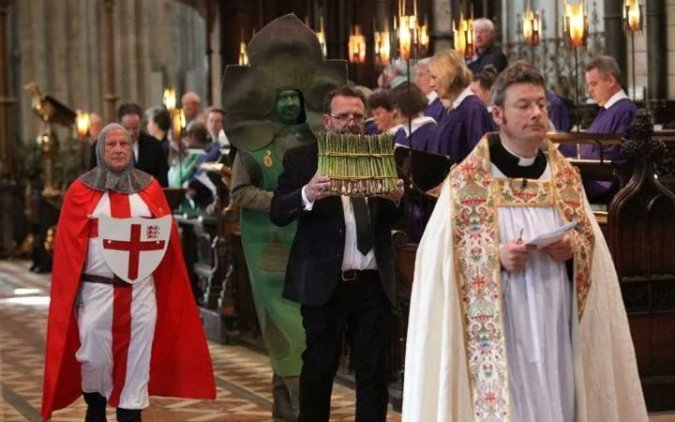
This past Sunday, England’s Worcester Cathedral  kicked off the region’s annual Asparagus Festival with a unique ceremonial blessing. A man in a suit and tie carried a bundle of the vegetable to the front of the church, followed by a man costumed as a spear of asparagus (Gus the Asparagus Man) and someone costumed as St. George, shield and all. The cathedral’s Precentor then blessed the crop.

Many churchgoers were offended. “This is an absurd pantomime-type scene that makes a mockery of Christian worship,” said one.  A popular religious blogger asked, “Where’s the sprout liturgy, or equality for mushrooms? Would the Dean really permit a walking fungus to participate in an act of divine worship?”

Your Ethics Alarms Ethics Quiz of the Day is..

Was it unethical for the Church of England to present such a whimsical service to its unsuspecting members?

The values to consider here are trust, fairness, respect, and responsibility.

What do you think?

________________________

Pointer: Fred

Ethics Hero, Corporate Division: Merck

Sometimes, though their implacable foes would refuse to acknowledge it, big corporations do the right thing even without a metaphorical gun at their heads. This week’s Economist magazine relates an amazing example that the public needs to know about, especially since it challenges popular stereotypes about Big Pharma.

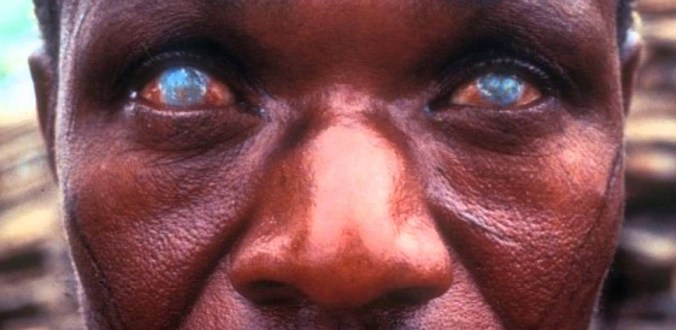
The Economist begins by horrifying us with a deadly aspect of life in third world countries that are hot and wet: “neglected tropical diseases,” or NTDs. These are neglected because the populations that suffer from them are poor and far away, but they affect more than a billion people. Among the scourges, all parasitic, are Buruli ulcer, Chagas disease, guinea-worm disease, leishmaniasis, river blindness, trachoma and yaws. There are 18 pernicious maladies currently listed as NTSs.

In the 1970s, mega-pharmaceutical firm Merck developed the drug ivermectin after tests on animals with parasitic infections. William Campbell, one of the firm’s parasitologists,told company executives that the new drug might be effective against the parasite that caused onchocerciasis, or river blindness, which  afflicts populations in in parts of Africa, Latin America, and  Yemen.  He was given the green light to find out.

The first human trial of ivermectin as treatment for river blindness took place in Senegal in 1981, on patients who had the early stages of the disease—itching, rashes— but no damage to their eyes yet. The results were encouraging,  indicating that ivermectin was safe for humans and highly effective at stopping the disease before it blinded its victims.  Merck, however, now faced the problem that has impeded cures for all the neglected tropical diseases: those who needed ivermectin were too poor to buy it, and so were the nations where they lived. Big corporations are not charities; they have investors, stockholders and a bottom line. They are not accustomed or programmed to give away their products.

Yet Merck made a corporate decision that Bernie Sanders and Elizabeth Warren say is impossible. Starting in 1987, it made an open-ended commitment to distribute as much ivermectin as was needed to eradicate the river blindness worldwide. In the next ten years, it swallowed the cost of 100 million doses. Continue reading

Incompetence Saturday’s Grand Finale: The Most Incompetent Story Ever Told!

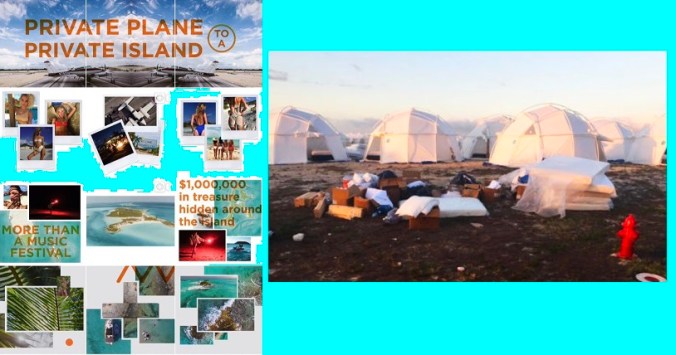
The promise (L) and the reality (R)

I have now read about ten articles about the collapse of the Fyre Festival in the Bahamas, and I still find it hard to comprehend.

The Fyre Festival was conceived by rapper Ja Rule and associate Billy McFarland in the Bahamas, and promoted by pop celebrities (I barely, just barely, know these people) Kendall Jenner, Emily Ratajkowski, Hailey Baldwin and Bella Hadid, In a promo video posted January, the Fyre Festival promised..

“The best in food, art, music and adventure…on the boundaries of the impossible, Fyre is an experience and festival…A quest to push beyond those boundaries!”

I have no idea what that means, but it sounds exciting, doesn’t it?

“You’ll be flown roundtrip on a custom, VIP configured Boeing 737 aircraft between Miami International Airport and Exuma International Airport on Great Exuma,” said the festival’s website. “Guests will be staying in modern, eco-friendly, geodesic domes. … Unplug from the everyday and ignite your flame in the Exumas!” Among theacts scheduled to perform were Major Lazer and Blink-182, as well as a DJ “who specializes in producing ’70s and ’80s rock remixes for clients that include Middle Eastern and European royalty.”.

Celebrities with ties to the organizers  tweeted and Instagrammed, building buzz about Fyre.  Ja Rule tweeted just a month ago, “This is where the cool kids will be April 27-30 May 5-8!!! #fyrefestival #fyre.”

Ticket packages to experience the self-proclaimed “cultural event of the decade” included accommodations and chartered flights from Miami, with a low price of $900 and a luxury tag of $399,995 for access to the performers.  Days before the festival was to begin, @fyrefestival  was still ginning up anticipation.

Then the festival-goers arrived on the first day to find…nothing. Well, worse than nothing: chaos. Those who had  paid $500 apiece for what the festival’s promotion described as “villas” found that the only shelter provided were FEMA-style refugee tents. There was no food, except some hastily packaged cheese sandwiches. All of the scheduled performers canceled.

The festivalgoers who hadn’t arrived by private yachts found themselves confused and stranded, with luggage but nowhere to sleep for the night. Some paid festival employees $100 to return them to the airport in a flatbed truck, but when they arrived at the airport gate, they were told that they couldn’t access the airport, requiring more bribes to get to a plane, if they were lucky. The stampede of shocked glitterati desperately trying to flee backed up the local airports, stranding many attendees in deplorable conditions, like understaffed kitchen tents with  pots of uncooked food.

And where were the organizers during all this? Nowhere near the “festival,” in Ja Rule’s case. (McFarland was  either partying on a yacht the first night of the festival, or he actually showed his face and tried to assist the victims of his ineptitude. I tend to the first account, because if he did show up, I would assume that he would be chum by now.)  Ja Rule was performing… in Chicago. He later issued a ridiculous statement, saying in part,

“I’m heartbroken at this moment. My partners and I wanted this to be an amazing event, it was NOT A SCAM as everyone is reporting. I don’t know how everything went so left but I’m working to make it right by making sure everyone is refunded … I truly apologize as this is NOT MY FAULT … but I’m taking responsibility I’m deeply sorry to everyone who was inconvenienced by this.”

Comments:

1. If you organize and promote an event and it turns out like this one, it IS your fault. You idiot.

2.  If it was a scam, at least the results could be explained as something other than someone persuading many people to trust and rely on him when he had no idea what the hell he was doing.

3. Inconvenienced? INCONVENIENCED? Selling tickets to an event in the Exumas that requires people to fly there and be met with a total fiasco is a lot more than an inconvenience.

His partner, Billy McFarland, had equally jaw-dropping comments, which included these gems..

We started this website and launched this festival marketing campaign. Our festival became a real thing and took [on] a life of its own. Our next step was to book the talent and actually make the music festival. We went out excited, and that’s when a lot of reality and roadblocks hit. 

The Exumas didn’t have a really great infrastructure – there wasn’t a great way to get guests in here – we were a little bit ambitious. There wasn’t water or sewage. It was almost like we tried building a city out of nothing and it took almost all of our personal resources to make this happen, and everything we had, to make this festival go on. We thought we were ready and built two different festival sites….The morning of the festival, a bad storm came in and took down half of our tents and busted water pipes. Guests started to arrive and the most basic function we take for granted in the U.S., we realized, “Wow, we can’t do this.” We were on a rush job to fix everything and guests were arriving and that caused check-in to be delayed. We were overwhelmed and just didn’t have the foresight to solve all these problems….We thought we were making timeframes that were correct. We were a little naïve in thinking for the first time we could do this ourselves. Next year, we will definitely start earlier. The reality is, we weren’t experienced enough to keep up.

KABOOM!

Continue reading

Comments Of The Day (3): “An Especially Ugly Ethics Quiz: Cam Betrayed”

There have been many excellent posts on the Ethics Quiz about the couple that executed their apparently loving therapy dog, a Staffordshire Bull Terrier named Cam. Three comments stand out (I could easily have selected twice this many, however) , one by Paul W. Schlecht, another by slickwilly, and a third by Elizabeth II. They cover some common ground, and together show the complexity and breadth of this issue, which goes beyond mere animal cruelty to our society’s emotional connection, confusion and hypocrisy about animals generally. I decided that they complement each other, and am posting them as a set.

First, here is slickwilly’s Comment of the Day on the post, “An Especially Ugly Ethics Quiz: Cam Betrayed”:

Growing up rural, animal management is a way of life. You care for ‘commercial’ animals and you care for ‘pets.’ Confusing the two causes problems with regards to ‘final disposition.’ You never torture the animal (as this was considered a lack of character and a sign of a dangerous person) but attempt to make the act as painless as possible. (Note this is why you never hunt deer with an insufficient caliber, or take low probability shots that may wound but not quickly lower the target’s blood pressure to induce unconsciousness. Not only is is more humane, but also prevents the meat from being tainted or lost.)

A good working definition of a commercial animal versus a pet is driven by what type of profits are earned on the animal. We (generally) keep and pay for pets for emotional reasons (a type of profit), and do not expect monetary profit. Commercial animals are for food and profit. The line can blur, as in the case of military bomb dogs or ‘barn’ cats, but this generally is the case. It is a pet if you cannot bear to think of eating it. Cows can be pets. Dogs can be junk yard guard animals. The owner’s feelings make the difference.

I remember some folks who were unable to kill their show chickens, pigs, sheep, (or whatever) for delivery to the buyer (who did not bid on a live animal, and paid well over market value to support the college aspirations of the seller.) The Ag teacher’s advice was to never name a meat production animal, if you intend to sell it. Reluctance to complete the life cycle of such animals indicated the person was not suited to that sort of rural agricultural activity. Go grow corn if you like, but don’t raise beef. There was no shame in this: find what you like to do and do it. But make no mistake: anyone who has cared for 20 pigs knows they are NOT pets, and they EAT a lot, which has to be paid for.

Continue reading

Willful Amnesia And The Great Cat And Dog Massacre

Did you know that animal-loving British families killed an estimated 400,000 household pets—cats and dogs—in the first week after Great Britain declared war on Germany in September, 1939? Neither did I, and now a new book by Hilda Kean, “The Great Dog and Cat Massacre,” sets out to remind us of that ugly episode.

As the New York Times review of the book notes and Kean explains, the mass euthanasia was “publicly lamented at the time,” but has since been erased from memory.  But why has it been erased from memory, and how? This is a disturbing cultural phenomenon that Ethics Alarms has covered before, notably in the post about dance marathons in the U.S. during the Depression. One of the definitions of culture is what we choose to remember and what we choose to forget. Forgetting, however, while often psychically soothing and an easy way to avoid guilt and accountability, is a pre-unethical condition. That which has been forgotten can no longer teach us, and a society that collectively decides to pretend something cruel, horrible or traumatic didn’t happen risks allowing it to happen again.

This, of course, is one more reason why the recent progressive mania for historical airbrushing is dangerous, irresponsible and unethical. Keep that statue of “Joe Pa” on the Penn State campus. Leave  King Andy on the twenty dollar bill.  Don’t take down that bust of Bill Cosby in the TV Hall of Fame. All civilizations have fallen heroes, moments of panic, times when they forget their values and betray their aspirations. Of course it is painful and embarrassing to remember these things, but also essential if human ethics are going to progress instead of stagnating, or even going backwards. We associate the elimination of cultural memories with totalitarian regimes, and for good reason, for they are blatant and shameless about it.

No nation is immune from the process’s appeal, however. When I was going to grade school and studying the Presidents of the United States, Jackson and Woodrow Wilson were routinely hailed by (mostly Democratic) historians as among the greatest of the great. The first Jackson biography I read barely mentioned the Trail of Tears. I read four well-regarded biographies of Wilson that ignored his support for Jim Crow, and the degree to which he deliberated reversed advances in civil rights, being an unapologetic white supremacist. The influenza epidemic that killed millions was excised from my school’s history books. Thomas Jefferson’s concubine, Sally Hemmings? Who? Continue reading