I suggest listening to this as background as you gaze at the picture…
Sexual harassment is unwelcome sexual advances in a workplace setting. Sexual assault is an uninvited or consented to touching of a sexual nature.
Outspoken feminist/writer/actress Lena Dunham decided to spontaneously kiss walk over toher “Once Upon a Time in Hollywood” costar Brad Pitt and kiss him, at the Quentin Tarantino film’s London premiere. I’m enjoying the media accounts—more on this below— that say she “appeared” to kiss him: what else could she be trying to do? Whisper in his mouth? Eat his lips?)
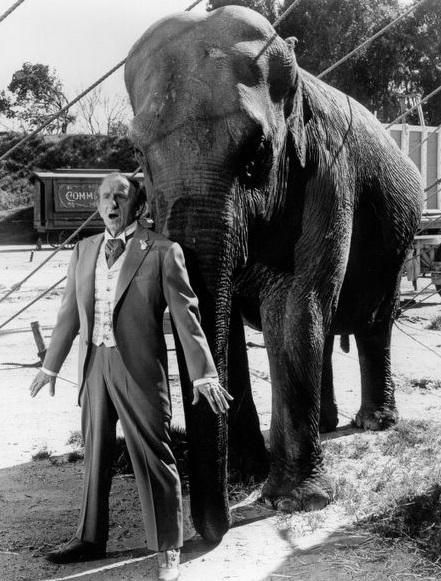
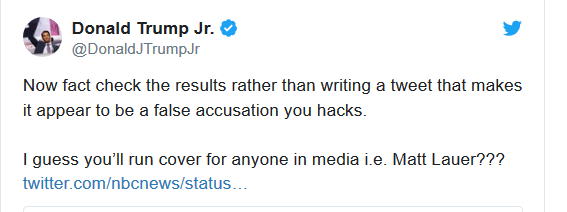
The photographic evidence makes it clear that the advance was unwelcome, indeed evoking an exchange in “Singing in the Rain”: Continue reading →
A recent question to Phillip Galanes, the advice columnist whose “Social Q’s” feature for the New York Times has frequently sparked Ethics Alarms essays, was fraught with larger significance.
A mother said that her 12-year-old daughter had a a sticker on her water bottle quoting Dr. Seuss: “You have brains in your head. You have feet in your shoes. You can steer yourself any direction you choose.” The girl’s friend told her that systemic racism made that statement false for many Americans, so the sticker was racist. The daughter then peeled off the sticker. “What’s a mother to do?” was the gist of the inquirer’s appeal. Continue reading →
And I don’t even like Friday, since small businesses like mine acknowledge no weekends, and ethics never sleeps…
1. Loyalty Ethics. Joe Biden got knocked around in the debate this week for supporting Barack Obama’s policies. Joe remained steadfast, saying, “I was a little surprised at how much incoming there was about Barack, about the President. I’m proud of having served him. I’m proud of the job he did. I don’t think there’s anything he has to apologize for. He changed the dialogue, he changed the whole question, he changed what was going on. And the idea that somehow it’s comparable to what [ President Trump] is doing is absolutely bizarre.”
Obama, however, has been silent. Now talk-show host Jesse Kelly, among others, is questioning Obama’s loyalty, tweeting, “The silence from Barack Obama as his Vice President of eight years gets torn limb from limb on his behalf is fascinating. Not even a polite word of support. Either those two are really on the outs or Obama truly is a political machine with no sense of loyalty.”
Fair? I don’t think so. It is not appropriate for Obama to start playing favorites as this stage pf the nomination process. He may realize that being seen as having to come to Joe rescue might hurt more than help: can Biden stand up for himself, or can’t he? That doesn’t mean that Obama is not a political machine with no sense of loyalty; I suspect that he is, as most of our Presidents have been. I also suspect that Obama thought Biden was a dolt, which, as we know, he is.
2. NBA sexual exploitation/ virtue-signaling ethics. I don’t know what to make of this story. Maybe you can explain it. The Milwaukee Bucks are eliminating their traditional, all-female T&A sideline “dance team” and replacing them with a gender-inclusive dance team named the 414 Crew. (Wait: my Facebook friends are arguing that an all-female editorial board is still diverse! Why was this necessary?) From the Bucks brass: “We’re kind of constantly looking to evolve and broaden our reach and be as inclusive as we possibly can.” Oh. That’s funny, I assumed that scantily clad women moving provocatively was a crude way to please the NBA’s and NFL ‘s overwhelmingly male market. If teams finally recognize that these acts were demeaning to women, why not just eliminate them? Why does a pro-basketball team need “dancing, tumbling, break-dancing, tricking and other unique talents” on display during the game? Why not magic acts? Fire-eating? Continue reading →
1. Unethical meme of the last couple hours or so...Esteemed Ethics Alarms commenter Curmie (Where have you gone Curmie? Ethics Alarms turns its lonely eyes to you… Oo-oo-oo…) posted this on Facebook, I assume in a tongue in cheek mood, since I know that he has a brain:
Sadly, it was greeted with cheers from the Facebook Borg as if the message was profound. This is a good illustration, however, of the intellectual rigor of the open borders crowd, which, please note, includes almost all of the Democratic Presidential hopefuls. How can you argue seriously with people this silly and shallow?
2. And an unethical sub-heading! Socialist propaganda turns up where you least expect it, which I guess is the idea. It’s insidious, and works on young brains like that bug Ricardo Montalban put in Chekhov’s ear in “The Wrath of Kahn.”
In this Sunday’s “Social Q’s” column, a weekly trove of ethics insight and blunders, a teacher complains about moving to a region where teacher salaries are much lower than what he is used to. The culture shock was required in order to accommodate his wife’s career opportunity to achieve her “dream job.” He says that he is obsessing about earning so much less, and even though he says he did not get into teaching for the money, and that his wife has the primary income in the family, he’s wondering if he will still be motivated to do his job at the drastically reduced salary.
Columnist Phillip Gallane’s answer is far too kind. What I would have said is that if your motivation to do the job you have contracted to do in your chosen profession is based on your compensation, you are in the wrong field, and you are letting non-ethical considerations dominate ethical ones to te detriment of those who have to trust you.
There’s nothing quite like making a sacrifice for a loved one and then being bitter about it afterwards. Gallanes does point out that since the teacher’s salary clearly isn’t crucial, he shouldn’t “stress about it” and should take satisfaction from allowing his wife to get her “dream job.”
The sub-heading for this segment in column: “It’s almost as if Capitalism is…broken?” Continue reading →
The white privilege trope has raised its obnoxious head in some recent Ethics Alarms threads, so this is timely. In “The Privilege of Escape,” a new public art project by Risa Puno at Onassis USA, the recent escape room fad (you know about escape rooms, right?), participants discover after their “escape” that some participants were given easier challenges than others. From the approving review by Times critic Jillian Steinhauer:
“As we reunite with the second group, we discover that they didn’t escape in time — not because their members lacked skills or intelligence, but because of the room they were in. Simply put, they were forced to play with a major handicap, whose challenges they were unaware of because it was presented as part of the game. (When asked for feedback, someone from that group jokingly called the experience “hell.”) Meanwhile, we had the privilege of perfect conditions, which allowed us to achieve our full potential and escape.”
Ah! I see! A perfect metaphor for life in the U.S., where social injustice and bigotry create uneven playing fields, meaning that those who are successful haven’t earned their success, and those who fail never had a chance! More: Continue reading →
In Steven Bochco TV legal dramas—the immortal “Hill Street Blues” was the best of them—everyone was sleeping with everyone else in the judicial and law enforcement system. Police chiefs were having affairs with defense attorneys, prosecutors were having affairs with judges, judges were having affairs with defendants. It was ridiculous, if entertaining, but gave an absurdly misleading impression to the gullible public about the legal system. Later, as Bochco’s star was waning, writer-producer David Kelley continued the myth with his many legal dramas
However, this is not to say that such unethical relationships don’t occasionally occur. Bochco, who died in 2018, would like this story, since he could have written it.
Alabama’s Judicial Inquiry Commission on Tuesday filed a complaint against Coffee County District Judge Christopher Kaminski, alleging that he has been carrying on a romantic relationship with an attorney who frequently practices in his court. Continue reading →
Prosecutors in Massachusetts this week dropped a sexual assault charge against the actor Kevin Spacey, in the only case against the alleged serial sexual harasser to be brought to trial. Mr. Spacey was accused of fondling an 18-year-old man at a Nantucket restaurant three years ago, one of the few of the accusations against him that wasn’t too old to try and that involved criminal conduct. The accuser’s lawyer said that a smartphone being sought as evidence by the defense had disappeared, then the accuser invoked the Fifth Amendment after being warned that he could be charged with a destroying evidence, a felony if he had deleted contents on his phone. When the young man continued to assert his right against self-incrimination, the Cape and Islands district attorney announced that it was dropping the prosecution “due to the unavailability of the complaining witness.” There wasn’t much choice.
Spacey’s far from out of the metaphorical woods. Around the same time as the Nantucket accusation, the Old Vic theater in London announced that 20 people had accused Spacey of inappropriate behavior during his 11-year stint as the theater’s artistic director. There is another investigation in Los Angeles.
So now what? None of the allegations against Spacey have been proven, though, as with Bill Cosby, the sheer number of them leave little doubt—but still some— that he is a serial sexual predator. Spacey’s own house of cards began falling when actor Anthony Rapp gave an interview to BuzzFeed accusing Spacey of assaulting him at a party when Rapp was only 14. The accusation was never proven, but suddenly more stories of sexual misconduct in the workplace and elsewhere started surfacing regarding Spacey. (There is a lot about Spacey’s conduct and problems on Ethics Alarms, here.) Continue reading →
1. More “phantom document” ethics. Last moth I wrote about the ethically dubious “phantom document” tactic, in which a lawyer alludes to a document he or she either does not have, or suggests a document has content it does not in order to trick a witness into recanting testimony.
I just saw the Eighties made-for-TV movie “Perry Mason Returns” that rebooted the classic series (and not so well) for an aging Raymond Burr. The great defense lawyer comes out of retirement to defend old legal assistant Della Street (Barbara Hale), who has been accused of murder. In the trial’s climax, Perry’s investigator Paul Drake, Jr. (played by Hale’s real-life son, actor William Katt of “The Greatest American Hero” fame) bursts into the courtroom and hands Perry a document, which he then holds as he asks the witness (Richard Anderson, playing a different role than he played in the original series) he was in the midst of cross-examining, “Would you like to reconsider your testimony? Would you like me to read a sworn statement from Bobby Lynch, in which he says you hired him to kill Arthur Gordon?”
The witness confesses that he planned the murder that Della was being tried for, and framed her. Della goes free! Perry then tells Della that there was no sworn statement. “I didn’t say I had a sworn statement,” he chuckles, “I just asked if he wanted me to read one.” Continue reading →
20-year-old Miss Michigan Kathy Zhu was stripped of her title because she tweeted against the mandatory wearing of hajibs, and the about the problem of black-on-black violence.
MWA Michigan State Director Laurie DeJack announced the measure, writing Zhu,
“It has been brought to the attention of Miss World America that your social media accounts contain offensive, insensitive and inappropriate content, and in violation of MWA’s Rules and Conditions, specifically the contestant requirement of ‘being of good character and whose background is not likely to bring into disrepute Miss World America or any person associated with the organisation. Therefore, and effective immediately, MWA does not recognize you as a participant of any sort or in any capacity as it relates to any and all events of MWA. Furthermore, let this communication serve as official notice to remove any mention of yourself as a participant in MWA from all social media platforms (including photographs of you wearing the MWA Michigan sash and/or crown, and any text claiming to be a participant of MWA events).”
What were the messages that led the organization to conclude that Zhu exhibited bad character that brought “disrepute” on the pageant group? Last year, Zhu tweeted critically about a “Try a hijab” booth on campus, writing “So you’re telling me that it’s now just a fashion accessory and not a religious thing? Or are you just trying to get women used to being oppressed under Islam?” Later, Zhu tweeted, “Did you know the majority of black deaths are caused by other blacks? Fix problems within your own community first before blaming others.”
The ABA Journal finally provided a brief, clear, fascinating account of exactly how it was that George Harrison was found to have “unintentionally” plagiarized the Chiffons’ “He’s So Fine” when he wrote his biggest hit single as a solo artist, “My Sweet Lord.”
It also clarifies what I always suspected: when courts have to decide the question of when a song is too much “like” another, anything can happen.
George Harrison’s first solo album “All Things Must Pass” was released in 1970, the same year the Beatles officially broke up, with “My Sweet Lord” the triple album’ s signature hit. I remember the first time I heard the song, and thinking, “Wow, that reminds me a lot of ‘He’s So Fine’!” Others thought so as well, including Bright Tunes Music Corp., which held the copyright on the Chiffons’ 1963 classic. It sued Harrison’s publishing company, Harrisongs Music Ltd., for copyright infringement.
As litigation proceeded, Harrison admitted in court filings that he was familiar with “He’s So Fine”—how could he not be?—but denied that he had used it to create “My Sweet Lord.” At trial, Harrison brought his guitar to the witness stand to demonstrate how he had composed “My Sweet Lord.” This, onlookers agreed, was sufficiently convincing to persuade the judge that George was not guilty of intentional infringement. Continue reading →