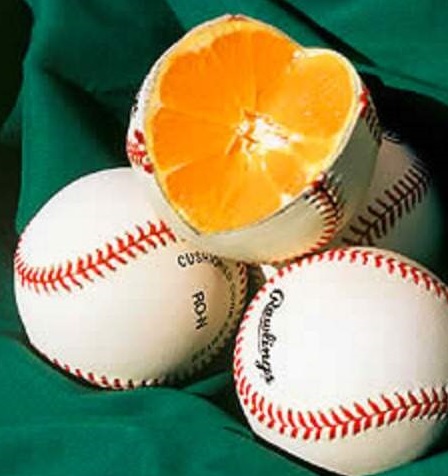
Baseball Ethics: Integrity, Records, And The “Juiced Ball”


The Boston Red Sox didn’t make the play-offs (and made me physically ill in the process), but that doesn’t mean I won’t find some baseball ethics to write about during October, which will cover the play-offs and World Series involving  five teams from each league. Some weeks ago commenter JutGory asked about the ethics implications of the so-called juiced baseball. and I was not in a mood to think that seriously about baseball, since the Red Sox were engaged in the final throes of an epic, inexplicable, season-long choke that, among other bad things, soured my wife on the game, undoing years of careful nurturing by me. I’m OK now, and Jut was right, the juiced ball does raise ethics issues.

Early on in the 2019 season, it was obvious that the ball was different somehow. The very first month had more home runs than is normal in the spring, and the phenomenon only got more extreme as the weather got warmer. Pitchers like Houston Astros ace (and likely Cy Young winner as the AL’s best pitcher) Justin Verlander and former Cy Young winner David Price called out MLB management directly, accusing them of messing with the ball to help the hitters. Baseball’s brass denied it initially, but eventually they had to admit that something was weird about the balls.

Researchers  confirmed  that the 2019 ball was traveling farther when hit with the same amount of force than the balls in seasons past. The change was determined to be that the balls’ seams were flatter, less raised, than they had been before. This reduced the drag when they were flying through the air, resulting in longer distances.

How and why this happened is  a mystery. Major League Baseball swears it was an accident,  but nonetheless the sport is completely in in control of the manufacturing of baseballs. It owns the company that makes them. The current theory is that this was a quality control issue or, perhaps, a quirk in which eliminating a flaw in the balls made them too uniform, too exact.

Among the ball’s many specifications, the degree to  which the stitches were raised had never been included. Continue reading
Morning Ethics Warm-Up, 10/1/2019: “30 Days Hath September” Appreciation Edition

Welcome October!

 I knew the date without having to check..for once.

Time to express my gratitude to the anonymous composer of the days of the month mnemonic, which I still literally have to sing in my head several times a year.

The earliest English version of the  verse has been traced to approximately 1425. It seems that the initial rhyme began with “Thirty days hath November,” not September, but by the time the little verse was first published in English, in  1562, September had taken over the top spot, and there it has remained. Wikipedia’s entry notes that “it is probably the only sixteenth-century poem most ordinary citizens know by heart.”

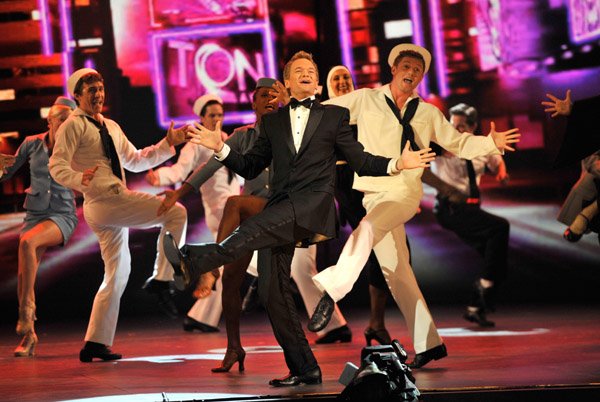
1. But by all means, it’s irresponsible to have Rudy Giuliani as a guest on a news program…CNN’s fake media ethics watchdog thought it was appropriate to have Robert De Niro as a guest on his CNN show over the weekend. Why is an uneducated, loud mouth, vulgar actor an appropriate guest? It is because he is guaranteed to delight the Trump Deranged with sophisticated commentary like he treated America with when he appeared at the 2018 Tony Awards, shouting, “I’m just going to say one thing. Fuck Trump! It’s no longer ‘Down with Trump.’ It’s ‘fuck Trump!’”

De Niro never graduated from high school, and has fewer credentials to expound on public policy matters than the average American you could identify by throwing a rock into a crowd blindfolded,. He has repeatedly shattered basic standards of public decorum by going into angry, vulgar, non-substantive rants against the President when invited to stand behind a podium or in front of a microphone. So, naturally, he was a perfect guest for Stelter’s show, and, also naturally, he said, in the course of opining that the President and his supporters were “gangsters” and “crazy” and that “This guy should not be president, period, ““F​uck ‘em. Fuck ‘em!”

A voice from off-set could be heard yelling “Woahhhh!”After all, who could have possibly predicted that the actor would behave on CNN when discussing the President exactly as he has been behaving for years? “This is cable, so it’s not an FCC violation, but it still is a Sunday morning,”  Stelter commented, weasel-like as usual.

Yes, it’s Sunday morning, and you invited a guest who habitually shouts versions of “Fuck Trump!’ in public places while being televised, because you know your audience wants to hear someone say “Fuck Trump.” Continue reading

Comment Of The Day: “A Trigger Warning About A Trigger Warning: Audiences Should Walk Out Of The Movie Theater When This Appears”

“For May wol have no slogardie a-night.
The seson priketh every gentil herte,
And maketh him out of his slepe to sterte.”

  Now who can argue with that?  The passage is from a story Geoffrey Chaucer’s “Canterbury Tales,” “The Knightes Tale,” the English  classic written between 1387 and 1400. I did not expect a substantive comment regarding Chaucer to follow an Ethics Alarms post (Chaucer has been mentioned in passing here in the context of the evolution of the English language), but there it was: Michael West revealed his fascinating discovery that Chaucer may have been a pioneer in more than just English literature. Michael’s Comment of the Day is unusual in another way besides its erudition. It was a comment on a post that is nearly two years old. It concerned the jaw-dropping warning that preceded the “Darkest Hour,” the acclaimed film about the wartime heroism and brilliance of  Winston Churchill:

“The depictions of tobacco smoking contained in this film are based solely on artistic consideration and are not intended to promote tobacco consumption. The surgeon general has determined that there are serious health risks associated with smoking and with secondhand smoke.”

I wrote at the time,

Winston Churchill, you see, smoked cigars. Actually he chain-smoked them, and inhaled. They were among his trademarks. Any adult who doesn’t know that should not have graduated from high school. Interestingly, shooting and bombing people are also serious health risks, so I don’t know why it wasn’t noted that the depictions of warfare contained in this film are based solely on artistic consideration.”

Whatever “based solely on artistic consideration” is supposed to mean…

Of course, showing Churchill smoking cigars is not an “artistic consideration,” but one of historical accuracy and integrity. Does this mean that there was really a debate in the studio about whether or not Churchill should be shown smoking, so as not to trigger good little progressive totalitarians, who believe in changing the past for the greater good of the present? I wonder if they considered making Winston, who was fat, appear slim and ripped, since the surgeon general has determined that there are serious health risks associated with obesity and over-eating. I don’t see why they wouldn’t, if they felt that showing people smoking in the 1930s, when almost everyone smoked,  might be interpreted as promoting smoking today.  Churchill also drank like Bluto in “Animal House.” Why no warning about that? Uh-oh—does this mean that the film, for artistic considerations, only shows Winston sipping soda water and prune juice?

That warning says to me, “We, your Hollywood moral exemplars, think you are an ignorant, illiterate  dummy who can’t tell the difference between a historical drama and a tobacco commercial. We also support the government’s belief that it should impose on every aspect of your life, including your entertainment, to protect you from yourself.”

I had, mercifully, completely forgotten about that asinine warning, and now I’m ticked off all over again. Gee, thanks, Michael, for reminding me.

Here is Michael West’s Comment of the Day on the post, “A Trigger Warning About A Trigger Warning: Audiences Should Walk Out Of The Movie Theater When This Appears”... Continue reading

And Now For Something Completely Stupid: “Upbeat,” Unethical Website Of The Month,

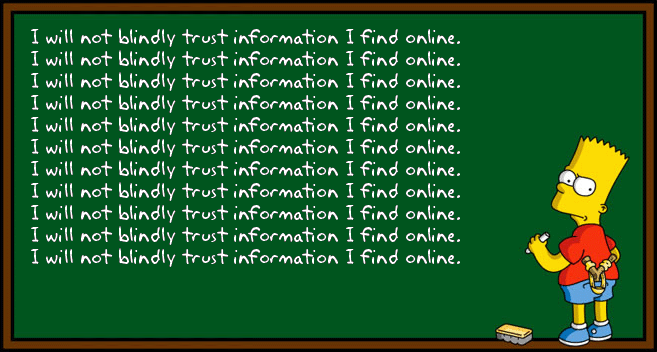
Stay away from upbeat, Bart!

Let this incompetent, sloppy, website stand for all of its ilk across the web.

This is a pop culture site initially aroused my ire by tricking me into a slideshow. These are unethical devices used to artificially inflate traffic statistics; it would be like Ethics Alarms breaking every post into ten or more chapters that every view had to click on individually. The clickbait headline was “Hollywood Actors That Don’t Get Cast Anymore,” and the intro suggested that they all had been “blacklisted” for one reason or another. This itself is misleading and sloppy: when “blacklist” is used in reference to Hollywood, it means THE blacklist, the secret list of artists who the studios conspired not to hire because of the reality or rumors of Communist associations, sympathies and activities. To confound things, the slide show mixes in, as padding, I suspect, some figures who were blacklisted for alleged Communist connections.

There is no formal “blacklist” today, though some actors with conservative leanings claim, with some plausibility, that they have struggled after being placed on the bottom of the metaphorical pile because of Hollywood’s ideological intolerance. Communists, ironically, would be welcome in today’s leftist Tinseltown. Among those actors who picked the wrong era to be conservatives are James Woods, Patricia Heaton and the late R. Lee Ermey. Even they, however, couldn’t credibly claim to be blacklisted.

“Upbeat” doesn’t bother with these interesting cases, however. It would rather just make stuff up. Of Brendan Frazier, it says, “Fraser claimed that he had been sexually assaulted by [Phillip Burke] ..the former president of the Hollywood Foreign Press Association… and whether the allegations were true or not, Fraser has not appeared in a film since. He now spends his time in his mansion outside of NYC, raising his kids and horses.” Continue reading

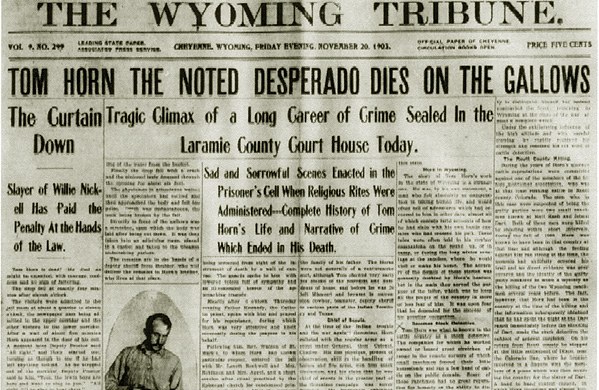
Directed Verdict Ethics In The The Movies: “Tom Horn” And “To Kill A Mockingbird”

Once again, as I watched the film version of “To Kill A Mockingbird” for the 50th time, I was bothered by the fact that Atticus never asked for a directed verdict, and the kindly, seemingly fair-minded judge never declared one.

A directed verdict is also known as a judgment as a matter of law or JMOL. It means that one side or the other has failed to meet a minimum burden of proof, and is usually declared by a judge  after is a motion made by a party, during trial, claiming the opposing party has presented insufficient evidence to reasonably support its case.  A directed verdict  is similar to judgment on the pleadings and summary judgment. Judgment on the pleadings is  made after pleadings and before discovery; summary judgment occurs after discovery but before trial.

A directed verdict occurs during the trial, and a judge can also render one spontaneously, without a motion. The motion can even  be made after a verdict is returned by a jury, where such a motion is technically for a “renewed” directed verdict, but commonly referred to as judgment notwithstanding the verdict.  In a civil trial, a party must have moved for a directed verdict before the jury reports out its decision. In a criminal trial, as in the fictional Tom Robinson case, there is no such requirement. The court may set aside a guilty verdict and enter an acquittal in the interests of justice.  A criminal defendant is not required to move for a judgment of acquittal before the court submits the case to the jury for the verdict to be overturned. A verdict of not guilty can never be overturned.

In “To Kill A Mockingbird,” black defendant Tom Robinson is convicted of rape despite the primary prosecution witness, the alleged victim, contradicting her own testimony at several points, and despite strong evidence that the beating she claimed was part of the sexual assault was shown to be delivered by a right-handed man—like her spectacularly vicious and creepy father—when the defendant couldn’t use his right hand at all. Atticus Finch never moves for a directed verdict, and the judge never declares one, though he presides over the fiasco of a trial with a disgusted look throughout. Continue reading

How To Kill The American Musical

I have directed musicals professionally in regional and amateur theater, and the shows were a great love of mine growing up. Sadly, the American musical genre is becoming increasingly isolated from the mainstream culture for many reasons, among them the death of the movie musical, the pop-infection of the music and its singing styles, making most Broadway scores (and all of the women) sound the same, the inflated price of professional theater tickets, and production costs and effects that put most modern shows outside the realm of possibility for high schools and colleges.

Another factor,  which it is impolitic to discuss, is that the male gay community has decided to make musicals its own special genre, has been discouraging any talented straight performers from venturing into the field, sometimes unintentionally, sometimes not.

Emblematic of this trend is the Sirius -XM Broadway Channel, which is the only way any kids are likely to hear an excerpt from a cast recording other than buying the song online. The nearly exclusive host is Seth Rudetsky, a writer/performer of some note and obvious talent. To say that he is openly gay is an understatement. Rudetsky’s delivery, speech patterns and preferred subject matter would have once been criticized as evoking cruel anti-gay stereotypes. He’s an actor; Rudetsky could butch up he chose to, and if he cared about musicals continuing as an art form participated in and enjoyed by the whole society and not just a small segment of it, he would. Continue reading

Morning Ethics Warm-Up, 9/20/2019: Not Funny!

Ah! It finally feels like a September morning!

1. Not fake news, exactly, just half-baked news. On the New York Times front page, right hand column above the fold is the headline “Claim on Trump Is Said To Involve Foreign Leader.” Reading it, we learn that an unspecified complaint has been made by a an unnamed whistle-blower “in the intelligence community” that is “said” (by no named source) to involve President Trump saying something, promising something or implying something, at least partially involving the Ukraine, according to two sources also un-named. This is apparently all being investigated by the appropriate inspector general.

I’m serious. This is what the Times considers front page news now. Instantly, “resistance” members and Democrats will leap to the conclusion that whatever it is, it’s impeachable. Those who are thoroughly sick of the successive coup attempts will assume that this is one more concocted sliming by the Deep State, so we can have a “Russiagate” style investigation that will hamstring President Trump’s second term. Those who are focusing on the mainstream news media’s war on the President will conclude that the Times, having once again exposed itself as less a journalism organization than a Democratic Party hit squad with its self-indicting misrepresentation of accusations against Justice Kavanaugh, rushed a non-story into print as a diversion.

For my part, I’ll wait for actual facts, thanks. I don’t trust “the intelligence community” not to manufacture ways to undermine the Presidency, not after Comey, McCabe, the FISA fiasco, the FBI lovebirds texts, and Mueller’s statements, among other smoking guns. I don’t trust the Times reporting, I don’t trust President Trump not to do or say something that crosses ethical or legal lines, and I certainly don’t trust Congressional Democrats to determine what are serious transgressions by this President and what are typical maneuvers that have only become ominous because he isn’t Barack Obama. Continue reading

Afternoon Ethics Flotsam And Jetsam, 9/16/2019: Ethics Movies, Clowns And Harvard Professors

…As I prep for a CLE road trip…

1. I finally saw “Doubt,” the film adaptation of the John Patrick Shanley stage drama about a parish priest suspected of child abuse. It’s an ethics film, and unlike many ethics films, made a profit at the box office.

I had seen the play on stage, and found it didactic and contrived; the film did not, I’m sure because the cast was so excellent. Meryl Streep, Viola Davis and Phillip Seymour Hoffman as the priest were all wonderful, especially Davis, whose single scene in which she runs down a series of desperate arguments and rationalizations to justify allowing her son to be molested—maybe—is an ethics cornucopia. Unlike the stage production I saw, the movie benefits by having its protagonists appear less sympathetic than its apparent villain.

This goes on the ethics movie list, which is due for an update.

2.  Yet another ethics movie of more recent vintage is 2019’s “The Challenger Disaster,” a fictionalized recounting of how the decision was made to allow the doomed space shuttle to launch despite the warnings of Morton Thiokol engineers.  I wrote about this depressing ethics case study here , in a tribute to the primary Cassandra in the tragedy, Roger Boisjoly, and here,  about his troubled colleague, Bob Ebeling. The film’s hero appears to be an amalgam of the two. Here is an excerpt from a review on The Engineering Ethics Blog:

Even if you are pretty familiar with the basics of the story, as I was, the film is almost agonizing to watch as the launch time draws closer….The focus is always on Adam [the fictional hybrid of the engineers opposing the launch]: his belief going in that the truth is always a sufficient argument (it’s not, as it turns out), his doubts that he’s done enough to stop the launch, and his retrospective descriptions of what went on in the hours leading up to the launch…. the generally underlit atmosphere symbolizes Adam’s darkening mood as the critical conference call comes and goes, and the decision is made to launch. After Adam drives home that evening, he just sits out in the driveway in his car until his wife comes and gets into the seat beside him. …Later, during the  hearings that Adam and his fellow engineers attend, they come forward out of the audience and interrupt the proceedings after they hear a Morton-Thiokol manager lie about his knowledge of the seal problem. After the hearing, a sympathetic commission member finds Adam and reassures him that there are whistleblowing laws to protect him from repercussions of his testimony.

While it is never good to kick a man while he is down, I wish the film had taken time to show in more detail the intensity of the ostracism that forced the real-life Boisjoly to resign from Morton-Thiokol after his participation in the hearings made him persona non grata at work. … Boisjoly made a new career out of giving talks to engineering students about his experiences. …For a complex, historically accurate, and thought-provoking take on the Challenger disaster, I cannot think of a better medium than “The Challenger Disaster”  for conveying the seriousness of the emotion-laden decisions that have to be made at critical times. It is not a fun movie, but it’s a good one. And I hope it does well in video-on-demand release, because engineers need to see it.

Also lawyers, doctors, corporate executives, military officers, government officials, journalists, students… Continue reading

Ethics Hero: Dave Chappelle

I know: just a week ago, I began the last section of the  day’s warm-up with “He’s not exactly an Ethics Hero, but…Dave Chappelle’s new concert video, now streaming on Netflix, is thought-provoking, brave, and full of ethical insights and analysis. I could do a two hour ethics seminar using just his material.” Several things have changed since then, however…

  • I am desperate for ethics heroes. We all are. If the Democrat candidates debate proved anything, it was that.
  • Chappelle is being attacked, hard, by the very same cancellation culture and political correctness dictators he has been willing to  challenge.
  • There is an organized effort to try to discourage the public from watching his Netflix special “Sticks and Stones,” not because it won’t be funny to anyone still capable of finding things funny, but because it will inspire people to think. Can’t have that…
  • Only one reader, the usually intrepid and culturally aware Humble Talent, commented on the issue last week. Sometimes I think that including a topic in the warm-up rather than devoting a whole post to it causes some Ethics Alarms readers to gloss over the issues involved, or maybe miss the item itself, as if each warm-up topic  is only 20% of a serious ethics topic because there are typically five in a post. The benefit to me of this format is that it saves time (you would not believe how long it takes to set up an individual post after the text is written) and helps me avoid an ethics backlog, but sometimes whether a particular issue is covered in a warm-up item or in a full post is arbitrary, a matter of timing, what else has occurred and my mood at the time.
  • Upon further reflection, I have concluded that Chappelle is an Ethics Hero.

Continue reading

Noon Ethics Warm-Up, 9/10/2019: Fat-Shaming, Race-Baiting, And Terrorist-Tarring [UPDATED]

ARRGH!! Half-way through the day, and not out of my pajamas yet!

1. Here’s the kind of comment that won’t get an aspiring  new commenter approved…From Erik Guettler: “It’s sad that you think you actually know anything about ethical behavior by criticizing Bill Maher, while Donald Trump’s the most unethical, openly racist and corrupt president Americans have ever had.”

The comment fails on many levels. To begin with, it’s stupid (there is a stupidity justification among the Ethics Alarms banning tenets.) Criticizing Maher for his frequent absence of functioning ethics alarms cannot make me think I know anything about ethical behavior. The opposite is true: it is because I am an ethicist that I criticize Maher, though it hardly requires an expert to recognize his unethical conduct.A relatively well-raised 17-year-old could do it.

Second, the comment breaches basic ethical analysis principles, not to mention common sense: President Trump’s conduct is irrelevant to how unethical Maher is, as is my criticism, or not, of the President. Third, his list of Trump failings is—oooh! Let me finally use this!NPC junk. Neither he nor anyone can find me any “openly racist” conduct or statements on the President’s part, for this is one of the Big Lies (#4, to be exact.) I have gone through this dance with many Trump Deranged Facebook friends. Challenged to back up the “openly racist” lie, they babble about how he challenged Obama’s birth certificate, and go downhill from there. The statement that he is the “most unethical” President, personally or professionally,  is proof of historical ignorance and bias. Unethical he is, but whether Trump’s lack of ethics is more or less substantive than that of Andrew Jackson, James K. Polk, Woodrow Wilson, Franklin Roosevelt, Jack Kennedy, Lyndon Johnson, Richard Nixon or Bill Clinton is a matter of legitimate disagreement. The “corrupt” accusation is also non-substantive, unproven, and based on supposition and bias rather than evidence.

But never mind all that: the claim that Ethics Alarms has somehow ignored Donald Trump’s ethics deficits is so easily disproved that the insulting comment is an example of reckless disregard for the truth.

Bite me, Erik.

And don’t come back.

2. While we’re on the topic of Mr. Maher’s ethics…Here is the professional asshole in his most recent HBO episode:
Continue reading