The Professor’s Blackface Salute: An Ethics Mess

oregon-blackface-mashup

Halloween costumes, political correctness, law, privacy, and the Niggardly Principles—this one has it all.

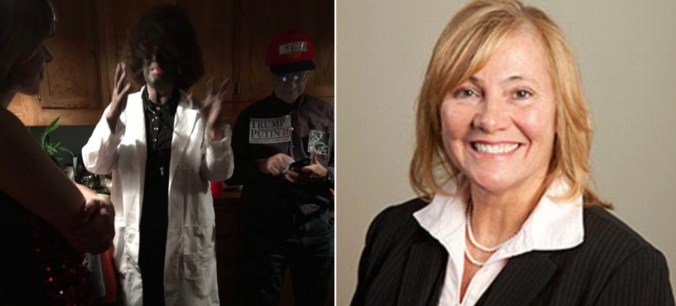
Last Halloween, University of Oregon law professor Nancy Shurtz dressed as Dr. Damon Tweedy, the author of Black Men In A White Coat , as an homage to the African American physician and author. She did this at a Halloween party in her own home. Nobody at the party appeared to misunderstand the gesture or the intent of the costume, in part because she could explain it on the spot, and because they knew that Shurtz was no racist. Shurtz had also told the students who were invited that she would be “going as a popular book title,” hence the blackface, Afro wig, white coat, and  stethoscope.The university report on the episode states that Shurtz “was inspired by this book and by the author, that she greatly admires [the author] and wanted to honor him, and that she dressed as the book because she finds it reprehensible that there is a shortage of racial diversity, and particularly of black men, in higher education.”

But as always happens now because there is no such thing as a reasonable expectation of privacy even in one’s own home, reports of Shurtz in costume and make-up got out into the campus at large, and inflamed the predictable outrage. The university launched an investigation that culminated in a critical report prepared by an attorney and the university’s Office of Affirmative Action and Equal Opportunity.  Shurtz issued an apology—for her private conduct within her own home that was pounced upon by Political Correctness Furies, since she appears to be one herself-–on November 1. Some of her colleagues on the faculty and many students demanded that she resign, and she may have to yet. Shurtz has been censored and suspended, and is now on paid leave. It being claimed that her wearing the costume–within her own home as a gesture that all agreed was intended as benign and that nobody at the party either objected to or failed to understand— created “a hostile environment” at the school. This is apparently because

“as part of the uproar, students said things of which the administration disapproved: The report specifically notes that students used “other offensive racially-based terminology during class times in the context of discussing this event and broader racial issues.” It related that “some of the witnesses reported that the students’ reactions to the event were racially insensitive or divisive.” And it apparently viewed such statements as relevant to whether Shurtz’s own speech was properly punished.”

The report, meanwhile, concludes that the costume constituted “harassment,” and that her intentions are irrelevant.

Writes First Amendment expert Prof. Eugene Volokh: Continue reading →
“Rogue One” Ethics: Peter Cushing Returns From The Grave

He's baaaaack!

He’s baaaaack!

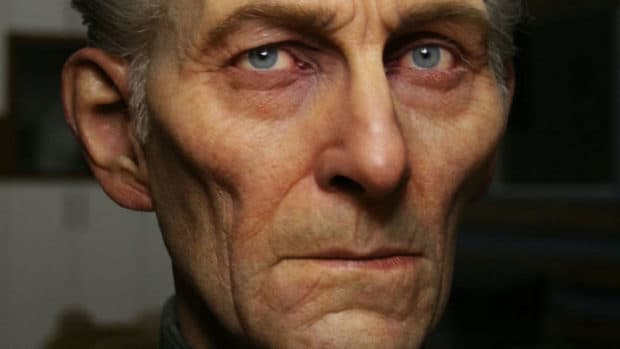
Hammer Films horror icon and Christopher Lee foil Peter Cushing died in 1994 from prostate cancer. That couldn’t stop the makers of the latest “Star Wars” movie from bringing his image back from the grave.  The gaunt-faced British actor—an early “Doctor Who”!—played Grand Moff Tarkin in the original “Star Wars,” a bad guy, Cushing’s specialty. Since “Rogue One,” the current addition to the series, is a prequel, Tarkin is alive again (he went down with the Death Star in Episode IV). Instead of recasting the part, the producers decided to recreate Tarkin/Cushing using CGI technology. Lucasfilm-owned digital effects house Industrial Light & Magic reanimated Cushing’s likeness so that a recognizable Tarkin could make a convincing  appearance in “Rogue One.” The results are not perfect, but it is still one step closer to allowing future movies to cast avatars of long dead stars to interact seamlessly with live performers.

We have recently seen actors like Arnold Schwarzenegger, Jeff Bridges and Anthony Hopkins digitally youthened, but forcing a dead actor’s image to perform is a different matter entirely. The use of computer animated images of dead performers to do the bidding of their director masters evokes memories of “Looker,” a science fiction film directed and written by the late Michael Crichton of “Jurassic Park” and “Westworld” fame. In that 1981 movie, a corporation transferred the images of living models to a computer program that could use the new cyber-models to do and say anything more effectively and attractively than the models themselves in television ads. Then the company had the models killed—less residuals that way.

The emerging technology raises many ethical issues that didn’t have to be considered before, but when it comes to using a dead actor in a new role, the ethics verdict should be easy. It’s unethical, unless a performer  gives informed consent for his image to be used post mortem in this fashion. Presumably, the consent or the lack of it will be part of future negotiations and standard contracts. Actors who agree to have their images used as cyberslaves will also probably want to limit the uses of their names and images. No porn films, for example. No uses of an actor in a role he would have never agreed to playing while alive. Don’t make John Wayne shoot someone in the back. Don’t show Fred Astaire as clumsy on his feet; don’t make Jimmy Cagney a weenie.

Allowing another actor to use a dead one’s face and body, like Andy Serkis wore his cyber King King suit, is a closer call. If it is clear that the dead actor isn’t the one doing the acting, and that digital technology is being used as the equivalent of make-up, maybe that practice is just icky rather than unethical, provided the credits are clear.To make Cushing’s Tarkin live again on screen, “Rogue One’s “film-makers hired Guy Henry, a 56-year-old British actor who resembles Cushing. Henry played the part of Tarkin on the set, then the tech wizards transformed him into a Cushing clone. Continue reading →

The Ethical Christmas Carol

Considering that Christmas is our culture’s ethical holiday, it is remarkable that only one traditional carol—and no modern holiday songs—celebrates ethical conduct. The one carol is “Good King Wenceslas,” and a strange one it is.

The lyrics are by J. M. Neale (1818-66), and were first published in 1853. Neale is a superstar in the Christmas Carol firmament: he also is responsible for the English lyrics of “Good Christian Men, Rejoice,” and “O Come, O Come, Emmanuel,” both of which you hear much more frequently than “Good King Wenceslas.” One reason is that the ethical carol tells a story in ten verses, and if you don’t sing them all, the story doesn’t make sense. There are very few recordings of the song in which all the verses are sung. Ten verses is also a lot to remember for any song. My elementary school used to teach the whole carol to sixth graders for the Christmas assembly, but let them have crib sheets. This was before it was decreed that allowing children to learn, sing and listen to some of the most lovely and memorable songs in Western culture was a form of insidious religious indoctrination.

Here is the whole carol:

Good King Wenceslas looked out
On the feast of Stephen,
When the snow lay round about
Deep and crisp and even;

Brightly shone the moon that night
Though the frost was cruel,
When a poor man came in sight,
Gath’ring winter fuel.

‘Hither, page, and stand by me,
If thou know’st it, telling
Yonder peasant, who is he?
Where and what his dwelling?’

‘Sire, he lives a good league hence,
Underneath the mountain,
Right against the forest fence,
By Saint Agnes’ fountain.’

‘Bring me flesh and bring me wine,
Bring me pine logs hither,
Thou and I will see him dine
When we bear them thither.’

Page and monarch forth they went,
Forth they went together,
Through the rude wind’s wild lament
And the bitter weather.

‘Sire, the night is darker now
And the wind blows stronger;
Fails my heart, I know not how,
I can go no longer.’

‘Mark my footsteps, good my page,
Tread thou in them boldly:
Thou shalt find the winter’s rage
Freeze thy blood less coldly.’

In his master’s steps he trod,
Where the snow lay dinted;
Heat was in the very sod
Which the Saint had printed.

Therefore, Christian men, be sure
Wealth or rank possessing,
Ye who now will bless the poor
Shall yourselves find blessing.

For one thing, “Good King Wenceslas” has little to do with Christmas Day, and doesn’t mention Jesus or the Nativity. The Feast of St. Stephen is also known as Boxing Day, the day after Christmas, December 26. It is a British Commonwealth tradition that never caught on in the U.S. In some European countries like Germany, Poland, the Netherlands and the Nordic countries, the day is celebrated as a Second Christmas Day. Continue reading →

Comment Of The Day: “Late Nominations For 2016 Jerk Of The Year: Lena Dunham And Daniel Goldstein, Ivanka’s Jet Blue Harasser”


Bill Maher, role model...

Bill Maher, role model…

Steve-O-in-NJ‘s reaction to the JetBlue flight harassment of Ivanka Trump by a lawyer could just as easily been written as a comment on this Ethics Alarms post, from shortly after the election, which began..

I have to adapt, with acknowledgement, a long-running gag wielded by Prof. Glenn Reynolds on his iconic conservative website Instapundit thus:

“I wrote if Donald Trump was elected President, we’d have a nation of assholes, and I was RIGHT!”

The problem is that the joke isn’t funny in this case. It’s tragic. What I am seeing in the news, watching on social media and reading on the web and in editorial pages shows me that the last eight years have done even more damage to American unity and ethics than I had realized.

Here is Steve-O-in-NJ‘s Comment of the Day on the post, “Late Nominations For 2016 Jerk Of The Year: Lena Dunham And Daniel Goldstein, Ivanka’s Jet Blue Harasser,” and I’ll have a few comments at the end:

The left seems to be perfectly ok with raising jerkiness to a profession – I decline to call it an art form. I’ll be the first to admit sometimes I don’t use my brain and turn to vicious attacks. Jack was absolutely right that I am not helping myself in my lucid moments when I do that, and, in all fairness, he isn’t the first. Actually a judge here in NJ has seen both sides of me, and said to me once, in a rare ex parte discussion (as part of a “breakout” settlement conference) that “there are two of you, apparently, the thinking Steve and the angry Steve. I would request that only the thinking Steve appear here.” I’d also say that some other people here aren’t helping themselves with the same approach, BUT, that’s for Jack to say more about.

There are plenty of scholars and pundits on both sides politically, and they are of varying quality, from the very erudite to the not much more than trash talkers. Most of us, when we are in our thinking mode, can tell the one from the other, and would place more value on Victor Davis Hanson’s perhaps overly sonorous pronouncements than on Michelle Malkin’s near-rants, and more value on Alan Dershowitz’s legal analysis than on Jonathan Alterman’s self-important poking.

Continue reading →

Late Nominations For 2016 Jerk Of The Year: Lena Dunham And Daniel Goldstein, Ivanka’s Jet Blue Harasser

jet-blue-tweet

I’m pretty sure the Ethics Alarms 2016 Jerk of the Year Award was locked up a while ago, but two new challengers for the title at least strengthen the field:

1. Daniel Goldstein, attorney

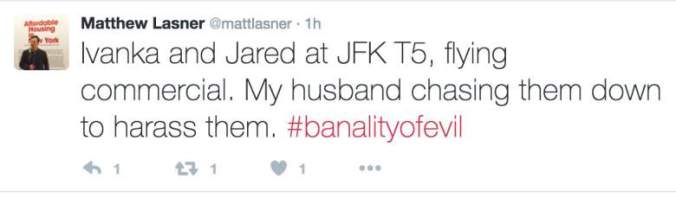
Goldstein, in the cabin of a JetBlue flight on which Donald Trump’s daughter, Ivanka, was also a passenger, verbally accosted the soon-to-be First Daughter before take-off. Holding a child in his arms, the New York lawyer started shouting, “Your father is ruining the country!” Then he asked, “Why is she on our flight? She should be flying private!”

Ivanka, who had her own kids in tow, tried to ignore him and attend to her family until he was removed from the flight by JetBlue personnel. “You’re kicking me off for expressing my opinion?” he yelled as he was led off the plane.

What a rude and obnoxious jerk.

Other observations: Continue reading →

Yes, Poker Champ Phil Ivey Cheated, Even If He Didn’t Think He Did

baccarat2

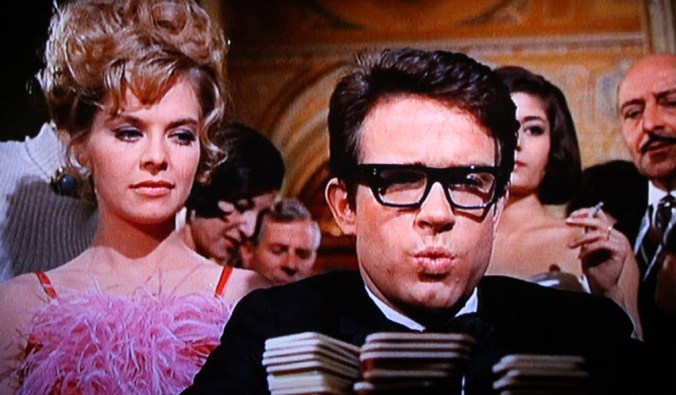
Phil Ivey is known as one of the best all-around professional card players in the world, in part because he notices things that other players, even great ones, may not. While playing baccarat at the Borgata Casino in Atlantic City in 2012, Ivey and a friend noticed  inconsistencies on the back of the cards that allowed him to read some of them as if they were marked. He even asked the dealer to position the cards so he could see them better, as in “see what nobody else noticed, giving him an unfair advantage.” Some advantage: he and his associate, Cheng Yin Sun, won $9.6 million at baccarat over four visits to the casino, then won an additional $504,000 betting their winning at the  craps table.

A federal judge has now ruled that the two must repay the $10 million. What they did is called “edge-sorting,” and it is considered cheating, though technically the ruling was that Ivey and Sun breached their contract with the casino.

In baccarat, players bet on the relative value of two hands of two cards each before the hands are dealt or the cards are revealed. The game is  played with six or eight decks of cards placed into a dealing “shoe,” and the object is to bet on the hand that will have a total value closest to nine. If a player knows the value of the first card in the shoe before it’s dealt, the player has a significant advantage over the house. Borgata accused Ivey and Sun of exploiting defects in playing cards manufactured by Gemaco Inc. that were not cut symmetrically during the manufacturing process, so Ivey and Sun were able to spot the manufacturing defects and  read the “marked”  cards without actually touching or defacing them themselves. The New Jersey Casino Controls Act requires that all casino games offer “fair odds to both sides.”  Without intending to or knowing, the casino was creating unfair odds against itself, and these two players made out like bandits as a result.

Ivey’s lawyer argued in a court filing that since his client never touched the cards, his advantage was like the casino trying to distract players with “free alcohol served by only the most curvaceous and voluptuous females in the industry.” Continue reading →

Are No Professions Safe From The 2016 Post Election Ethics Train Wreck? Now Even Restaurant Critics Have Gotten On Board!

circus-train-wreck

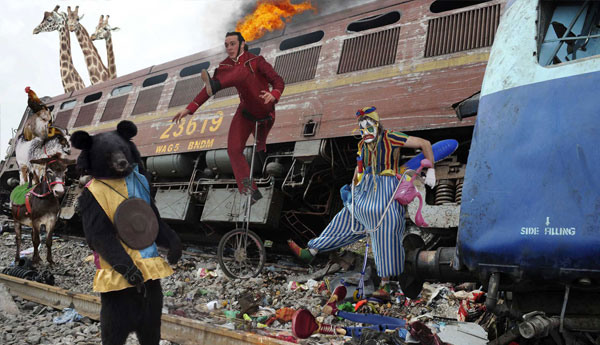
As a professional ethics specialist, I find the enthusiasm with which alleged professionals have used the election of Donald Trump to excuse their abandonment of such ethical values as fairness, responsibility, respect and citizenship deeply discouraging, and I am seriously considering becoming a beachcomber. I already knew that the journalism profession no longer could distinguish ethics from a hairy crab, so this wasn’t too surprising, nor was it too much of a shock that the New York Times has become a non-stop anti-Trump fear-fest and rant machine. Let’s see, in today’s edition alone  there is a hit piece on Trump advisor Steve Bannon called “Bannon’s Coriolanus Rewrite,” then  “Donald Trump’s Racial Ignorance,” “Where the Right Went Wrong,” (an amazing title, given the current balance of political power after Hillary’s botched campaign), “How the Truth Got Hacked,” “Is Democracy in Danger?” “Trump, the Russian Poodle,” and “Is This Collective Trauma?” The  last, I guess,  explains why mass trauma is inevitable for progressives, moderates and “Never Trump” Republicans when “the political order they long took for granted — defined by polarization, yes, but also by a commitment to basic principles of democracy and decency — is suddenly gone.”  One would almost wonder from that sentence which side of the political spectrum is calling for armed insurrection, pre-inaugural impeachment, and the overturning of the election results. The Times is also a showcase for columnists whose minds have snapped like dry branches in the wind,  causing them to leap manically onto the Trump Hysteria Express. Economist Paul Krugman has long been a hyper-partisan scold for whom fairness is alien territory, but this tweet was spectacularly vicious even for him:

“Thought: There was (rightly) a cloud of illegitimacy over Bush, dispelled (wrongly) by 9/11. Creates some interesting incentives for Trump.”

An ethical newspaper wouldn’t want someone capable of such a comment working for it.

Many broadcast journalists were stunningly unprofessional, indeed amateurish, on election night. Martha Raddatz choked up with emotion reporting Clinton’s loss; now there’s an objective reporter. Rachel Maddow described the evening as a “nightmare.”

Education has been racing journalism to the ethics barrel bottom for years, but I did not expect universities to send such intimidating messages to their students that they were expected to either be in mourning or on the verge of emotional breakdowns because the Democrats lost. Once, higher institutions of learning aimed to teach students critical thinking skills so they could make up their own minds regarding civic affairs. High school administrators and teachers also forgot their duties, and allowed students to skip school because, you know, TRUMP!!!!, and “ARRRGHHHHH!!!!”

Lawyers have lost their ethical bearings, of course, as have law professors, with perhaps the best example of the latter being the Georgetown Law Center adjunct who claims that the Constitution is unconstitutional, because following it will elect Donald Trump. My law alma mater isn’t faring too well in the train wreck: another professor, Paul Butler, argued that Supreme Court justices shouldn’t normally attack a President Elect, except when it’s Donald Trump.

Other academics have disgraced themselves. A prominent historian, for example, even resorted to making up history to provide an excuse for Democrats losing to such a horrible creature. Professor Larry Lessig of Harvard Law, who heads an ethics institute there, is encouraging electors to be “faithless,” as in “double-cross the voters who elected them.” Some ethics institute you have there, Harvard!

Artist, actors and show business professionals have debased themselves even more than usual, beginning with the Broadway cast of “Hamilton’s” breach of the Performer’s First Commandment: DON’T ABUSE THE AUDIENCE. They have even started turning on each other: Jon Voight, whose sin was that he expressed support for the man elected President, was booed at recent awards show by his fellow actors. Nice.

But as bad as this has been, I didn’t expect food critics to be corrupted. Continue reading →

“White Christmas” Ethics Addendum: Battlefield Incompetence, Insubordination And More In The Holiday Classic


A Special Guest Post by Texagg04

Ethics Alarms commenters who are honored with the annual “Commenter of the Year” title in the yearly Ethics Alarms awards have the option of joining the elite ranks of guest bloggers here. Texagg04 got the honor a couple years ago but never exercised his option. His recently posted, meticulously-researched and fascinating  multi-comment  addition to my 2012 post about the holiday film “White Christmas” seemed too extensive for a mere Comment of the Day, and I asked tex to edit it into a single post. He agreed, and what follows is the result. I recommend seeing the film (it’s on Netflix) either before of after reading his analysis. The 2015 update to the 2012 Ethics alarms “White Christmas” post is here.

—Jack

***

As the kids were watching “White Christmas” and I walked by, in passing, I noticed something amiss about the “military” feel of the opening scenes that seemed off ethically. So I copied and pasted the first website that claimed to be a script of White Christmas. I’m not sure what it was…if it was a working copy or a first draft, but it has significant differences from the actual filmed scenes. So, I’m forced to modify some of my assessment from the original three posts.

All the dialogue is transcribed *directly* from the listening to the movie, so I think I’m pretty close to word for word. The scene descriptions and action statements are modified versions of the script I got from the original website (which can be found here).

Before I go into commentary, I’ll insert the entire dialogue for perusal and familiarity. There are numbers to reference particular dialogue in my analysis at the end. Here are the opening scenes—General Waverly is played by Dean Jagger; Captain Bob Wallace is Bing Crosby, and Private Phil Davis is Danny Kaye:
Continue reading →

Ethics Quiz: The Ethical Duties Of Santa Claus Imposters

11 photos for movie review running Thanksgiving Eve. Billy Bob Thornton in Terry ZwigoffÕs BAD SANTA. Photo Courtesy of Tracy Bennett.

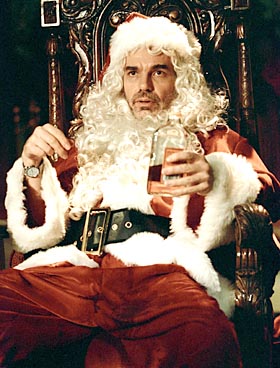
A post yesterday described the outrageous conduct of the management at the Six Flags Over Texas theme park, which declared a local man named Jerry Henderson person non grata and kicked him out of the park because he “looked too much like Santa Claus” (they want him to shave his white beard to resume his park privileges). He also gave candy canes to children after their mom asked him to pose with her kids for a photo.

A regular Ethics Alarms commenter related this 180 degree variation on the story:

My kids take swimming classes at our local park authority pool, and last week, while we were signing in, one of the managers came out of the back office dressed as Santa. However, he was doing it as a gag for the other employees, not for the kids. (About 80%+ of the people there were children.) My kids went running up to him shouting, “Santa, Santa!” He did not acknowledge them or the other kids, didn’t even say hi, and just walked into one of the workout rooms.

I thought my kids were going to cry. I had to tell them that Santa was busy right now, but not to worry, we would go see him tomorrow when he had time to talk to them.

Your “Bad Santa”-themed Ethics Alarms Ethics Quiz of the Day:

If you look like Santa Claus, are you ethically obligated to act like Santa Claus?

Continue reading →

The Rape Of Maria Schneider

tango_2011_a_l

There are many stories of directors crossing ethical lines by using abusive, unfair and disrespectful methods obtain a vivid performance from an actor. None are as bad as this one.

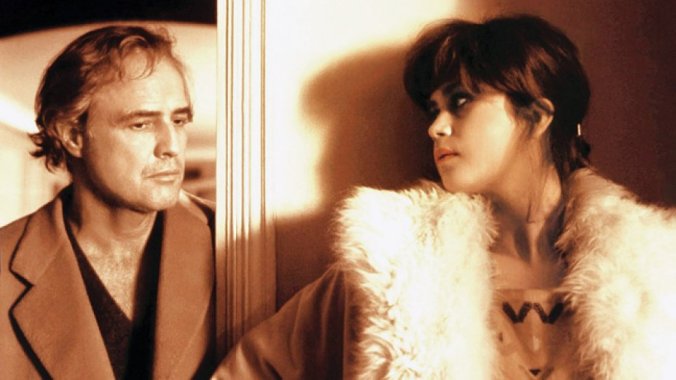
Now a video has surfaced of Italian director Bernardo Bertolucci admitting that in his acclaimed 1972 film “Last Tango In Paris,” the infamous rape scene where Paul (Marlon Brando) sodomizes Jeanne (Maria Schneider) with a stick of butter was not consented to by the 19 year-old actress, who was not warned of the unscripted sequence before it was thrust upon her, and in her. She was, in short, raped.

No wonder it seemed so realistic.

“The sequence of the butter is an idea that I had with Marlon in the morning before shooting it,” Bertolucci said in the 2013 interview at La Cinémathèque Française in Paris. “I’d been, in a way, horrible to Maria, because I didn’t tell her what was going on…I wanted her reaction as a girl, not as an actress…I wanted her to react humiliated…I think she hated me and also Marlon because we didn’t tell her.”

The film was a sensation, though and both Brando and Bertolucci received Academy Award nominations, so it was worth it.

Right?

Apparently Schneider alluded to the rape in private conversations and interviews, but never explicitly enough that it was clear what had been done to her. Now Hollywood is reacting with appropriate outrage.

“The should be in jail,” tweeted actor Chris Evans. (Psst!...the actor is long dead, Chris, as is Schneider. Bertolucci is 76.)

What a disgusting story of complete ethics rot in the arts, and what a damning indictment of Bertolucci, Brando and the culture that produced them.

_____________________

Pointer: Fred