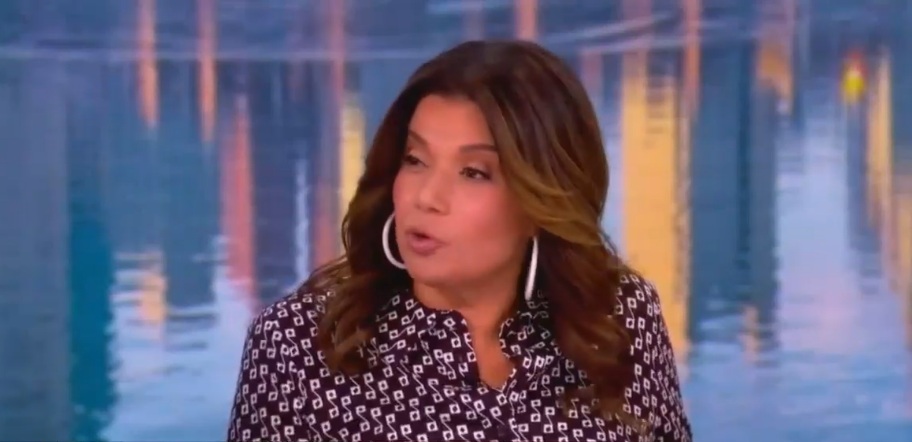
Yesterday, “The View’s” collection of opinionated female Democrats were discussing the botched execution of Christa Pike. Whoopi Goldberg began by saying, among other things, that what needs to happen now is that Pike’s original victim’s mother should decide what happens to the condemned murderer . “Me personally, I think you should ask the mother what should happen now. I think they should ask her because, you know, they tortured her daughter and there’s a reason she was where she was, but I think it’s, it’s not a question that the state should answer,” Goldberg said, being semi-incoherent because she never made it through high school. You should ask her? They should ask her? They tortured her? Whoopi also has civic literacy of a guppy. Then Ana Navarro (above), who has a law degree and a license to practice, piped up.
“I’m with you. I think the victim’s family needs to lead.”
And how would that work, exactly? Oh, details, details! It just feels right, so “do it.” What does “needs to lead” mean? Can the family be handed the authority to decide how Pike is executed this time? How would that be done? Does any law permit a judge to delegate law enforcement to citizens? Well, no, but the family “has a right” to take over because the state has failed. Is that Ana and Whoopi’s theory? I believe that is called “vigilantism,” which is specifically illegal, but remember this whole program represents the lowest common denominator of not only of civic comprehension, but of attachment to the whole concept of that “Rule of Law” thingy. Process? Nah. Precedent—what’s that?
Two thoughts on the first day of the MLB play-offs:
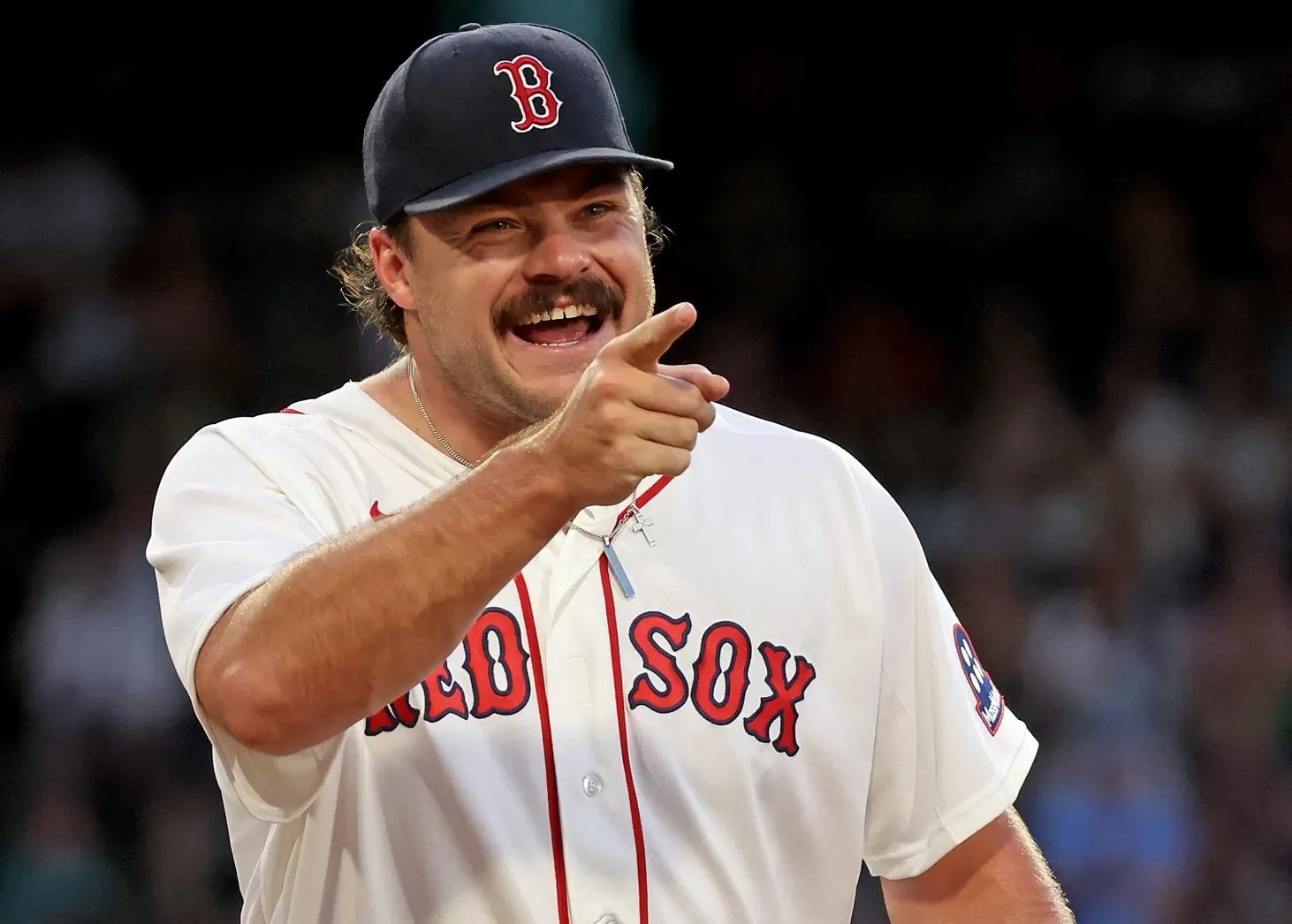
1. I am officially 12-years-old. (Most of my friends and associates know that, but it continues to amaze me.) Today I have critical client work to do involving huge amounts of money (for them, not me). I have several medical issues I need to attend to ASAP. I’m late getting my invoices out and I’m in cash-flow hell. But all I can think about is the Red Sox-Yankee game tonight. (8 PM, EST. on NBC)
This is the juvenile state of mind that led me to risk my job in 1978, when I walked out of a critical, high-level capital fundraising meeting at Georgetown, with all the brass present, saying, “I’m sorry, but the Red Sox and Yankees are playing a game in Fenway Park in an hour to decide the American League East, and I have to see it. Let me know what you all decide.” (That was the Bucky %$#@ Dent Game.) My wife-to-be Grace was at the meeting and was the only one smiling; everyone else looked like the audience in “The Producers” after “Springtime for Hitler.”
I’ve been remiss in posting deserving “Comments of the Day,” and I apologize. It’s not that there haven’t been worthy submissions, its just been a fact that getting content up on EA at all has been especially challenging of late. The last Comment of the Day was almost a month ago. Yikes.
Below, after a brief observation on the specific incident inspiring the post, Charles Abbott segues from the CEO fired for trolling the Trump Deranged in social media with a photo saluting “Lake America” to the ideological grandstanding that has taken over Facebook, at least based on what I am reading there.
It seems the safest thing to do is simply to shut up. That will be a post for another day.
I want to redirect this comment to the topic of your experiences on Facebook. I’m not an expert on the the topic but I’ve had a Facebook account for approximately 20 years now. Like many of us.
You often post that you are surprised by the sorts of posts and comments and behaviors you see on Facebook from people you know personally and/or professionally.
Here’s the way it looks to me. If Facebook has ever been a place where people went to debate things in good faith, or to seek the truth, or to strive after correcting error, that time is long gone.
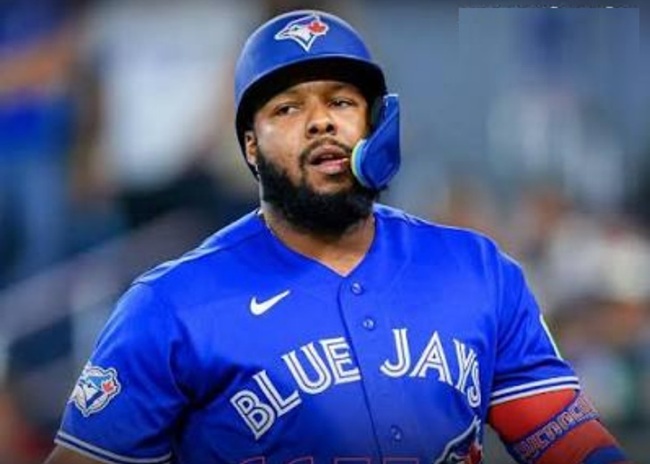
Toronto Blue Jays star Vladimir Guerrero Jr. kind-of, sort-of, not really “apologized” yesterday for the ethically brain-dead comments he made during a Spanish language interview about his $500 million, 14-year contract. I wrote earlier in the week about his absurd protestation that his huge contact wasn’t meant to pay for what he would produce on the field over the next decade-plus, but just a reward for what Vlad had already done. When the erstwhile slugger was criticized for the statement, he doubled down. Now, a scant two days later, he is suddenly contrite, or something.
“The main reason I’m here is because I regret my comments the other day,” Guerrero said through a translator. “I feel from my heart that my fans, my teammates, they needed an apology from me and that’s what I’m here for. Obviously, I’m also here because I’m just going to tell everyone that I’m going to continue to keep working hard to make my contract a great one.
“I just gave it some thought and I felt like the comments I made the other day is not what I really wanted to say, and I really feel that everyone, my fans, everyone deserves an apology from me and that’s the main reason I’m here today.”
Oh. What??? Wait, what exactly is Vlad apologizing for? He’s apologizing because others “needed” an apology because he didn’t say what he “really wanted to say?” We still don’t know what he wanted to say, or if he even understands what he’s apologizing for.
This isn’t even a level 10 apology on the Apology Scale ( “An insincere and dishonest apology designed to allow the wrongdoer to escape accountability cheaply, and to deceive his or her victims into forgiveness and trust…”). He might as well have said, “I apologize, whatever that means.” He regrets his comments because he’s getting criticism from fans, and someone, apparently his Hall of Fame father, Vlad Sr., told him that he had better say he didn’t mean what he said. Guerrero obviously did and does, because he said what he said twice, and that was essentially, “I don’t owe the team of fans anything going forward. So I stink this year; deal with it. I’ve got my money.” Guerrero’s contract includes a record $325 million signing bonus that protects his contract from the possible work stoppage everyone expects in 2027.
Now he says he “regrets” what he said twice, which is not the same as a sincere apology.
To be fair, I’ll concede that Vlad doesn’t speak English very well. I’ll also note that there’s no excuse for this, since he has split his residences between Florida and Toronto for at least seven years.
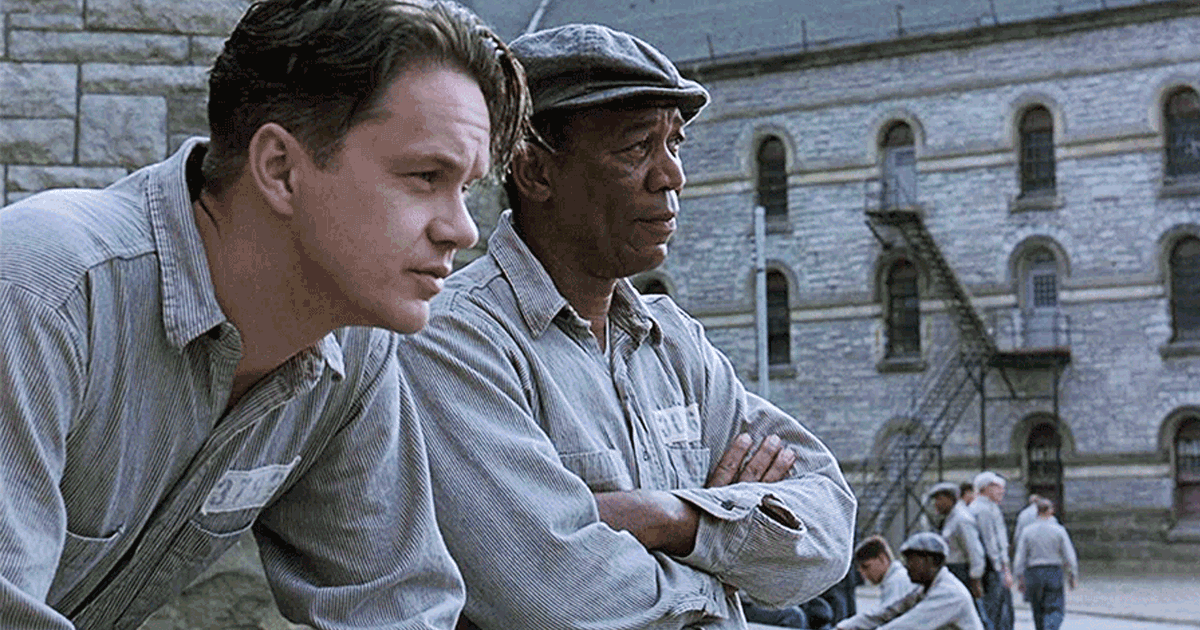
Wikipedia says that “that “The Shawshank Redemption” (1994) is considered “one of the greatest films of all time.” OK. It’s a good movie. If “one of the greatest films of all time” means one of the best 250 movies, I can live with that. But let’s not get carried away. The Stephen King novella adaptation has been the #1 ranked movie on the Internet Movie Data Base (IMDB) for over two decades, which tells me that the people who frequent that site do so because they don’t know much about American cinema—you know, like Ann Althouse. A substacker I never heard of writes, “I know I’m thirty years late, but I finally watched The Shawshank Redemption. I laughed, I cried, I threw a metaphorical tomato (many, in fact) at the warden and his prison guards, I walloped and fist-bumped in joy at the end. It lived up to every bit of hype and, in my opinion, justified its place as the #1 ranked movie…” That’s nice. You need to get out more, and I officially don’t care what you think about anything else.
But she’s not alone. Rotten Tomatoes gives the film an 89% approval rating from 146 critics, It has a score of 82 out of 100 on Metacritic based on 22 critics indicating “universal acclaim”.The American Film Institute ranked the film number 72 on its 2007 AFI’s 100 Years…100 Movies (10th Anniversary Edition) list, outranking “Pulp Fiction” released the same year. It was also number 23 on AFI’s 100 Years…100 Cheers (2006) list of “most inspiring films.” I think I could list 23 equally or more inspiring films in the sports category alone of the top of my head. The Writers Guild of America listed Frank Darabont’s screenplay at #22 on its list of the 101 greatest screenplays. In 2014, “The Shawshank Redemption” was named Hollywood’s fourth-favorite film, based on a survey of 2,120 Hollywood-based entertainment industry members.
Yes, that’s because the California wokies want to abolish prisons. I’d vote the movie only the second-best film adaptation of a Stephen King novella.
I just watched most of the movie again for the first time in many years. Even if I had been a member of “The Shawshank Redemption” cult, however, I couldn’t forgive the film this gaffe that I missed first time around: in a long panning shot as “Red” (Morgan Freeman) goes on in his soporific narration about how the inmates must have hobbies, there is a brief shot of a chess board, set up and ready for a game.
The board is set up wrong, with a black square on the right-hand corner. I have written about that careless, insulting mistake twice, first in 2022’s Chess Board Ethics: A Popeye. Quote:
🚨 THE VIEW HOST QUESTIONS PATRICK CLANCY FOR DIVORCING LINDSAY CLANCY ‼️ Sara Haines questioned how Patrick’s marital love ended so quickly after Lindsay killed their 3 children. Patrick has since remarried. Do you agree with Haines? #LindsayClancy#PatrickClancy
[Sorry for stooping to using TikTok, but it had the only suitable clip that WordPress would let me embed…]
“The View” is trying to get its own private dining car on the Lindsay Clancy Trial Ethics Train Wreck. First Sunny Hostin uses the issue to declare that she was the “lone juror” who got a man declared not guilty after he killed a woman and made her into a delicious soup…and it turns out that she was lying about the whole thing and wasn’t the “lone juror” after all. Now Sara Haines—how can anyone determine which of these opinionated, wokeness-infected, ignorant women is the dumbest?—expressed her shock that Lindsay Clancy’s husband (now remarried) would divorce the woman who murdered his children. After all, Haines says, don’t the marriage vows state “in sickness or in health”?
Well yes, Sarah, but at least the vows I took didn’t have a “whether one of us murders our kids or not” clause in there.
Haines really and truly asks, “How did the marital love end so quickly?” Gee, that’s a real brain-teaser. Domestic abuse activists argue that “marital love” has been abandoned once a husband punches his wife in the face, but that’s obviously bad and inexcusable. Murdering the children is more nuanced. Good question, Sara. I’ll have to think about that….
How is someone as dumb and confused as Haines on television anyway? The inconvenient truth about all journalism is that the vast majority of reporters just aren’t very bright, and certainly not as smart as they think they are. Nonetheless, we allow them to have public platforms and exposure that consistently accomplish the opposite of what our Founders believed made “the press” essential to a functioning democracy. Heck, we allow them to manipulate elections. Haines and her colleagues—not just the confederacy of dunces on “The View” but reporters and pundits generally—make the public less informed, less astute, less ethical and less responsible. Somehow this stupid woman—yes, I hold that asking why a man would divorce his wife after she murdered three children, especially their three children, is signature significance: no intelligent person even thinks that’s a puzzle, never mind announcing it on national TV—managed to be a correspondent on NBC and ABC. What does that tell us about the competence, judgment and trustworthiness of broadcast news?
Related questions:
Will anything cause ABC to recognize that calling “The View” a news program is a disgrace, and that the network metaphorically soils itself and the culture every time it gives this coven of morons gets another hour to lobotomize the public?
How do Democrats continue to get votes when siding with progressives means associating oneself with the likes of Sara, Sunny, Whoopi and Joy, never mind Bernie, Kamala, AOC, Fredo, Ayanna, Jasmine, Gavin, and Zohran?
When did American woman lose their ethical bearings?
I burned this week’s open forum on Tuesday night as my remedy for enforced absence from EA (dead laptop, ethics road trip), so I’m waking up this morning with a different low energy feature. This was an awful week from a scheduling standpoint; on the other hand, at least my ethics wisdom was in demand. I had back-to-back seminars to teach for the first time since Ethics Villain Dr. Fauci and the totalitarian Left wrecked my training business (and the economy, children’s socialization, education, culture…) with their lockdown. Oh, and it killed my wife, too, I mustn’t let them off the hook for that. But I’m not bitter…
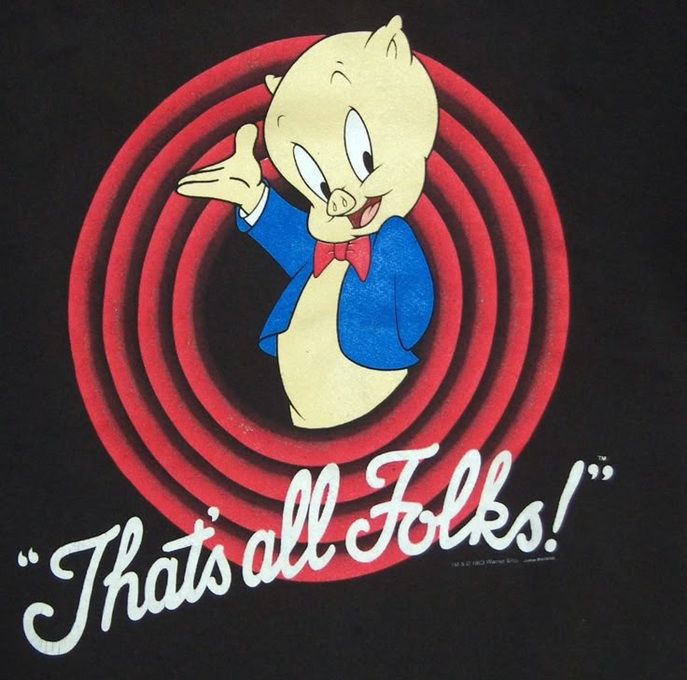
1. TCM has cancelled Porky Pig. It is hypocritical for a station that purports to preserve American film history and present the screen entertainment of the nation’s past for enlightenment and perspective to engage in any censorship at all reagrding the content its mission dictates, but I guess Porky doesn’t count. TCM often shows Warner Bros. cartoons between its main features, and as any culturally-literate person knows, these always ended with Porky Pig poking through the screen and stuttering, “That’s all folks!” the traditional Loony Tunes coda. It took me a long time to figure it out (“Huh! That’s funny…this one doesn’t have Porky…”) but Ted Turner’s legacy project has erased Porky from the endings of all its Warner Bos. animated features. What petty, silly, cowardly, pandering morons. Porky stutters, see, so he’s being mean to the disabled, or “differently-abled,” or funny speech-enabled, or whatever the hell we’ve been ordered to call it by our moral betters. If “Make America Great Again” meant nothing more than “End Crap Like Banning Porky Pig,” it would still be worth cheering for. I am officially ECLBPP.
2. Speaking of mind-rot in the U.S., one of my most esteemed and once-rational Trump Deranged Facebook Friends demonstrated how the cult corrupts. He posted with favor an essay by a progressive journalist that purported to give “both sides” of the Israel-Palestinian conflict, and recommended that everyone read it. The essay was weakly camouflaged anti-Semitism and anti-Israel propaganda, and obviously so.
Once my friend would have seen that, but Trump Derangement has eaten a substantial part of what had been an impressive brain. The party he is now pimping for has become, incredibly, pro-Islam, pro-Iran, pro-Hamas and pro-terrorism, so the Cognitive Dissonance Scale is forcing him to excuse these indefensible positions by embracing spin, rationalizations, and lies. The author my friend was promoting referred to Israel as an “occupation” and cited the position of the World International Court as evidence of Israel’s wrongdoing. There is a reason why the U.S. doesn’t recognize the anti-American, anti-Isreal WIC.
Those are flaming tells, and that my friend, a retired lawyer, couldn’t or wouldn’t see that is itself a tell. Tragic. And yes, this time I did comment critically on his post. No response, because he’s still smart enough to know I was right.
3. Back to TCM: the station is saluting director Stanley Kubrick this month, which is appropriate since almost every one of his movies is brilliant and he excelled in every film genre he tried. I stumbled upon a disturbing note, however. Sue Lyon, who played Nabokov’s teenage sex nymph in “Lolita,” was evidently raped and sexually abused repeatedly by the film’s producer during the shoot, which the actress reasonably believed derailed her emotional stability, career and life. Where was Kubrick while this was going on? It was his film and his project, and I hold him responsible if his child star was being abused during the production. This month HarperCollins UK announced it would stop selling the children’s books authored by David Walliams following allegations that he harassed female and junior employees. The UK has lost all common sense in its woke-mania: if we start banning artists based on their personal conduct, we’ll have decimated our cultural resources. Kubrick’s film achievements aren’t degraded by his human failings, but it is interesting to me that Porky Pig was banned because he stuttered yet the TCM progressives don’t think Sue Lyon’s abuse under the director’s metaphorical nose is worth mentioning. TCM’s hosts habitually mention all sorts of production details in their introductions and final comments to the movies they show. (“Gone With The Wind” is racist, you know!) But they admire Kubrick too much to tell “the rest of the story.”
4. Here is something artificial intelligence is good for: baseball statistics and history. Last night the Boston Red Sox lost to the Cleveland Ind..sorry, Guardians 1-0 on a home run around Fenway Park’s famous “Pesky Pole,” which marks the shortest outfield fence point of any baseball park still in use. I wondered if the Red Sox had ever lost a 1-0 game on one of those cheap homers, so I asked Google’s bot. The answer came in seconds: No, last night was the first time that has happened in all the games the Sox have played at home since 1912. Then I decided to check the information, as one must with AI until its annoying habit of making stuff up abates. It took me almost an hour, but the bot was right.
I defend professional athletes against the hoary accusation that they are paid “too much.” I remember all the arguments my father would have with my Aunt Beatrice, an unshakeable liberal, who would insist that baseball stars getting higher salaries than teachers was “ridiculous.” Dad would patiently try to explain to her the economic principle of supply and demand but to no avail. It would be even more difficult keeping the late Aunt Bea’s passions in check now, when one baseball player has a ten year contract worth 700 million dollars, and the minimum MLB salary is $780,000. The amounts don’t matter, however. Those salaries reflect the actual value of those players, who have rare talents essential to a multi-billion dollar industry that supports many other industries with millions of employees.
However, alleged superstar Vladimir Guerrero Jr. of the Toronto Blue Jays recently made an exquisitely absurd argument to justify the obvious disparity between the 14-year, $500 million contract extension he signed in 2025 and his current disastrous season in which he has performed only slightly better than one of those minimum salary players. Guerrero’s mysterious season-long slump pretty much destroyed 2026 for the Jays, last year’s American League World Series representatives that were the overwhelming favorites to repeat.
In an interview, the 30-year-old Guerrero was asked about his struggles and explained that fans just don’t understand that he is being paid for what he has done in the past, not what he is expected to do in the future.
They have no shame. It’s bad enough that there is a bank with the ridiculous name of “Fifth Third Bank” (In 1908, Third National Bank and Fifth National Bank merged and nobody had the wit to come up with a better name. I wouldn’t entrust my money to a bank run by such dimwits), but a ballpark? What’s a fifth of a third out? A third strike? Houston briefly had its park named after Enron, and San Diego’s ball park is named after supplier of dog and cat merchandise, but at least “Petco Park” is alliterative.
I was sure that I had already written a rueful post about baseball teams that sell out their fans, history, traditions, cities and dignity for filthy lucre and name their home fields after any company who will pay to turn a stadium into its billboard. In 2010 I wrote a post about the adultery website Ashley Madison tried to by the naming rights to the NFL Giant’s stadium, and sure enough, decade ago I covered this revolting topic thoroughly. In honor of Fifth Third Park, I’m posting it again below, with a couple of additions and edits.
***
The Washington Nationals announced this week that it has partnered with Major League Baseball Advanced Media and the consulting firm Korn Ferry to sell naming rights to Nationals Park, as the team’s home field has been known since it opened in 2008.
After all, the team explains, plastering a corporation’s name on the ballpark could add between ten and twenty million dollars a year to the team’s revenue, and imagine how much better the team will be with another starting pitcher or slugging outfielder. Why wouldn’t a team sell its home’s name, and a large chunk of its identity, to a bank, a website, or a pet supplies company?
[Update: I am happy to announce that the Nationals did not ultimately give in to greed and name its stadium MSNow Park. It is still Nationals Park.]
I admit it: being a life-time fan of the Boston Red Sox, who play in one of the the ten major league parks ( the others: Angel Stadium of Anaheim, Dodger Stadium, Fenway Park, Kauffman Stadium, Marlins Park, Nationals Park, Oriole Park at Camden Yards, Turner Field, Wrigley Field, and Yankee Stadium ) belonging to teams that have not accepted filthy lucre to mar their stadium entrances with the names of companies Bernie Sanders would hate, I find the idea revolting. A baseball team represents its community; its lore becomes part of the culture and shared memories passed down through generations.. That has value, and symbolic significance. How much is it worth? It’s priceless, or should be. Continue reading →
Lyricist Oscar Hammerstein Jr. had many moments of great ethical clarity, as did his pupil and protege, Stephen Sondheim. I don’t think either topped this song, however, from the 1951 Rodgers and Hammerstein musical, “The King and I.” I’ve highlighted the key sections.
When I was a boy, World was better spot. What was so was so, What was not was not.
Now I am a man— World have change a lot: Some things nearly so, Others nearly not.
There are times I almost think I am not sure of what I absolutely know. Very often find confusion In conclusion I concluded long ago.
In my head are many facts That, as a student, I have studied to procure. In my head are many facts Of which I wish I was more certain I was sure!
[spoken] Is a puzzlement. What to tell a growing son?
[sung] What, for instance, shall I say to him of women? Shall I educate him on the ancient lines? Shall I tell the boy, as far as he is able, To respect his wives and love his concubines?
Shall I tell him every one is like the other, And the better one of two is really neither? If I tell him this, I think he won’t believe it— And I nearly think I don’t believe it either!
When my father was a king, He was a king who knew exactly what he knew, And his brain was not a thing Forever swinging to and fro and fro and to. Shall I then be like my father And be willfully unmovable and strong? Or is better to be right? Or am I right when I believe I may be wrong?
Shall I join with other nations in alliance? If allies are weak, am I not best alone? If allies are strong with power to protect me, Might they not protect me out of all I own?
Is a danger to be trusting one another, One will seldom want to do what other wishes… But unless someday somebody trust somebody, There’ll be nothing left on earth excepting fishes!
There are times I almost think Nobody sure of what he absolutely know. Ev’rybody find confusion In conclusion he concluded long ago,
And it puzzle me to learn That though a man may be in doubt of what he know, Very quickly will he fight, He’ll fight to prove that what he does not know is so!
Oh-h-h, oh-h-h! Sometimes I think that people going mad! Ah-h-h, ah-h-h! Sometimes I think that people not so bad!
But no matter what I think I must go on living life. As leader of my kingdom I must go forth, Be father to my children, And husband to each wife— Et cetera, et cetera, and so forth.
If my Lord in Heaven, Buddha, show the way, Ev’ry day I try to live another day. If my Lord in Heaven, Buddha, show the way, Ev’ry day I do my best for one more day, But… Is a puzzlement!