Just To Wash The Nasty Residue Of Those Absurd Pilgrim-Syrian Refugee Analogies Out Of Your Brain, Here are Some Useful And Informative Silly Refugee Discourses

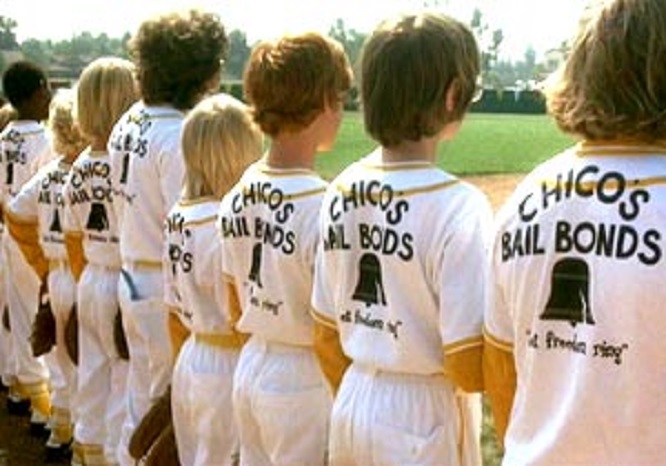
Go ahead, tell us how you'd keep THESE refugees out, Donald...

Go ahead, tell us how you’d keep THESE refugees out, Donald…

By the time Thanksgiving arrived, the social media memes pronouncing that for anyone who believes accepting Syrian refugees into the U.S. is less than wise policy it was rank hypocrisy to celebrate the holiday had become too much to bear. Granted, this stupid analogy was marginally less stupid than the “Jesus was a refugee so what kind of Christian are you?” stuff put out by OccupyDemocrats, but it was still pure debate pollution. Did the Native Americans know that the Europeans were refugees? Uh, no. Did they have a refugee policy? Nooooo. Was the territory that became the United States being targeting by terrorists? No. Had there been any previous terrorist attacks on Native Americans in North America? No. If the Indians had known about what the Spanish had already been doing to indigenous people, would they have been so welcoming? I think not. If Native Americans today could go back in time and decide all over again whether to allow the “refugees” to settle here, what would they decide?

You betcha.

Are the beneficiaries of a terrible decision ethically obligated to risk their own destruction by making the same mistake?I guess that’s the theory. Pardon me if I’m not persuaded, but you wouldn’t believe the “likes” this argument got on Facebook in its various forms.

Well, President Obama used this same illicit analogy before Thanksgiving, and the progressives and pundits nodded their heads furiously, like turkeys. Oh, snap, Mr. President! You really stuck it to those xenophobes!

President Obama obviously doesn’t care about his rhetoric any more, or think about it, either. He’s not as flagrant as Donald Trump in spewing irresponsible nonsense, but no ethical President should even spark the comparison.

Well, over at Law and the Multiverse, which is another neat website in the Ethics Alarms links, there is a very informative discussion of the refugee status of Superman, an environmental refugee (a planet exploding qualifies its residents) and Supergirl, another Krypton refugee whose status is a bit more complex. Law and the Multiverse features serious legal discussions of the legal issues that would be raised by the conduct and existence of superheroes in the real world. Here’s a sample, from author Kean Zimmerman’s discussion of Supergirl’s status: Continue reading

Ethics Film of the Year: “Spotlight”

No spoiler alerts necessary; I’m not going to say much about the film’s plot. Just go see it.

Sure, I was predisposed to like “Spotlight.” It’s about Boston, my home town; Fenway Park even appears in it, Red Sox and all.  I had also followed the unfolding Catholic Church sexual molestation scandal there that the Boston Globe broke in 2002. This was the Globe’s momentous investigative journalism series which showed the extent to which high-ranking Church officials allowed child predator priests to continue harming trusting kids, as the Church paid for confidential settlements to victims and transferred the criminal priests to other parishes, where they could, and did, strike again. “Spotlight” tells the story of how a group of Globe editors and reporters finally exposed a local conspiracy of corruption that spread across institutions and professions, and that pointed to a world-wide scandal that still haunts the Catholic Church today.

It’s a better ethics movie than “All The President’s Men,” to which it will inevitably be compared. Whether it’s a better movie or not is a matter of taste. (I liked it better.) Where the movie really shines, however, is how it raises so many of the ethics issues we routinely cover here, such as…

  • Legal ethics: the duty of lawyers to represent clients, confidentiality, and when, if ever, human ethics require the breaching of professional ethics.
  • Ethics corruptors, and what happens when admired, trusted and powerful people and institutions require their followers to show their loyalty by ignoring, rationalizing or covering up wrongful acts.
  • Journalism ethics: the business of journalism’s conflict with the duty of journalists to find and publicize the truth; how ambition, personal biases and non-professional concerns can warp perspective and performance
  • Ethics and religion, hypocrisy, and the institutional utilitarian choice to protect the whole when it means sacrificing individuals
  • Rationalizations, including the Saint’s Excuse and the King’s Pass, in which prominence and “good deeds” seem to justify double standards.
  • Hindsight bias, Moral luck, and more.

Continue reading

Ethics Quiz: Ann Rice O’Hanlon’s Fresco

Fresco

In 1934, under the auspices of the New Deal’s Public Works of Art program, artist Ann Rice O’Hanlon painted a fresco (the largest ever painted by a woman up to that time) in the University of Kentucky’s Memorial Hall. It has become famous and is much admired by art historians, and thousands of Kentucky students have walked past it through the decades. The large, six section artwork depicts many events, industries, traditions and activities that were significant to the state, invented in Kentucky or by Kentuckians, as well as historical events. Among the scenes shown are black slaves picking tobacco and black musicians serenading whites.

Ann Rice O’Hanlon’s masterpiece became the target of choice at Kentucky as the University ‘s black students were seeking to emulate the power plays by their equivalents at the University of Missouri, Yale, Amherst, Harvard Law, Dartmouth and other institutions. The Kentucky students held a meeting with president Eli Capilouto and argued that the fresco was offensive, as it relegated black people to roles as slaves or servants, and did not portray the cruelty of slavery and the later Jim Crow culture that existed in the state.  Capilouto capitulated, agreeing to move the work to “a more appropriate location.” In the meantime, Kentucky will cover up the 45-by-8-foot fresco while adding a sign explaining why the mural is obscured.

Your Ethics Alarms Ethics Quiz of the Day is this:

Should a university remove works of art on campus because particular groups of students or individual members of such groups find the artwork upsetting, offensive, or a negative influence on their experience?

Continue reading

Special Post Thanksgiving Food Feature: Store Brand Ethics

Dr-PublixI may be the only person who cares (other than the company’s that are losing sales to the tactic), but look-alike labeling, branding and packaging are ethicly objectionable if not flat-out fraudulent, and if it isn’t that, it’s a insult to shoppers’ intelligence. I particularly detest kids DVDs with the same titles and similar graphics as Disney DVDs, but containing cheap knock-offs that look like Hanna Barbara cartoons when the cartoonists were having a bad day. Now that my kids video purchasing days are over, it’s over-the-counter drugs and food packaging that trick me when I’m not paying attention and in a hurry, and with me its one or the other, often both. I got caught Wednesday, in fact, buying a Safeway knock-off that had the same colors as the real McCoy.

Thus I’m grateful to Consumerist, which recently asked for readers’ to send in photos of the most ridiculous examples of store brand imitations. With these, it’s not the lame attempts to fool consumers that’s annoying so much as the laziness and the pure lack of respect and creativity involved in the effort or lack of it.

There was a theme on the late, lamented film satire show Mystery Science Theater 3000 when the special effects or other aspects of the cheesy science fiction and horror movies they mocked were particularly ridiculous: “They just didn’t care.”

That’s what’s going on with this Hamberger Helper rip-off…

panburger

and this pathetic “I Can’t Believe It’s Not Butter” clone… Continue reading

“White Christmas” Ethics (UPDATED)

White-Christmas

I just watched“White Christmas” again when my wife wasn’t around (she hates it), and was again struck by how entertaining it manages to be while making no sense at all and containing one ethics breach or gaffe after another. Ethics Alarms did an ethics review of the film in 2012, and reading it now, I realize I was too kind. This is an update.

Yes, I still get a lump in my throat when the old general, played by Dean Jagger, gets saluted by his reunited army unit, which has gathered at his struggling, snowless, Vermont inn on Christmas Eve to remind him that he is still remembered and loved. Nonetheless, it is by far the strangest of the Christmas movies, and also the most unethical. Though everything works out in the end, the characters in the sloppy plot spend the whole movie lying, extorting, betraying, manipulating and generally mistreating each other, always with no recriminations at all, and usually with no consequences either.

The movie starts out with guilt extortion. Army private Phil Davis (Danny Kaye) rescues his smooth-singing captain, Bob Wallace (Bing Crosby) from being crushed by a falling wall in a World War II bombing raid. (It’s not a plot feature, but the battlefield set for the entire opening sequence is itself unethical by being chintzy even by musical standards: it looks like they are filming a skit for a Bob Hope Christmas Special.  I thought it was lousy when I saw it as a kid.) Phil then uses Wallace’s debt of gratitude to coerce him into accepting the aspiring comic as a partner in Wallace’s already successful civilian act. This is obviously unfair and exploitative, but Bing accepts the ploy with good spirits, and the next we see  the new team of Wallace and Davis knocking ’em dead and rising in the ranks of stage stars. Now they have a show on Broadway, and as a favor to a mutual army buddy, they agree to watch the boonies nightclub act of “The Haynes Sisters” (Rosemary Clooney as Betty. and Vera-Ellen, of wasp-waist fame, as kid sister Judy. Did you know that in the “Sisters” number, Clooney sang both parts? ). Bing is immediately smitten with older sister Rosemary, but there is a tiff over the fact that younger sister Judy fooled them into seeing their act: she, not her brother, had sent the letter asking for a “favor.”

This is the first revealed of many lies woven into the script. This one is a double beach of ethics: Judy uses her brother’s name and contacts without his permission or knowledge, and lures Wallace and Davis to the night club under false pretenses.

Bing dismisses Judy’s cheat by noting that everyone “has an angle” in show business, so he’s not angry. Rosemary is, though, and reprimands Bing for being cynical. That’s right: Vera/Judy uses their brother’s name to trick two Broadway stars into watching their little act, and Rosemary/ Betty is annoyed because Bing/Bob (Bing’s bandleader, look-alike, sound-alike brother was also named Bob) shrugs off the lie as show business as usual. True, Betty is technically correct to flag the Everybody Does It rationalization, but shouldn’t she be grateful that Bob isn’t reaming out the Haynes sisters and leaving the club in a huff? OK, nice and uncynical is better than nice and cynical, but Bob is still giving her and Judy a break.

As we soon find out, however, Betty is prone to flying off the handle.

Continue reading

Ethics Musings On An Open Letter From A Rejected Son

Patrick Bradley is a New York-based food columnist and founder of TheGayFoodie.com. I’ve never heard of him, which doesn’t matter; somebody does need to explain to me why a writer’s sexual orientation has anything to do with food, and why this isn’t just blatant group identification tribal exploitation of the kind that is dividing this country and culture. But I digress…this stuff annoys me, but I digress.

Bradley sent to the gay website Out an open letter he wrote (and sent? Let’s hope so) to his parents, who refused to attend his wedding to his same sex partner more than two years ago, and who have been estranged from him ever since. I would call the letter an ethics bomb, an action that hurls ethical dilemmas and problems in all directions, for good or ill. I’m publishing it in its entirety, and will have comments afterward.


Dear Mom and Dad,

It’s been 890 days since the day that you both decided not to partake in my wedding. I don’t know why it’s taken me this long to say anything about it. Perhaps I’ve been afraid of what the family will think, what the family might say. Or perhaps I’ve been afraid of losing even more of my wonderful, beautiful family, whom I think about day and night.

But the time is now because I’ve finally grown too tired of the 890 days and nights of being haunted by your presence—by your lack of presence, to be more precise. I’m tired of night after night of dreaming of you. And tonight, I had the most unpleasant of dreams—one that jolted me from my sleep and disallowed me to return to it. So at 6:22 a.m., after little more than three hours of sleep, I’m writing this letter to you—knowing that it is taking from my opportunity of getting a full night’s rest before work; but I’d rather work on little sleep than on little dignity.

As not to keep anyone in the family excluded (any longer), I’m sending this letter to everyone involved. I want everyone to know what had happened on my last visit to you, before my beautiful, wonderful wedding. I’m not writing this letter in an act of vengeance (even though it feels like it is), but rather, I’m doing it because I’m tired of walking on eggshells around my siblings, godchildren, nephews and nieces. I’m tired of having to be “civil” with both of you, “for the sake of the family.” I’m also tired of the unwanted holiday and birthday gifts, and I’m tired of you having the audacity to speak to my husband (and myself) as if nothing has happened. Have you no shame?

Continue reading

Ethics Dunces: “The Walking Dead”

Fool me once, shame on you...

Fool me once, shame on you…

The producers and writers of  AMC’s “The Walking Dead” must be all puffed up with pride, squeezing three weeks of artificially-goosed ratings by faking the death of a major character and then bringing him back safe and sound tonight as blithely as they used to do with Pearl White in the old “Perils of Pauline” serials after the previous episode ended with a buzz-saw  inches from bisecting her, or with a speeding locamotive yards away with Pearl lashed to the tracks. (No, damn you, I’m not THAT old!)

Well, they can be proud without me. I don’t appreciated any show treating me like a fool, and that’s exactly what “The Walking Dead” did with this cheapest of cheap stunts. This is drama, not “Die Hard,” not “Days of Our Lives,” and not Gilbert and Sullivan. Silly resolutions of crises are expected in those and other genres, and an audience is forewarned and consents to the absurdities to come; it’s part of the fun. “The Walking Dead,” in contrast, has presented itself as an uncompromising, raw, nihilistic survivalist study of a hopeless and deadly world where death is lurking everywhere, and even heroes (who are barely heroes anyway) aren’t safe. It is the constant threat of a horrible death that give the show its legitimacy and its characters weight.

Take that away, and the the show is pointless gore, just a special effects exhibition with a repetitious plot attached. I know most people don’t demand integrity from their elected leaders or their entertainment, but I do. The producers and writers of “The Walking Dead” think lying is cute and profitable. I supposed its ovine fans will prove them right.

I say its unethical, and I say to hell with them.

Update: Actor Steven Yuen, who plays the now miraculously alive character, said after the show aired:

“I think it proves that this world still can take that story of the good guy winning sometimes. I really like the fact that it’s not this bent of always seeking out something miserable happening on television or something terrible and sulking on that and rather just really accepting the fact that sometimes good guys survive.”

Baloney. What this proves is that this world, which knows that good guys die all the time, can be gulled into caring about the demise of a fictional character as if that character is worth caring about, when it is is in fact just a tool of commerce and emotional manipulation by a creative force that has no interest in any artistic or philosphicaltruths, only a cynical commercial one.


More Cultural Bulldozing: Political Correctness Gets H.P. Lovecraft, Woodrow Wilson Of The Geeks

The bust says it all...

The bust says it all…

Really bad and dangerous ideas take hold and thrive because, like a particularly deadly virus, they pop up in so many places at once, especially dark corners and exotic locals. The current progressive contagion of airbrushing history, toppling icons and cultural bulldozing–one of several  habits of successful totalitarians being embraced by the left these days—is such an idea. As usual, defenders of this thought-inhibiting and unjust practice behave as if it is the epitome of common sense and virtue, when in truth it is the  opposite.

To the credit of the followers of the World Fantasy Award (for literature in the fantasy an horror field), the administrators’ decision to cave to political correctness and retire an H. P. Lovecraft bust (designed by black humor cartoonist Gahan Wilson) as its symbol—H.P. was like, Woodrow Wilson, a white, Western culture supremacist —was not met with universal approval. Nonetheless the Award’s head honchos did it.

They did it to mollify the social justice zealots in the organization’s midst, who insisted on sending the message that currently non-conforming ideas and beliefs should be punished decades or even centuries later by pretending that legitimate and important contributions to art, politics, science and civilization didn’t exist, if the man or woman involved stepped across a political correctness line that didn’t exist when it was stepped over. All it takes to justify eradicating any honor, recognition or symbol of cultural gratitude is for a major historical figure in any field to have been shown to have engaged in, thought about (or consorted with those who engaged in or thought about) practices that the current culture, with assistance of many years of debate and experience that the toppled never had, now finds misguided, objectionable, offensive or wrong.

The proper punishment for this retroactive crime, these spiritual brethren of Stalin believe, is banishment, rejection and shame in the very field where the individual’s positive accomplishments reside. This is necessary to keep future generations from being influenced by ideas that might trigger discomfort among true believers of the official creed.

Thus, reason doctrinaire Princeton kids who have figured out The Great Truths at their tender age, Woodrow Wilson’s major contributions of strengthening and burnishing the name of the college, leading the United States for two terms, including through a world war, and devising the concept of the United Nations, no longer warrant respect and memorial, because he was, like so many other Southerners of his time, an unapologetic white supremacist. Of course, so was Abraham Lincoln and much of the nation, but that cuts no ice with the practitioners of merciless presentism. It isn’t just the views of the long dead that are being punished, you see. It’s a warning to non-conforming thinkers alive yet. Watch out! it says. Your thoughts, inspirations and ideas are impure and wrong, and you are still vulnerable to real punishment, not just the post-mortem fate of being defiled and forgotten. Continue reading

Ethics Quiz: “Don’t Eat The Daisies” Ethics

I’m trying to take a breather from the Syrian refugees, President Obama, Presidential candidates and rampaging college students, and an ethics issue from a 1960 Doris Day comedy is as far away as I can get.

In “Don’t Eat the Daisies,” a movie loosely (very loosely) based on the humorous mommy anecdote best seller by Jean Kerr, wife of then New York Times  theater critic Walter Kerr, newly appointed prime drama critic Larry McKay (David Niven), his lovely wife Kate (Doris), their four rambunctious kids, their sheep dog and their wise-cracking house-keeper (Patsy Kelly)—yes, this was essentially the “Brady Bunch” without the girls—move to the country. Doris gets roped into the annual musical (for charity, natch) of the very amateur Hooten Holler Players. They ask the Larry for a play they could use, and he isn’t very helpful, so Doris calls up Alfred North, an old friend of the couple and a successful novelist played by Richard Haydn, best known as the sneaky Max in “The Sound of Music,” who has just had his first Broadway play skewered by McKay (Integrity! Integrity!). He is secretly seething and seeking revenge. The betrayed playwright siezes his chance: he sends Doris an obscure, terrible Foriegn Legion melodrama by an unknown author, and the Hooten Holler players turn it into a musical spoof.

Days before its ready to open, after all the tickets have been sold, Doris asks David to watch a rehearsal. He immediately recognizes the plot and some particularly awful lines: he wrote the  play under a pseudonym! “BWAHAHAHAH!” laughs Max, or rather Alfred. Larry’s  onetime friend, now relentless foe, has set the critic up for humiliation and professional doom, for other New York critics have been tipped off that the play getting its world premiere by the Hooten Holler Players is in fact the creation of the hypercritical critic himself. Once this abysmal mess is seen and taken apart by the critic’s rivals, his judgment will never be taken seriously again.

Niven demands that the production be cancelled, and forbids the Players to perform his work. Doris, who stars in the play, begs him to reconsider: the humble theater group will be ruined, and the charity will lose much needed support. The critic explodes: why does she care more about the amateur theater group than her husband’s career? She tells him that his theatrical power and fame has made him petty and mean. Their marriage seems ready to disintegrate.

Your retro-Hollywood Ethics Alarms Ethics Quiz of the Day is..

What’s going on here, and what do you do about it?

Continue reading

The Syrian Refugee Controversy: For The US Government, An Easy Ethics Call

Syrian refugees

That does not mean that it is an easy call for Barack Obama, whose perception of his duties and the stakeholders in his decisions is often confused.

The Question: Is it competent and responsible (ergo ethical) for the  the U.S. accept 10,000 Syrian refugees (or 65,000, as Hillary Clinton advocates) in the U.S., knowing that it is statistically certain that some of them will carry the threat of Islamic terrorism with them?

The Answer: No. Of course not. How can a rational person advocate such a foolish policy?

The answers to the last question are fascinating to speculate upon, and range from 1) “A rational person won’t,” to 2) “Willful blindness to reality” to 3) “Because of a profound misunderstanding of  the ethical priorities of government and leadership” to 4) “That’s a rational policy if the policy maker-wants  terror attacks.”

The proper analogy is admitting a refugee population with members suffering from a highly-communicable, infectious, incurable and fatal disease. No responsible government would risk bringing a plague into its population without being able to make certain—certain—that none of the refugees carried it. Thus there would be a quarantine period imposed on the refugees showing no symptoms, and those infected would not be allowed to enter the U.S. population at all. This is the same situation, except that the infectious, fatal, incurable contagion is radical Islam.

Dishonest and manipulative politicians like Hillary Clinton tacitly acknowledge the plague model when they say that refugees must be admitted to the U.S. but only after they are “thoroughly vetted.” They cannot be thoroughly vetted, however. Records from Syria are neither reliable nor available. Thus what such politicians are really saying is either “I don’t support taking Syrian refugees, but want you to think I do” or “I’m hopeless detached from reality.” The first is Hillary; the second is Barack Obama, who said yesterday,

“Slamming the door in their faces would be a betrayal of our values. Our nations can welcome refugees who are desperately seeking safety and ensure our own security. We can and must do both.”

We can’t do both. It can’t be done. His first sentence is pure demagoguery, and demonstrates, yet again, how shockingly ignorant the President is regarding the duties of his office. His essential duties are  to do what is in the best interests of the United States, its citizens, and its mission of promoting human rights in the world. When those objectives are in conflict, the President must put the welfare and security, long term and short term, of the citizens who elected him and the nation he leads above all else.

Why can’t Obama see that? I don’t know. I’ve given up trying to understand the man.

Objectively, the question of the Syrian refugees is an ethics conflict, when warring  ethical principles and systems contradictory results.On the side of accepting the refugees and the undeniable risks they carry, we have altruism, The Golden Rule, fairness, kindness, decency, tolerance, acceptance, compassion, and caring.

On the side of rejecting them, there is utilitarianism, responsibility, loyalty, process, competence, trustworthiness,  prudence, and due diligence.

For a leader, the choice is obvious, because for a leader, it can’t be a question answered objectively. The President of the United States is not permitted the luxury of altruism, or objectivity. He holds an office of trust, and is trusted to place  citizens above others. This decision involves more than values. It is a matter of leadership and government ethics.  However much Obama or anyone else believes that assisting the Syrian refugees, of any number, is objectively the “right thing to do,” the United States Government cannot regard it that way. It is bound by its own duties, standards and priorities to be partisan: this country comes first. The Syrian refugees present a real and existential peril that cannot be avoided, except by keeping them out.

Easy ethics call.

At least it should be.

Other points:

1. Nonetheless, it is Obama’s call. The 28 state governors who have announced that they will “not permit” Syrian refugees in their states are either ignorantly or for effect asserting a power they do not have. States cannot reject immigrants and refugees duly and lawfully admitted into the country by the Federal government. (According to the Obama Justice Department, they can’t reject illegal immigrants negligently admitted into the country by the Federal government’s incompetence and corruption, either.) These announcements of defiance are a bluff, but have undeniable political power. Continue reading