“How to reconcile facts and feelings, art and fealty to the truth? When filmmakers recall with pride about the deep reporting and research they’ve done for their projects, then they deserve to be held accountable for their projects. For fact-based films, accuracy becomes a formal element, along with acting, design and cinematography. It’s up to each viewer to identify the threshold where artistic license compromises the integrity of the entire endeavor. Cinema has more responsibility in this regard precisely because of its heightened realism, its ability to burrow into our collective consciousness and memory, where the myth has a tendency to overpower settled fact. But viewers have responsibilities, too. If accuracy has become a formal element of historical dramas, then the ensuing fact-checks have become just as integral a part of how we view them. That means it’s incumbent on audiences to engage in a mode of spectatorship that, rather than decide who’s right, can listen to and respect expert critiques, and still open themselves up to a piece of filmed entertainment that speaks to less literal, more universal truths.”
The question of whether film makers have an ethical obligation to fairly represent history, and particularly individual historical figures, in their movies has been a topic visited frequently at Ethics Alarms, and I’m not going to re-hash conclusions that have been thoroughly discussed before, such as
…here,regarding the casting of “The Impossible” with a gleamingly light-skinned central family and the changing of the real life heroine from Spanish to British
…here, discussing complaints that a fictional event was not portrayed accurately in “Noah”
…here, exploring the many falsehoods, some quite despicable, in James Cameron’s “Titanic”
and here,discussing “Lincoln” screenwriter, playwright Tony Kushner’s inexcusable choice to represent a real life former Congressman voting against the Thirteenth Amendment abolishing slavery when in fact he voted for it.
The conclusion of that last one sums up the lessons of the rest, I think. Kushner’s defense against criticism of the collateral damage his invented facts wreaked was to argue that they were legitimate tactics in the pursuit of drama and “greater truths.” He then compared smearing the reputation of a Congressman, to the detriment of his descendants, to misrepresenting the kinds of socks Lincoln wore. (Kushner can be a brilliant writer, but his ideological utilitarianism is repellant.) I wrote: Continue reading →
In the episode that ran yesterday, the campus bimbo-turned-feminist “Boopsie” ranted about sexual assault cover-ups of by institutions, and singled out the University of Virginia as a culprit, forbidding her college age daughter from attending school there. [ Notice of correction:I am informed by a reader that “Sam” is Boopie’s daughter, not her son as I wrote originally. Thus she is forbidding her daughter from attending a school where she thinks she is likely to be raped, rather than forbidding her son from going to a school where major magazines will unjustly accuse his fraternity of being a cult of rapists. I apologize for the error.] The premise was based on the anonymous allegations of a fraternity campus assault that were turned into a sensational expose by a feminist reporter with an agenda, and guilelessly published in Rolling Stone without confirmation, fact-checking, or a minimal level of ethical journalistic practices. “Jackie’s” rape accusations have been shown to be substantially or completely fabricated, and story has been thoroughly discredited for more than three weeks.
Why are Trudeau and his fictional creations still calling UVA a hotbed of sexual assault? There are several reasons: Continue reading →
This is a rare collaborative Comment of the Day, as texaggo4 and Penn combined for a fascinating discourse on the trend in Christmas holiday music and its significance in response to my December 23 post, prompted by listening to one too many renditions of “I Saw Mommy Kissing Santa Clause” and “Santa Baby.” It’s a wonderful job by both participants here, reinforcing my conviction that the the debates following the posts are as valuable, or more so, than the posts themselves.
First up is tex, followed by Penn’s response. Here is their combined Comment of the Day on “Remembering Christmas Music”:
Christmas only exists because of Christ. That being said, pull the religion out of the holiday and ultimately the holiday disappears and all of its associated trappings.
Christmas music has several “genres”, not classified nor exclusive:
1) Theological or religious: directly communication the story or the theology of the Incarnation.
2) Modern references to the festivals associated with the Christ-Mass.
3) Modern references to the neo-pagan Christmas folklore…Santa Claus, Saint Nick, Father Christmas, etc.
4) Modern references to the American folklore… Frosty the Snowman, etc
5) Modern references to the post-materialist Capitalist associations with Christmas— Christmas party songs.
6) Modern references to the post-narcissist associations with Christmas…songs about sex….
great.
We all saw this coming…it is predictable. take the religion out of a religious holiday and you can only assume that artistic messages (songs included) pertaining to the Holiday will have less and less to do with the ethical message of the holiday until eventually, watered down, it isn’t even worth playing the secular versions of that Holiday’s music.
What are the secularists complaining about? They asked for this.
It is slowly dawning on me that Christmas music, one of the annual joys of my childhood and perhaps yours, is in a perilous state, both culturally and aesthetically. The best of the songs musically are religious in nature, which means that schools won’t pass them along to their charges as happened routinely when I was a child, and even playing them on the radio is likely to be regarded as a religious statement. I just loved the music, as I think most kids would if they ever got the chance before they were brainwashed into believing the ancient songs were subversive.
A full court cultural press is underway to make those songs as rarely heard outside of church as hymns, and I don’t see the trend as reversible. One obvious bar to a comeback: current pop stars don’t have the pipes to sing most of them without causing a sound pollution emergency. Or, if one of the few singers who could actually hit the notes dared to cover a carol like “O Holy Night,” he or she would feel required to apply flourishes of the sort that make every rendition of “The Star Spangled Banner” at a major sports event an invitation to PTSD.
Even for the more secular Christmas repertoire, the clock is running out. The most listenable versions, and the definitive ones in most cases, are by performers of the past who are not just dead, but also long forgotten by the current culture. An hour of classic Christmas recordings on the radio is now a reminder of how old I am and close to joining great singers like Bing Crosby, Judy Garland, Andy Williams, Nat King Cole, Jo Stafford, Burl Ives, Gene Autry, Frank Sinatra, Dean Martin, Elvis—dead, dead, dead. I guess Brenda Lee is still alive, so “Rockin’ Around The Christmas Tree” is a little less depressing, but it’s a minor classic at best. It’s gotten so bad that when I hear “The Little Drummer Boy,” I find myself wondering if the whole Harry Simeone Chorale is dead too—Harry died in 2005, and the recording is 56 years old, after all.
Meanwhile, our post-modern culture is sneering at the whole idea of Christmas songs, and Christmas itself. Most modern Christmas songs either are making fun of Christmas, about sex, or just lousy. The tradition is being undermined in more creative ways, too: this week I watched a 2012 straight-to-video movie called “12 Disasters of Christmas,” based on the loopy premise that “The Twelve Days of Christmas” was really a coded recipe for stopping the 2012 apocalypse predicted by the Mayan calendar. “The Mayans knew that the knowledge would have to be preserved for centuries, so they devised a song that would carry the secret and would be passed on and learned by children for generations,” explains the old codger who’s figured it all out. (But why would they choose such a monotonous and stupid song?) Come on, guess: How does the “Chosen One” stop the end of the world?[Answer below.]*
The movie is on to something, though. The Christmas songs that have the best chance of persevering though this age of cynicism and cultural illiteracy may be those that either tell a story or that have an interesting one related to their creation. The simple and beautiful tune of “Silent Night,” for example, as one of those films they used to show in school assemblies every year before some anti-religious hysteric sued, was composed for guitar in response to a Christmas Eve crisis for a small church in the Austrian alps in 1818: the church organ wasn’t working. I have found that Irving Berlin’s “White Christmas” affects me far more deeply since I learned that the Berlins’ infant son died on Christmas day, and that while his children celebrated Christmas as a cultural holiday, Berlin and his wife did not. They spent each Christmas after their son’s death in mourning. The song is a wistful remembrance of a happier time that the composer will never experience again.
Maybe another Christmas song will persevere if its origins are remembered; I was reminded of its history this week as a result of the thaw in U.S. relations with Cuba. Though my wife hates it, the song is one of my favorites, perhaps because it brings back warm memories: I watched the song’s first national broadcast with my sister and parents, and the Marshalls bought the recording the next day.
It was 1962. Noel Regney and Gloria Shayne were a husband and wife songwriting team of modest success. They were saddened by the lack of any spiritual content in popular Christmas songs then; imagine what they would think today.
Like all Americans, they were petrified during the thirteen days of the Cuban Missile Crisis, when the world stood on the brink of nuclear annihilation. As the crisis intensified, Regney found himself inspired to write down a simple poem with a Christmas theme. (Later, the couple would say that neither of them could ever sing the song through, because of the strong emotions it recalled.) When the nation could finally take a deep breath of relief as the threat ended, Gloria devised a melody for her husband’s words, though he had always been the composer when he and wife wrote songs together.
The result of this unique variation on their collaboration was recorded before the end of 1962, but it wasn’t until the following year, when Bing Crosby sang the team’s creation live on ABC’s “Hollywood Palace,” that it became widely known. The song written during the Cuban Missile Crisis became a best-seller, Crosby’s last hit Christmas record, and also the last popular Christmas song to have a religious theme.
It was, and remains, a prayer for peace.
____________________________
* By finding and wearing FIVE GOLDEN RINGS, of course!
A grand welter of celebrities ranging from Pussy Riot and Paul Krugman to Willie Nelson and Big Bird joined comic Stephen Colbert in his farewell to Comedy Central, as he prepares to step into David Letterman’s shoes and hopes to do a Jimmy Fallon as Dave’s (overdue) replacement, rather than a Conan O’Brien. Obviously the producers and Colbert sought a ridiculously diverse group symbolizing U.S. culture and whimsy, and sent out invitations far and wide. Instead, the got an overwhelmingly liberal and progressive group that may make up half of MSNBC’s total viewership, a group that would almost all have been at home on the floor of the Democratic National Convention.
Don’t blame Colbert. It was clear that ideological animus with Colbert’s almost entirely anti-conservative schtick was no bar to the option of participation. Republicans and conservatives, however, almost unanimously decided to sulk, stay home, and boycott the party. Continue reading →
I regard Oprah Winfrey’s conduct in the 2006 James Frey scandalsignature significance regarding her priorities and character. When it was revealed that Frey’s “memoir,” “A Million Little Pieces,” which Oprah had promoted in her show’s book club, was a near-total fabrication, her immediate response consisted of, in essence, “Who cares, if people like it?” Then, when the public response to her response was overwhelmingly negative, Oprah turned on a dime and ambushed Frey on the air, condemning him as an unscrupulous fraud. That’s our Oprah.
Oprah has profited by promoting several fakes, frauds and dubious authorities, such as the syndicated Oprah spin-off “Dr. Phil,” featuring a non-doctor who masquerades as a psychologist despite losing his license to practice decades ago. The most successful of all Oprah’s protegés is “Dr. Oz,” or “America’s Doctor” Mehmet Oz, now a popular syndicated talk-show host who dispenses medical advice with the aura of a real degree and a convincing air of authority. When I say popular, I mean it. “The Dr. Oz Show” attracts 2.9 million viewers per day, and ranks in the top five talk shows in the U.S. “I haven’t seen a doctor in eight years,” the New Yorker quoted one fan telling Dr. Oz. “I’m scared. You’re the only one I trust.”
For some reason medical experts have waited over a decade to actually check out the snake oil Dr. Oz has been selling to credulous viewers softened up by Oprah’s House of Truthiness. They were finally roused from their torpor in recent months, after Dr. Oz appeared before Congress in June and Sen. Claire McCaskill (D-Mo.) knocked him around the chamber, saying that he gave people false hope and that his segments were a “recipe for disaster.” Then, in November, a study he promoted as proving the efficacy of coffee bean weight-loss pills was retracted as junk science.
The British Medical Journal this week published a study analyzing the recommendations handed out on “Dr. Oz” as well as on another popular daytime medical show, “The Doctors.” The study selected forty “Dr. Oz” episodes from last year, and examined 479 separate medical recommendations, comparing them to available medical research. The study found that just 46 % of his recommendations were validated by data, while research contradicted 15%. For 39% of Oz’s advice, there was insufficient research and data to substantiate or debunk his claims. (“The Doctors” fared a little better, but not much.) Continue reading →
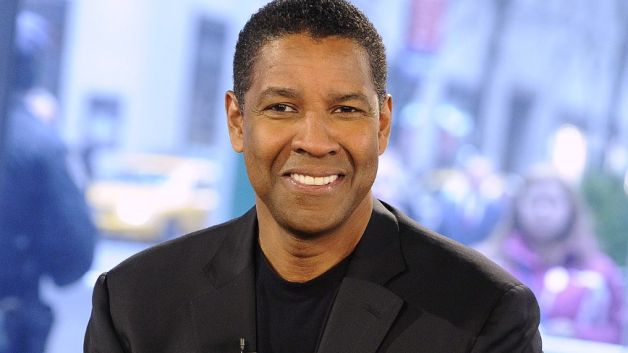
Does anybody even bother to think about what racism is any more before accusing people of it? Do journalists think about the circumstances before they parrot knee-jerk accusations of racism from the likes of Sharpton and others? Based on the evidence of reaction to the infamous memo from a Sony honcho regarding the performance of Denzel Washington pictures abroad, apparently not.
Everywhere, this screed by an unnamed Sony executive is being called “shocking,” “unbelievable,” and, of course “racist.” It is nothing of the kind. In a scenario that reeks of the surreal Samuel L. Jackson fiasco where Ethics Alarms was virtually alone in noting that Jackson’s on-air accusation that a white TV host had confused him with fellow black star Lawrence Fishburne because “all blacks look the same to him” was unfair and completely meritless, the news media is just running with a demonstrably false accusation.
Here are the relevant portions of the e-mail exchange based on what has been reported in the media:
“I am not saying The Equalizer should not have been made or that African American actors should not have been used (I personally think Denzel is the best actor of his generation.) [But] Casting him is saying we’re ok with a double if the picture works. He’s reliable at the domestic [box office], safe, but has not had a huge success in years. I believe…the non event pictures, extra ‘bets’ should have a large inherent upside… Here there isn’t a large inherent upside….I believe that the international motion picture audience is racist – in general, pictures with an African-American lead don’t play well overseas…Sony sometimes seems to disregard that a picture must work well internationally to both maximize returns and reduce risk, especially pics with decent size budgets.”
Let’s examine this “unbelievable” e-mail, line by line and then as a whole, for ethical misconduct and incipient racism:
“I am not saying The Equalizer should not have been made or that African American actors should not have been used (I personally think Denzel is the best actor of his generation.)”
No problem there, right?
“[But] Casting him is saying we’re ok with a double if the picture works.”
The baseball analogy, a “double” over a “home run,” is a conclusion based on Washington’s films’ grosses and hard facts, not racism. It is a legitimate opinion, and one that in a business context must be made as a matter of fiduciary duty. Foriegn box office is about half (or more) of a typical film’s profit. If a star isn’t as popular in foreign markets as in the U.S., then metaphorically speaking, a “home run” is more difficult, and maybe impossible. Continue reading →
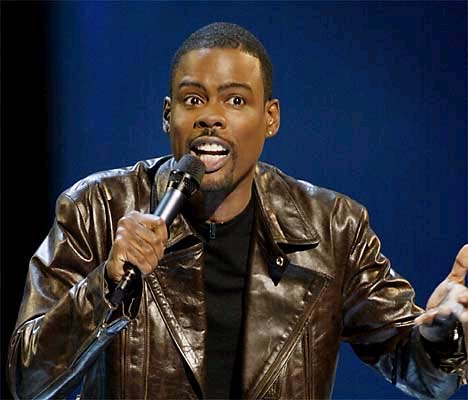
“You say the wrong thing — you see what happened to [Donald Sterling],” Rock said. “I’m not defending what Sterling said at all, but if that’s not the First Amendment then what the [bleep] is? And what did he say, ‘I don’t want my girlfriend hanging out with black basketball players’? Me neither!”
Gee, Chris, that’s courageous, fair, perceptive and true.
What a shame you didn’t have the integrity or guts to condemn what happened to Sterling while every other black pundit, columnist, athlete, and celebrity was comparing him to Satan. You just allowed everyone to pile on the old, rich white guy, take away his team and make him the face of racism for telling his slutty black girlfriend—in his own bedroom!—not to flaunt the fact she was only hanging with him for the money by showing up at his teams’ games with her real boyfriends. You Hollywood types are hilarious–as in disgusting— in your selective belief in rights, privacy and fair play. First Aaron Sorkin, who didn’t object to the media feeding frenzy over Sterling’s private remarks, suddenly argues that his friends and business associates’ equally damning comments shouldn’t be reported because they aren’t about crime and corruption, and thus aren’t news. Then you suddenly decide to defend Donald Sterling’s rights of privacy and free speech now, when there is no cost to you at all, and the damage is done and irreparable.
Here’s what’s unethical about your statement, Chris: it’s too damn late.
Regal Cinemas, Cinemark, Cineplex, Bow Tie Cinemas, Carmike and AMC Theatres will not show “The Interview” because the North Korea-based hackers that breached Sony Pictures Entertainment e-mail security threatened movie theaters and moviegoers who attend screenings of the satire. More theater circuits are expected to follow, because terrorism works especially well against weenies.
Leading the way for this disgusting weenieism display were first, Sony itself, which reportedly toned down the film in response to earlier threats from the group, and then the stars of the comedy, James Franco and Seth Rogan. They both cancelled all their publicity appearances and are evidently hiding under their beds, caving to the dictates of unknown critics who are almost certainly not in the country. Oooh, but they’re so scary!
First they stole emails from Sony executives to retaliate for the comedy’s story line, which involves an assassination attempt on the life of North Korean leader Kim Jong-Un by two morons. Then the group issued a warning referencing 9-11 and warning Americans, to stay away from theaters showing “The Interview”:
“We will clearly show it to you at the very time and places The Interview be shown, including the premiere, how bitter fate those who seek fun in terror should be doomed to. Soon all the world will see what an awful movie Sony Pictures Entertainment has made. The world will be full of fear. Remember the 11th of September 2001. We recommend you to keep yourself distant from the places at that time. (If your house is nearby, you’d better leave.) Whatever comes in the coming days is called by the greed of Sony Pictures Entertainment. All the world will denounce the SONY.”
Everywhere we look, it seems, we see the United States culture being threatened by weenies and the rise of Weenyism. In a nation founded on the principles of self-reliance and individual liberty, built and shaped by stunningly brave men and women who hacked civilization out of an uncertain and perilous wilderness, there is a growing mass of citizens—the cancer imagery is intentional—who are committed to giving the government near total control over every conceivable danger, threat, peril, offense, inconvenience or annoyance, real or imagined, as the role of individual Americans devolves into pointing and saying, “There! Fix that! I don’t like that! Arrest them. Fine him.” Increasingly, the primary motivation for public policy is fear, planted by activists and politicians to panic, terrify and mobilize the weenie base, who are ever eager to trade individual freedom for protection against, well, almost everything.
I know I am hyper-sensitive to the weenification problem right now, having spent three weeks reviewing the history of the American West and its portrayal by Hollywood in preparation for my Smithsonian Associates program last week on how the Hollywood Western shaped American culture. Around the same time that the Sixties exploded, the culture’s unified acceptance of traditional American values began to collapse, just as the primacy of the Western as an entertainment genre declined. Now weenyism is in its ascendency. There are those who claim that the name of a distant football team causes psychological trauma to Native Americans who don’t follow football. Blogger Andrew Sullivan (a candidate for Head Weenie) asserts that the United States should have the “courage” to do nothing about ISIS and allow it to run amuck (the ultimate goal of the Weenies: an Orwellian “Weenies Are Heroes” motto). Feminists insist that women are so vulnerable to male sexual predations on campus that due process, fairness, common sense and much of the respect as equals their predecessors fought for must be surrendered, in a new system that begins with the presumption that all men are potential rapists and all women simpering, helpless victims, even when they say “yes.” College students and other are demanding that books, stories, essays and blog posts contain “trigger warnings” to alert weenies that words and topics in the text might give them the vapours. Needless to say—I hope—this not a healthy development for the United States, or our culture.
The resistance to Weenyism ought not to be a partisan issue. The obligation to help the weak, disadvantaged and powerless become stronger, overcome their handicaps and acquire power is part of the American tradition too. Somewhere, however, this obligation was distorted by the realization that in a system where the government is looking for victims to justify its existence, Weakness Is Power (Orwell again). Weenies—fearful, risk-averse, passive-aggressive citizens who shrink from conflict, confrontation and the messy process of democracy— have realized that they can mobilize power to satisfy their narrow biases and interests, often at the expense of their fellow citizens’ right to liberty and the pursuit of happiness. Now the culture is tilting away from the uniquely American model that encouraged individuals to fight their own battles and succeed or fail on the merits of their causes and their own determination and skill, to one that rewards the perpetually offended, victimized, and passively unsuccessful.
It is unethical to be a weenie, and equally unethical to allow Weenieism to overcome what has been an American cultural strength.
Part I:The Lipreading NFL Fans
Several TV viewers who watched the NFL’s New England Patriots-Green Bay Packers made official complaints to the Federal Communications Commission because they could see Patriots quarterback Tom Brady saying “fuck” repeatedly on the sidelines in frustration over his own play. They couldn’t hear it, mind you: they were just able to read his lips. This was so horrible that they felt that the Federal government needed to investigate and take remedial action.
One complaint was from an Indianapolis parent who wrote that their “6 year old children know how to read lips.” Another was from a Pennsylvania grandparent who complained to the FCC, “My 8 year old grandson was watching the game with me and even commented that he should not have said that.”
The Horror. Law professor Jonathan Turley opined on his blog, “I do not believe that this was a good thing for a NFL QB to be doing.” Well, sure: he should be picking his nose of grabbing his crotch, either, but this isn’t scripted, and its a football game. The whistle has to be blown for Federal retribution for mouthed obscenities to nobody in particular, as these sensitive parents and grandparents happily allow their delicate charges to cheer men in the process of maiming themselves and risking that their children will be changing their fathers’ diapers in the disturbingly near future?
The really frightening thing is that our regulatory morass encourages such attempts at censorship. Continue reading →