More Evidence That Winston Churchill’s Misquoted Statement About Democracy Is Right Even If He Didn’t Say It….

Winston Churchill is often quoted as as observing that democracy is “the worst form of government except for all others.” In truth he was not so cynical: what he really said in a speech to the House of Commons in 1947 was that “it has been said that democracy is the worst form of Government except all those other forms that have been tried from time to time; but there is the broad feeling in our country that the people should rule, and that public opinion expressed by all constitutional means, should shape, guide, and control the actions of Ministers who are their servants and not their masters.”

If he were around today and watching recent developments in our depressing Presidential race, however, I think Winston might go with the misquoted version.

Item: MoveOn, a progressive public policy advocacy group that has been much-derided on Ethics Alarms over the years, is partnering with Ben & Jerry’s radical Left co-founders Ben Cohen and Jerry Greenfield to release a special Kamala Harris-inspired ice cream flavor. (Send in related joke suggestions, by all means.) Limited edition pints of “Kamala’s Coconut Jubilee”are being released in a limited edition; it is a coconut flavored ice cream layered with caramel and topped with red, white and blue star sprinkles. Why coconut? This, apparently. (Winston is starting to roll already.)

The new flavor will be the center of the “Scoop the Vote” free ice cream truck tour that kicks off next week. Cohen and Greenfield will be on board while the truck makes 20 stops in the so-called battleground states as part of a push to register voters. Rahna Epting, executive director of MoveOn, told USA TODAY that the tour aims to inspire voters to register and cast their votes for Harris in the 2024 presidential election, noting that even non-political activities like getting free ice cream have an impact on the election.


Continue reading

Artificial Intelligence Raises a Lot of Ethics Issues, But This Isn’t One of Them…

From An Experiment in Lust, Regret and Kissing (gift link!) in the Times by novelist Curtis Sittenfeld :

My editor fed ChatGPT the same prompts I was writing from and asked it to write a story of the same length “in the style of Curtis Sittenfeld.” (I’m one of the many fiction writers whose novels were used, without my permission and without my being compensated, to train ChatGPT. Groups of fiction writers, including people I’m friends with, have sued OpenAI, which developed ChatGPT, for copyright infringement. The New York Times has sued Microsoft and OpenAI over the use of copyrighted work.)

The essay describes a contest between the bot and the human novelist, who also employed suggestions from readers. I do not see how an AI “writer” being programmed with another author’s work is any more of a copyright violation than a human writer reading a book or story for inspiration. Herman Melville wrote “Moby-Dick” after immersing himself in the works of William Shakespeare. Nor is imitating another author’s style unethical. All art involves borrowing, adopting, adapting and following the cues and lessons of those who came before. In “Follies,” Stephen Sondheim deliberately wrote songs that evoked the styles of specific earlier songwriters. He couldn’t have done this as effectively as he did without “programming” himself with their works. Continue reading

Tuesday PM Ethics Anxieties, 9/10/24

It’s been slim ethics pickin’s of late, probably because everyone is obsessed with the campaign and the Debate To Decide The Fate Of Democracy (or DTDTFOD for short). These things always launch ridiculous numbers of fake news items, like “How Trump and Harris Will Try to Attack Each Other at the Debate” on the Times website, a variety of what I call “psychic fake news;” “How Trump Has Used Debates to Belittle Women” (‘poisoning the well”) on its front page, and also “As Debate Looms, Trump Is Now the One Facing Questions About Age and Capacity.” Translation: The mainstream media Democratic shills want to make the election about “age and capacity.” Then we have the hilarious “Hillary Clinton Has Advice on Debating Trump: ‘He Can Be Rattled’” Taking advice from Hillary on how to beat Trump is like taking advice from George Foreman about how to beat Muhammad Ali. I chuckled at “Liz Cheney Accuses G.O.P. Trump Backers of Betraying Their Principles.” Kamala Harris literally represents the opposite of everything she and her father at least pretended to stand for until Trump Derangement struck. Still, there are some issues lying around that need to be cleared…

Continue reading

More Thoughts About “The Box”….

This is very strange. I wrote about the ethics horror movie “The Box” just this year, yet had no memory of writing the post or seeing the whole movie, despite stating in the post that I had. Then I noticed that the post was dated February 28, the day before I found my wife’s body in our living room. Apparently the shock erased some files.

Moreover, it is creepy that I posted on a movie about a couple that pushes a button on a mysterious box after being told that doing so will kill a stranger but also result in their receiving a million tax-free dollars from an anonymous authority, and shortly thereafter discovered that my own wife had died of unknown causes.

Did somebody push that button?

Continue reading

Comment of the Day: Curmie, On “On ‘the Truthful, Brief, 21-Point Biography of Kamala Harris’: Ten Ethics Observations”

This submission by Ethics Alarms intermittent guest columnist Curmie created a categorization problem. Is it another installment of “Curmie’s Conjectures” (They are all here) ? Should I call it On “the Truthful, Brief, 21-Point Biography of Kamala Harris”: Ten Ethics Observations, Part 2? Oh, I don’t know: I wrote and posted Part I before 5 am this morning when I woke up after a nightmare and such minutia is beyond me until I get at least two more cups of coffee in me.

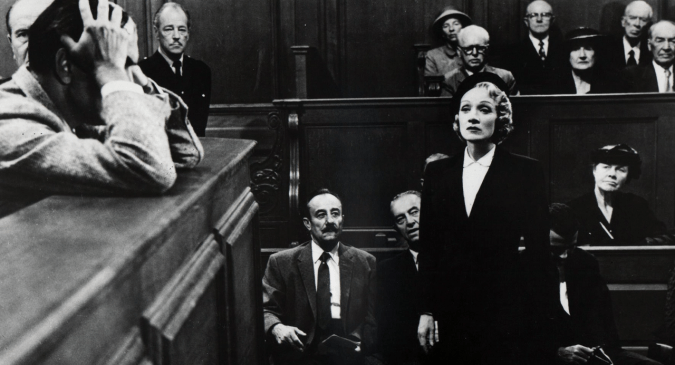
Curmie’s analysis (he only stooped to “But Trump!” once) is enhanced in my eyes at least by Curmie’s mention of Christine Vole, the treacherous witness of the prosecution in the classic Billy Wilder film version of “Witness for the Prosecution.” Now, heeeeeeeeeeere’s Curmie!

***

Yesterday, in my first day of teaching (except as an invited guest) in over two years, I closed both my classes by urging skepticism, including of what I tell them. As an example of what I hope to get them to do, I used some of my current research: trying to determine who directed the production of a particular play. The play was staged before it was common practice to include the director’s name was on the program, in publicity materials, or in newspaper reviews.

Conventional wisdom, presented with only a single piece of evidence, suggests that the playwright directed his own play. Several prominent theatre historians all say so, most of them without citing any evidence at all. A couple of other scholars suggest, without explicitly arguing against the playwright as director, that the leading actress took over the function while the normal director for the company was ill and away from the city. They don’t provide much evidence, either.

Based on a number of factors, I think it’s about 98% certain that conventional wisdom is wrong, but 1). 98% is different from 100%, and 2). I’m not convinced of the counter-arguments, either. Maybe when I hear back from the company’s archivist my impressions will change. Maybe there isn’t enough primary source material to make a difference; maybe I’ll be able to prove (“beyond reasonable doubt”) that the playwright didn’t direct the play. Maybe I’ll be left with a speculative piece that claims “the preponderance of the evidence” is that he didn’t. Maybe I’ll end up agreeing with conventional wisdom. But I’m going to do everything I can to get all the evidence before finalizing my opinion, and I’m not going to say something is true if I only suspect that it might be.

CP, on the other hand, immediately loses all (and yes, I mean all) credibility by the claim that “you cannot deny the factual accuracy of what I am about to say.” Actually, yes, I can. Next.

Continue reading

Confronting My Biases, Episode 14: Female Baseball Broadcasters

There is really no good excuse for this one, just reasons, but I’m trying, I really am.

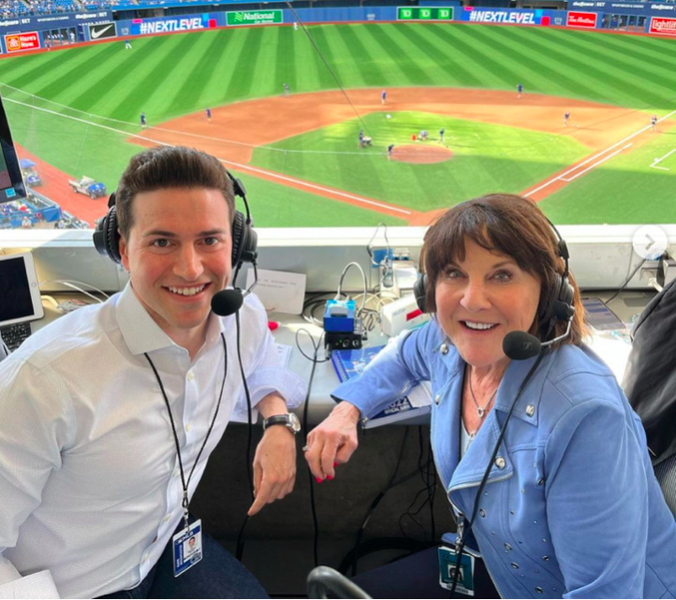
Major League Baseball is making a concerted effort to get more women into the baseball broadcast booths for both radio and TV. I don’t know if this is a DEI-inspired initiative or just a rational response to a long-lasting gender prejudice. Either way, there is no reason why a woman who knows the game, has a pleasing voice and is an experienced broadcaster shouldn’t be doing play-by-play or color commentary.

I am not used to it, however; nobody is. Baseball games to loyal fans are the voices of Vin Scully, Earnie Harwell, Mel Allen, Curt Gowdy, Harry Carey, and the rest. It didn’t help that the first prominent national baseball female broadcaster was whoever the young softball star was who was put in a three-person ESPN Sunday Night Baseball booth next to Alex (yecchh!) Rodriguez several years ago. Cheatin’ A-Rod was terrible as always, but she was embarrassing: NOW should have petitioned to have her fired. She was cute, which I suspect was the major reason she got the job, but most of the time she was giggling or laughing. She set the cause of female baseball broadcasting back at least a decade.

Continue reading

More Non-Traditional Casting Double Standards Hypocrisy: “Whitewashing ‘Little Shop of Horrors'”

Here is another installment of a frequent topic on Ethics Alarms: non-traditional casting, DEI casting, and and virtue-signaling stunt casting just to appear woke. The position here as a long-time stage director who has been responsible for some audacious non-traditional casting in my time (I once cast the role Cole Porter with a woman) remains unchanged: if it works and the audience enjoys the show as much or more than it would have with a traditional casting choice, then all is well. (Full disclosure: casting Cold Porter as female did NOT work. At all…)

The mission of any stage production is to be fair to the show’s creators and make the production as effective theatrically as possible, not to make political or social statements that get in the way. (Prime example of the latter: this.)

Curmie sent me a link to “Yes, You Can Whitewash ‘Little Shop of Horrors’, But Please Don’t” at Chris Peterson’s Onstage blog. I love the musical (my old high school doubles tennis partner, Frank Luz, co-starred as the sadistic dentist in the original off-Broadway production and the cast album) based on the wonderful 1960 Roger Corman camp movie classic. I thought its creators would revive the genre, but Disney snapped them up (“The Little Mermaid”; “Beauty and the Beast”) and then half the team, Howard Ashman, died.

Peterson cites the license-holders’ quite reasonable casting note:

Continue reading

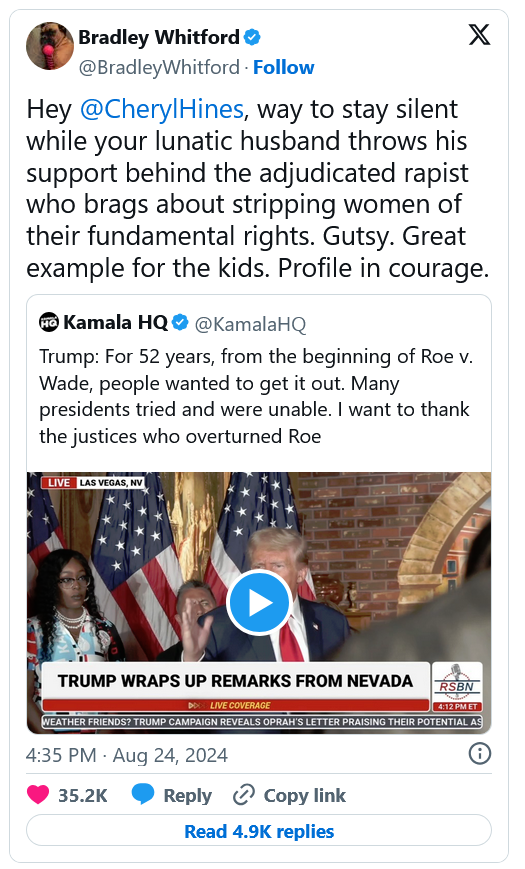
Unethical Tweet of the Month: Actor Bradley Whitford

Just remember, the Ethics Alarms position is to strive as much as possible to remain unbiased regarding a performer’s art regardless of his or her demonstrated political orientation or revealed personal character flaws. I enjoy Bradley Whitford as an actor.

But only an unethical, bullying asshole would write a tweet like that.

Continue reading

Bad Celebrity Ethics: David Copperfield’s Penthouse Trick

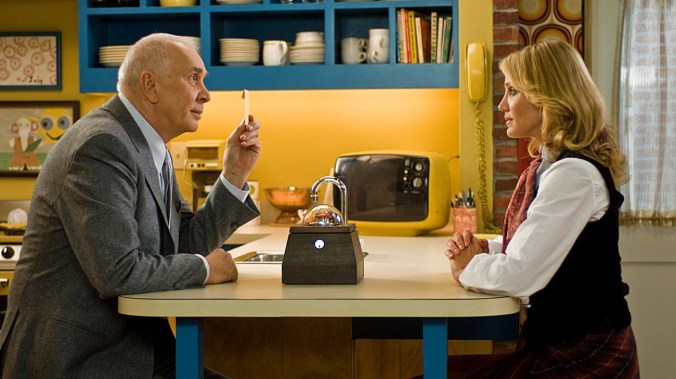
Trust me on this: almost all magicians are weird. I strongly suspect that they tend to be on the “neurodivergent” spectrum (that’s the new politically correct term for autistic: you know my views on linguisitic rebranding), but they have other problems as well, including the tendency to slide into more destructive unethical behavior after building their lives around deceiving people for fun.

Alakazam! Here’s David Copperfield to demonstrate how it’s done!

Continue reading

Ethics Quiz: The Cheating Democrats’ Beyoncé Rumor

Having gagged on the last Ethics Quiz completely, I have to clear my palate with a second try.

Those canny Democrats tried to trick young voters into watching Kamala Harris’s acceptance speech last night by feeding their propaganda agents (that is, the U.S. news media) a fake rumor that pop super-star Beyoncé was going to show up in Chicago, perform at the convention’s finale, and thus endorse KAmala Harris.

“Beyoncé to perform at Democratic convention: Sources,” stated the headline at The Hill. “Did White House political director just drop major hint about Beyoncé DNC appearance?” coyly insinuated NBC Chicago. “BEYONCÉ PERFORMING AT DNC’S FINAL NIGHT!!!” claimed TMZ. “🚨🚨SHE’S THERE!!!!!!”announced the Twitter/X account @beyoncepress at 7:16 p.m. Central time, alongside a video of a black SUV driving through Chicago’s River North neighborhood escorted by a motorcade.

All false. Harris finished her speech, balloons came down from the ceiling, and no Beyoncé. Figures aren’t in, but I assume that the planted rumor “worked,” making it “good” as the late Harry Reid will confirm if you track him down in the Lake of Fire.

“It’s a bad move to trick people into staying tuned and then denying them what they thought they’d get,” opines Ann Althouse today as she disagrees with Harry, though I don’t know what she means exactly by “bad.” Unethical? Unfair? Likely to backfire (meaning it didn’t “work”)? Columnist Laura Bassett tweeted that “teasing a huge surprise guest and leaking that it’s both Beyonce and Taylor swift just to get people to tune in is actually kind of funny.” Not unethical. Funny. Bassett is a former HuffPo pundit who now hangs out at MSNBC and CNN, so you can guess what her ethics alarms are like.

Your Ethics Alarms Ethics Quiz of the Day is this…

Is using a false rumor as a device to create interest in an event like the Democratic National Convention unethical, or is it sufficiently standard publicity and marketing practice now to give it an ethics pass?

Continue reading