“Who Ya Gonna Call?” Paranormal Ethics, and the Irony of Same

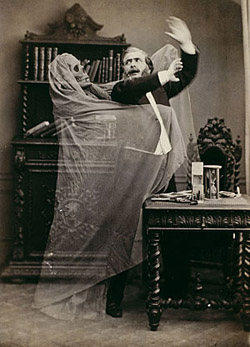
Here we see a common ethics violation: the paranormal researcher has allowed himself to become emotionally involved with his subject...

Any profession, no matter how strange, that thinks seriously about ethics is to be encouraged, and thus it is that Ethics Alarms gives a hearty shout-out to paranormal investigator L.S. Watts, 8 years a ghost-hunter and the co-founder of Grigori Research Institute of Paraspsychology. She has published a set of ethical standards for paranormal investigators that appear to be serious, thorough and well-thought out, addressing issues of professionalism, candor, honesty, conflicts of interest and fairness. Since her profession is by definition likely to be involved with a lot of people who are, shall we say, easy to deceive, and that must also attract more than its share of con artists, humbugs and frauds, there is an obvious need for a clear and sensible ethics code, for which her work would be an excellent starting point. Back in May of 2010, I noted that there was a planned “Town Meeting” on ethics in the field of paranormal investigation, and it’s nice to see progress has been made.

Ms. Watts seems sincere, so I can’t fairly apply the principle I am itching to state, which is that there are activities and fields like astrology, paranormal research, psychics, spiritualism, faith healing, creation science, loan-sharking and hacking for which the only truly valid Code of Conduct would be an extremely brief one that says, “Don’t Do This.” As long as these professions are with us, however, they might as well try to be as ethical as possible.

BREAKING NEWS: Whales Aren’t Slaves! PETA Shocked!

"Thank you! And for my next number, 'Nobody Knows The Trouble I've Seen!'"

PETA’s cretinous and offensive lawsuit equating Sea World’s whales with enslaved human beings—just the latest in the organization’s irresponsible “look at us!” tactics—was laughed out of court, as everybody but a breathless NPR interviewer knew it would be. This was yet another example of a lawsuit that any common sense-imbued layman would accurately call frivolous, but a bar association discipline committee would not. A lawyer can ethically take on a lawsuit he or she knows is stupid, foolish, silly, or a “hail Mary” shot, as long as there is a good faith belief that it might/could possibly/ gee, with a little luck and they don’t think about it too carefully prevail. And looking at some of the rulings that come down from various benches and verdicts that creep out of some jury boxes, that means almost no case is unethically frivolous in a legal sense. That doesn’t mean that it is responsible and right for lawyers to help plaintiffs like PETA bring such wasteful lawsuits, just that it isn’t a breach of professional ethics to do so. Continue reading →

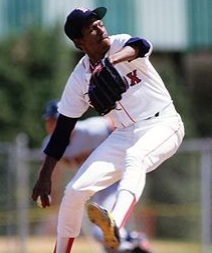
Ethics Dunce: Dennis “Oil Can” Boyd

Well, I can’t say I’m really very surprised.

And another mystery solved: Why was he called "Oil Can"? Because apparently that's what he has on top of his neck instead of a head.

Former Red Sox pitcher Dennis “Oil Can” Boyd, one of my favorite characters when he was active, admitted this week that he was stoked up on cocaine when he pitched more often than not. “Oh yeah, at every ballpark. There wasn’t one ballpark that I probably didn’t stay up all night, until four or five in the morning, and the same thing is still in your system,” Boyd told WBZ NewsRadio 1030’s Jonny Miller in Fort Myers, Florida, where the Red Sox are about to start Spring Training.  “Some of the best games I’ve ever, ever pitched in the major leagues I stayed up all night; I’d say two-thirds of them. If I had went to bed, I would have won 150 ballgames in the time span that I played. I feel like my career was cut short for a lot of reasons, but I wasn’t doing anything that hundreds of ball players weren’t doing at the time; because that’s how I learned it.” Continue reading →

Unethical Website of the Month: “Make Presidents’ Day Super”

The degradation of America’s values continues in seductive and incremental ways.

Take the online petition “Make Presidents’ Day Super,” described as…

“A plan to move Presidents’ Day to the Monday after the Super Bowl. For football. For hangovers. For America.”

The proposal is unethical in many ways, beginning with its dishonest presentation.  “We the people, in order to form a more perfect holiday, seek to take what should be one of our most patriotic holidays and actually give it more meaning, make it more American,” the argument begins. Make it “more American”? How, exactly, does moving a holiday that already minimizes the national recognition of the birthday of George Washington by making it a floating annual date to manufacture a three-day weekend make that holiday “more American”? Continue reading →

Where Should The Alarms Sound For THIS?

I have little to add to the video above, which is nearly self-explanatory. A student took a video camera to the halls of his Washington State high school to quiz  class mates on basic U.S. history, geography and civics. I’m sure—I hope—that the answers shown on the video were atypical, but never mind: they are scary enough.

The blogger Kevin DuJan on Hillbuzz uses the video to attack teachers unions, writing,

As I watched the video above, two thoughts immediately popped into my head:

1. Why do teachers’ unions claim they deserve more pay and endless benefits when this is the result of their “hard work” in the classroom?

2. I honestly can’t remember anyone this dumb in my Catholic high school back in Ohio when I was going to school in the mid-90s. Continue reading →

Ethics Quote of the Week: George Clooney

“I think it’s a stupid thing. I think it’s stupid for anyone, whether they’re celebrated or not, I don’t believe their 911 calls should be broadcast around the world.” 

"Poor Demi! The public has a right to hear us humiliate her."

—-Actor George Clooney, speaking during Sunday night’s Screen Actors Guild Awards.  He was referring to the release and subsequent airing of a 911 call from a woman summoning rescue workers for actress Demi Moore, who, the caller said, was convulsing and had lapsed into semi-conscious.

Good call, George.

911 calls are considered public, but that doesn’t mean that the public needs or has to hear them, or that sleaze-factories like TMZ should put them online when their only purpose is titillation and to embarrass celebrities. There may be special circumstances that justify making a recording of a 911 call, rather than a  transcript, available to the public, but those should be exceptions. In cases like Moore’s, playing them is unfair and unkind, a clear Golden Rule violation, not that TMZ, or most journalists for that matter, would know about that.

If the media can’t control itself when it comes into possession of a 911 call that will embarrass someone who already has enough problems to deal with, then we need laws to keep 911 calls out of irresponsible hands…in other words, the news media’s hands.
.


“Pay-What-You-Can” Ethics

A live performance of Jules Feiffer's "Little Murders" at a regional theater in Arlington, Va. that holds "pay-what-you-can" performances over the periodic objections of its artistic director, me.

Toronto Star ethics columnist Ken Gallinger does a pretty good job today answering a query from a financially strapped theater-lover who feels guilty about attending “pay-what-you-can” professional stage productions. “…My husband says paying less than full fare takes advantage of the theatre company. Technically, we could pay the ticket price; we still have access to credit. And there are things we could cancel…What do you think?” asks the inquirer.

Gallinger explains the benefits to the company of not having a sea of empty seats facing the actors, and also how discount tickets have promotional value to theater companies. All true: the theater companies wouldn’t offer “pay-what-you-can” if they didn’t think it was in their companies’ long term interest. There are other benefits that Gallinger doesn’t mention. For example, the increased audience size still contributes to the average audience statistics that a non-profit company can use to seek advertisements and to argue for community foundation grants.

Even this wouldn’t cover the topic, however. “Pay-what-you-can” and other discount ticket programs are essential if theater companies are going to meet their own ethical obligations to the community, and if live theater is going to survive at all. The ticket prices at most large, established regional theaters are, in a word, unconscionable. Justifiable perhaps, since live theater costs more to produce than can be paid for by box office receipts, but still unconscionable. Continue reading →

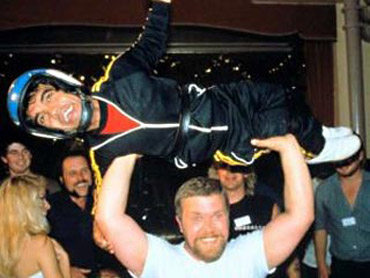
Dwarf Tossing Is Back. So What?

The traditional "throwing out the first dwarf" ceremony....

Dwarf tossing, a bar sport or spectacle or satire or something, was briefly in the news early last decade. Helmeted and padded little people were used as discuses or bowling balls by large, burly, often intoxicated men. It was weird; it could arguably be funny. Advocates for the unusually small got the activity banned in Florida and New York, and in Canada, while bills to ban it failed, public opinion opposing the games pretty much made dwarf tossing obsolete, like making fun of Paris Hilton.

Now comes the news that a strip joint in Ontario is reviving the sport, and  has scheduled a competition. Critics are horrified and outraged, because, well, they are horrified and outraged. Dwarf tossing, they say, is unethical.

Why? Continue reading →

Photography Ethics on Trial

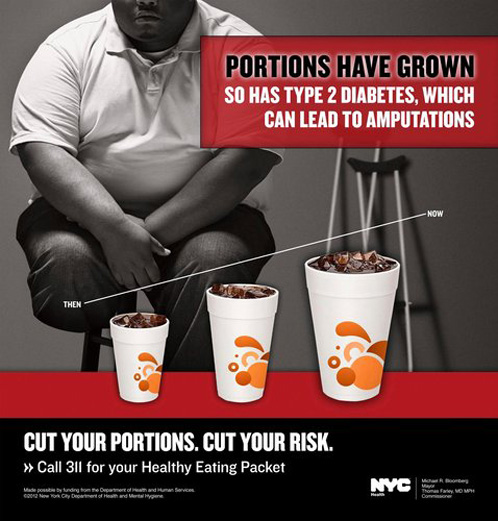
Two photography technology ethics cases erupted this week.

The Case of the Fake Amputee: A recently unveiled New York public health campaign warning against Type 2 diabetes uses a photo of an overweight man who is missing his leg.  The man, however, had both legs when the photo was taken. One was digitally removed to make it appear that his right leg had been amputated. The American Beverage Association, fighting the city’s efforts to reduce consumption of sweetened soft drinks and fast food, seized on the photo to press its case. “Clearly, the straight facts don’t support their singular attacks on our products, so they keep falling back on distortions and scare tactics that are over the top,” association spokesman Chris Gindlesperger said in a statement. “That’s disappointing.”  Well, diabetes does increase the risks of amputations, and a fake amputee is no more scary than a real amputee. Real amputees do exist; having a graphically-created one doesn’t change the accuracy of the ad’s message one bit. What does the association’s argument have to do with the photo-manipulation? Nothing. Continue reading →

Celebrity Encounter Ethics

You're welcome. But now I'll never know what Eddie Murphy is really like!

I run into a lot of celebrities when I travel. I assume everybody does who travels very often; I know that I am better at recognizing them than the average person because my celebrity knowledge spans multiple generations, I have a good memory for faces, and I have always watched way, way too much television. And it happened again today: I was having my usual battles with an airport self-service check-in kiosk, this one in Atlanta, when I realized that the traveler enduring similar annoyances (“We have no record of your itinerary. Please enter the code that we call something other than what it is called on your ticket receipt before you get frustrated and have to wait in line to speak with an agent, because you know that’s what is going to happen.”) was the young actress-singer, Raven-Symone.

She was traveling alone, and it seemed clear that nobody around us had any idea who she was. Strange: doesn’t everyone watch “The Cheetah Girls,” “Dr. Doolittle 2” and re-runs of “That’s So Raven” on the Disney Channel? The encounter immediately sent me into Marshall Celebrity Recognition decision mode: what is the ethical way to treat the rich and famous if you are insignificant and lowly, and close enough to assassinate them? Continue reading →