Ethics Quiz: Who is the Most Incompetent Elected Official—the DA Who Doesn’t Care If A Convicted Prisoner Is Really Guilty, Or The Assemblywoman Who Doesn’t Know About The First Amendment?

California Assemblywoman Fiona Ma. " First Amendment? Where the heck did THAT come from?"

For this weekend’s Ethics Alarms quiz—the blog’s 2000th post!—I am asking readers to help me determine the Incompetent Official of the Week, when two unusually qualified candidates are running neck and neck.

Candidate A is McLennan County (Texas) District Attorney Abel Reyna:  Defense attorney Walter M. Reaves has filed a motion asking for DNA testing as part of his efforts to exonerate Anthony Melendez, currently serving a life sentence for the 1982 slayings of three teenagers in Waco.  Reaves says the test is needed because DNA analysis was not available when Melendez was convicted, and Melendez still maintains that he is innocent. D.A. Reyna, however, opposes the test. Why? He argues that such testing shows a lack of faith and support of the jury system, and what the jury has decided usually ought to be free of such post-trial attempts to discredit the verdict.

In other words, the D.A. believes that it is better to honor the jury system by letting an incorrect verdict stand than to use newly available scientific evidence to set an innocent man free.  Continue reading →

The 9-11 Photo And A Columnist’s Character

One thing I have learned about personal ethics: they are imposible to hide. Ethical individuals eventually show their values in grand style, and those without ethics, or whose ethical values are corroded, frayed and rotting, show their true colors as well. Thus it was no surprise to me when Frank Rich, once one of America’s most unfair drama critics who turned into one of the media’s most vicious opinion columnists, exposed the content of his character in grand style with a New York Time column last month about 9-11. Continue reading →

Ethics Dunce: Innovative Legal Marketing

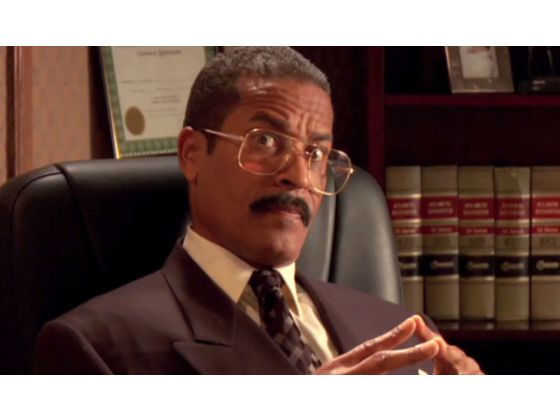
Would "Seinfeld's" Jackie Chiles be a worse spokeperson for lawyers than Arnie Becker? Hmmmm...

L.A. Law’ Actor Corbin Bernsen, whom we originally got to know as priapic divorce attorney Arnie Becker on the old TV lawyer series  “L.A. Law,” was recruited in 2009, fifteen years after “L.A. Law” went to re-run heaven, to serve as the paid spokesperson for Innovative Legal Marketing, a Virginia-based company providing marketing services for lawyers and law firms. Now Bernsen has filed a lawsuit claiming he’s owed more than $668,000 after the company allegedly breached its contract and dropped him.

I have no idea whether Bernsen or the marketing firm has the law on its side in the suit, but I do know this: for a legal services marketing firm to recruit the actor who played Arnie Becker to promote legal services is an implicit insult to the legal profession and the intelligence of the public. Continue reading →

“The 48 Laws of Power”: Robert Greene’s Recipe for Power, Greed and Misery

“The 48 Laws of Power” is a 1998 book by Robert Greene, a best-seller, and a re-packaging of ideas from multiple sources, including “The Prince” and “The Art of War.” Those who wonder why it is that certain sub-cultures in the United States—business, Hollywood, the entertainment industry, politics, finance— appear to be incurably cynical, amoral, corrupt and untrustworthy would do well to read it, provided they are able to resist being persuaded by its brutal philosophy.

Greene, who has other similarly-oriented best-selling books on business success, is considered a guru by the music industry, and has been embraced with special enthusiasm by hip-hop moguls. What is remarkable about his 48 laws is how completely they discard all ethical virtues, as if fairness, honesty, integrity, responsibility, respect and trustworthiness were irrelevant to the topic of power. In fact, the five most important laws of power are…

1. You must prove your worthiness to hold power by your manner of acquiring it.

2. Power without competence, wisdom and good will lead to tragedy.

3. Do not use power to restrict the welfare, autonomy, freedom, and pleasure of  others, but to enhance them.

4. Regard power as a means, not an end.

5. When retaining power itself becomes the goal, it is time to surrender it. Continue reading →

Roger Williams, Consequentialism, and “Born Free”

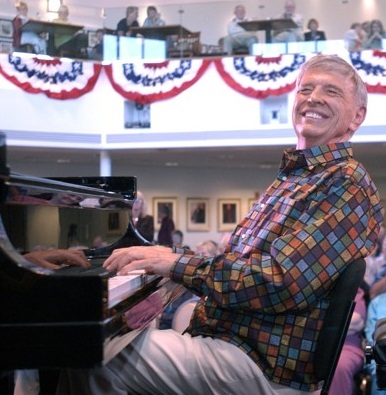
Roger Williams in his 80's. Take THAT, Drake!

Roger Williams, the pianist whose hit renditions of songs like “Autumn Leaves” and “Born Free” are pop culture generational touchpoints, died this week. One item in his obituary has double ethical significance:

“While majoring in piano at Drake University in Des Moines, he began developing a style that was a fusion of jazz, classical and pop. When a school official overheard him playing the tune “Smoke Gets in Your Eyes,” he was expelled because the school had a “classics-only” policy…”

It is both encouraging and depressing to learn that school administrators were just as doctrinaire, unreasonable, unfair, incompetent, stupid and willing to abuse their power while playing with the lives of young people back in the 1940’s as they are today—encouraging, because that generation seems to have come through it pretty well; depressing, because this field appears to have a flat learning curve.

Mainly, however, Williams’ run-in with music snobs at Drake beautifully illustrates what is wrong with the consequentialist argument that we should assess the ethical nature of an act based on its consequences. Continue reading →

Why Lawrence O’Donnell’s Interview With Herman Cain Wasn’t Unethical Journalism

Lawrence O’Donnell’s unconscionable roast of GOP presidential candidate Herman Cain —-no fair journalist would call it an “interview”—made me realize that broadcast journalism ethics have fractured to the point where it is unfair to apply the same ethics standards to different networks and programs. My initial reaction to seeing O’Donnell’s over-the-top performance was that it represented a new low in broadcast journalism interview ethics. Now I think that is unrealistic and unfair. O’Donnell’s conduct was what MSNBC’s audiences want to see, and what critics should expect to see. Herman Cain, the target in this case, consented to the abuse. Where’s the unethical journalism? There was no journalism. Continue reading →

Ethics Confusion in Ken Burns’ “Prohibition”

I enjoy all of Ken Burns’ documentary series, and I am grateful for them. They do a better job of teaching history than the schools, and they are always thought-provoking and, of course, beautifully executed. At the same time, I am aware of the limitations in Burns’ approach, beginning with his genre. Documentaries are inherently misleading works, more misleading in the hands of some, like Michael More, than others. The sifting of which material to use, how to balance issues, choices of photographs and film footage and even the inflections of voice betrayed by narrators (To his credit, Burns has all of his narrators deliver their script in the exact same measured and deliberately-paced tones; I found myself wondering how many times Burns forced “Prohibition” narrator Peter Coyote to listen to previous Burns stand-ins David McCullough and John Chancellor in “The Civil War” and “Baseball” until he sounded as much like their clone as they sounded like identical twins) unavoidably slant the final product, sometimes unintentionally, but usually with a motive. To the extent that viewers realize this, it is an ethical medium, but for most, especially those unfamiliar with the subject matter and with no independent knowledge to draw on, it is not.“Prohibition,” Burns’ latest PBS series that debuted last week, has a more obtrusive agenda supported with more dubious logic than his previous documentaries, reminding me, at least, that his historical conclusions should always be taken with a measure of skepticism. Continue reading →

Hank Williams, Jr.: Victim of a Political Correctness Mugging

Wait---Hank Williams Jr. thinks Obama is like Jennifer Aniston?

On the Fox News morning couch-fest, country singer Hank Williams, Jr. had this exchange with the hosts:

HANK WILLIAMS: Remember the golf game?

    STEVE DOOCY: Boehner?

    HANK WILLIAMS: That was one of the biggest political mistakes ever.

    CO-HOSTS: Why?

    HANK WILLIAMS: That turned a lot of people off. You know, watching, you know, it just didn’t go over.

    GRETCHEN CARLSON: You mean when John Boehner played golf with President Obama?

    HANK WILLIAMS: Oh, yeah! Yeah. And Biden and Kasich, yeah. Uh-huh.

    GRETCHEN CARLSON: What did you not like about it? It seems to be a really pivotal moment for you.

    HANK WILLIAMS: Come on. Come on. It would be like Hitler playing golf with Netanyahu, OK?

It wasn’t OK, apparently. Headlines sprouted up like weeds claiming that Williams had “compared Obama to Hitler,” or “said Obama was like Hitler.” So because ESPN figured much of its audience would think that Hank Williams compared the President to Adolf Hitler, since the media was reporting his words that way, ESPN, that paragon of courage, fired Williams as the voice of Monday Night Football. No longer will his song introduce the festivities. Continue reading →

An Ethics Muffin Wreck

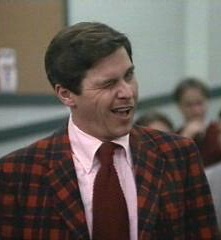
Tim Matheson in “Animal House,” as “Justice Department Inspector General”

In the end, it was Ethics Bob who saw the light first. Responding to last month’s Ethics Alarms post about the Justice Department’s inspector general flagging extravagant costs for conferences, Bob Stone, a business ethics expert and blogger who comes from a long career with the Defense Department, wrote this:

“As a sometimes victim of smear-by-IG, I’d recommend turning down the outrage. Just as there never was a $400 hammer, there probably wasn’t a $16 muffin. I’ve been involved with a lot of government conferences—I’ve sponsored a few—and my experience is that the people are as diligent with expenses an informed taxpayers would like them to be. IG’s records are built on how many outrages they turn up, and they often manufacture them.”

Continue reading →

Ethics Hero: David Letterman

No Free Speech weenie he. Yale, take note.

I stopped watching David Letterman years ago, when I learned that he was an unapologetic serial sexual harasser.  I don’t like to patronize the work of professionals, however talented, who should have been fired and would have, if their employers had any integrity. As a result, I missed Letterman’s ascent into ethics hero territory. It pains me to admit this, since I neither like nor generally respect him, but that is where David Letterman belongs.

On the June 5, 2011 edition of “The Late Show with David Letterman,” the host smilingly pulled his finger across his throat to note the U.S. military’s reported killing of Ilyas Kashmiri, an Islamist terrorist who was one of the organizers of a deadly attack in India that killed and wounded hundreds of innocent civilians. On a roll, Letterman made a joke about Osama bin Laden’s death as well.A group of radical Islamists took offense, and in a posting on the Islamist web forum Shumukh al-Islam, called for Letterman’s murder, urging the eventual assassin to cut out Letterman’s tongue.

Continue reading →