Ick, Unethical, or Illegal? The Fake Scarlet Johanssen Problem

This is one of those relatively rare emerging ethics issues that I’m not foolhardy enough to reach conclusions about right away, because ethics itself is in a state of flux, as is the related law. All I’m going to do now is begin pointing out the problems that are going to have to be solved eventually…or not.

Of course, the problem is technology. As devotees of the uneven Netflix series “Black Mirror” know well, technology opens up as many ethically disturbing unanticipated (or intentional) consequences as it does societal enhancements and benefits. Now we are all facing a really creepy one: the artificial intelligence-driven virtual friend. Or companion. Or lover. Or enemy.

This has been brought into special focus because of an emerging legal controversy. OpenAI, the creators of ChatGPT, debuted a seductive version of the voice assistant last week that sounds suspiciously like actress Scarlett Johansson. What a coinkydink! The voice, dubbed “Sky” evoked the A.I. assistant with whom the lonely divorcé Theodore Twombly (Joaquin Phoenix) falls in love with in the 2013 Spike Jonze movie, “Her,” and that voice was performed by…Scarlett Johansson.

Continue reading

Historical Note: Why It’s A Mistake To Automatically Assume Authorities Aren’t Completely Wrong

That old TV Guide review of the then new-to-America “Monty Python’s Flying Circus” was recently posted on “Twitter/X” by conservative writer and commentator John Podhoretz. He implied in his tweet that he didn’t know who Cleveland Amory was, but I do (John’s ten years younger than me). Amory is not just an obscure critic from the murky past: in the Sixties into the Seventies, Amory was a famous writer, critic, media personality and animal rights activist, a ubiquitous public intellectual whose pronouncements were frequently accepted as invaluable contributions to public wisdom because of their source.

These days, I would assume any pundit who chose an image of himself smoking a pipe was a pompous ass, but back then my father smoked one (though never in public) so that bias had yet to be fully formed. Nor was I quite as contemptuous of critics then as I am now, having watched a series of ignorant and biased Washington Post theater reviewers marginalize my professional theater company for 20 years on the theory that no stage work produced before 1990 had anything useful to say to the enlightened and politically sophisticated.

Continue reading

So It’s Come To This: A Brief But Depressing Addendum To “In the Hallowed Halls of Congress, Ethics Dunces, Dolts, and Disgraces All Around”

In the comments to the previous post regarding the juvenile incivility and playground level exchanges of insults in the House of Representatives last week, Chris Marschner notes in part,

“Today, our representatives are products of our public education system where the original classics have been banned for being offensive to one group or discarded as irrelevant to current society. Linguistic presentations today reflect the gutter because that is how the teachers they had speak.’

Last night, before Chris issued his comment, I had already resolved to write about the following revolting development:

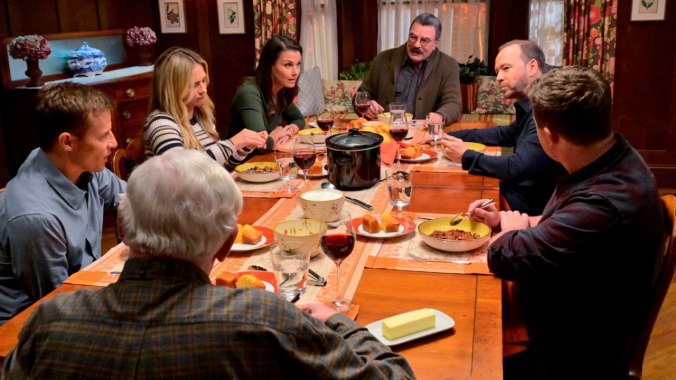
In a new episode of “Blue Bloods,” the long-running CBS police and family drama that Ethics Alarms awarded “Ethical TV Show of the Year” several times back when I was doing such things, the show concluded with Erin ( Bridget Moynihan), the NYC prosecutor and police commissioner Tom Selleck’s daughter, making an erection joke. At Sunday dinner. And not even an original or particular funny one.

The discussion around the dinner table of this devout Catholic extended family—where grandpa constantly reminds the brood to “keep it civil”—involved the fifth wedding anniversary of youngest son Jamie (Well Estes) and his policewoman wife. The group noted that traditionally this was the “Wooden” anniversary. Erin then asked, “So, Jamie, are you up to giving her wood?”and punctuated her witticism with a suggestive upward arm thrust.

Hearty laughter all around.

I look forward to next season, when Sunday dinner is disrupted by Grandpa (Len Cariou) loudly farting during dessert.

How can anyone still argue, as I have many times, that Donald Trump is too crude to be President?

Mother’s Day 2024 Ethics Warm-Up

Happy Mother’s Day. It’s not going to be a happy one at the lonely Marshall house, though my sister and I will be having dinner to celebrate her motherhood as well as the two dead mothers in the family. She talked me out of bringing Grace’s urn to the dinner, as I expected she would. I’m still tempted.

In more dark news, it seems a cruel twist of fate that the major event in U.S. history that occurred on this date was the discovery of the kidnapped Lindbergh baby, dead. Happy Mother’s Day!

On to the ethics inventory…

1. About that Trump trial…I haven’t written much about Alvin Bragg’s blatantly political and partisan prosecution of Donald Trump in New York. I’m not there and it’s not being broadcast; meanwhile, the news media is setting new records for completely slanted and biased coverage: going back and forth among Fox News, MSNBC and CNN is like visiting parallel universes. But even a legal analyst on CNN confessed that the prosecution had yet to prove any crime had been committed, and it seems clear that the judge’s decision to allow Stormy Daniels to testify extensively about the alleged sexual activities engaged in with the former President guarantees a guilty verdict being thrown out. From what I can determine, the judge should throw out any guilty verdict as a matter of law, because guilt beyond a reasonable doubt cannot be legitimately found when the two primary witnesses for the prosecution are as inherently unbelievable as Daniels and Michael Cohen, who is a disbarred lawyer, a disgruntled former employee of Trumps, and an admitted perjurer. Jonathan Turley, who has registered his utter contempt for this case (recent posts here, here, and here), had a funny line about waiting to see if the courthouse is struck by lightning when Cohen takes the oath before testifying.

It is so clear, in listening to the MSNBC and CNN commentary on the trial as well as print and online accounts like Maureen Dowd’s column“Donnie After Dark” that the real objective of this trial is to humiliate Trump and expose his “bad character.” This is not an ethical or legitimate use of the justice system, but Democrats are committed to it. How desperate they are. I was thinking about this even as I laughed at Jerry Seinfeld’s movie sharply tweaking Democratic icon Jack Kennedy’s serial adultery and sex addiction: after JFK, after Bill Clinton, and with a their own current President credibly accused of rape and caught on film sniffing and touching young girls as his own daughter’s diary documents them showering together, this is the best they can muster to impugn Trump? And how many Trump supporters are under the delusion that he has embraced high moral and ethical values in his private life? if anything, Trump’s handling of the lawfare assault on him has raised my opinion of his character. His determination and resilience are amazing. He epitomizes the lesson of “Laugh-In” comic Henry Gibson’s favorite poem (by Frank Lebby Stanton), “Keep A-Goin’.”

Continue reading

A Reward For the Historically and Culturally Literate: “Unfrosted”

If you are looking for a funny rather than syrupy entertainment diversion for your mother (or grandmother) this Mother’s Day, you couldn’t do better than spend 90 minutes or so with Jerry Seinfeld in his new movie for Netflix, “Unfrosted.”

Don’t worry: it’s a lot better than “Bee Movie.”

The film, co-written by the comic, is sly, clever and funny provided that the viewer knows enough about the popular culture of the early Sixties—you know, before everything went crazy—as well as U.S. history to understand what is being satirized. Seinfeld has always been a Sixties trivia buff as he demonstrated repeatedly on his classic sitcom, but this movie is an orgy of such references: JFK, the space program, the Cuban Missile Crisis, Jack LaLanne, Werner Von Bron, Quickdraw McGraw and Saturday morning cartoons, Johnny Carson, Walter Cronkite, Silly Putty, the Twist, Thurl Ravenscroft (the original voice of Tony the Tiger who also sang “You’re a Mean One, Mr. Grinch!” ) the Doublemint Twins (who are both apparently impregnated by JFK while Jackie is away), on and on.

Continue reading

Ethics Quiz: That Apple IPad Pro Ad

Filmmakers, musicians, writers and other artists began whining about that ad above for the Apple iPad Pro from almost the second it was released. As Sonny and Cher warble one of their lesser efforts, “All I Ever Need is You,” a hydraulic press crushes musical instruments, cameras, a framed picture, paint cans, record albums and other stuff in a colorful explosion of chaos.

“The destruction of the human experience. Courtesy of Silicon Valley,” tweeted actor Hugh Grant. “Who needs human life and everything that makes it worth living? Dive into this digital simulacrum and give us your soul. Sincerely, Apple,” added “Men in Black” screenwriter Ed Solomon. There were lots more metaphorical squeals of indignation and alarm on social media, as
“creative people” accused Apple of gloating over how Big Tech is co-opting the traditional tools of art and on the verge of eliminating the human creativity with artificial intelligence.

So, naturally, as is the norm these days, Apple “assumed the position” and groveled an apology. Pledging that Apple would never run the ad on TV again, Tor Myhren, the company’s vice president of marketing communications, said, “Creativity is in our DNA at Apple, and it’s incredibly important to us to design products that empower creatives all over the world.” The statement continued, “Our goal is to always celebrate the myriad of ways users express themselves and bring their ideas to life through iPad. We missed the mark with this video, and we’re sorry.”

Seriously?

Your Ethics Alarms Ethics Quiz of the Day is…

Oh, lots of things: Is there anything unethical about that ad? Do its critics have a legitimate point? Should Apple have caved to their complaints? Was that apology sincere?

Continue reading

Performers Making Random People Happy: This Is a Good Thing

“In these troubled times,” as a weenie college president would put it today, we need to acknowledge the random acts that make life a little bit brighter for people, especially those acts that might file themselves permanently in an individual’s “thrills and fond memories” collection.

In the video above, the singer/songwriter known as Jewel (her real name is Jewel Kilcher) provided one of those random acts. At 49, she’s past her pop culture stardom prime by about two decades, transitioning into the “Masked Singer” contestant and “Star-Spangled Banner” stage. But she’s sold 30 million albums, and qualifies as a major singing star, if one whose fan base now mostly qualifies as middle-aged.

Jewel was recruited by the website “Funny or Die” for a stunt reminiscent of the old “Candid Camera” show. She agreed to submit to extensive make-up and wardrobe subterfuge to disguise herself, and to visit a Karaoke bar as a mousy, reluctant recruit to go on stage and sing some of her own songs. The results can be seen in the video. First the crowd is thrilled at the spectacle of an unlikely candidate revealing herself as a genuine talent, and later, when she revealed her true identity, joyful in the realization that a celebrity singer had given them an unexpected fun experience they could tell their friends and family about.

I love this kind of thing. Back in 2013, Ethics Alarms saluted Neil Diamond for spontaneously and for no compensation leading Red Sox fans in their nightly “Sweet Caroline” serenade. I have been consistently critical of Mandy Potenkin, but he has revealed in interviews that when a child recognizes him in public as “Inigo Montoya” from “The Princess Bride,” he leans down and whispers in the kid’s ear, “My name is Inigo Montoya. You killed my father. Prepare to die.”

Celebrities can abuse their unique status in our society, or they can employ it to bring a little joy into our hum drum lives, as Lena Lamont so memorably said…

Good for Jewel.

On the Ethical Significance of the “Curb Your Enthusiasm” Finale…

I must disclose as my initial bias in approaching this topic that I am not a fan of HBO’s “Curb Your Enthusiasm” (though I liked the use of the Gilbert and Sullivan “Three Little Maids from School” melody in its early seasons). Essentially the saga of an unrepentant wealthy asshole in Hollywood, which Larry David, the star and creator, actually seems to be and is apparently proud of it, the show is repetitious and shrill, made more so by David’s irritating voice and narrow range. Never mind: lots of people seem to think it’s hilarious, so I must rate the thing good because “it works.” Fine.

Now (FINALLY!) “Curb” is over, and it had to have an “eagerly awaited” final episode that wraps everything up. Ever since “The Fugitive” set Nielson ratings records by closing the series with David Janssen finally finding the elusive one-armed man and proving his innocence, popular TV series have striven for a boffo send-off, usually failing. “MASH” and “The Mary Tyler Moore Show” pulled it off; “Cheers” not so much. “Friends” finale was just okay. “St. Elsewhere” and “The Sopranos” last episodes are playing in a loop in Hell. ” Newhart’s” last episode, in contrast, was probably the pinnacle of the genre (“You should wear more sweaters.”)

One of the biggest letdowns was the final episode of “Seinfeld,” written by Larry David, who was the template for George Constanza, the worst sociopath in the group of four toxic (but funny!) narcissists who drove the “show about nothing.” It just wasn’t funny: the concept, which seemed to be to be one of those “Wouldn’t it be great if…” ideas someone raises in jest and it ends up being taken seriously, was that all the many victims of Jerry, George, Elaine and Kramer through the years testify against them in a criminal trial. Virtually everyone hated the episode; in fact, it’s infamous. Larry David, being the jerk he is, has insisted that his script was hilarious, and that he’s proud of it.

Continue reading

In Brazil, Life Imitates Really Stupid Art: “Weekend at Bernie’s”

One of the dumbest popular movies ever was 1989’s “Weekend at Bernie’s,” in which two guys haul around their dead boss pretending he’s alive—it isn’t worth my time to explain why they do this. I have a fertile dark sense of humor, but I couldn’t finish watching the thing. It’s a ridiculous premise (Terry Kiser, playing the dead Bernie, steals the movie, which should tell you something), but somehow this junk it clicked with audiences. (The sequel not so much, a perfect example of going to the well once too often). But who suspected that the movie would inspire a Brazilian scamster?

Police say that Erika de Souza Vieira Nunes wheeled a corpse into a Rio de Janeiro bank this month claiming that the late 68-year-old Paulo Roberto Braga was her uncle and in need of a bank loan. Nunes had to support Braga’s lolling head with her hand to keep it from tipping to the side as he showed no signs of life (I can’t find out if Paulo was wearing sunglasses). The staff expressed their concerns about him, but Nunes just said her uncle was quiet by nature.

“Uncle, are you listening? You need to sign. If you don’t sign it, there’s no way,” she was heard telling the wheelchair-bound corpse. “I can’t sign for you, what I can do I’ll do. Sign here, same as the document. Sign so you don’t give me any more headaches.” Then: “Uncle, are you feeling something? He doesn’t say anything, that’s just how he is…If you’re not okay, I’m going to take you to the hospital. Do you want to go to the Emergency Room  again?” But one of the tellers had called the police, and the responding officers placed Nunes under arrest when they arrived. Sure enough, Brazilian Bernie was dead, and had been dead for hours, medical personnel determined. Using a body this way isn’t just unethical, it’s illegal. (But funny!… or at least funnier than the movie.)

She wasn’t his niece, either.

Ethics and Columbo’s First Name

This goes into the Maslow’s Hammer file, as in “If the only tool you have is a hammer, every problem looks like a nail.”

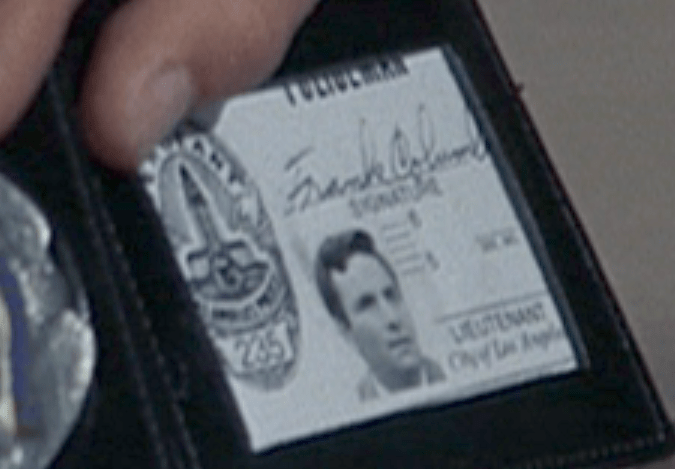
I have been watching all the original “Columbo” episodes, first because they’re still worth watching, second because Grace and I used to watch them when picking something else was too much trouble and we couldn’t agree, third because Spuds likes Columbo’s dog (a Basset Hound), and fourth, because they usually distract me from stuff I don’t want to think about and leave me relaxed for a while, unlike, say, watching the Red Sox. As I finished the seven seasons, I wondered if I had ever heard Peter Falk’s character called anything but “Columbo” or “Lieutenant” on the show. My research revealed that I had not: the character’s creators Richard Levinson and William Link deliberately kept the eccentric sleuth’s first name a secret as one of the show’s quirks, and were adamant: nobody should ever speak his first name.

This raises the question of whether a character who only exists in television episodes where his first name is never mentioned has a first name, but that’s not an ethical question. However, the saga of Columbo’s first name did tick a few ethics boxes.

Continue reading