Wasting A Heart

Heart transplant patient

I don’t have a solution to an ethics fiasco like this or know how it could be avoided, but there have to be some lessons buried here somewhere.

In 2013, 15-year-old Anthony Stokes was denied a place on the waiting list for a life-saving heart transplant  at Children’s Healthcare of Atlanta at Egleston because, the hospital explained, he had “a history of noncompliance, which is one of our center’s contraindications to listing for heart transplant.”

This means that doctors doubted that Anthony would take his medicine or go to follow-up appointments. In other words, he was too unreliable and irresponsible to be entrusted with a heart that could save the life of someone else more likely to make good use of it. When a doctor told the family that Anthony’s low grades and time spent in juvenile detention factored into the assessment, however, that gave the family an opening to save the boy’s life. They played the race card. Anthony was being sentenced to death because he was poor and black, and a white patient would naturally be a better risk. The media ran with the narrative, and there was national outrage. Fearing a public relations disaster, the hospital reversed its decision, and Stokes got his heart.

From the Washington Post today:

Tuesday afternoon, [Anthony] Stokes died after a vehicle he was driving jumped a curb, hit a pedestrian and collided with a pole in a car chase with police, according to WSBTV. The pedestrian was hospitalized for her injuries, but Stokes’s car was nearly split in half by the sign, according to the Atlanta Journal-Constitution.

Police said he had to be cut out of the Honda by first responders and rushed to a hospital where he later died…Stokes was driving a car that matched the description of one used by a person suspected of breaking into an elderly woman’s home. The chase began after officers responding to her 911 call attempted to pull Stokes over, according to WXIA.

Pensive and Rueful Observations: Continue reading
Boycotting Dolce And Gabbana: Gays Becoming What They Once Hated Most

After centuries of oppression, Gays have finally achieved the right to openly be who they are as long as they don't piss of Elton John.

After centuries of oppression, Gays have finally achieved the right to openly be who they are as long as they don’t piss of Elton John.

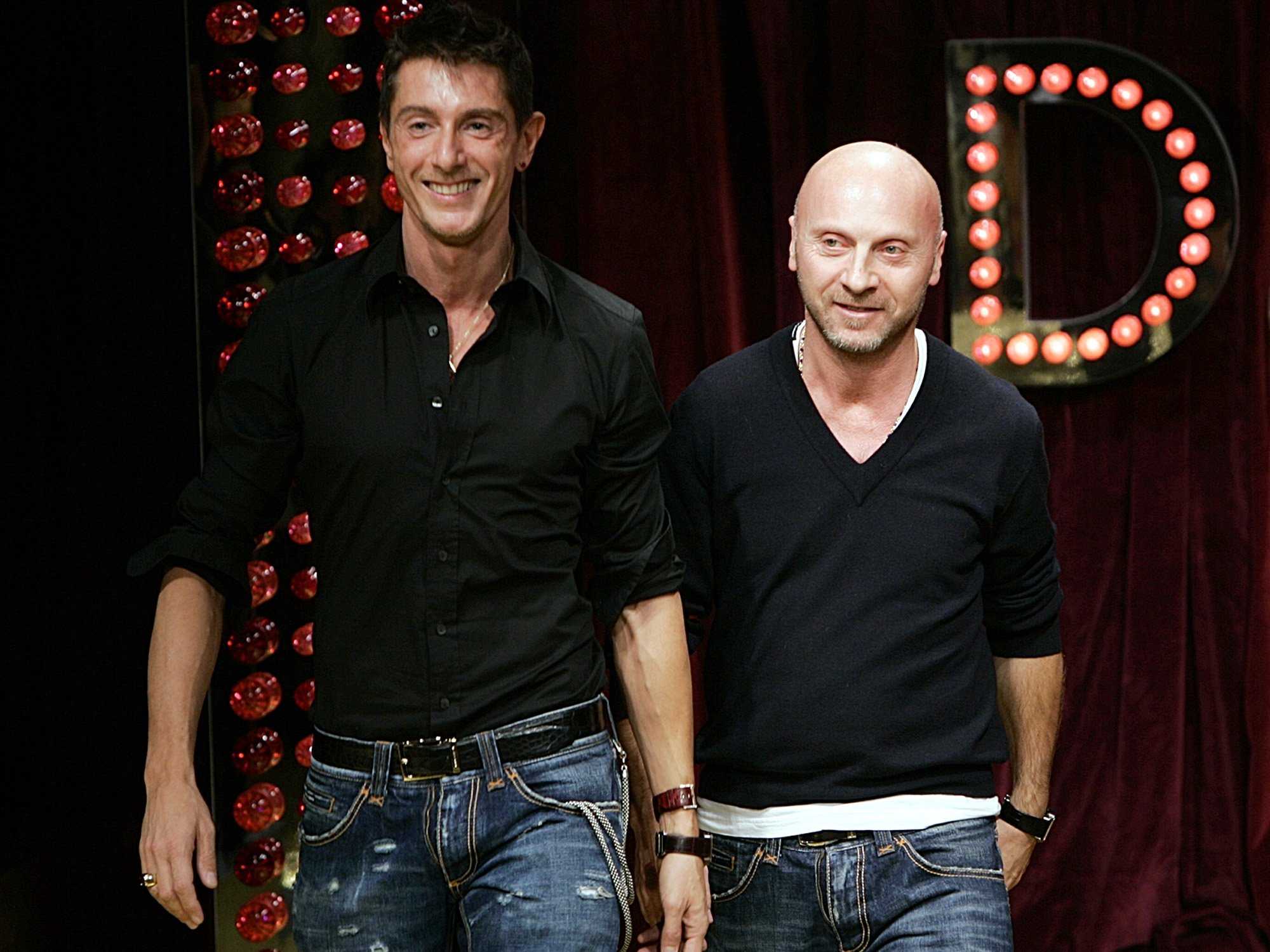
Stefano Gabbana and Domenico Dolce are Italian fashion design superstars, meaning that I pay no attention to them whatsoever, and don’t understand the priorities of anyone who does. Nonetheless, they have a rich and famous international clientele.. The two men were once romantic partners, but no longer; how they are just business and artistic partners, and continue to thrive.

Their thriving, however, has suffered from a self-inflicted setback. In an interview with the Italian magazine Panorama, the pair declared their lack of support for same-sex families with children created by in vitro fertilization.  “I am not convinced by those I call children of chemicals, synthetic children,” Dolce told the magazine. “Rented uterus, semen chosen from a catalog.” Gabbana added, “The family is not a fad. In it there is a supernatural sense of belonging.”

The Horror: a non-conforming opinion from prominent gay fashion icons! Can’t have that! Lapsed pop superstar Elton John, who has two sons through in vitro fertilization with his husband, David Furnish, took the remarks as a personal attack and proclaimed a boycott of the Gabbana & Dolce label. “How dare you refer to my beautiful children as ‘synthetic,’ ” Mr. John wrote on social media. “Shame on you for wagging your judgmental little fingers at I.V.F. Your archaic thinking is out of step with the times, just like your fashions. I shall never wear Dolce & Gabbana ever again.” Thus was born the hashtag #BoycottDolceGabbana.”
Continue reading

No Judgment At Planet Fitness

They mean what they say!

They mean what they say!

In Midland, Michigan, a Planet Fitness gym revoked a woman’s membership because she complained that a man—actually a man who identifies as a woman— was in the woman’s locker room.

Company officials explained that she violated its “no judgment zone” policy. Planet Fitness  policy also states members and guests may use all gym facilities based on their self-reported gender identity.

Fine.

It’s their business, and they can make whatever silly and irresponsible rules they want. If they want to make members dress like chickens, wear noodles on their heads and speak only pig latin, that’s their choice. The establishments Planet Fitness wants to run, apparently, are ones where a woman can go into the ladies locker room and run into some hairy, naked guy with his dong hanging out, and she gets dinged because she objects, not knowing that he is really all girl at his creamy nougat center.

Okaaaaay…. Eventually Planet Fitness will have a membership that is all trans, all blind, or all pathologically politically correct, or perhaps have no establishments at all. When the company says “no judgment,” it really means it, because this shows a ludicrous lack of judgment. But ethical! The policies were all communicated to all members, so the woman violated the “don’t react negatively to the showboating trans individual in the ladies locker room who shows no respect or consideration for others who might not be quite ready for a full frontal” policy, and has no defense, except offensive normalcy.

Clearly “Men” and “Ladies” labels on locker rooms and bathrooms are no longer unambiguous or effective.

What do you think about “Penis” and “No Penis” signs? I think that solves the problem, especially in places where there’s no judgment.


Q: Why Is CNBC Posting Anti-Vaccination Propaganda?

A: Because its staff is lazy, inattentive and irresponsible.

Weston Price (1870-1948), Quack. His work goes on...

Weston Price (1870-1948), Quack. His work goes on…

The cable business news network posted this press release from the natural foods and nutrition huckster group, The Weston A. Price Foundation.

It isn’t news. It is poison.  The press release makes the false claim that vaccinations spread measles, as well as other diseases. This is standard anti-vaxx hysteria, and it gets children killed.  It is false. “Measles live vaccine doesn’t transmit easily at all,” said Dr. Jane Seward of the CDC’s Division of Viral Diseases told NBC, which apparently doesn’t communicate with its subsidiaries. “I don’t think there has ever been a secondary transmission,” she added. “There is no evidence of any transmission of measles virus from a child to household contacts.” As for the Foundation itself:

“The Weston A. Price Foundation is a nonprofit, tax-exempt charity founded in 1999 to disseminate the research of nutrition pioneer Dr. Weston Price, whose studies of isolated nonindustrialized peoples established the parameters of human health and determined the optimum characteristics of human diets. Dr. Price’s research demonstrated that humans achieve perfect physical form and perfect health generation after generation only when they consume nutrient-dense whole foods and the vital fat-soluble activators found exclusively in animal fats….

Yes, it is strange, like Dr. Price’s theories, and not in a benign way. Among the foundation’s other objectives is to show that vaccinations are unnecessary if you eat right, or something: when a  home page prominently displays a link that reads, COD LIVER OIL: Our Most Important Superfood, my eyes tend to gloss over, I file the group under “Nut Balls” and move on.

CNBC posted this promotional piece uncritically and without context, leaving the impression that it was actual news, thus allowing fake news to go to the top of Google searches for gullible readers.  At the bottom of the screen it says “More from CNBC” and not “More from health food hyping anti-science fanatics.Continue reading

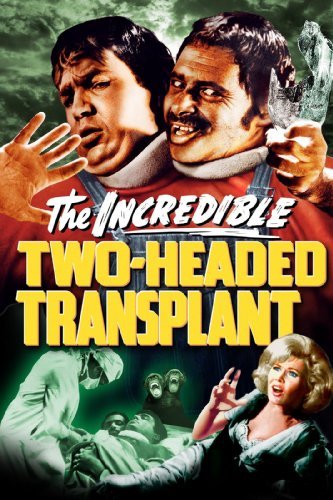
Ick, Not Ethics: The Incredible Head Transplant

OK, this looks unethical...

OK, this looks unethical…

I adore stories that clarify ethical distinctions, and this is the third one we’ve had recently. First we had the classic “Awww! Factor” case of the Down Syndrome cheerleader. Then, close on its heels, we got “Downton Abbey’s” finale, which illustrated the ethics fallacy of Consequentialism as deftly as any textbook.

Now we have the startling report of impending head transplants:

The world’s first attempt to transplant a human head will be launched this year at a surgical conference in the US. The move is a call to arms to get interested parties together to work towards the surgery.

The idea was first proposed in 2013 by Sergio Canavero of the Turin Advanced Neuromodulation Group in Italy. He wants to use the surgery to extend the lives of people whose muscles and nerves have degenerated or whose organs are riddled with cancer. Now he claims the major hurdles, such as fusing the spinal cord and preventing the body’s immune system from rejecting the head, are surmountable, and the surgery could be ready as early as 2017.

Canavero plans to announce the project at the annual conference of the American Academy of Neurological and Orthopaedic Surgeons (AANOS) in Annapolis, Maryland, in June.

Predictably, this news prompted a wave of “Futurama” jokes and bad puns. It also prompted dozens of hysterical stories online and in print pronouncing the yet-to-be performed operation as “a terrible idea” and obviously unethical. A Daily Beast “expert” with the trust-inspiring name “Docbastard” condemned the practice with this wisdom:

That’s the funny thing about ethics—it may be impossible to say why something is wrong, but can be easy to see that it isn’t.

Yeah, that is funny. It is also false, and incredibly stupid. If one cannot say “why” something is wrong–you know, things like interracial marriage, interracial adoption, homosexuality, gay marriage, plastic surgery, income tax, integration, eating meat on a Friday…gee, let’s see how far back into cultural history we need to go to get the list up to a thousand! My guess: no further than 1900, if that far—there’s an excellent chance that it only seems wrong because 1) nobody’s bothered to analyze it thoroughly and objectively, and 2) the Ick Factor, which is when we mistake strangeness, shock and surprise, all visceral, emotional reactions, for ethics.

Let’s actually think about the “Doc’s” provocative questions about the theoretical procedure that he seems to think clinch the argument that head transplants are “easy” to identify as unethical. He writes, Continue reading

Abortion, “The Fly” and the Ethics Incompleteness Theorem

"AWWW! He looks just like his father!"

“AWWW! He looks just like his father!”

The most interesting aspect of ethics is at the margins, those situations where absolutists are challenged to hold to their principles because of unforseen variations that no general analysis could anticipate. The absolute ban on torture as unethical becomes shaky under the “hidden nuclear bomb” scenario.  Capital punishment opponents find that their compassion evaporates when asked whether Hitler or bin Laden deserved execution.

This is the Ethics Incompleteness problem, which I last wrote about at length in March of 2014:

“The human language is not sufficiently precise to define a rule that will achieve its desired effects, that is work, in every instance. There are always anomalies around the periphery of every normative system, no matter how sound or well articulated. If one responds to an anomaly by trying to amend the rule or system to accommodate it, the integrity of the rule or system is disturbed, and perhaps ruined. Yet if one stubbornly applies the rule or system without amendment to the anomaly anyway, one may reach an absurd conclusion or an unjust result. The Ethics Incompleteness Principle suggests that when a system or rule doesn’t seem to work well when applied to an unexpected or unusual situation, the wise response is to temporarily abandon the system or rule and return to basic principles to find the solution. No system or rule is going to work equally well with every possible scenario, which is why committing to a single system is folly, and why it is important to keep basic ethical values in mind in case a pre-determined formula for determining what is right breaks down.”

I was watching the Jeff Goldblum remake of “The Fly” (written and directed by David Cronenberg) last night, and rather than being properly horrified by Geena Davis’s nightmare of giving birth to a yard long fly larva, I found myself wondering how anti-abortion absolutists would handle her unusual dilemma. The film follows the tragedy of scientist Seth Brundle (Goldblum ) who has developed a means of teleportation. The process involves a computer breaking down a body, then transmitting the atoms electronically to a receiving “pod,” and reassembling them there. Unfortunately, when Seth tests the device on himself, an unnoticed fly gets into the sending pod, and the result is a version of Brundle that has fly DNA mixed in. (In the memorably campy Vincent Price original, what arrived in the receiving pod was a man with a giant fly head and a fly with a tiny human head.) Gradually Brundle mutates in form and mind into a monstrous hybrid, but before he knows what has happened to him, he impregnates girl friend Davis. Soon she realizes that something with insect DNA is gestating inside of her, though all tests show a healthy human embryo. Not surprisingly, she wants an abortion.

Would those who argue that abortion is murder maintain that she shouldn’t be able to have one, or that aborting the fetus is wrong? Let’s make the problem harder: let’s say she only learns that she has a fly-baby in the third trimester, when our laws wil not permit abortions unless the mother’s life is in peril. Some questions: Continue reading

Baby-Switching Ethics

The song from H.M.S. Pinafore tells the story amazingly well.

In Johannesburg, South Africa, a horrendous situation resembling the plot-resolving song from “H.M.S. Pinafore” may be reaching an unusual resolution for such cases—a sensible and ethical one. The families never suspected until one of the mothers underwent tests when her ex-husband refused to pay child support. One of the mothers wanted her biological child back, while the other wants to keep the child she had raised. A judge now has to decide.

The court asked the University of Pretoria’s Centre for Child Law to investigate and make a report n what would be in the children’s best interests. The experts’ answer: “The recommendation is that the children should stay with the parents who have raised them and should also be permitted to have contact with their biological parents.”

Exactly. Let’s hope that the court follows the recommendation, the only ethical one. Four years old is too old for this wrong to be set right without making it worse. What about three years old, though? Where do we draw that line? Furthermore, I am assuming that the two families are more or less equally fit, able and qualified to raise children. What if the investigation showed that one family was clearly more advantageous for a child: better educated parents with more resources and experience with children, living in a safer community? Then what would be the calculation of “the right thing”? The benefit of one child would be the detriment of the other, a zero sum game. In such a case, would fairness govern, rather than the best interests of the children? Why should one child be cheated out of the better life awaiting him, because of a nurse’s mistake? Fortunately, we don’t have those details, so we can make a confident abstract ethics judgement without confounding factors and issues. Continue reading

Terry Turnage, Serial Father and Utter Fick

"So? Not my problem."

“So? Not my problem.”

Terry Turnage  has fathered 26 children by 15-20 different women, the precise number being difficult to establish. And that’s not all:  he apparently has failed to pay child support to any of the women who bore his offspring, all while driving expensive cars,  throwing elaborate parties, and spending money on everything but his bastard progeny.

He is a co-owner, with one of his many sons, Terry Jr. (and maybe one of many Terry, Jr’s), of Club Envy, an Arkansas nightclub. Recently Terry Sr. threw a two-day party for his birthday. He threw another party for 700 guests.

Of course, that could just be his relatives.

What does society do with someone like this, so irresponsible and shameless? It you lock them up, they can’t support any of the kids. We can’t castrate him (cruel and unusual, that) and courts can’t order citizens not to procreate, or ensure that they they don’t. That’s Nazi stuff, though the U.S. did a bit of it until relatively recently. Continue reading

Introducing Rationalization #46: Zola’s Rejection, or “Don’t Point Fingers!”

fingers-pointing

J’accuse …!” ( “I accuse…!”) was a famous open letter to French president Félix Faure, published  January 13, 1898 in the newspaper L’Aurore by novelist Émile Zola. It accused the French Government anti-Semitism and a breach of justice in the prosecution and imprisonment of Alfred Dreyfus, a French Army General Staff officer sentenced to lifelong penal servitude for espionage. His well-argued accusation was the epitome of effective finger-pointing, and played a major role in bringing down a corrupt government.

Nonetheless, pointing fingers where they need to be pointed, when they need to be pointed, is inconvenient for the incompetents, miscreants, con artists, spinners and otherwise accountable parties so accused. Thus they and their allies often exploit this peculiar rationalization, which is better described, perhaps, as rationalization fertilizer, since it is a catalyst for the employment of many others, including the Biblical rationalizations. “Don’t point fingers!”, or its common variation, “Stop pointing fingers!” provides protection for the very people who most deserve to be pointed to, allowing them to deny culpability, avoid the just consequences of their failings, and best of all, divert appropriate attention from what they have done or not done to the supposed meanness and vindictiveness of critics who want to make sure the same mistakes don’t occur again, especially with the same officials in charge.

And, ironically, the cry “Don’t point fingers!” is often followed by those who cry it pointing fingers themselves, at others. It has unlocked, in such circumstances, the use of Rationalization #7, The Tit-For-Tat Excuse, which holds that one party’s unethical conduct justifies similar unethical conduct in return. Continue reading

Ethics Observations Regarding The “Little Thing” Letter

Mail call!

Mail call!

Let me begin by stating that I doubt that the now viral “Little Thing” letter is genuine. It may well be bait put on the web (it was first published on Reddit) to trap the worst unethical hypocrites of the pro-abortion movement. If so, it worked, for some pro-choice advocates have received it with deafening, nauseating, self-indicting applause. If, on the other hand, the letter is genuine, it is a chilling confirmation of the ethical gymnastics some abortion apologists put themselves through to rationalize what in their hearts they know to be wrong.

If abortion is ethically tolerable, it cannot involve the willful and unnecessary killing of a human life. Only then is “pro choice” a fair description of the legal and the ethical issues involved: the choice of a woman to end a her pregnancy without ending what she believes to be the life of an innocent child. There are many complex and logically dubious aspects to this. The magic moment, still moving, individually variable and often determined legislatively or judicially with the precision of a coin flip, when “undifferentiated cells” suddenly become a human life worthy of society’s respect and protection, is sometimes defined by the mother’s belief. If she believes she is with child, someone else killing that child may be charged with some form of murder. If she decides that it is no more human than a wart or a tumor, she is given leave by the law to kill it without regret or consequences. This means that it is in the interests of a woman who wishes an active sex life and wants to control the timing of motherhood to fit her life plan to tend toward the wart point of view.There is no integrity to defining a key factor in a life and death decision after we have already decided how we want that decision to come out. It is like the Bush administration, having decided that waterboarding is useful, creating legal arguments asserting that an act that had always been regarded as torture wasn’t torture after all. To  many women on the pro-abortion side, unwanted or inconvenient babies are as much enemies as terrorists were to Dick Cheney. Thus life is defined in such a way as to make their war winnable.

This self-delusion, legal fiction, essential myth or convenient belief—pick your favorite—has obviously been very successful, and many women appear to accept it without thinking very deeply about it. If the option of an abortion makes one’s life infinitely more manageable, why begin questioning the ethics of the procedure, especially since about half the public, most of the media, prestigious organizations, the law, a political party and political correctness tenets tell you not to, that the issues are settled? Nonetheless, some women do question it, and do reach the conclusion that it is not a wart or tumor or enemy within them, but rather an innocent, growing, human life.

If and when a woman reaches that conclusion, as inconvenient as it may, then to go ahead with an abortion is unethical, and is, in fact, the ethical equivalent of murder. It is not the legal equivalent of murder, but when a mother believes that she is, through abortion, taking the life of an unborn child that she regards as an individual, I don’t see how it can be termed anything else.

And that is clearly the state of mind of the anonymous author of this letter, if it is genuine: Continue reading