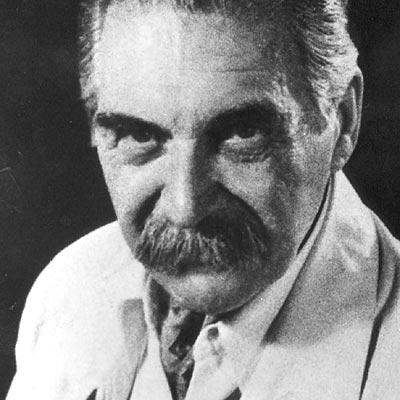
Home-Grown Mengeles, And What We Must Learn From Them

Josef Mengele: researcher, utilitarian, monster

We knew, or should have known, that this extremely ugly shoe was bound to drop eventually.

Last autumn, when the U.S. apologized for federal doctors infecting prisoners and mental patients in Guatemala with syphilis 65 years ago, it put us on notice that a vile and unethical cultural standard had taken hold of the American medical and scientific communities in the 20th century, one that held  it was “right” for the weakest, most powerless and most disposable of human beings to be tricked, coerced or bribed into serving as subjects for experiments that could lead to miraculous cures and treatments for the rest of the population. This–depriving human beings of their rights and lives in the interest of science—is “the ends justify the means” at its worst. But the Guatemala experiments proved that this was once flourishing and respectable in the U.S. scientific and medical research communities, so it would have been surprising if there weren’t more stories of home-grown Mengeles, and sure enough, there were. The U.S. acknowledged as much when it apologized for the Guatemalan tests. Now we have details. Continue reading

The Ethics Final: Ending My Mother’s Life Today

Some of our most important ethical decisions are made with the least analysis. At least that was the way it was for me this morning at 10:34, when my sister and I directed that my 89-year-old mom, Eleanor Coulouris Marshall, be taken off of life support. Continue reading

A Strong Consequentialist Argument for Steve Jobs’ Liver…But Is It Right?

Steve Jobs and friend

Back in June of 2009, when “Ethics Alarms” was but a twinkle in my eye, there was a momentary controversy when ailing Apple CEO Steve Jobs was able to use his enormous wealth to land on multiple regional organ transplant lists, thus vastly improving his chances of getting a precious liver transplant in time to save his life. The California native ultimately got a Tennessee liver, but critics cried ethics foul. The organ transplant distribution system is not supposed to be based on wealth: otherwise, why not just auction off livers to the highest bidders? Because most insurance companies won’t cover multiple listings, only the richest patients can afford to employ this strategy, meaning that a system that is supposed to be means-neutral favors the wealthy after all. Continue reading

Good-bye and Good Riddance to Bush’s Unethical “Conscience Clause”

The Obama Administration has deep-sixed a controversial Bush Administration rule that permitted a wide variety of health care workers to  refuse to administer treatments they found morally repugnant, what the Bush administration termed workers’ “right of conscience.”

Hospitals and clinics faced a loss of federal funds if they failed to uphold the rule, which itself was ethically repugnant. Kudos, thanks and hosannas to President Obama for getting rid of the Federal variety; some states, regrettably, still have them.

The American Medical Association’s position on the matter, embodied in a resolution passed by its membership, is clear and well-reasoned. Its reasoning applies to health care workers though the specific subject of the resolution was pharmacist conscience clauses.

The AMA’s resolution, “Preserving Patients’ Ability To Have Legally Valid Prescriptions Filled,” states: Continue reading

Abortion Ethics: The Delusions of P.Z.Myers

Mere “Ethics Dunce”-dom doesn’t suffice for P.Z. Myers, gonzo biologist and professor who writes the intermittently enlightening, frequently infuriating blog, Pharayngula. Writing about the horrific case of Dr. Kermit Gosnell, an abortionist/quack/butcher whose method would make him a likely model for an episode of “Criminal Minds,” Myers wrote this, referring to the charges against him based on the fact that his version of “abortion” consisted, in at least seven cases, of inducing a live birth and murdering the baby afterwards, with a scissors: Continue reading

Ex-Rep. Steve Driehaus and Sore Loser Ethics

Former U.S. Rep. Steve Driehaus (D-Ohio), who lost his seat last November to Republican Steve Chabot, is suing an anti-abortion group for making statements that he says misled voters about his stance on abortion, leading to his demise at the polls.

In his defamation lawsuit, Driehaus argues that the Susan B. Anthony List lied about him in public statements and then sued him for trying to stop the group from posting misleading billboards, thereby “depriving him of his livelihood.” Driehaus, who campaigned as an anti-abortion candidate, voted for the controversial national health care law, which many anti-abortion activists maintain supports taxpayer-funded abortion. Driehaus argued and still maintains that the claim was false, and that the law bars any federal funding of abortion.

Driehaus’s suit is unethical and  ridiculous. Continue reading

Gov. Haley Barbour Shows How To Make Mercy Unethical

Mississippi Governor Haley Barbour has managed to make a reasonable commutation decision look thoroughly corrupt….which it very well might be. Continue reading

Ethics and Altzheimer’s Testing: An Easy Call

Sometimes I think bioethicists spend too much of their time looking for new ethical dilemmas rather than giving thoughtful guidance on the dilemmas we already have. A recent example: the New York Times wrote about a supposed ethical dilemma appearing in the wake of new tests that reveal the likelihood of whether an individual will get Alzheimer’s at some point in the future. As the article put it:

“Since there is no treatment for Alzheimer’s, is it a good thing to tell people, years earlier, that they have this progressive degenerative brain disease or have a good chance of getting it?…It is a quandary that is emblematic of major changes in the practice of medicine, affecting not just Alzheimer’s patients. Modern medicine has produced new diagnostic tools, from scanners to genetic tests, that can find diseases or predict disease risk decades before people would notice any symptoms. At the same time, many of those diseases have no effective treatments. Does it help to know you are likely to get a disease if there is nothing you can do?”

My question is: “What’s the dilemma?” Continue reading

Unappetizing Spam Of The Day

Ethics Alarms gets about two times as many spam comments as real ones, most of which I can discard without a second’s thought. Occasionally one brings me up short, however, like this one. If it’s not spam, the blog is being followed by some very strange people. The comment was:

“Thanks for the post. I am always looking for ways to improve my gardening and cooking skills. My family loves eating real food.’

The post it was in response to is… “Unavoidable Bias in the Embryonic Stem Cell Research Controversy.”

Yuck.

Note to John Avlon: Having Itegrity Doesn’t Make Someone a Wingnut

John Avlon is a Daily Beast contributer; he also is the author of Wingnuts: How the Lunatic Fringe is Hijacking America. Avlon’s definition of “wingnut” often seems to be a politician who doesn’t agree with John Avlon, but his recent list of 15 wingnuts running for office this November would be hard to quibble with, except that 15 is far from enough in this disturbing election.

One aspect of his list is both telling and unfair, however. The policy position Avlon cites most frequently to “prove” that a particular candidate is a wingnut is the candidate’s opposition to abortion “even in cases of rape or incest.” Whatever that position may be, it is not evidence of wing-nuttiness. Continue reading