From The “Law vs. Ethics” Files: A Westin Hotel Comes To The Nuisance

nookwestin

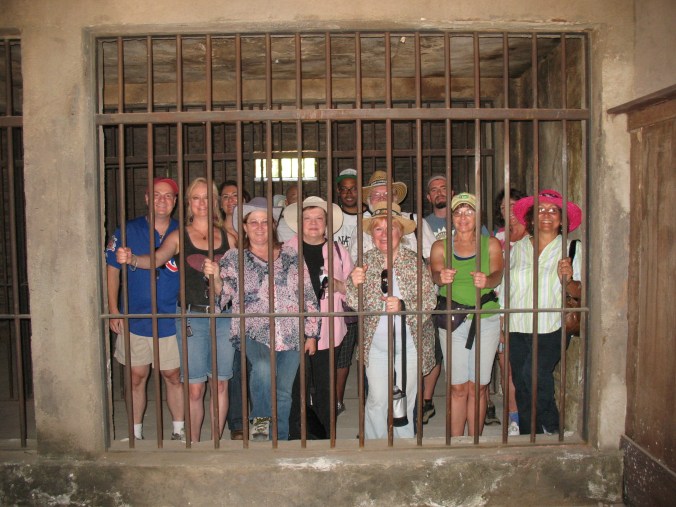
The photo says it all.

In Austin Texas, Westin  opened a large hotel next to the Nook Amphitheater, which is famous venue for live music in a city with a strong music culture  Westin is now suing the Nook because its music is disturbing the guests. The complaint states that the Nook plays “chest thumping bass” seven nights a week until 2 a.m. making some rooms uninhabitable.and thus harming the hotel’s business.

Law professor and invaluable ethics story source Jonathan Turley notes that the case recalls the now defunct “coming to the nuisance” doctrine.  The defendant in such a case once could move to dismiss a nuisance claim on grounds that the plaintiff moved next door only to challenge the activities, business and even the existence of it neighbor in court.  Turley writes,

The doctrine originated in early common law with cases like Rex v. Cross, 172 Eng. Rep. 219 (1826).  The Court held:

“if a certain noxious trade is already established in a place remote from habitations and public roads, and persons afterwards come and build houses within the reach of its noxious effects; or if a public road be made so near to it that the carrying on of the trade becomes a nuisance to the persons using the road; in those cases the party would be entitled to continue his trade, because his trade was legal before the erection of the houses in the one case, and the making of the road in the other.”

American courts found the doctrine to hinder growth and work against the common good, particularly as populations in cities expanded into rural areas.  

But, Turley explains, even in the absence of the “coming to the nuisance” defense, defendants have had some support from the courts: Continue reading

Ethics Dunce: ThinkProgress Editor Adrienne Mahsa Varkiani

A Milo protest at UCLA followed by a bomb threat that shut down his speaking appearance.  You'd think they'd want him to have a book published so they could burn it...

A Milo protest at UCLA followed by a bomb threat that shut down his speaking appearance. I’d think they’d want him to have a book published, so they could burn it…

Adrienne Mahsa Varkiani, an editor at progressive website ThinkProgress, epitomizes a real problem for progressives, and society’s ability to trust them with political power. She, like increasing numbers of others espousing her ideology, believes that citizens expressing opinions she doesn’t agree with should be prevented from doing so.

Her post is titled “We live in a world where white supremacists get lucrative book deals,” and her argument is that the “white supremacist” in question (though he isn’t one), inexplicably popular professional asshole Milo Yiannopoulos, shouldn’t be able to get a book published or be paid for writing it.

Yiannopoulos’s act is that he is forcefully and often obscenely politically incorrect, particularly regarding feminism. If he’s a white supremacist, he’s a very odd one, having a gay partner who is black. Yiannopoulos has been banned from Twitter, which regards his harassment of a black actress ban-worthy but the harassment of white male conservatives just desserts, and he has also sparked several episodes on campus last year where his scheduled speeches were cancelled by cowardly college administrators after students complained that the threat of his likely comments being made to others caused them to feel “unsafe.”

He got a book deal because he is famous in some circles, a culture war combatant, and a sometimes amusingly inflammatory writer. He got a book deal because enough people are likely to buy his book that his publisher expects to make money. He got a book deal because enough people in a free country want to read what he has to say. Varkiani believes this is scandalous, and if she and her fellow censors had their way, he wouldn’t be able to get paid to speak or write. Continue reading

“Is It Possible To Address A Race-Related Problem Without Being Attacked As Racist?” And Other Reflections On The Holiday Mall Brawls

mall-violence

On the City Journal website, Heather Mac Donald of the Manhattan Institute writes in part,

Judging by video evidence, the participants in the violent mall brawls over the Christmas weekend were overwhelmingly black teens, though white teens were also involved. The media have assiduously ignored this fact, of course, as they have for previous violent flash mob episodes. That disproportion has significance for the next administration’s school-discipline policies, however. If Donald Trump wants to make schools safe again, he must rescind the Obama administration’s diktats regarding classroom discipline, which are based on a fantasy version of reality that is having serious real-world consequences.

The Obama Justice and Education Departments have strong-armed schools across the country to all but eliminate the suspension and expulsion of insubordinate students. The reason? Because black students are disciplined at higher rates than whites. According to Washington bureaucrats, such disproportionate suspensions can mean only one thing: teachers and administrators are racist. The Obama administration rejects the proposition that black students are more likely to assault teachers or fight with other students in class. The so-called “school to prison” pipeline is a function of bias, not of behavior, they say.

This week’s mall violence, which injured several police and security officers, is just the latest piece of evidence for how counterfactual that credo is.  A routine complaint in police-community meetings in minority areas is that large groups of teens are fighting on corners…The idea that such street behavior does not have a classroom counterpart is ludicrous. Black males between the ages of 14 and 17 commit homicide at ten times the rate of white and Hispanic males of the same age. The lack of socialization that produces such a vast disparity in murder rates, as well as less lethal street violence, inevitably will show up in classroom behavior….School officials in urban areas across the country set up security corridors manned by police officers at school dismissal times to avoid gang shootings. And yet, the Obama administration would have us believe that in the classroom, black students are no more likely to disrupt order than white students.

The entire essay is here.

Observations: Continue reading

UPDATE: Cyber-Zombie Peter Cushing And The Prospect Of Cyber-Zombie Carrie Fisher Remind Actors To Fight For Control Of Their Post-Mortem Acting Career

cgi

It looks like I wasn’t the only one who felt that Peter Cushing was being abused by finding himself in “Rogue One” without his prior consent. Of the late actor being digitally inserted into a role he never agreed to play and deliver lines he never contracted to deliver, I wrote…

The emerging technology raises many ethical issues that didn’t have to be considered before, but when it comes to using a dead actor in a new role, the ethics verdict should be easy. It’s unethical, unless a performer  gives informed consent for his image to be used post mortem in this fashion. Presumably, the consent or the lack of it will be part of future negotiations and standard contracts. Actors who agree to have their images used as cyberslaves will also probably want to limit the uses of their names and images.

Cushing’s exploitation and the subsequent death of Carrie Fisher with widespread speculation that she would soon be added to the “Star Wars” franchise’s army of CGI clones have now sounded the alarm loudly. But apparently many actors were already aware of the threat, and taking affirmative action to control their destinies. Continue reading

The Ethical Problem With The Cinnebon Tweet

cinnebon-fisher

First I was going to post an essay about Cinnebon’s humorous tweet above under the title “How Humor Dies.” Our culture is in serious trouble if a clever, playful, obvious joke like this attracts so much criticism that it generates a retraction and an apology.Clearly, there are Political Correctness Furies on the Left and  Puritan Scolds on the Right lurking and  lying in wait to make any attempt at levity too much of a risk for all but the socially inept or defiantly rude to attempt. I confess, I laughed out loud when I saw Cinnebon’s gag. I thought the company deserved applause, not opprobrium.

Then I thought about it, and decided to make the episode an Ethics Alarms ethics quiz. Does the fact that Cinnebon can be accused of using Carrie Fisher’s tragic death as product promotion outweigh the cleverness of the tweet, or was the joke a natural one for the sticky bun-makers to make? Who better to remind us of all the jokes about Leia’s odd hairstyle when “Star Wars” debuted? Maybe this was one example where the “she would have approved” standard might be more than a rationalization. Is there any doubt that Carrie Fisher would have laughed at Cinnebon’s joke more heartily than anyone?

Fortunately, I thought some more.

I hadn’t realized until just a few minutes ago that the tweet was issued on the day Carrie Fisher died.  Ick, and also, yecchh, as well as “Ethics Foul!”

It doesn’t matter how clever, well-executed or funny it was. Krusty the Clown could have told Cinnebon what was wrong with the tweet in a trice, if they had the sense to ask, and Krusty wasn’t a cartoon character.

Too soon.

When Debbie Reynolds Took A Stand

Some readers were offended that I noted in a comment here that Debbie Reynolds characteristically upstaged her daughter by dying a day after Carrie Fisher, again stealing the spotlight from her daughter. Sorry about that—but it’s true. For most of her life, Reynolds was less than comfortable when she didn’t feel an audience watching her, as Fisher herself complained in her semi-autobiographical novel, “Postcards from the Edge.” Debbie Reynolds shared the life-defining neurosis of many performers: she was happiest when she was being herself for the world to see. Debbie, in fact, was an extreme version of this model. Most such performers are miserable, and recognizably so, when they aren’t performing. Reynolds appeared not to acknowledge that there was a world off-screen.

In “The Unsinkable Debbie Reynolds,” an excellent appreciation of her career today in the New York Times (another good one is this, in “Variety,”and the Times obituary is here.), Anita Gates confirms my assessment. It was hardly a difficult one, for Reynolds radiated her love of performing in everything she did. Here are some excerpts (do read the whole essay), as Gates begins by doubting that we will ever see a show business figure like Debbie Reynolds again in our increasingly cynical culture:

“Who’ll be as plucky? Who’ll work as hard to stay as morally pure? Who the hell is gonna be named Debbie? …We’ve all been happy to be at the movies. She always seemed happy to be in the movies. She never ceased to be thrilled to be herself. Ms. Reynolds, who died Wednesday, didn’t so much act as sell — she sold happiness, she sold pragmatic romance, she sold professional stardom…Ms. Reynolds was, as they say, a trouper. So she did what came naturally to her: She trouped… Ms. Reynolds embraced virtue. She was the least ostensibly neurotic of her peers — a class that included Shirley MacLaine and Doris Day. The movie titles got a lot of that anti-anxious decency across. She played “The Singing Nun,” for heaven’s sake. But she also starred in the 1964 musical “The Unsinkable Molly Brown,” a title whose adjective best explains the full Debbie Reynolds experience: maximum buoyancy…”

When a time came to take a public stand on principle, however, Debbie Reynolds proved that she had her priorities straight. Continue reading

George Michael’s “Trunk”

trunk

Performers are dropping dead left and right, and people are trying to find ways to keep their talents and names profitable without their consent so quickly that it’s hard to keep up. I just read that a CGI version of Debbie Reynolds will star in a sequel to “Singin’ in the Rain.”

Kidding!

So far, at least.

Pop singer George Michael died on Christmas day, and already there is a controversy over his unpublished songs, what Irving Berlin and his generation referred to as a songwriters’ “trunk.” The “trunk” was where composition deemed unfinished, unsatisfactory or just not quite right were stored, perhaps for future commercial use, perhaps for oblivion.

Fadi Fawaz, Michael’s partner, posted online a song from Michael’s unreleased and unfinished album “Trojan Souls.” The song, called “This Kind of Love,”includes the lyrics: “This empty house seems to get colder and colder. So won’t you stay here with me?”

Michael’s  fans immediately clamored for the song to get an official release, calling for it to be properly edited to share with the world in George’s  memory. Michael’s Wham! collaborator Andrew Ridgeley has disagreed strenuously.  In response to one fan who suggested that a previously-unheard track should be released to raise money for Michael’s preferred charities, Ridgeley tweeted:

“No, #GM [George Michael] controlled all his output. I, nor anyone else have the right to transgress that principle.”

The singer’s representatives have not confirmed plans for any future releases, but don’t be surprised if they do: now that he is dead,  Michael’s music is hot and flying up the charts. We can expect that the same rationalization regarding Michael we have heard regarding the “Star Wars” franchise using Peter Cushing’s cyber-zombie to reprise his original role despite the fact that he is long dead and never anticipated having post-mortem, computer controlled performances attributed to him: “I’m sure he would have wanted it this way,” or in the case of Cushing’s  heirs, “We’re sure he would want us to make money off of him.”

Maybe, maybe not. In the case of performances and songs an artist chose not to reveal to the public while he was alive, the ethical course is to presume he did so for a reason, and whatever that reason was, it should be respected now.  Andrew Ridgeley is right.

Keep that trunk closed.


Ethics Quiz: The Truth About Snopes

"So what? What matters is the quality of work we do, not how we do it!"

“So what? What matters is the quality of work we do, not how we do it!”

Ethics Alarms had already declared the fact-checking website Snopes.com untrustworthy,  based on a series of partisan posts that intentionally muddied the factual waters rather than purifying them, when Facebook named it as one of its select gate-keepers to protect its readers from “fake news.” This was not wise,  since a fact-checker who slants the facts is as useful as an accounting firm that will cook the books for a price. I laid out a series of conditions before I would ever use the service again, and so should Facebook. My non-negotiable demands before I would visit the site, reference it positively, or use it as authority were:

  • Getting out of the political fact-checking business.
  • Firing researchers who have been conclusively shown to engage in biased and shoddy research
  • Confessing its betrayal of trust and capitulation to partisan bias, apologizing, and taking remedial measures.

However, there is more to consider. In an exclusive report so lurid that I assume it is credible only because publishing it without iron-clad verification would be asking for a lawsuit and worse, the Daily Mail has just revealed that…

  • When Snopes  was founded by spouses Barbara and David Mikkelson, they used a letterhead claiming they were a non-existent society to give credibility to their research.
  • The couple is divorced, and Barbara claimed in legal documents that David embezzled $98,000 of company money to spend on “himself and prostitutes.”
  • Now operating Snopes himself, David Mikkelson’s new wife Elyssa Young is employed by the website as “an administrator.” Before that, she  worked as an escort and porn actress.
  • She also ran  for Congress in 2004 as a Libertarian on a ‘Re-Defeat Bush’ platform
  • Kim LaCapria, one of the site’s  main researchers and the author of the baised and misleading “fact-check” on Hillary Clinton’s representation of a child rapist, previously had a blog called “ViceVixen.”

The article also includes this:

David Mikkelson told the Dailymail.com that Snopes does not have a “standardized procedure” for fact-checking “since the nature of this material can vary widely.’” He said the process “involves multiple stages of editorial oversight, so no output is the result of a single person’s discretion.” He also said the company has no set requirements for fact-checkers because the variety of the work “would be difficult to encompass in any single blanket set of standards. Accordingly, our editorial staff is drawn from diverse backgrounds; some of them have degrees and/or professional experience in journalism, and some of them don’t.”

Your Ethics Alarms Ethics Quiz of the Day:

Should any or all of the items in the Daily Mail story, it it is accurately reported, disqualify Snopes from being trusted by Facebook, its readers, or anyone else?

Continue reading

Ethics Observations On The Trump Sons’ Influence Peddling Story

161220181600-opening-day-fundraiser-780x439

To catch you up: Celebrity gossip website TMZ  hyped the launch of new Texas nonprofit led by Donald Trump’s adult sons Donald Jr. and Eric based on what it called a “draft” of a soon to be released event brochure. The non-profit was offering, we were told, access to the new President during inauguration weekend  in exchange for million-dollar donations to unnamed “conservation” charities.  Prospective million-dollar donors to the “Opening Day 2017” event on  January 21, the day after inauguration, were to receive a “private reception and photo opportunity for 16 guests with President Donald J. Trump,” a “multi-day hunting and/or fishing excursion for 4 guests with Donald Trump, Jr. and/or Eric Trump, and team, ”as well as tickets to other events” and “autographed guitars by an Opening Day 2017 performer.”

The Center for Public Integrity was on this like a shot…and so was the news media. I received a link in an e-mail from someone who archly noted that “You seem to be interested in influence peddling,” a reference to my many posts about the real purpose behind the Clinton Foundation, “so perhaps you will find this of interest [Unsaid but understood: “…you Donald Trump enabling, racist, fascist bastard!”] In the link, TIME took the hand-off from the Center, and got a series of quotes from critics, like Larry Noble, the general counsel of the Campaign Legal Center, a nonpartisan campaign reform organization.“This is problematic on so many levels,” Larry said.  “This is Donald Trump and the Trump family using a brand new organization to raise $1 million contributions for a vague goal of giving money to conservation charities, which seems a way of basically just selling influence and selling the ability to meet with the president.”

Noble cautioned that the details of the event and its association with the new nonprofit listing the Trump brothers as directors were still unclear. “It’s really hard to identify all the problems when they’re so vague,” he said.

True. As of today, Donald Trump Jr. and Eric Trump are no longer listed as directors of a that non-profit. Papers removing their names from the Opening Day were processed by the state of Texas,  a spokeswoman for the Texas secretary of state told CNN Money.

Never mind!

Observations: Continue reading

Yes, Poker Champ Phil Ivey Cheated, Even If He Didn’t Think He Did

baccarat2

Phil Ivey is known as one of the best all-around professional card players in the world, in part because he notices things that other players, even great ones, may not. While playing baccarat at the Borgata Casino in Atlantic City in 2012, Ivey and a friend noticed  inconsistencies on the back of the cards that allowed him to read some of them as if they were marked. He even asked the dealer to position the cards so he could see them better, as in “see what nobody else noticed, giving him an unfair advantage.” Some advantage: he and his associate, Cheng Yin Sun, won $9.6 million at baccarat over four visits to the casino, then won an additional $504,000 betting their winning at the  craps table.

A federal judge has now ruled that the two must repay the $10 million. What they did is called “edge-sorting,” and it is considered cheating, though technically the ruling was that Ivey and Sun breached their contract with the casino.

In baccarat, players bet on the relative value of two hands of two cards each before the hands are dealt or the cards are revealed. The game is  played with six or eight decks of cards placed into a dealing “shoe,” and the object is to bet on the hand that will have a total value closest to nine. If a player knows the value of the first card in the shoe before it’s dealt, the player has a significant advantage over the house. Borgata accused Ivey and Sun of exploiting defects in playing cards manufactured by Gemaco Inc. that were not cut symmetrically during the manufacturing process, so Ivey and Sun were able to spot the manufacturing defects and  read the “marked”  cards without actually touching or defacing them themselves. The New Jersey Casino Controls Act requires that all casino games offer “fair odds to both sides.”  Without intending to or knowing, the casino was creating unfair odds against itself, and these two players made out like bandits as a result.

Ivey’s lawyer argued in a court filing that since his client never touched the cards, his advantage was like the casino trying to distract players with “free alcohol served by only the most curvaceous and voluptuous females in the industry.” Continue reading