On Lady Gaga’s Frenchies: Not Surprisingly, Criminals Don’t Comprehend “The Unclean Hands Doctrine” [Corrected]

[In the original version of this post I confused readers by forgetting to erase pieces of the source article that I had pasted to the draft to save me the time of jumping back and forth between screens. My fault. Then I compounded the problem by leaving out the link. Fixed. It was all my fault; can’t blame WordPress this time.]

What a moron.

But then if criminals were smart, we’d be in even more trouble than we are…

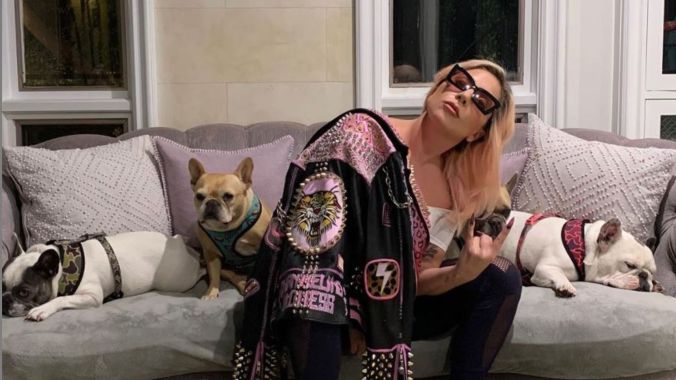
Lady Gaga promised to pay a $500,0000 reward for the return of her two kidnapped French Bulldogs Gustav and Koji (two of the three above: sorry, I don’t know which). The pop icon’s dogwalker was shot and injured during the theft. Emulating the plot twist in the Mel Gibson thriller “Ransom,” however, one of the participants in the kidnapping scheme decided to collect the reward, arguing that because Gaga had said she would pay for the dogs’ return “no questions asked,” she was obligated even to pay someone who was involved in the crime.

Seeking the outlandish reward, Jennifer McBride was arrested when she turned in the dogs at a police station. She pleaded no contest to knowingly receiving stolen property and was sentenced to probation. I suppose the scheme was to have her collect the reward and split it with the dognappers.

After Lady Gaga warbled, “You’ve got to be kidding!’ when McBride asked for the money, McBride sued her for breach of contract.

Uh, no.

In rejecting the claim, Judge Hollie J. Fujie of Los Angeles Superior Court cited the ancient “unclean hands doctrine,” which holds that a litigant cannot benefit from a situation he or she deliberately helped to bring about by illegal or unethical conduct.

“The unclean hands doctrine demands that a plaintiff act fairly in the matter for which he seeks a remedy,” Fujie wrote, adding that the UHD “is an equitable rationale for refusing a plaintiff relief where principles of fairness dictate that the plaintiff should not recover, regardless of the merits of their claim.”
Continue reading

Ethics Verdict: Disney Is Officially Incompetent

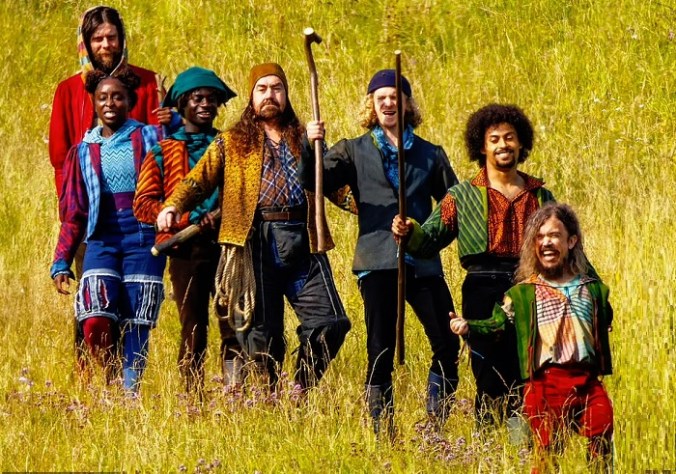
Yes, those are “the Seven Dwarfs” of “Snow White and” fame, according to our national steward of childhood fantasy and iconic fables, the Disney Corporation. That photo is smoking gun evidence of insanity, a production shot from the upcoming live action version of the 1937 movie that made Walt Disney’s artistic vision a cultural force, now retitled “Snow White.” Of course Snow White is going to be Snow Of Color, as the actress playing the German fairy tale princess is Latina Rachel Zegler, who has already embraced the company’s current “screw tradition, common sense and legacy” attitude by tweeting, “Yes I am Snow White; no, I am not bleaching my skin for the role.”

You do recall why Snow White was called Snow White, right?

Continue reading

Of Local Radio, Law vs. Ethics, Ruthless Capitalism And “It Is What It Is”: The WOAS Saga

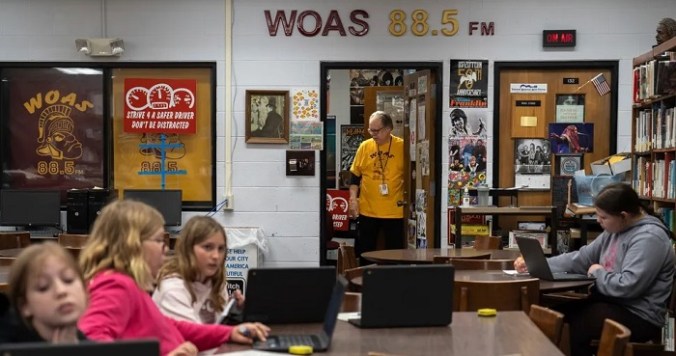
WOAS 88.5-FM is a high school radio station, one of only 200 remaining in the U.S., that has been broadcasting from the Ontonagon High School building in Michigan since 1978. It has only10 watts of broadcasting power, but is still one of only two radio stations in Ontonagon, on Michigan’s western Upper Peninsula. Not only does it provide some listening variety for the town, it also is a valuable educational and recreational vehicle for high school students. Two snack vending machines inside the school largely cover WOAS’s costs, and everyone is a volunteer. After school hours, members of the community volunteer their time as disc jockeys.

WOAS is a Class D station, the lowest FCC classification, covering low-power, noncommercial radio stations. These are considered too weak and disposable to warrant regulatory protection, so when unprotected” from other broadcasters, which can legally overpower its signal or simply apply to take over the station’s place on the dial. WHWL 95.7-FM, with10,000 times the broadcasting power of the school station, applied to the FCC to take over its frequency and place on the radio dial. The FCC said, “Sure! Go ahead!” granting a license for a new station on 88.5 FM, where WOAS lives. The high school radio station now has to find itself a frequency, which costs money, or go gently into that good night.

When the high school asked the radio giant why it chose its place on the radio dial to invade, the answer was classic Bill Clinton: it did it because it could. The big station said it needs to expand and FCC rules allow them to just take over. A consultant looked at available frequencies available to WHWL to add stations, and it deemed 88.5 FM “the best.”

The fact that a high school was currently operating from there was not, apparently, part of the equation, or considered at all.

Continue reading

In Which Your Host Loses His Oldest CLE Organization Client For Telling The Truth

I and my ethics training company just got cancelled by the Continuing Legal Education organization that was my very first client when we started ProEthics over 20 years ago. Our seminars have always received top evaluations from lawyer attendees; nos small achievement in the legal ethics field. They also have made our long-time partners a lot of money. We had never needed to re-negotiate our arrangement, and my state tour with a new legal ethics program was a yearly occurrence every fall. This year, however, we had heard nothing about future dates or requests for possible program ideas (I have introduced most of my musical legal ethics seminars with Mike Messer with this group), and it was getting a little late. Grace sent an inquiry to the long-time contact who has handled our programs, and got back a stunning, “We have decided not to use you this year” letter. One shocking realization was that it was clear from the letter that the decision had been made long ago. After two decades, the organization did not have the courtesy to let us know about their decision, or to discuss their concerns with me before making it.

Even more shocking was the reason given for our dismissal. Last year, as I faced very small in-person groups with most of the attendees watching via Zoom, I made a point of thanking and congratulating those who made the effort to come in person, and urging those who had not to remember that remote training is not as effective as in-person training, and that ethics in particular was a topic in which interaction and engagement were crucial, features that are difficult to impossible using Zoom. This, we were told in the letter, did “not respect those who work diligently within our own Distance Education Department to provide remote options for attorneys.”

I did not denigrate the staff at all; I didn’t even know the organization had a Distance Education Department. What my comments did do, and appropriately so, was to alert lawyers to something they need to know. CLE isn’t just for getting mandatory credits. It is supposed to make lawyers better. Most data indicates that remote training with Zoom or similar methods don’t do the job: they are convenient, and lawyers like them because they can rack up billable hours and write emails while turning off their video and pretending to pay attention. But just as with children whose learning crashed with the substitution of distance learning for live instruction, lawyers are cheating themselves, their clients and the profession by undergoing CLE Lite when they should be challenged in a classroom.

Continue reading

Comment Of The Day: “Flagrant Virtue-Signaling Of The Century: Ben & Jerry’s”

There are more than the usual reasons to publish JutGory’s overview of the absurdity riddling Ben & Jerry’s fatuous July 4th Tweet exhorting the U.S. to “return” “stolen indigenous land” to the Native American tribes. The most unusual one is that WordPress has temporarily (I hope!) lost its damn mind, and has replaced all commenter names on the recent posts with the Borg-like “[1].” As a result, readers are unable to tell who wrote Jut’s comment, for which we should all be grateful.

The main one is that the oft-heard demand that the United States should return the nation to “the Indians” is historically, legally, ethically and realistically batty and ignorant, and drives me nuts every time I hear or read it. Jut concisely explains why it’s nuts historically and legally. He does not go into the aspect of the matter than is usually ignored by shallow thinkers like whoever wrote the Ben & Jerry tweet, which is that if the U.S. hadn’t been in possession of its current mainland North American territory in the 1940s, Nazi Germany would have overrun it and probably the world, and reduced the happy, innocent hunter-gatherers there to either slaves or ashes. Tragic as the current status of the tribes is today, it is a lot better than that. Similarly Hawaii, where there is no question that the residents were robbed of their islands, would have been conquered by the Japanese. If Secretary Seward had not bought Alaska from the Russians, all of us, including the Native Americans, might have been blasted into the Stone Age (where, admittedly, the tribes would have been more confortable than the Europeans) by the Soviets.

I am not exactly saying that Native Americans should be grateful they were over-run, but rather that, as JutGory correctly points out, you can’t turn back the clock.

Here is [1]’s…sorry, JutGory’s Comment of the Day on the post, “Flagrant Virtue-Signaling Of The Century: Ben & Jerry’s”:

***

Just another example of Twitter’s inability to facilitate an exploration of subtle thoughts.

Does the US exist on “stolen land”?

Sort of.

Apparently, Manhattan was purchased from indigenous people, just not the ones who “owned” the land. That would make the US a good faith purchaser for value.

But, really, that was a fraud perpetrated on the Dutch, or maybe the English. But, we got it from England fair and square in the Treaty of Paris. All of the original states were stolen from England.

We bought the Louisiana Territory from Napoleon. That was another big portion of the US.

And, the Mexican-American War, contrived as it may have been, was settled legally.

Then, there was Texas.

A huge portion of the US was obtained legally from other thieves.

Continue reading

From The Ethics Alarms Mail Bag: The Case Of The Abandoned Beanie Babies

Now and then people contact EA privately for some ethics guidance, which I usually supply free of charge. Yesterday an inquirer spun this tale:

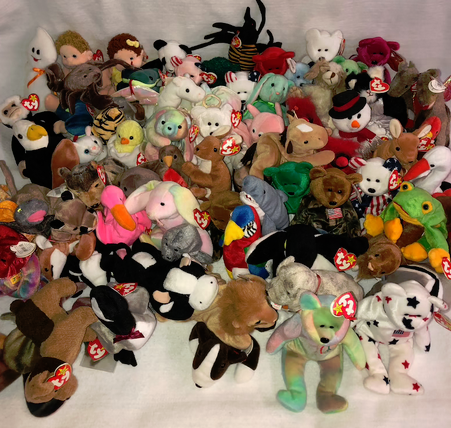
Her neighbor decided to clean house, and get rid of all of her now grown and out children’s abandoned toys. Among these were dozens and dozens of Beanie Babies, the toy fad of the Nineties. My inquirer said that neighborhood parents and pre-schoolers were just scooping the things up, and so she asked her neighbor if she could have three, two for her granddaughter, now 4, and one for as a future stocking-stuffer. Receiving a positive response, she chose three that she thought a little girl would like.

She swears it didn’t occur to her at the time that Beanie Babies are collectibles, but when she got home, she was moved to investigate. She was shocked at what some of the old stuffed animals are worth, and was particularly shocked to see that one of the BB’s she had chosen at random and that appeared to be in mint condition is considered rare and valued at $70,000. Her question: what is the ethical course to pursue at this point?

Continue reading

Pro Sports’ Stunning Hypocrisy On Gambling

From ESPN:

“Isaiah Rodgers and Rashod Berry of the Indianapolis Colts and free agent Demetrius Taylor were suspended indefinitely — through at least the 2023 season — for betting on NFL games last season. In addition, Tennessee Titans offensive tackle Nicholas Petit-Frere was suspended six games for betting on other sports at the workplace. The four suspensions were announced Thursday by the NFL. The Colts subsequently announced that both Rodgers and Berry have been waived as a consequence of their suspensions. “The integrity of the game is of the utmost importance,” general manager Chris Ballard said in a statement. “As an organization we will continue to educate our players, coaches, and staff on the policies in place and the significant consequences that may occur with violations.”

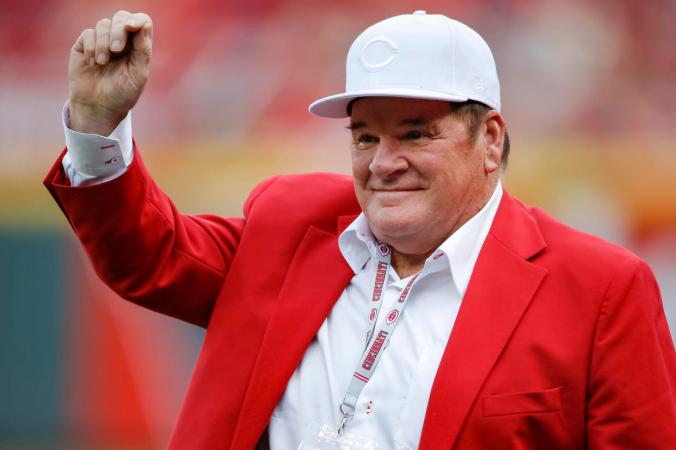
Meanwhile, while watching the Boston Red Sox play the Toronto Blue Jays yesterday, I noticed that about 75% of the commercials were promoting on-line betting on baseball games, including that baseball game. At one point the Red Sox play-by-play announcer read the over-under odds on the game’s total runs and other odds. Several of the gambling ads featured David Ortiz, the Red Sox icon who is about to be inducted into the Hall of Fame.

Continue reading

The Merchant Checkout Scam

Well, I feel like an idiot.

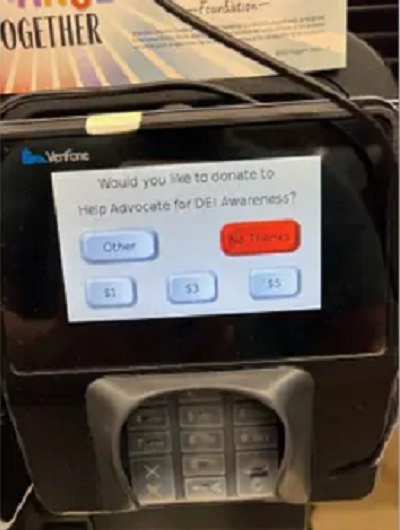
PetsMart asks me to contribute a few bucks to dog rescue organizations when I check out. Oh sure, why not? 7-11 has a jar where you can drop change to help Jerry’s Kids, or what ever that organization goes by these days. Hell, I’ll throw in some coins, at least when the jar hasn’t been stolen. These “oh, by the way, as long as you’re here” fundraising asks are so common—“Would you like to ’round up’ today, sir?”—and routine that I usually accede to them, and most of the time, don’t really know what I have contributed to.

That ends now.

Haggen, with 2,200 stores in 34 states and one of the grocery store chains owned by Albertsons Companies, including Safeway, Shaw’s, Vons, and Randalls, asks customers during checkout to donate to a pool of organizations promoting “diversity, equity, and inclusion initiatives.” How many customers know what they are supporting? How many think DEI is just the acronym for the latest dread disease, like “COPD”? How many think about what they are giving money to when they are solicited in the middle of a basic transaction that one is seeking to complete as quickly as possible?

Continue reading

Ethics Quote Of The Month: John W. Jenkins

“The University defends the truth,” says the Harvard logo. ‘The emblem shows respect for science, using only verified facts within the University’s walls and a willingness to defend the truth.’ Yet as it relates to climate change, the University has set aside obvious truths and brought together its five professional schools supporting the new “Save the Planet” religious dogma of the past decade.”

—Harvard M.B.A John W. Jenkins, in a letter to the alumni magazine protesting the University’s complicity in promoting “imprudent policies perpetuated on our populations by Green environmental activists whose view of history is only 20 years deep.”

Jenkins, whom I have thus far not succeeded in contacting, has authored one of the clearest and most persuasive debunking of current climatic change cant, and perfectly chastised our mutual alma mater, Harvard, for its cowardly and irresponsible alliance with an unethical and destructive movement. The author appears to be in his late eighties, and more skilled in communication than graduates half, indeed a quarter his age.

Harvard Magazine published his letter, but I am trying hard to believe it was a coincidence that its second half was difficult to locate due to a pagination error. I hope Mr. Jenkins does not mind Ethics Alarms re-publishing his entire statement. It deserves to be seen by as many people as possible. The whole thing is an Ethics Quote of the Month. Here it is:

Continue reading

“From The Res Ipsa Loquitur Files: Bud Light’s Bias Makes It Too Stupid To Sell Beer,” Addenda!

My frustrated high school Latin teacher Miss Rounds, who once told me I was the most infuriating student she ever had, would have been amazed to see me include four Latin words in a headline, but that’s not an explanation for the “addenda.” These are:

1. A bit after I posted the previous commentary, I came across this news from earlier in the week. Even though its marketing wizardry had driven off 26% of its marketing base and cost Bud Light its long-held perch as America’s favorite beer, the brand’s owner, Anheuser-Busch InBev was honored this week at the Cannes Lions International Festival of Creativity, the so-called Oscars of the ad industry, with one of the event’s highest honors: Creative Marketer of the Year for the second anum running. (That’s five, Miss Rounds!) AB InBev’s global chief marketing officer, Marcel Marcondes, was also given Cannes Lions’ main stage to present the event’s opening seminar, described in programming notes as an examination of AB InBev’s “relentless focus on connecting with consumers in meaningful ways.”

You can’t make this stuff up. The awards body, which is owned by London-based Ascential Events, announced AB InBev’s win for brilliant marketing in March, before the Dylan Mulvaney disaster struck. Leila Fataar, founder of cultural and marketing strategy firm Platform13 opined, among others, that “In the spirit of fairness and credibility, I think it would be a big and the right gesture for AB InBev to give the 2023 award back, make the changes necessary and come back even stronger.”

You know, like with the creative wizardry of the newly unveiled “Bud Light drinkers are fat, slovenly, clumsy white yahoos who are simply hilarious!” video.

The WSJ story further explicated the reason for my post, which was not to keep flogging Bud Light for associating its brand with the trans madness. I intended to point out that this was more evidence of how the Woke Virus has crippled the professions, if one considers marketing a profession (marketers clearly do) or, if you don’t, the creative trades as well. All marketers and ad mavens have to do is understand human nature, yet class, ideology, arrogance, insularity, stereotyping and bias have apparently blocked them from what psychologists, experience and common sense had taught the industry for decades.

Even when they have been proven spectacularly, disastrously wrong, today’s marketing “experts'” reaction—Just like the lawyers, doctors, public health officials, educators and journalists—is still ‘we’re the smart and virtuous ones, and those others—the deplorables— are too primitive to understand.’

Continue reading