Encore: “Regarding ‘Athlete A’….”

[I watched “Athlete A,” the infuriating Netflix documentary for the second time, and completely forgot that I had written about it here when it first came out. (I’m sure glad I checked.) It is gratifying, I guess that most of what I was prepared to write today was what I wrote in 2020. I was not, however, emphatic enough about the implications of the multi-level failures of ethics decency, responsibility and accountability that allowed this disaster to occur. For in addition to Larry Nassar, the sick, manipulative doctor who used his position to sexually molest hundreds of young girls for more than 20 years, this mass crime was inflicted by stunning corruption and cruelty by key officials in the U.S. Olympic Committee, gymnastic coaches, Michigan State officials (where Nassar worked when he wasn’t sexual assaulting female gymnasts) and—is this even shocking any more?—the FBI. Then there are the parents of the gymnasts, who shipped their daughters off to be cared for by strangers who often abused them.

I suppose this story bothered me more this week than it did in 2020 because we have finally learned the truth about the Russian collusion hoax, the multi-level failure of integrity and trust that marred the 2020 election, and the horrific betrayal by so many institutions that inflicted the pandemic lockdown on us with the incursion on basic liberties that it involved, the discovery that schools are secretly pushing their students into life-altering gender confusion, while Big Tech and social media platforms conspire with the government to censor speech. I confess that I am less inclined to look at the Larry Nassar scandal as an anomaly today than three years ago. Now I am thinking: if we can’t trust our institutions to have sufficient ethics alarms that their leaders and key personnel choose the health and welfare of young girls over power, profit and selfish personal agendas, how can we trust them at all?]

Athlete A,” the Netflix documentary that tells the awful story of USA Gymnastics doctor Larry Nassar’s decades of sexually abusing young female gymnasts—perhaps as many as 500 of them—, how he was allowed to continue his crimes after complaints from parents and others, and the young women who finally sent him to prison with their testimony, is both disturbing and depressing. I watched it last night with my wife, who was horrified that she didn’t know the Nassar story.

Ethics Alarms wasn’t as much help as it should have been. Its first full post about the scandal was this one, which, in grand Ethics Alarms tradition, slammed the ethics of the judge who sentenced Nassar to 60 years in prison, essentially a “Stop making me defend Dr. Nassar!” post. I’ll stand by that post forever, but it didn’t help readers who are link averse to know the full extent of Nassar’s hobby of plunging his fingers and hands into the vaginas and anuses of trusting young girls while telling them that it was “therapy.”

The second full post, in August of last year,  was more informative regarding Nassar, but again, it was about the aftermath of his crimes, not the crimes themselves. That post  focused on the the Senate hearings following the July 30 release of the report of an 18-month Senate investigation  that found that the U.S. Olympic Committee and others failed to protect young female athletes from Nassar’s probing hands, detailing “widespread failure by the U.S. Olympic and Paralympic Committee (the “Committee”) and other institutions to keep athletes safe.”  Then there was this: Continue reading →

From The “Eternal Vigilance Is The Price Of Liberty”: A Law Firm Is Caught Inflicting “Good Racial Discrimination” And Backs Down

The scary part is that a major law firm really thought it would be legal to do this, or perhaps knew it wasn’t legal but thought it could get away with it anyway.

The law firm Morrison Foerster, based in San Francisco, was sued for excluding non-minority students from its so called “diversity fellowships,”described as a program for first-year law students who are members of “a diverse population that has historically been underrepresented in the legal profession,” such as black, Hispanic, Native American and LGBTQ+ individuals. The plaintiff in the suit was the American Alliance for Equal Rights (AAER), founded by same conservative activist who brought the lawsuits that resulted in the Supreme Court finally declaring affirmative action in college admissions what it had always been: unconstitutional racial discrimination.

A few weeks after the lawsuit was filed, the firm removed all references to race from the program page on its website, an implicit statement that “OK, you caught us. Never mind!” The program now is described as

designed to recognize “exceptional first and second-year law students with a demonstrated commitment to diversity and inclusion in the legal profession.” In other words, the firm is substituting viewpoint discrimination for racial discrimination.

Continue reading →

Observations On An Incident At McDonald’s

For various reasons the most convenient route to a late lunch was the nearest McDonald’s, so after my wife’s physical therapy session, I reluctantly hit the drive-thu. All went surprisingly well at first: for a welcome change, someone who could speak clear-English was at the mic, and the order was correct on the screen (though the prices for fast food now are absurd). Two sandwiches, one small fries, no drinks, easy-peezy.

The order was simple, Grace didn’t bother to check the bag when I handed it to her at the window, but it felt light, so she checked after we had pulled away. Sure enough, there was only one of the two sandwiches we had ordered.

Continue reading →

“Ick” vs. Ethics: The Nazi Gems Collection

Once again, we encounter the conundrum of so-called “dirty money.”

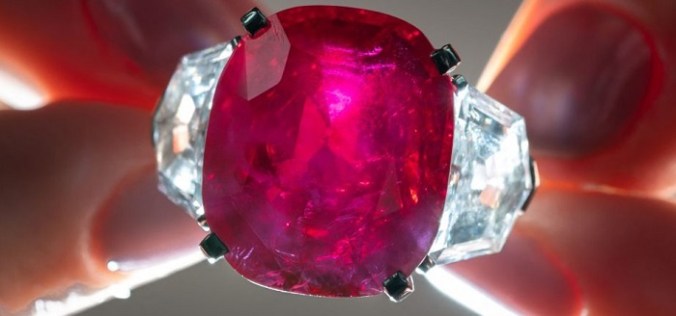
In May, the auction house Christie’s sold a collection of jewels and jewelry from the estate of Heidi Horten, an Austrian philanthropist. The auction earned $202 million, establishing the Horten sale as the biggest precious gem sale ever. There was, however, an ethics controversy: all that jewelry had been bought with a fortune amassed by Horten’s husband Helmut, a Nazi who bought up Jewish businesses in forced sales during the Holocaust.

The Holocaust Educational Trust called the May auction a “true insult to victims of the Holocaust.” Yoram Dvash, president of the World Federation of Diamond Bourses, wrote, “In a time of Holocaust denial and the resurgence of antisemitism around the world, we find it especially appalling that a world-renowned auction house would engage in such a sale.” David Schaecter, president of Holocaust Survivors’ Foundation USA, which represents support groups for victims’ families in the U.S., called the sale “appalling” and said it had perpetuated “a disgraceful pattern of whitewashing Holocaust profiteers.” But Christie’s officials argued that the proceeds of the sale would go to the Heidi Horten Foundation, which supports medical research and a museum containing her art collection. The auction house also pledged to donate some of its own profits arising from the sale to Holocaust research and education.

Since May, however, attacks on the collection, Chistie’s, and the money paid for the jewels at auction have escalated. Christie’s announced this week that a scheduled November sale of more lots of jewelry from the Heidi Horten collection would be canceled, citing the “intense scrutiny” from Jewish organizations and some critics. The Jerusalem Post reported that other Jewish groups had rejected Christie’s donations from the May auction.

Continue reading →

A Canary Dies In An Ethics Culture Mine, And It’s No Surprise That The Mine IS In The State Of Washington

In the city of Federal Way, Washington, Denise Yun is running for the City Council on a platform of protecting businesses from crime. Meanwhile, Nick Rose, a Federal Way Trinity Ace Hardware store owner, apparently caught her attempting to steal multiple hammers from his store by stuffing them into her purse.

Seeing her act suspiciously and spying the glint of something metallic in the woman’s jumbo purse, Rose asked if he could see what she had in there, to which Yun replied, “Absolutely not!” So he reached into her bag anyway, and pulled out one of his hammers. “It was one of my hammers that had a little ACE tag hanging on it. It was a ball peen hammer, so I just grabbed it. And as soon as that happened, she just stormed out of the store,” he said. Taking the rest of the hammers.

Continue reading →

American Airline Pilot To “A Nation Of Assholes”: Don’t Be An Asshole

A video has gone “viral” of an American Airlines pilot’s pre-flight speech telling passengers to behave ethically, with over 5 million views on Instagram and other platforms. He said in part (the videos miss the very beginning of the speech, apparently):

Welcome on board our flight. Remember: The flight attendants are primarily here for your safety.  After that, they’re here to make your flight more enjoyable. They’re going to take care of you guys, but you will listen to what they have to say because they represent my will in the cockpit or in the cabin, and my will is what matters. Be nice to each other. Be respectful to each other. I shouldn’t have to say that. You people should treat each other the way you want to be treated. But I have to say it every single flight because people don’t, and they’re selfish and rude, and we won’t have it, okay? Stow your stuff. Get it out of everybody else’s way. Put your junk where it belongs. Everybody here paid for a space. Don’t lean on other people. Don’t fall asleep on other people. Don’t pass out on other people or drool on ‘em unless you’ve talked about it and they have a weather-assisted jacket. All right. A little bit of fatherhood here, the other thing. The social experiment on listening to videos on speaker mode and talking on a cellphone on speaker mode…that is over, over and done in this country. Nobody wants to hear your video. I know you think it’s super sweet, and it probably is, but it’s your business, right? Keep it to yourself. Use your airbuds, your headphones, whatever it is. That’s your business, okay? It’s just part of being in a respectful society. Middle seaters: I know it stinks to be in the middle. Raise ‘em up. Anybody in the middle? Like five people. Yeah, right. That’s full. All right. Nobody’s listening. Fine. You own both armrests. That is my gift to you.

You can hear the speech here.

Observations:

Continue reading →

“Painkiller”

“Painkiller,” the new Netflix series about the origins of the opioid crisis largely created by the despicable machinations of the Sackler family and Perdue Pharma, could not be better timed. Just three days ago there was another development in the fall of the Sacklers, as the U.S. Supreme Court temporarily blocked the implementation of the 2021 $6 billion deal in federal bankruptcy court that would have blocked future opioid lawsuits against family members, who added to their vast fortune by creating and peddling OxyContin to complicit doctors and unsuspecting members of the public.

OxyContin was introduced in 1995 as Purdue Pharma’s breakthrough drug for chronic pain. The company employed an unethical marketing strategy that family scion Arthur Sackler had pioneered decades earlier, lobbying doctors to prescribe the drug and increase its dosage by dangling gifts, free trips to “pain-management seminars,”( aka all-expenses-paid vacations), paid speaking engagements, and ego-stroking visits from comely sales reps with cheerleading credentials.

Continue reading →

You Can Make Your Own Decision, But I Won’t Be Patronizing Best Buy From Now On…

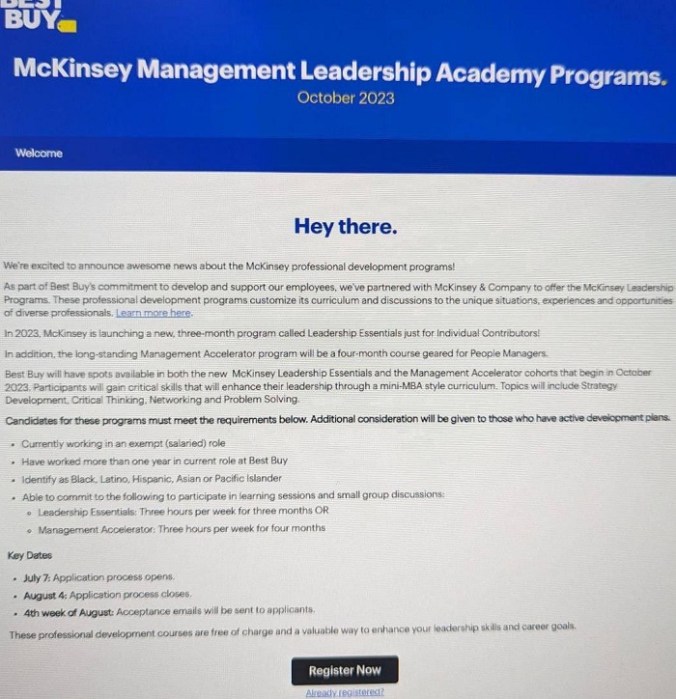
A whistleblower revealed the above screen shot of an internal Best Buy company memo regarding “management leadership academy programs” with the O’Keefe Media Group. The programs are a partnership between Best Buy and global management consultant McKinsey & Company, and, as you can see in the third bullet point under “Candidates must meet the requirements below,” white employees need not apply.

That’s illegal and racially discriminatory, or course, But to be fair, this is “good racism” in Woke World.

Continue reading →

KABOOM! How Can A Company—A CANDY Company No Less!—Possibly Think This Packaging Is Responsible?

Well, there goes my head again, and I really need it this weekend.

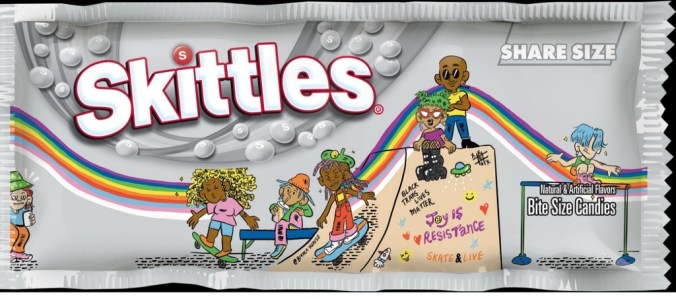
Hold on to yours: this really and truly is one of the “Pride” packages for Mars Inc.’s Skittles:

I don’t understand how this could happen in a major corpoation. In a pluralistic society, it is unethical for products and services to deliberately polarize the public, politically, socially, in any way whatsoever. True, the temptation for rainbow-colored Skittles to try to exploit the LGTBQ propaganda for marketing purposes must have been strong for some marketing execs with the cranial depth of a walnut shell, but the fact that sane parents don’t want their kids proselytized by their candy shouldn’t be that hard to grasp.

If the type is too small for you to read, the legends somewhere under the rainbow include “Joy is Resistance” and “Black Trans Lives Matter,” both of which are semi-incoherent, but the intent is clear. (Is the character with the sunglasses supposed to be in drag? What does “skate & live” mean? Is skating on the rainbow a metaphor for embracing an LGBTQ identity?)This is the equivalent of forced political speech, and the force is being applied to children. Holding that package sends an unintended message, weird as it is, and once that political message is associated with the brand, eating Skittles at all becomes a political act.

Continue reading →

“Curmie’s Conjectures”: Athletes Are the Most Pampered and Most Abused Students, And Both Situations Are Getting Worse

by Curmie

The first part of the title above ought to be self-evident.  Far too many universities operate as sports franchises with a few academic courses offered on the side.  This, despite the fact that most athletic departments lose money despite TV revenue, ticket sales, etc.  Even average (by intercollegiate standards) athletes are likely to get a full ride: tuition and fees, room and board. 

And that’s not counting NIL (name, image, and likeness) deals which often run well over $100,000 a year for even average players in a major sport at a Division I school.  High-end programs in football and basketball get bowl games or in-season (or pre-season) trips to tournaments in exotic locales.  The best student physicist at the school might get travel money to a conference or something like that, but there’s not going to be a lot of hanging out on the beach on someone else’s dime, much less a tuition waiver and a six-figure income.

NIL also means that at least some elite athletes in football and basketball are shopping their services to the highest bidder.  Every time a star player enters the transfer portal and moves to a different university, the accusations pour forth from the new school’s competitors that they’re “buying players.”  Some of those allegations are simply sour grapes; many (most?) aren’t.  Of course, the practice has existed under the table for decades, but NIL has certainly exacerbated the problem.

Then, there are the tutors, the luxurious housing, and other forms of special treatment.  A goodly number of athletes, of course, wouldn’t be accepted at Duke or Stanford, or even at the University of Northern South Dakota at Hoople (extra credit if you get that reference), if they didn’t have a jump-shot or some equivalent skill in another sport. 

Bolenciecwcz, the dim-witted football star of James Thurber’s “University Days” (1933) who finally is able to name a mode of transportation after professor and fellow students alike prompt him to say “train,” is a satirical construction, of course, but satire works only if there is the ring of truth.  And I suspect the scandal at the University of North Carolina a few years back is more likely the tip of the iceberg than an anomaly.

I’ve had a number of students in my classes who actually were the “scholar-athletes” the NCAA pretends anyone with an athletic “scholarship” is.  There was the multi-year all-conference tennis player who was also a fine student and an excellent actress (she got a graduate degree and now works for one of the country’s leading regional theatres), the middle-distance runner who missed the Olympic team by a fraction of a second and did quite well in my non-major class, the starting safety on the football team who asked for permission to miss class because he would be interviewing with one of the nation’s top med schools (he got in).

But there are plenty of examples in the other direction, as well.  There was the basketball player who couldn’t write a coherent paragraph about literally anything.  There was the football player who complained about his grade in an acting course because he had nothing in common with the character I’d given him in a scene; the character was complaining to his professor about his grade.  (Sigh.)  Another football player whispered disgusting sexual advances to one of the women in an acting class when I was working with other students.  (He came to regret that.)

My… erm… “favorite,” though, was the star football player who missed about a half dozen more classes than department policy allowed.  There were three hour-exams in the course: he got a D on one and failed the other two.  He didn’t write either of the required short papers, and he got something like a 31 on the final exam.  He subsequently showed up at my office, position coach in tow, to protest his failing grade because one (yes, just one) of his absences should have been excused.  His excuse: he was in court… being convicted of an E felony.  (Sigh.)

All that said, it would be easy to make a case that athletes, especially those in sports other than football and basketball, are the most exploited students on campus.  Unless, like LSU gymnast Olivia Dunne, what you’re selling is that you look great in a bikini or a miniskirt, you’re not going to get as good an NIL deal as the backup quarterback does.  Plus, most sports require that you’ll play more than a dozen or so games; baseball and softball, for example, generally have about 50 games in a regular season.  That means, among other things, more road games, and that means more travel, more time out of class, etc.

Continue reading →