Further Observations On The Pro-Trump Rioting At The Capitol

Capitol riots

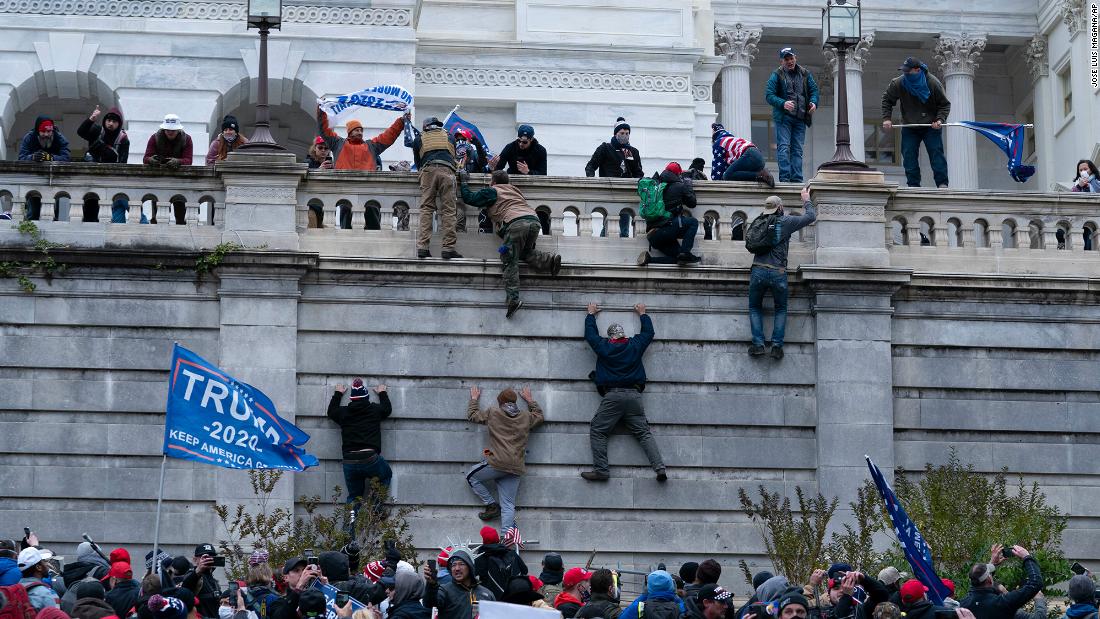
I wasn’t able to track everything that was going on yesterday, at the Capitol, in the media, and in cyberspace. I confess: I didn’t even try to listen to the news networks. I know their biases, assumed, correctly, that the rioting would just give the news media perceived license to unleash all of the hate for President Trump they might have left unexpressed over their four years of resistance. I don’t respect these people, I don’t trust them, and I don’t care what they think or say. They are at least as responsible for the violence as the President; I would argue that they are more responsible.

Here are some ethics observations on matters that came to my attention since the post on this topic last night:

1. I’ll repeat this one:

First and foremost, anyone who did not condemn all of the George Floyd/Jacob Blake/Breonna Taylor/ Black Lives Matters rioting that took place this summer and fall is ethically estopped from criticizing this episode.

That covers almost all of the mainstream media, Joe Biden, “The Squad.” and many others. Now that I have checked, virtually all of the conservative media and its pundits have unequivocally condemned those who invaded the Capitol yesterday as they should.

2. The President’s statements about the rioting following the one I quoted were irresponsible, but about what I would have expected. Conservative writer Tyler O’Neil, who, like me, has chronicled the wretched way Trump has been treated by the AUC since his election, wrote (in part), in an admirable post titled, “Trump Needs to Forcefully Condemn the Rioters, Not Coddle Them”:

Never in my life did I expect to see the president of the United States refuse to unequivocally condemn a mob that broke into the U.S. Capitol. There is no place for political violence in America, and the president needs to be the first person to always insist upon that. Tragically, President Donald Trump not only failed to denounce the mob but even praised some of them, essentially coddling rioters….

Trump’s comments remind me of the way Joe Biden responded to the Black Lives Matter and antifa riots over the summer. Biden asked protesters to remain peaceful, but he also repeatedly praised the protests that devolved into riots and condemned America’s “systemic racism,” repeating the arguments that inflamed the riots in the first place. Biden refused to full-throatedly condemn the noxious ideology behind the riots. Like Biden, Trump has called for peace even while suggesting that this political violence followed from a legitimate grievance. Yet even at his worst moments, Biden did not say “we love you” to antifa and he did not insist that riots were the natural response to systemic racism.

He continued,

The 2020 election was not a pristine exercise of democracy, as many legacy media outlets have claimed, but it wasn’t a “steal,” either. As Sen. Ben Sasse (R-Neb.) pointed out, it is unlikely that the very serious irregularities and mistakes in the 2020 election were responsible for Biden’s win. Trump’s legal team had many chances to present evidence in court, and when push came to shove, they caved.

It is important for Americans to demand election reform after 2020, but it is also essential for them to accept that Biden won…President Trump decided he would fight the loss, which is his right. Yet the president did not just call for recounts or raise specific problems — he repeatedly claimed that he won by a “landslide.” He also cited the 74 million Americans who voted for him as an achievement. That 74 million number is indeed an achievement — but if the president says the election results are in doubt, he should not brag about the election results. Tragically, Trump’s supporters were primed to listen to him, rather than the legacy media and other sources, because the legacy media has proven itself heinously biased against Trump, again and again. … a Media Research Center poll found that many Americans who voted for Joe Biden said they would not have done so if they had heard about one of eight key election-related news stories that the legacy media suppressed (like allegations of Joe Biden’s personal connection to Hunter Biden’s corruption). If these Americans had not voted for Biden, Trump would have won the election.

Trump did not win, however, and his rhetoric after the election has been dangerous. The president never encouraged his supporters to storm the Capitol, but he did support various schemes to overturn the election results, including crackpot theories about the vice president’s ability to reject Electoral College votes from certain states. (Mike Pence wisely refused to take this course.)

When Trump supporters stormed the Capitol, Trump had a moral duty to vocally condemn their lawless attack. This situation also gave him an opportunity to demonstrate that he supported law and order more than Joe Biden had over the summer.

Instead, Trump arguably proved himself worse than Biden. The president coddled violent elements among his supporters, even when they broke into the People’s House. This was despicable. Trump’s comments were beyond the pale.

The president needs to reverse course. He should follow the lead of Sens. Lindsey Graham (R-S.C.) and Tom Cotton (R-Ark.), who called for the mob to face “prosecutions to the fullest extent of the law.” He should not equivocate or suggest that it was natural for some of his supporters to break into the Capitol. He certainly should not praise them or declare his “love” for them.

Continue reading

On Kamala, King, Lies, The Media And The Julie Principle

King and Harris

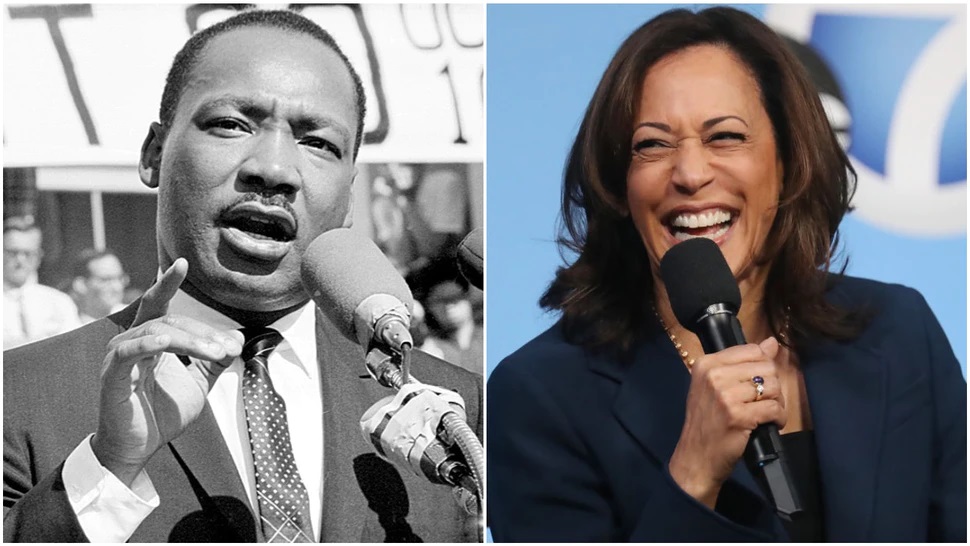
Vice-President Elect Kamala Harris has a favorite story she likes to tell about her childhood, most recently in Elle Magazine. The article begins with the anecdote: Harris was attending a civil rights march in Oakland, California as a toddler. She fell out of her stroller, and,

“‘My mother tells the story about how I’m fussing,and she’s like, ‘Baby, what do you want? What do you need?’ And I just looked at her and I said, ‘Fweedom.’”

The story also appears in Harris’s 2010 book “Smart on Crime” as well as her book published in 2019 titled “The Truths We Hold.” Yet it sounded strangely familiar to some people this time around, and sure enough, it seems that the tale is oddly similar to a story Rev. Martin Luther King related in his famous interview published in Playboy a half-century ago. During the interview, King recalled an incident:

“I never will forget a moment in Birmingham when a white policeman accosted a little Negro girl, seven or eight years old, who was walking in a demonstration with her mother. “‘What do you want?’ the policeman asked her gruffly, and the little girl looked him straight in the eye and answered, ‘Fee-dom.’ She couldn’t even pronounce it, but she knew. It was beautiful! Many times when I have been in sorely trying situations, the memory of that little one has come into my mind, and has buoyed me.”

Now Harris is being mocked on social media and by conservative pundits for her apparently fake and stolen story.

Observations:

Continue reading

Ethics Flotsam And Jetsam, 1/4/21, Borne Back Ceaselessly Into The Past

Gatsby

 “The Great Gatsby‘s” 1925 copyright expired on January 1, 2021, and right on cue, Amazon announced that it was selling a now-legal prequel to that wildly over-praised F. Scott Fitzgerald novel called “Nick,” by Michael Ferris Smith: “A tumultuous origin story of one of the most famous and unforgettable literary narrators, Nick is a true cross-continental bildungsroman. This emotional novel successfully puts “The Great Gatsby” into an entirely new perspective and era: from the battlefields of World War I to the drunken streets of Paris and New Orleans. Dive back into the world of an unparalleled classic.”

It’s not unethical exactly, I guess it’s just pathetic. This author was waiting to scavenge someone else’s original work, and had his rip-off ready the second the bell tolled. The similarly creatively challenged among you now can repurpose and sell as your own books like Virginia Woolf’s “Mrs. Dalloway,” Ernest Hemingway’s “In Our Time,” Franz Kafka’s “The Trial” (in German) Theodore Dreiser’s “An American Tragedy,” John Dos Passos’s “Manhattan Transfer,” and Sinclair Lewis’s “Arrowsmith” (a personal favorite) among others.

1. Nah, the Democrats aren’t turning into totalitarians! That’s going to be the most-used gaslighting reference here in the ordeal to come I fear, as foretold by this screed in the New Yorker (Pointer: Arthur in Maine) by John Cassidy. Its thesis is that there are legislative steps that can be taken to make sure no political outsider like Donald Trump will ever again defeat establishment hacks like Hillary Clinton and Joe Biden.

Among the steps to “Trump-proof” the Presidency: require all candidates to sell off any businesses they own (lifetime politicians don’t own businesses), force them to release their tax returns, try various end-arounds the Electoral College (none of which are constitutional, in my view), and adopt ranked-choice voting so third and fourth party candidates have no chance whatsoever (they do it in New Zealand, so it must be better than our system).

I’d take the time to fisk this thing, but it begins falling apart on its own like Captain Queeg on the witness stand about halfway through, descending into standard anti-Trump blather about “norms,” lies, and “verbal assaults on the media” (which thoroughly deserved them).

The author really exposes his bias when he cites Citizens for Responsibility and Ethics in Washington as his ethics authority, a group that somehow only finds ethics violations in the Republican Party.

Continue reading

Saturday Evening Ethics Post, 1/2/2021

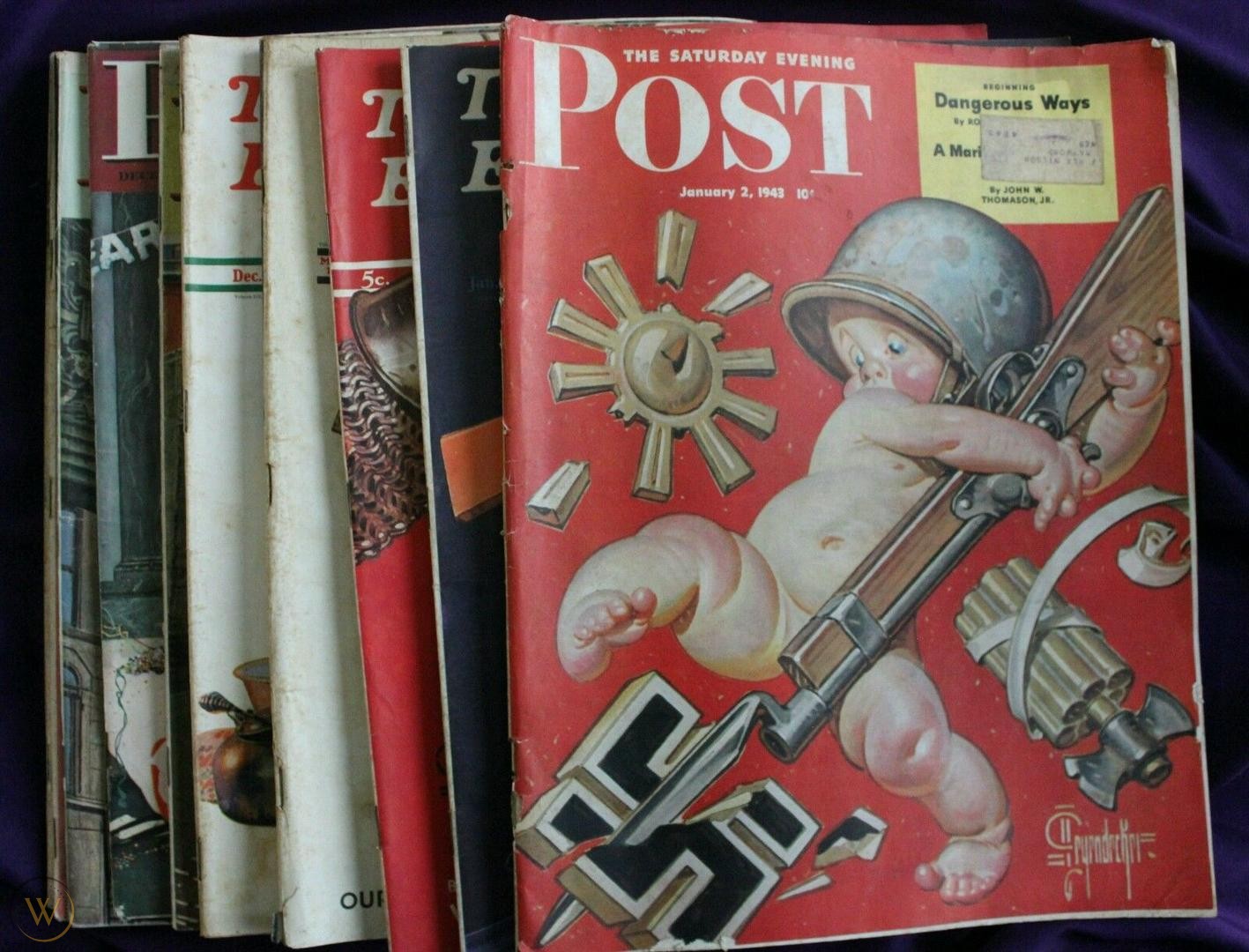
10-saturday-evening-post-magazines

State of the Blog: Yesterday marked the 365 day low point in Ethics Alarms traffic after what was otherwise a lively year. Coincidentally, it also marked the all-time high point in Ethics Alarms followers, if you don’t count Twitter, which I do not.

I’ve got a lot of housekeeping to do on the blog, and I’m hoping the annual dead spot after New Years gives me time to do i. This includes fixing some broken links, continuing to fix typos both old and new (Pennagain and Other Bill provide a marvelous service by flagging them, and I am behind right now), taking down some pages and categories that are or will soon be out-dated in the wake of President Trump’s defeat, taking the time to see if I can master the WordPress “block” system which right now robs me of an extra 30 to 40 minutes every day, and finishing and posting several articles that have been hanging around my neck in various states of incompletion. There are a couple of rationalizations that need posting, too, and some Comments of the Day that fell through the cracks.

I always have hope that I will get up the Ethics Alarms Awards for the year, which I have failed to do now for several cycles. They are fun, but they take a lot of time, and the stats say few read them. I may try a less ambitious version

Facebook finally allows me to link to articles, though it won’t post the graphics like it will for other websites, but after two years of being blocked for violating Facebook community standards, I consider that progress.

To be honest, I’m tired, and right now I’m sick and tired. The core group of commenters here keeps me focused on the mission, and for that I am grateful beyond words.

1. I was going to devote a whole post in rant form to this, but I calmed down. In August of last year, The Robert H. Jackson Center hosted a discussion on comedian George Carlin’s “7 Dirty Words” and the 5-4 FCC v. Pacifica Foundation SCOTUS decision in 1978 upholding the broadcast restrictions on George Carlin’s “seven dirty words” routine as well as the words he discussed. Emmy-nominated producer Stephen J. Morrison, serving as moderator, was joined by comedian Lewis Black, Carlin’s daughter Kelly Carlin and Cornell Law professor Howard Leib. I stumbled upon a recording of the discussion on the Sirius-XM “Classic Comics” station, and my head exploded so many times that I had to clean up the car like John Travolta in “Pulp Fiction.”

Continue reading

New Year’s Ethics Warm-Up, Entertainment Edition

Thats enter

1. “That’s Entertainment!” Once again, Turner Movie Classics ran all of the “That’s Entertainment!’ series as its New Year’s Eve programming. Last time TCM did this, primary host Ben Mankiewicz won ethics points for having the guts to say, as his fellow hosts were gushing about MGM musicals between “That’s Entertainment!” 1 and 2, that he regarded movie musicals as in the same category as super-hero movies today: diverting fluff, but not cinematic masterpieces. I don’t completely agree with him, but as Mankiewicz has shown before, he has integrity as an expert analyst, and does not hesitate to register opinions that his audience might not like. (Where Ben is wrong in his comparison is that the old movie musicals showcase astonishing talents that we are unlikely to see the like of again—Judy Garland, Fred Astaire, Gene Kelly, Danny Kaye, Julie Andrews and others—while the super-hero movies merely display special effects that we are doomed to see repeated for the rest of our lives. In support of Ben’s point, I have to admit that watching “That’s Entertainment” one is struck by how few truly great movie musicals there were.

Last night, Ben scored again as a truth-teller. After mouthing the conventional wisdom that Gene Kelly and Fred Astaire were regarded as the greatest dancers in Hollywood history, he added, “Of course, Eleanor Powell and the Nicholas Brothers might disagree.” As an early clip in “That’s Entertainment!” shows, a dance-off between Astaire and Powell, she could match Fred step for step. The Nicholas Brothers, who only appear briefly in TE1, never had a chance to impress white audiences, but when you watch them, it is hard to avoid the conclusion that they could perform feats of feet that neither Kelly nor Astaire could match.

2. “That’s Entertainment!” (cont.) The series is as good an example as one could find of why sequel are cheats most of the time. The first in the series was perfectly conceived: at a time of national cynicism in the wake of Watergate and Vietnam, during a period where movies were becoming violent and bloody and MGM, once the “Dream Factory,” was being sold off. Jack Haley, Jr, the son of Judy Garland’s Tim Man and an MGM executive, had the idea of using old clips and old stars from Hollywood’s Golden Age to show a new generation what thrilled their parents and grandparents. In part because of Haley’s clever choices of material and his editing, the movie worked better than anyone could have imagined. I saw it in D.C. grand Uptown theater (it just closed it doors forever, killed by the lockdown) with a packed house of Baby Boomers. During the opening credits, the audience broke into spontaneous applause as each names of the co-hosts, past their primes all (except for Liza Minnelli), appeared on the screen. Donald O’Connor! (Applause)…Mickey Rooney! (Applause). I’ve never witnessed anything like it.

Continue reading

Last Gasp Ethics, New Year’s Eve 2020

Happy New Year, Everybody!

1. A late entry in the “Most Unethical Lawyer of 2020” competition! McGinnis E. Hatfield was stripped of his license to practice law by the West Virginia Supreme Court. What did he do? Well, this section of a transcript of his conversation with a female client explains things pretty well:

Female: “I thought like when we first started out, I was just going to pay you. I didn’t know that you wanted sex out of the whole thing.”

Hatfield: “Well, I’d have to charge you like $1,500 bucks. You don’t have $1,500, do you?”

Female: “No.”

Hatfield “So come on out here. Just come. What time do you want to come?… [I]t’s just not going to work unless you do what I say.”

Female: “What do you want me to do?”

Hatfield: “… “Well, I want you to let me eat your pussy, and then I want you to let – I want you to suck my dick, and then, you know, I just have to – I’m as straightforward as I can be. And if you don’t want to do that, then fine. I don’t have any- I like you. And if you don’t want to do that, then we’ll just have to call it off.”

Female: “Is that not – all right. That’s fine. Whatever.”

Hatfield: “Is that okay?”

Female: “I mean no, not really because I’m not a whore.”

Hatfield: ” … And like I said, if you won’t want to do that, then that’s fine by me. I wish you luck. And if you don’t want to do that, then I’m not going to try to represent you. So that’s a benefit for you. And I’ll give you some money, too[.]”… You know, I’m shooting straight with you. I told you from the beginning that sex was important to me. I want some now. Nobody’s tried to trick you. And it would be safe, too. But anyway, if you don’t want to do it, that’s fine by me, honey, but you’ll have to get somebody to help you with your divorce, too.”

Female: “Okay, That’s fine.

Of course, it’s not fine. Lawyers are prohibited from having sex with clients in most jurisdictions. Lawyers cannot encourage individuals, including clients, to commit a crime. Mr. Hatfield compounded his problems when he flunked the easiest part of a disciplinary inquiry, telling the judge who asked Hatfield whether in retrospect, he found his behavior inappropriate or unethical,

“I think my conduct in this whole situation is human. And that’s the only defense I’m offering. Lord knows, we all need that. So that’s as far as I’ll go with that.”

The judge tried again, asking, “Are you remorseful?” Hatfield replied, “No. I have no remorse. I feel like I’ve been victimized.”

What an idiot.

It put me in mind of the Steven Wright line, “How did the fool and his money get together in the first place?”

Continue reading

Comment Of The Day: “Bizarro World Ethics: A Vicious Young Jerk’s Unethical Act Is Celebrated …..Part II: The Times And Its Readers

new yorktimes

Arthur in Maine earned the second Comment of the Day to end the year with his observations on the New York times aiding and abetting the savaging of Mimi Groves. Here is his COTD on the post, “Bizarro World Ethics: A Vicious Young Jerk’s Unethical Act Is Celebrated And His Victim Vilified In A Cautionary Tale Of What Happens When Society Allows Its Values To Be Turned Inside Out. Part II: The Times And Its Readers”:

Let me go further into my comment to Part 1, which boiled down to “the NYT acted most unethically of all.”

I chose not to expound then, anticipating this post, but I will now.It’s likely – indeed, even essential – to this story that the pitchfork-and-torches mobs on social media have a larger footprint than the New York Times. But THIS Facebook group, THAT Instagram “Influencer”, THOSE Twitter feeds – tend to be narrow channels of like-minded myrmidons (this is what social media has done to society, more effectively than any propagandist ever could: separated culture into armed camps).

Continue reading

Senator Hawley’s Futile Protest Prompts A Senator And A Corporation To Expose Their Ethics Deficits

Secretary Mnuchin Testifies In Senate Hearing On CARES Act Implementation

Well, that’s something.

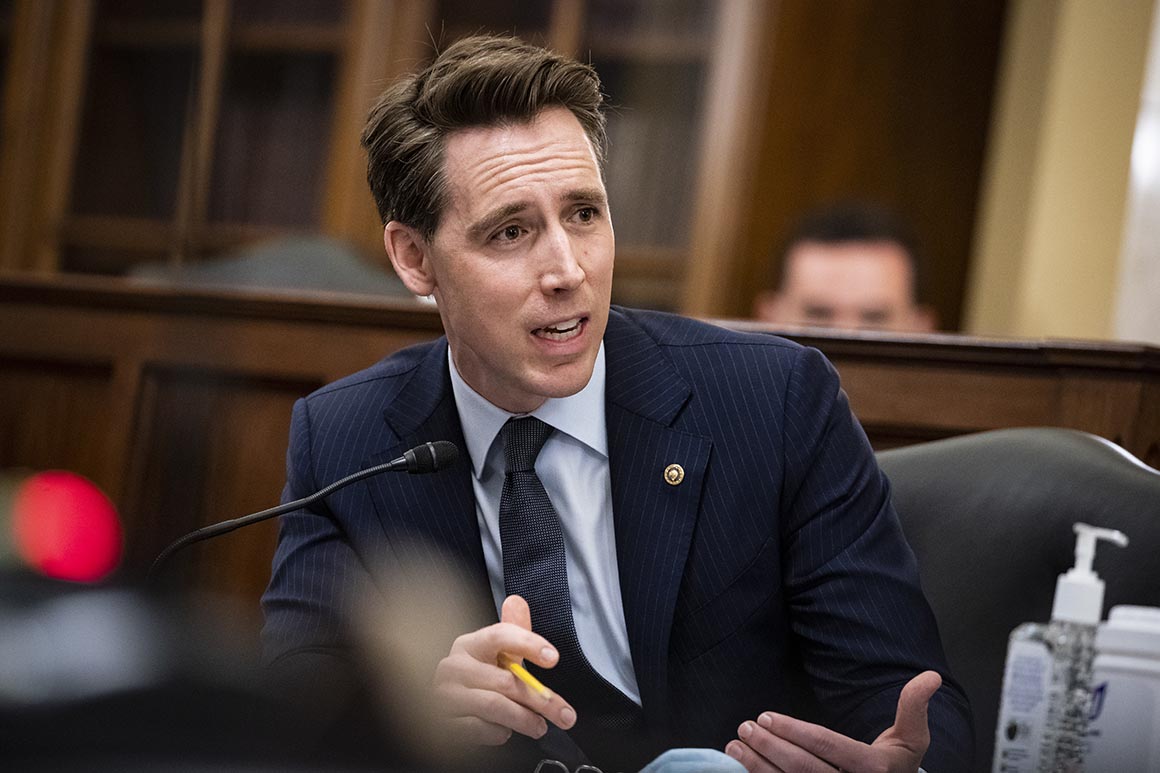
GOP Senator Josh Hawley of Missouri announced yesterday that he would object to Congress’s certification of the Electoral College results on January 6 as “an effort to highlight the failure” of states “to follow their own election laws as well as the unprecedented interference of Big Tech monopolies in the election.” “Millions of voters concerned about election integrity deserve to be heard,” he said in a statement. “I will object on Jan. 6 on their behalf.”

In other words, this is symbolic political theater, nothing more, nothing less. The Constitution requires that challenges to the certification process, which are completely legal, be approved by majorities in both the House and Senate. That;s not going to happen, obviously, and Hawley’s statement makes that clear.

And yet here is Minnesota Senator Amy Klobuchar, whose status as a favorite of my Democrats friends among the contenders for the Presidential nomination highlighted just how awful that field was, tweeted this:

“This is how you run for President on the Republican side in 2024. You join a coup attempt. Democracy will prevail. As lead Dem on Rules Committee, I will guarantee it. There’s a bipartisan group of electeds who will put our country first. See you on the 6th!”

That’s pretty shameless coming from a Democrat whose party tried one soft coup attempt after another since 2016, including a contrived impeachment without evidence of “high crimes and misdemeanors” and a relentless investigation designed to undermine trust and support of the President. Then there’s the fact, revealed in the New York Times, that in the last three decades, every time a Republican won the election, Democrats in Congress challenged the certification of that election, and when a Democrat won the Presidency, Congressional Republicans did not challenge the certification. Does Klobuchar believe that her party attempted coups in 2000, 2004 and 2016? She’s deliberately mischaracterizing Hawley’s action, but then that’s Amy.

Continue reading

Bizarro World Ethics: A Vicious Young Jerk’s Unethical Act Is Celebrated And His Victim Vilified In A Cautionary Tale Of What Happens When Society Allows Its Values To Be Turned Inside Out. Part II: The Times And Its Readers

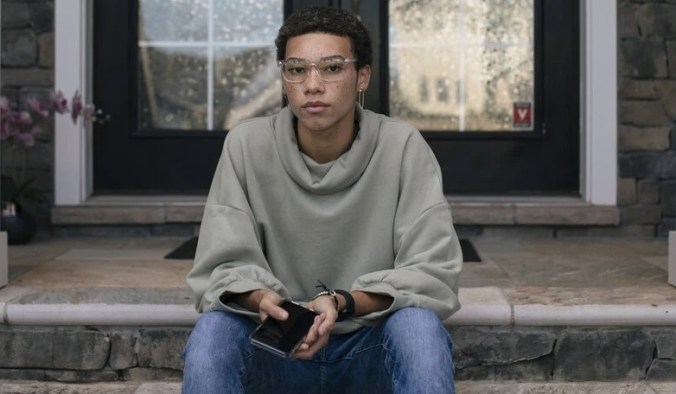
Mimi

In Part I, describing the horrific personal destruction of 18-year-old Mimi Groves (above)–the antiseptic term “unethical” does not adequately convey the pure viciousness and wrongfulness of the act—I attempted to clarify what the entire scenario represents, a near complete distortion of values and ethical norms with ominous implications. I mostly left out the enthusiastic participation of the New York Times in this destructive process, first, because it was not directly involved in Jimmy Galligan’s hateful and pernicious conduct, and second, because of space considerations. Thus we have Part II.

The Times signaled its sentiments and objectives in the headline of its feature, written by reporter Dan Levin: “A Racial Slur, a Viral Video, and a Reckoning.” “Reckoning” means, in this context, a settling of accounts, a judgment, or earned punishment. In the view of the Times writer and the editors who allowed it to be published, Mimi Groves was justly punished by her black classmate, who plotted–plotted is a fair description—to derail her education and future prospects, and did so. What was the conduct that earned the “reckoning”? Groves used a word, in a general context, that the social justice establishment has ruled, on its own authority, can never be uttered for any reason, or published in print—unless the individual responsible is black, in which case it may be rude or less than desirable, but otherwise it’s OK.

At the time the word “nigger” was used by Groves in a three second video on social media, and today, popular songs embraced by her age group and peer group used the same word repeatedly, and made millions of dollars as a result. At the time the word “nigger” was used by Groves in a three second video on social media, popular movies showed black characters calling other black characters that same word in jest, or affectionately, or for shock value.The actors playing those characters, notably Samuel L. Jackson, who has earned a bundle as the spokesperson for a major credit card,while using teh word “nigger” more times on screen that any actor in film history, have not faced any “reckoning.” The screenwriters who put those words in his mouth faced no “reckoning”; the directors who permitted the dialogue to be read and the studios that sent the wave of “niggers” into theaters and streaming services faced no “reckoning.”

Just this month, Netflix premiered an adaptation of August Wilson’s play “Ma Rainey’s Black Bottom,” directed by acclaimed social justice warrior director George C. Wolfe, an African American. When a stream of “niggers” was unleashed about ten minutes into the fim, never to stop, I was genuinely confused. How could this be, when I have a file of professors and teachers who faced sanctions, protests, suspensions, and professional destruction, not by referring to any black individual as a nigger, but by using the word in the context of discussing legal, ethical and cultural implications of language.

Yes, I was confused, and I am a lawyer, a writer, an ethicist and a teacher with more than four times as much experience in life as Mimi Groves when, as a child, she mistakenly thought a casual use of the word in a social media message wouldn’t upset anyone, much less put a dedicated life assassin on her trail.The the New York Times holds that Mimi deserved her “reckoning,” and made sure that if anyone inclined to tar her as a racist unfit for human association on this woke culture we are breeding didn’t know that she had to be punished and why, a major feature in the nation’s most read, circulated and quoted newspaper would spread word of her disgrace. The paper’s verdict is clear: Jimmy Galligan struck a blow against “systemic societal racism.” He’s a hero, even though literally nothing he did was ethical, fair, or just:

Continue reading

Bizarro World Ethics: A Vicious Young Jerk’s Unethical Act Is Celebrated And His Victim Vilified In A Cautionary Tale Of What Happens When Society Allows Its Values To Be Turned Inside Out. Part I: Jimmy Galligan, Ethics Villain

The New York Times published a long and detailed account of what can and will happen if society allows its values and ethical norms to become distorted. It enters the world of Bizarro Ethics, where, like the fictional and allegedly comic planet of Bizarro World in old Superman comics, everything is backwards and inside out. In such a culture, I have explained here many times, being unethical is ethical, and being ethical is wrong. A black student set out to use an old social media post to destroy the reputation of a white classmate after she had been admitted to the college of her dreams. And he succeeded. The Times story is a cautionary tale of what is happening in our culture, but that’s not its objective. Its objective is to rationalize and justify what the black student did.

In 2016, when she was a freshman and 15-years old, Mimi Groves sent a three second video SnapChat message to some friends that said, “I can drive, nigger!” She has explained that she used the dreaded “N-word” because it was common in the music she and her friends had been listening to. It was not intended to be seen by or to upset anyone; it was just a one-off social media message like millions of others that are sent every day, by an immature child lacking common sense, experience and a fully formed brain. As such, it should have been ignored, especially by her peers, who suffered from the same maladies.

But because of the scourge of social media and a culture which increasingly encourages cruelty, vengeance, personal destruction, and the elevation of doing harm to those who “deserve it” to a societal norm, the message became a ticking time bomb in the hands of those who felt they had a right to destroy her.

Somebody send a copy of the message to Jimmy Galligan’s phone last school year. Galligan is black, and Mimi was a fellow classmate whom he knew and had spoken with earlier in their high school days.

Ethics Point 1: Whoever saved the message and set out to make sure that someone would see it who would find it upsetting is the first and the catalytic ethics villain in this story. There was no justifiable reason to send the message to Galligan except to upset and trigger him, which someone who knew him obviously believed it would. A fair, rational and ethical person would know that a years-old message on SnapChat is meaningless, and the Golden Rule would have taught him or her that circulating such a message is something he or she would never want anyone to do with an ill-considered video of their creation.

Here the Times attempts to prejudice the reader in Jimmy’s favor with a trail of irrelevancies:

Continue reading