Sunday Morning Ethics Warm-Up, 9/29/2019: Updates, Coincidences And Suspicions [CORRECTED]

The same as what?

I heard this song yesterday for the first time in many years, and immediately wondered how many people  my son’s age (he’s 24) or even older would know what “Spanky and Our Gang” referred to. Then I made the mistake of briefly watching HGTV’s “A Very Brady Renovation” and saw to my horror that all the “Brady Bunch” kids are senior citizens. “Who’s that old lady? OHMYGOD It’s JAN!!!!”

1. Well, it was nice while it lasted...Traffic here increased by about 30% over three days last week after Facebook slipped up and allowed a link to one Ethics Alarms—it violates Facebook community standards, don’t you know— post to be circulated on among users.

2. Here’s a poll on the previous post, about a controversial joke related to the Texas governor’s disability that was made by a female judge. Governor Abbott has been in a wheelchair ever since he was struck by a falling tree almost 40 years ago. Noting that Texas Republicans have opposed proposed environment-minded legislation, “even local tree ordinances,”  the judge quipped to her partisan Democratic crowd, “Governor Abbott hates trees because one fell on him.”

While we’re on the subject of polls, the Ethics Alarms readers were strongly opposed to the course of action discussed here, here, and here, with about 88% holding that a Swedish man should not have allowed a doctor to euthanize his sister despite her past consent to the procedure, because she was resisting.

Continue reading →

Contract Cheating: One More Reason College Is A Massive Scam On Our Society

A disturbing article from several perspectives appeared last week in the Times. Titled “Cheating, Inc.: How Writing Papers for American College Students Has Become a Lucrative Profession Overseas,”  it contained one ethically troubling paragraph and factoid after another, such as…

  • “Finally, a friend offered to help her break into “academic writing,” a lucrative industry in Kenya that involves doing school assignments online for college students in the United States, Britain and Australia. Ms. Mbugua felt conflicted.”

    “This is cheating,” she said. “But do you have a choice? We have to make money. We have to make a living.”

  • “Cheating in college is nothing new, but the internet now makes it possible on a global, industrial scale. Sleek websites — with names like Ace-MyHomework and EssayShark — have sprung up that allow people in developing countries to bid on and complete American homework assignments.

    “Although such businesses have existed for more than a decade, experts say demand has grown in recent years as the sites have become more sophisticated, with customer service hotlines and money-back guarantees. The result? Millions of essays ordered annually in a vast, worldwide industry that provides enough income for some writers to make it a full-time job.”

  • “A Facebook group for academic writers in Kenya has over 50,000 members…

“…It is not clear how widely sites for paid-to-order essays, known as “contract cheating” in higher education circles, are used. A 2005 study of students in North America found that 7 percent of undergraduates admitted to turning in papers written by someone else, while 3 percent admitted to obtaining essays from essay mills. Cath Ellis, a leading researcher on the topic, said millions of essays are ordered online every year worldwide.”

Yes, I’d say that the statistics cited in the article make the 7% and 3% findings risible.  What do you think are the real numbers? 15%? 20%? If that large a segment of graduating college students have cheated to get by, why is a diploma trusted as a credential? Would you want to be operated on by a doctor with a 20% chance that he or she cheated to graduate from medical school? Continue reading →

Afternoon Ethics Tea, 9/26/2019: A Drunk Lawyer, A Disgraceful Congressman, Uncivil Peanut Butter And The Dolls America Needs [UPDATED!]

These trustworthy scones are divine!

1. First, the important stuff: peanut butter ethics. Now Jif, the peanut butter, has joined the detestable ranks of consumer products that deliberately evoke the vulgarity “fuckin'” in its advertising. Booking.com was the first company chided here for this particular offense against minimal civility, when I wrote,

Ethics dictates that one communicates with respect for anyone within hearing distance, and unless ugly words serve a material purpose, using them is not the mark of a good citizen, a good neighbor, or a trustworthy human being. Nor is spouting vulgarity witty, and unless you are 11, and employing obvious code words that sound like curses, epithets and obscenities isn’t especially funny either, since we pretty much exhausted the possibilities at summer camp. I have no idea why anyone would want to recast the culture as a place where professionals curse like sailors and the words “fuck” and “cocksucker” are as likely to issue from a debutante’s lips as those of a hip hop artist, but that seems to be the objective now. … TV stations happily accept money from advertisers using code words for “ass” (Verizon), alluding to sexual intercourse (Reese’s), and evoking the word “shit” (K-Mart and DraftKings).

Booking.com no longer uses this device, but Jif now pronounces itself “Jif’n good!” Fortunately, this peanut butter aficionado regards Jiff as the least of the  national brands and varieties (1. Skippy Natural 2. Skippy regular, 3. Peter Pan crunchy 4. Peter Pan smooth…and Jif, bringing up the rear.

Now I won’t even buy this peanut smutter when it’s on sale.

2. Apparently the mainstream media AND the Democrats are determined to dash what’s left of their rotting credibility to smithereens with this last ditch impeachment push:

  • Today’s “Japanese Bombs Pearl Harbor” size headline across the New York Times print edition: TRUMP ASKED FOR ‘FAVOR’ IN CALL, MEMO SHOWS.” Again, this would be really funny if it wasn’t so destructive.
  • Showing unprecedented lack of respect for the office of President (and proving beyond any doubt that no American who wants fair and objective reporting on politics should tune into MSNBC), the network’s Nicole Wallace cut off the  audio at President’s   first news conference since House Democrats opened a formal impeachment inquiry,, saying,  “We hate to do this, really, but the president isn’t telling the truth.”
  • In Congress, on TV, Rep. Adam Schiff read into the record his “paraphrase” of the transcript of the President’s phone call to the Ukraine President. Sample:

“I’m going to say this only seven times, so you better listen good, I want you to make up dirt on my political opponent, understand, lots of it, on this and on that, I’m going to put you in touch with people.”

“Is he just making this up?” Committee member Mile Turner (R-Ohio) asked. Indeed he was. Althouse’s commenters are having a field day on this. Ann’s readership is ideologically mixed, but you couldn’t tell that from the utter contempt Schiff’s stunt inspired. Continue reading →

Ethics Quiz: The Dying Veterans Plea [Corrected]

I know my answer to this one right now, but I’m curious about everyone else, and willing to be convinced that I’m a hard-hearted meanie.

Call this one a “Good Disgraced Veteran” story, in the style of the recent spate of human interest tales designed to make us feel sorry that the law has to be enforced when those nice, noble illegal immigrants break it. In this variation, the object of sympathy is Needham Mayes, who was among the first black servicemen to be stationed at Fort Bragg following  the President Truman’s executive order desegregating the armed forces  seven years earlier. In July 1955, as a 21-year-old private, he walked into a club on the base for non-commissioned officers only.  He was quickly confronted by a sergeant; their altercation became violent, and the sergeant ended up shot and bleeding with his own gun. Mayes was arrested and led away in irons, then court-martialed. He left the Army with a dishonorable discharge.

Now in his eighties and ailing, Mayes wants his dishonorable discharge expunged so he can be buried in a national cemetery. [Notice of Correction: I erroneously wrote “Arlington National Cemetery” in the original version] His argument is that after being kicked out of the Army, he turned his life around and has been an admirable, even exemplary citizen.

In 1978, he earned a bachelor’s degree at Adelphi University, then a master’s degree. He became a social worker and therapist. He worked with organizations that fought drug abuse promoted mental health, and worked to  prevent the spread of HIV and AIDS. In 2009, when  Mayes was 75, he joined the NAACP’s Civic Engagement Committee, and began working  with young men in poor, black neighborhoods, visiting homes and jails, and also seeking out anyone who would listen at large community events. All who know him and his work acknowledge that he has changed lives for the better.

“I am a rehabilitated man,” Needham  wrote in 2017, in an appeal to have his dishonorable discharge converted to an honorable one, “and I hope to have the right to be buried in a national cemetery with my comrades-in-arms.” His request was denied. Now his lawyers are again mounting an effort to have his record cleansed, assisted by Senator Kirsten Gillibrand.

Your Ethics Alarms Ethics Quiz of the Day:

Should Mayes’ dishonorable discharge be upgraded?

As I said above, I know my answer: no.

Stipulated: Needham Mayes has been a positive force in his community and a fine citizen; based on what I know, I have no difficulty concluding that he is an ethical, virtuous, admirable human being. Nothing he has done since his military discharge, however, alters in any way his conduct when he was in the military, or renders his court martial and discharge any less valid than they were in 1955.

What the Times, Gillibrand, Mayes’ supporters and Mayes himself are arguing for is akin to the Ted Kennedy fallacy, which goes like this: Yes, horny, drunken Ted may have contributed to the death of a young woman and participated in a cowardly cover-up, but he went on to be a hard-working and respected U.S. Senator, so all of that should be forgiven and forgotten. Wrong. Ethics and personal responsibility don’t work like that, and life shouldn’t.  Past misconduct isn’t erased by present good works. Its significance in assessing the character and personal achievements of an individual are certainly mitigated and even outweighed by what has come after, but the misconduct remains, and so should its just consequences.

The Times story adds irrelevant factors to its sympathy brief. Meyers is black; black soldiers were court martialed more frequently than white soldiers; he’s old and  dying; this is a dying man’s wish; and the man he shot back in 1955 says that he holds “absolutely no animosity toward Mr. Mayes,” and  is pleased to that he spent his life helping others. That’s all nice, but it changes nothing.

This is sentimental static designed to interfere with a clear analysis. Needham Mayes was discharged dishonorably after an incident that would have had the same consequences whether the soldier was black, white, or magenta.

Burial in national military cemeteries  is earned by a soldier’s service in the military, not by subsequent achievements in civilian life. My father (along with my mother) is buried in Arlington  National Cemetery because he served honorably and with distinction during World War II, not because he was wonderful husband and father. I’d love to know what my father would think about Meyers’ case: we once had an argument about whether a convicted murderer who was a decorated veteran should be buried at Arlington. My position was that if a veteran’s military record qualified him to be buried there, nothing he did subsequently short of treason should change that. My dad disagreed, and maybe he would disagree with me here as well.

Tell me what you think.

Morning Ethics Warm-Up, 9/23/2019: Post Emmys Edition [UPDATED]

I’m kidding; I  didn’t watch the Emmys, have not watched a second of the Emmys in decades, and can’t imaging a greater waste of time than watching the Emmys, and that includes the time I spent watching “Tusk,” the Kevin Smith black comedy in which a madman played by Michael Parks traps a jerk podcaster played by Justin Long and surgically transforms him into a human walrus. I kind of liked it, to be honest.

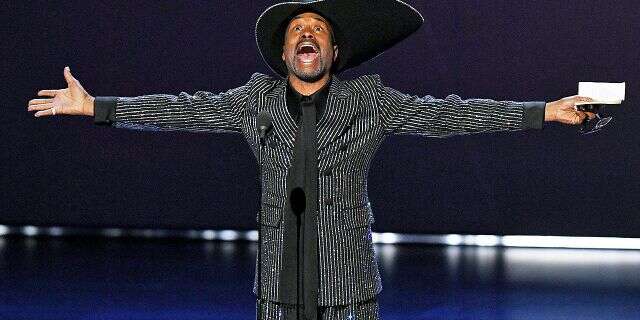
That’s Billy Porter above, by the way, the first openly gay actor to win a performing Emmy, after the many, many non-openly gay actors who have won over all these years. Making a big deal out of this diminishes his honor, since it suggests that his sexual orientation had something to do with his winning the award. I don’t see any reason why who an actor chooses to have sex with should have any relevance to an acting honor.

[UPDATE: Not that it matters, but the Emmy broadcast ratings hit an all-time low. What? People voluntarily passed up a chance to see actresses use their podium time to lecture about acceptance of trans individuals, and basing industry pay levels on gender  equity rather than value?]

1. Country music’s Jackie Robinson. Ken Burns’ documentary “Country Music,” on PBS now, convinced me that Charlie Pride, the first black country music star, deserves more accolades than he has received, as do the white producers and allies, like Chet Akins, Jack D. Johnson, and Louis Allen “Al” Donohue, who made it possible for him to break that culture’s color barrier.

Inspired by Robinson, Pride resolved as a teen to escape the cotton fields. He played minor league baseball, and sang in bars to make extra cash. Then he was “discovered” by two country music figures and advised to go to Nashville.

It’s an amazing story (why Pride’s life hasn’t been made into a movie, I don’t know). Apparently at the beginning of his career, stations played his records without noting his race. In the documentary, Pride describes a Detroit concert where he was introduced to an all-white audience of nearly 20,000 that roared and applauded when he walked out, and then suddenly became silent when they saw his skin color. Do you think that scene might have inspired Richard Pryor to write this one?

2.  Jerk of the Year? Just being the NFL Jerk of the Year is an achievement (there is so much competition), but Antonio Brown, the star receiver signed by the New England Patriots (in their own bid for NFL Jerks of the Year) after he had jerked his way off his previous two teams, then released after two sexual misconduct allegations against him surfaced, went out in a blaze of jerkness.

Immediately after being ditched by the embarrassed Pats, Brown unleashed a torrent of attack tweets, attempting to position himself as a victim. Continue reading →

Sunday Ethics Warm-Up, 9/22/2019: Five Ugly Ethics Stories (Sorry!) [Corrected]

A pleasant Sunday…

as long as I don’t read the newspaper or watch the Talking Heads…

1. Before I finish a long post about the most recent contrived Brett Kanavaugh smear by the New York Times, ponder this quote from the Times review of “The Education of Brett Kavanaugh”: “[The authors] come to a generous but also damning conclusion, which is that Blasey Ford and Ramirez are believable and were in fact mistreated by Kavanaugh as teenagers, but that over the next 35 years he became a better person.”

Ugh. The conclusion is “damning” because it relies almost entirely on confirmation bias: Blasey Ford’s own lawyer revealed that her motive in using her “recovered memory” against Kavanaugh was to discredit any future anti-abortion opinions he participated in as a member of the court. The accusation by Ramirez isn’t, apparently, even believable to Ramirez herself, since she says she isn’t certain that the Mad Penis-Dangler was Bret Kavanaugh. Why then, do the authors find the claims “believable”? Oh, because they want to believe them, of course; they work for the New York Times, and they certainly weren’t going to get their book promoted by their employer and snatched up by its readers if they concluded, as objective reporters would, that there is no more reason to believe Justice Kavanaugh did these things than there is reason to believe he didn’t.

The real ugh is this, however: if even these biased analysts conclude that the accusations, even if true, do not have any relevance on the grown man who was nominated to the Supreme Court because they relate to a minor who existed 35 years ago—and who has, as most children do, grown up—then the episodes that their book focuses upon literally don’t matter, shouldn’t have been brought into Kavanaugh’s hearing,  and should not be used now to denigrate and discredit him.

2. From “Social Q’s,” a glimpse of what a malfunctioning ethics alarm is like. Prompting the frequently appearing question in my mind, “How does someone get like this?” was the query into Phillip Gallane’s advice column from a woman who threw herself a birthday party, directed guests not to bring gifts but to make a donation to a charity she supports instead, and was annoyed that some brought gifts anyway. She asked if it would be inappropriate to send the gifts back with a disapproving note so they “would listen” to her “next time.”

I know what I would do “next time”…

3. Hey, sounds great, Facebook! Why wouldn’t everyone trust your judgment? Facebook announced  a series of changes last week to squelch hate speech and extremism—meaning what Facebook and its allies consider such— on its platform in a letter to the chairman of a House panel. Facebook said it would prevent links from the fringe sites 8chan and 4chan from being posted on its platform—you, know like it blocks links to Ethics Alarms!  Then it explained how it would develop an oversight board of at least 11 members to review and oversee content decisions—like the decision that a wide-ranging ethics blog that has no political affiliation or agenda, written by a professional ethicist of some note, doesn’t meet the Facebook “community standards.”

In other, unrelated news regarding the obstacles being thrown in my path, the Appeals Court in Massachusetts finally alerted me that it was taking “under advisement” the request for an appeal of the rejected frivolous defamation suit filed about two years ago by a banned commenter here whose boo-boo I wounded.

(I am not concerned.) Continue reading →

Reporting The Mysterious Ukraine “Scandal”: Once Again, I’m Fighting The Urge To Conclude That These Are Just Corrupt, Terrible People


And losing.

When the first notice of the unnamed whistle-blower’s complaint about—well, something involving the President and the Ukraine surfaced on the New York Times front page, in an article that was so devoid of facts, details and corroboration that its only excuse for publication was to titillate Trump-Haters, I wrote,

“This is what the Times considers front page news now. Instantly, “resistance” members and Democrats will leap to the conclusion that whatever it is, it’s impeachable. Those who are thoroughly sick of the successive coup attempts will assume that this is one more concocted sliming by the Deep State, so we can have a “Russiagate” style investigation that will hamstring President Trump’s second term… For my part, I’ll wait for actual facts, thanks. I don’t trust “the intelligence community” not to manufacture ways to undermine the Presidency, not after Comey, McCabe, the FISA fiasco, the FBI lovebirds texts, and Mueller’s statements, among other smoking guns. I don’t trust the Times reporting, I don’t trust President Trump not to do or say something that crosses ethical or legal lines, and I certainly don’t trust Congressional Democrats to determine what are serious transgressions by this President and what are typical maneuvers that have only become ominous because he isn’t Barack Obama.”

Well, I’ve been waiting. As predicted, Democratic impeachment-mongers and Presidential hopefuls are screaming to the skies, and the mainstream media has been flogging the as-yet non-story, another species of fake news, as if it were the Second Coming. Yet here is how the New York Times itself explained the alleged scandal:

What did Mr. Trump do?

In a July 25 phone call, Mr. Trump is said to have pressed the president of Ukraine, Volodymyr Zelensky, to investigate Mr. Biden’s younger son, Hunter, who sat on the board of a Ukrainian energy company. Mr. Trump has seized on an unsubstantiated theory that Mr. Biden was trying to protect the company from prosecution when he called for the firing of Ukraine’s top prosecutor in 2016. Rudolph W. Giuliani, one of Mr. Trump’s personal lawyers, has pushed the Ukrainian government to investigate the matter.

Is “said to have”? By whom? This is not news reporting, it’s gossip. The Biden theory is unsubstantiated? The theory the Times has published multiple stories about regarding the President’s interactions with the Ukraine is far less substantiated.

Why is this coming up now?

Because of an intelligence community whistle-blower who filed a complaint last month about the president’s actions. An inspector general deemed the complaint “credible” and “urgent” and forwarded it to the acting director of national intelligence, Joseph Maguire, who has refused to share it with Congress….

Amazingly, it has now been revealed that the “whistle-blower” did not have  direct knowledge of the communications between President Trump and the foreign leader in question. An official who has been briefed on the matter, however, told CNN that the whistleblower “didn’t have direct knowledge of the communications.” The official said that the concerns and subsequent complaint came in part from the whistleblower “learning information that was not obtained during the course of their work.” That’s hearsay by definition, and means that the report has no probative or evidentiary value whatsoever until it is independently verified. Until then, it is also not news.

What did the whistle-blower claim?

The full extent of the whistle-blower’s complaint, as well as the whistle-blower’s identity, is not publicly known. Reporting by The New York Times and others has established that the complaint involves Mr. Trump’s interactions with Ukraine and a phone call with a foreign leader — possibly, but not necessarily, Mr. Zelensky. It is not clear if it includes other matters.

This is really what the Times itself says. A “whistleblower” from the intelligence community made a complaint about something he was told by an an unnamed party about a private phone call with a yet to be identified official.

Here’s my favorite, though: Continue reading →

Morning Ethics Warm-Up, 9/20/2019: Not Funny!

Ah! It finally feels like a September morning!

1. Not fake news, exactly, just half-baked news. On the New York Times front page, right hand column above the fold is the headline “Claim on Trump Is Said To Involve Foreign Leader.” Reading it, we learn that an unspecified complaint has been made by a an unnamed whistle-blower “in the intelligence community” that is “said” (by no named source) to involve President Trump saying something, promising something or implying something, at least partially involving the Ukraine, according to two sources also un-named. This is apparently all being investigated by the appropriate inspector general.

I’m serious. This is what the Times considers front page news now. Instantly, “resistance” members and Democrats will leap to the conclusion that whatever it is, it’s impeachable. Those who are thoroughly sick of the successive coup attempts will assume that this is one more concocted sliming by the Deep State, so we can have a “Russiagate” style investigation that will hamstring President Trump’s second term. Those who are focusing on the mainstream news media’s war on the President will conclude that the Times, having once again exposed itself as less a journalism organization than a Democratic Party hit squad with its self-indicting misrepresentation of accusations against Justice Kavanaugh, rushed a non-story into print as a diversion.

For my part, I’ll wait for actual facts, thanks. I don’t trust “the intelligence community” not to manufacture ways to undermine the Presidency, not after Comey, McCabe, the FISA fiasco, the FBI lovebirds texts, and Mueller’s statements, among other smoking guns. I don’t trust the Times reporting, I don’t trust President Trump not to do or say something that crosses ethical or legal lines, and I certainly don’t trust Congressional Democrats to determine what are serious transgressions by this President and what are typical maneuvers that have only become ominous because he isn’t Barack Obama. Continue reading →

The Lying Game Continues: Was There A 9-11 Switcheroo In North Carolina?

A Paul Krugman column this week titled “Republicans Don’t Believe in Democracy” began,

Item: Last week Republicans in the North Carolina House used the occasion of 9/11 to call a surprise vote, passing a budget bill with a supermajority to override the Democratic governor’s veto. They were able to do this only because most Democrats were absent, some of them attending commemorative events; the Democratic leader had advised members that they didn’t need to be present because, he says, he was assured there would be no votes that morning.

Elizabeth Warren (via tweet), the Washington Post and other news outlets repeated the same story. It wasn’t true. NPR’s North Carolina affiliate checked the facts with local reporter Paul Specht of the Raleigh News & Observer. He explained how the rumor—for that’s what it was, despite Warren, Krugman, the Washington Post et al. reporting it as fact—got started.

“It’s hard to tell where it started,” Specht told NPR.  “You know, in some cases the news and reporters and other observers were victims of circumstance.’

Baloney, by the way. The “circumstance” here was that reporters didn’t verify the story. Specht is covering for his habitually unethical colleagues.

“The vote happened the morning of September 11. And that morning, as we all know, there’s a national moment of silence…And you, know, I think people just took all that information — they heard keywords, they heard, you know, “Republicans vote,” “Democrats absent,” “9/11,” morning of. And then people jumped to assumptions about where the Democrats were. There were a few outlets both locally here in Raleigh, WTVD, and then national outlets, too, they got it wrong. Whether it was Now This, which posts viral videos, the Washington Post, also, its headline was inaccurate. It took it a little while to correct so misinformation was all over the place.”

Wow! Is American journalism terrific, or what? Continue reading →

Ethics Observations On Justin Trudeau’s “Brownface” Scandal

Other than “Hahahahahahahahahahahahahaha!” that is.

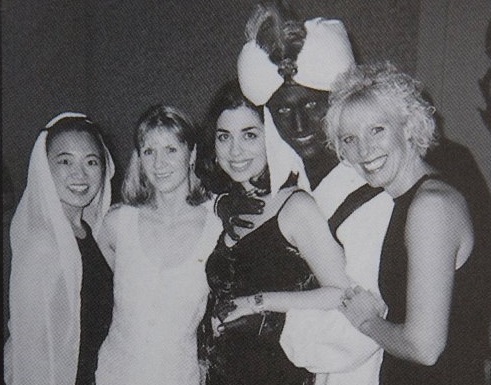
News item: “Justin Trudeau, Canada’s prime minister, wore brownface makeup to a party at the private school where he was teaching in the spring of 2001. TIME has obtained a photograph of the incident. The photograph has not been previously reported. The picture was taken at an “Arabian Nights”-themed gala. It shows Trudeau, then the 29-year-old son of the late former Prime Minister Pierre Trudeau, wearing a turban and robes with his face, neck and hands completely darkened. The photograph appears in the 2000-2001 yearbook of West Point Grey Academy, a private day school where Trudeau was a teacher.”

Also: “The re-election campaign of Prime Minister Justin Trudeau of Canada was thrown into turmoil on Wednesday when a photograph surfaced of him wearing brownface makeup at a 2001 private school party….Speaking with reporters aboard his campaign plane, Mr. Trudeau, who has long championed the rights of racial minorities in Canada, confirmed that he was in the photo and that he was dressed as Aladdin.

“This is something I shouldn’t have done many years ago,” Mr. Trudeau said. “It was something that I didn’t think was racist at the time, but now I recognize it was something racist to do, and I am deeply sorry.”

Observations:

1. Wearing make-up to create an image along with a costume is not “racist.” Either Trudeau is just pandering  and grovelling to political correctness, or he’s not every bright. I’ve written about this before, most notably here (the post that got Ethics Alarms banned from Facebook). How is that make-up a negative commentary on the inferiority or inequality of a race? Not being sensitive to the hair-trigger offense reflexes of minorities and activists looking for a “gotcha!’ is not racist. It is not being sensitive to hair-trigger offense reflexes by minorities and activists looking for a “gotcha!” Continue reading →