Character
The Brutal Ethics Truth About “7 Brutal Truths That Will Make Your Life Better If You Accept Them”
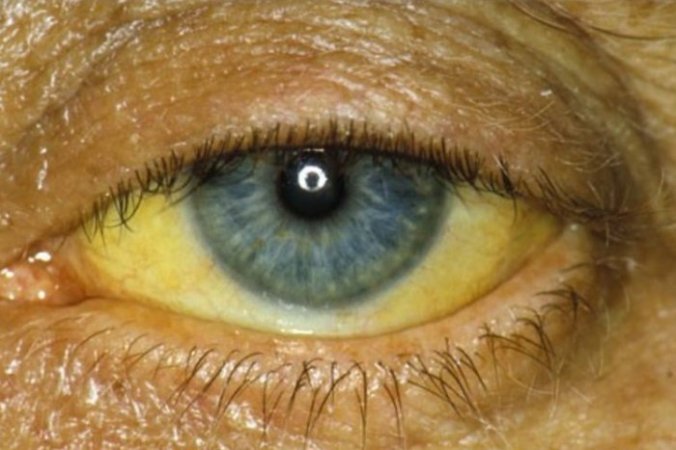
All looks yellow to the jaundiced eye.
Conservative writer John Hawkins published a post called “7 Brutal Truths That Will Make Your Life Better If You Accept Them.”
If I were as cynical as he is, I might say that a better title would be “How to Rationalize Being a Jerk,” but I’m not.
However, his post does demand some ethical perspective. Most, though not all, of his truths are really constructs to justify unethical conduct. Let’s examine them:
1. The average person cares more about what he eats for lunch than whether you live or die.
Maybe, and so what? That doesn’t mean that you should emulate them. To begin with, there is no “average person.” There are individual people, good, bad and in-between. Hawkins writes,
“You tell the average person that doesn’t know you very well that you have a fatal disease and he’ll say, “I’m so sorry to hear that.” Then he’ll forget about it in five minutes while he debates with his friends whether they’re going to Chili’s or the Mexican restaurant down the street. What that means is that everything you want out of life, you better prepare to earn without getting a lot of favors on the way. If you fall, you have to be the one to pick yourself up off the ground, brush yourself off and get your life back on track. You care. They don’t. So it’s up to you.”
But the a stranger doesn’t always react that way. Sometimes he gives you his kidney. Hawkins is supplying an excuse to be callous based on a Golden Rule Distortion: “Do Unto Others As They Would Do Unto You.” Don’t listen to him. Care about other people, and don’t hesitate to ask for help. People are better than you think: they will surprise you. In the meantime, it is your job to be as good as you would like them to be.
2. Life is not and will never be fair
I’ve written about this recently: fairness is a vague and broad concept in ethics. Life isn’t “fair” because life is often random, and nobody is tending the fairness meter. Systems either are fair or are not depending on your point of view. The mainstream conservative view about fairness is that one should play the cards one is dealt and stop complaining about it. It’s facile, though not without some truth: it is better to spend time trying to overcome obstacles than to bitch about them. On the other hand, each of us has an obligation to make the world better for those who follow us. Genuine unfairness, in systems, institutions, the culture and society, should be exposed, attacked, and fixed if possible. Hawkins’ approach would have left the U.S. with slavery, second class citizenship for women, Jim Crow, straight-only marriages, age discrimination, brutal monopolies and unchecked consumer fraud. His #2 is a license to be callous.
3. Most people are shallow
What an elitist and ignorant thing to say. If one has spent any time talking to and getting to know a wide range of people, it becomes clear that the opposite is the case. Again, assuming that most people are shallow provides Hawkins with an excuse to ignore them, or treat them with contempt. Most people will tend to behave as if they are shallow because they are rushed, stressed, distracted and focused on short-term exigencies. Give them time to think, a reason to consider a topic carefully, and the respect they deserve, and frequently unexpected depths will reveal themselves. “Most people are shallow” is a crippling bias for anyone to adopt. Expect the best of people: you will often be disappointed, perhaps, but you will also allow validations of your faith in humanity to bloom.
Writes Hawkins:
“So, use the shallowness of other people to your advantage. Learn to dress like a successful person. Pay attention to how you look. Find ways to give off the appearance that you are doing well. Don’t be a phony—be you, but also take advantage of the fact that a superficial appearance will be the reality to most people.”
Let’s see: pretend to be a successful person, but don’t be a phony; be you, but try to fool people by not revealing who you are. What?
People don’t assume that people who dress well, speak well, have manners and behave in a civilized fashion are successful because they are shallow. They assume that because they have learned from experience that certain traits both aid success and result from it. Hawkins is the one revealing shallowness. Continue reading
Morning Ethics Warm-Up, 3/25/18: “March For Our Lives” Hangover Edition

Good Morning!
1 Exploitation carnage. I feel so sorry for David Hogg. No teenaged male so obviously locked into the arrogation asshole stage of the maturation process, should be exposed to public scrutiny like this. His intemperate and foolish rhetoric will haunt him for the rest of his life. He will either be humiliated when his brain cells kick in, or he will develop into a full-fledged monster. What if he wants to go in a different direction in his life and career? I wouldn’t hire him. Who would? He’s restricted to left-wing activists until he changes his name or does a high-profile mea culpa and goes on a reinvention tour. Celebrity, as Paul Petersen has spent his life trying to teach us, is disastrous for kids; never mind: the cynical, ruthless partisan operatives who made Hogg into their weapon and shield don’t care about him, just the momentary political advantages he represents. When he is chewed up and spit out, as he certainly will be, they will have forgotten his name.
2. A half-Fick sighting! A (she says) transgender woman who calls herself “Lauren” on Twitter claimed to be drugging attendees of a conservative conference in Phoenix, Arizona yesterday, tweeting
“I love my job at the phoenix convention center starbucks and i love slipping my spare estradiol pills in the coffee of anyone wearing a #WesternConservativeConference lanyard.”
Estradiol is an estrogen steroid, prescribed for biological males transitioning to womanhood. Of course, this could be a lie. It could be a false flag tweet from a conservative who wants to make transgender activists look vicious and unprincipled. “Lauren” maybe Ben Stein. “Lauren” may be a dog. Even if the tweet is true, Lauren is only a half-Fick (an Ethics Alarms designation for someone who is open and proud regarding their unethical conduct) because she doesn’t have the guts to identify herself….although she probably revealed enough to be apprehended and charged. How many transitioning males could be working at the Phoenix Convention Center Starbucks?3. The double standards exposed. From Professor Turley:
Former FBI deputy director Andrew McCabe penned an op-ed for The Washington Post to contest the allegation of his “lack of candor” with federal investigators. I have been writing (here and here and here) on the contrast between the treatment of McCabe and former national security adviser Michael Flynn. McCabe has been erroneously portrayed as “losing his pension” but has not been charged. Flynn was charged and accepted a plea deal under 18 U.S.C. 1001 for making a false statement to investigators. Now McCabe is raising virtually the same defense that did not work for Flynn: that there was a lot going on and he was “confused and distracted.”
In a fair world, I want to see people like Michael Flynn charged with lying to law enforcement officials. I want to see Martha Stewart and Scooter Libby charged too. I think lying to investigators should be a crime; it drives me crazy that on just about every procedural on TV, we constantly see officers come back to those they have interviewed and the subjects always say, “OK, I wasn’t being truthful. I was there.’ The nice cops or FBI agents never charge them. They should. Continue reading
Morning Ethics Warm-Up, 3/24/18: Ethics Musings While Not Marching [UPDATED]
A Good Saturday Morning To All!
[If you had a speech impediment and lisped your “s’s”, would you choose this song as your only solo among the repertoire of your singing group? Why didn’t Karen tell her bother? This has mystified me for decades…]
1 It’s irrational and pointless fury day in D.C. Today hundreds of thousands of intellectually dishonest, ignorant or purely emotional citizens will be doing the equivalent of screaming at the sky to call for “something” to be done about gun violence., because “think of the children.” Yes, I think that’s a fair characterization.
Given the chance to suggest actual measures that would stop the equivalent of the Parkland shooting, one of my usually rational but currently virtue-signalling-to beat-the-band friends really made this pathetic argument in response to a Facebook post that was a shorter, gentler version of what I just posted on Ethics Alarms: ‘Where is your empathy? Would you feel this way if your son had been killed in the Parkland shooting?”
Can you believe that? “How would you feel if you were so emotionally ruined, angry and despairing that you couldn’t think straight?” Why, I believe that I would be so emotionally ruined, angry and despairing that I couldn’t think straight—and thus useless to any serious and objective public policy discussion. As I told my friend, when “Why can’t you be irrationally and emotionally biased like the rest of us?” is your reflex rebuttal, you’ve got nothin.
2. Related: YouTube is banning gun instructional videos. This a part of a growing trend in the online platform world to attempt to constrict information and discourse according to ideology and partisan preferences. There is no more justification for banning how-to videos about guns than there is for banning how-to videos for chain-saws. The social media companies are going to have to be regulated as common carriers, or the right of free speech and access to information will be slowly strangled by these left-wing, high-tech, useful idiots.
3. From the ” Tragic Misunderstandings of the Cognitive Dissonance Scale” files. Lindsay Lohan is the new spokesperson for Lawyer.com. What, O.J. wasn’t available? Continue reading
Comment Of The Day: “Morning Ethics Warm-Up, 3/22/18: Nanoo Nanoo, And The Oxford Comma”[Item #3]
Observations:
1. I love it when I am out of the office all day and return to find that my desperately rushed post in the morning spawned multiple donnybrooks.
2. If this were baseball, Mrs. Q would be leading the Ethics Alarms League in batting average. Her Comment of the Day/Comments average leads the pack.
3. This quote…
“If someone were to ask me “what do you want most from our society today?” I’d answer, to have people mind their own business, not assume I’m needing a leg up, and honor those who honor family, faith, and free thought.”
…is as smart, powerful and profound a statement as any that have appeared on Ethics Alarms in nine years.
Here is Mrs. Q’s Comment of the Day on #3 in the post, Morning Ethics Warm-Up, 3/22/18: Nanoo Nanoo, And The Oxford Comma:
How do we as a society make things more fair for a variety of minorities, based on a history of unnecessary biases?
I don’t think it’s possible to make everything equal for everyone forever and always. It’s a nice idea but I’m called to remember the book “The Lathe of Heaven” where the therapist manipulates his patient into “making the world a better place” with disastrous results. For example in trying to solve overpopulation, millions die. In another, an attempt at solving racism turns everyone grey.
The song by Tears for Fears, “Everybody Wants to Rule the World” highlights another dilemma in attempting to make things as we wish:
“All for freedom and for pleasure
Nothing ever lasts forever”There is simply no way to obliterate prejudice. There will always be poor folks, enslaved folks, downtrodden folks, and people who get treated like crap for one reason or another. Obviously this doesn’t mean we stop caring or making effort to be kinder people, which includes examining institutional racism, homophobia, etc. However any “peace” we make won’t last in the next generation or the one after that because some other disparity will always present itself. This is the way of life and the evidence of history from the Egyptians to the Jews to women today being trafficked. So how do we balance the scales for minorities here in the US? Continue reading
Morning Ethics Warm-Up, 3/22/18: Nanoo Nanoo, And The Oxford Comma

Good Morning!
1 . From the “Oh, Come on!” files. As I have mentioned here several times, Georgetown Law professor Professor Paul Butler decided to ambush me with a cheap shot on NPR last year, interjecting “Oh come on!” as I was explaining how a celebrity or prominent man’s inappropriate sexual advances could be initially welcome to a female subordinate, and then later, after, say, the same celebrity is regarded as toxic by that woman’s peer group, what were originally “welcome” (or not unwelcome) attentions could become retroactively unwelcome, prompting an accusation of sexual harassment. I was 100% correct. Last month, in an email exchange on ten topic with the NPR host, I was told that both she and the professor thought I was making excuses for Donald Trump.
Thus does Trump hate and bias make intelligent discourse increasingly difficult. If I had used Al Franken as my example instead of the President, I presume my commentary would not have been kneecapped. But I digress…
In jaw-dropping revelations in a new book coming out in May, actress Pam Dawber and others describe how co-star Robin Williams often treated her and other actresses on the set of “Mork and Mindy.” The book discusses Williams’ “improvisations”…
[M]any of these additions were sexual and directed at the women in the cast, such as when he goosed the actress who played Mindy’s grandmother with a cane.
[Director Howard] Storm said: ‘I’m standing there watching this and I’m thinking, “oh my god” and I just laughed. I thought she was going to turn and say: “How dare you stick a cane in a woman’s ass?” That sweet old lady.’There was nothing lascivious about it, in his mind. It was just Robin being Robin, and he thought it would be funny. He could get away with murder.’
Other times Williams would grab Dawber’s bottom or her breasts simply because he was ‘bored.’
‘He’d be doing a paragraph and in the middle of it he would just turn and grab her ass. Or grab a breast. And we’d start again. I’d say, “Robin, there’s nothing in the script that says you grab Pam’s ass.” And he’d say: “Oh, ok,”‘ Storm added.
Garry Marshall, the producer of the show, said: ‘He would take all his clothes off, he would be standing there totally naked and she was trying to act. His aim in life was to make Pam Dawber blush.’
But Dawber remained unfazed, she admits: ‘I had the grossest things done to me – by him. And I never took offense. I mean I was flashed, humped, bumped, grabbed. I think he probably did it to a lot of people…but it was so much fun.
‘Somehow he had that magic. If you put it on paper you would be appalled. But somehow he had this guileless little thing that he would do – those sparkly eyes. He’d look at you, really playful, like a puppy, all of a sudden. And then he’d grab your tits and then run away. And somehow he could get away with it. It was the Seventies, after all’.
Wait: if it was the 70’s, does that mean that in the parallel universe where Robin Williams has conquered his demons and is running for the U.S. Senate as a Republican (those parallel universes are funky, let me tell you), Dawber couldn’t come out and destroy his candidacy by describing his outrageous behavior? Does it mean everyone would say that she was being unfair, and that she wouldn’t be lionized as another #MeToo hero?
Comment Of The Day: “When Ethics Alarms Don’t Ring: Snapchat Approves A Domestic Abuse Game Ad”
Video games and their effect on societal violence have been mentioned in the comment threads of several recent posts of late, so Michael West’s essay on the topic is especially timely (even if my posting of it is tardy). I am dubious about claims that forms of entertainment warp healthy minds, as I am old enough to have seen a series of modes and genres be condemned from various sides of the political spectrum as turning children into violence-prone monsters. Even the Three Stooges once were fingered as making kids unfeeling sociopaths. I’m also historically astute enough to know dime-novels about bloody Wild Bill Hickock shootouts, pulp novels with half-naked blondes on the cover and EC comics about shambling, face-eating corpses were similarly accused. My son played “The Godfather” video game, and five earlier versions of the “10 Violent Video Games” the Parenting website says to avoid, all with my blessing.
When my son was 18, he bought a gun, too. I’m not worried. He has many friends, a strong peer group, he has strong ethical values and character, and is kind and thoughtful. That is not to say that every new social influence is different, and that attention must be paid.
Here is Michael West’s Comment of the Day on the post, When Ethics Alarms Don’t Ring: Snapchat Approves A Domestic Abuse Game Ad
Video games have been out nationally for quite a while. Even video games that have abstract versions of violence…like Mario Brothers or Donkey Kong…and I mean old school versions of those games like I used to play on Apple IIe. But for us to seriously contemplate capital V, capital G, capital V Video Game Violence as a force affecting the acculturation of our youths, we ought to fast forward in time specifically to “realistic” video game violence. An estimate that will be off plus or minus a few years, the *mid* 1990s is when our culture saw First Person Shooters enter the market, with early favorites like “Doom” and “Wolfenstein 3D” for desktop computers and ultimately entering the console market. In other words, Video Game Violence is still a young force in our society. This makes measuring its effects a bit problematic.
As we raise our young, they are acculturated through several INPUTS…all of which communicate to some level or another the values that the culture espouses OR worse, inadvertently communicates values the culture notionally DOES NOT espouse, but accidentally promote. In a manner of speaking, “we are what we eat”. My personal take up front is that YES, video game violence, as a subset of ALL informational inputs DOES affect each individual’s acculturation. The real questions are, “how much” and “are it’s effects mitigated by other inputs”?
I would think that for video game violence to start acculturating the young towards violence, they would need to be inundated by it and have few effective counter-acculturating forces in their lives teaching them that wanton and purposeless violence is bad. For the first 20 years of video game violence, my gut tells me we can explain away its effects as having been minimally noticeable without deeply searching each individual or practically non-existent. Children of the early years of video games had plenty of other inputs in their lives as well as outlets for their minds at a vastly greater ratio than the violence int he games…first and foremost active and attentive parents.
That leaves us really with only about 15 years of any generation that could be said to be inundated by truly graphic depictions of limitless violence…most of those age cohorts are still too young to see how they turn out as adults. Again, my gut says that you’d see actual correlations, if they exist, in about another decade. And even then, I don’t think we’ll find a direct causal effect between video game violence and individuals acting on violent tendencies *except in marginal cases*. Continue reading
Ethics Review: “Three Billboards Outside Ebbing, Missouri”
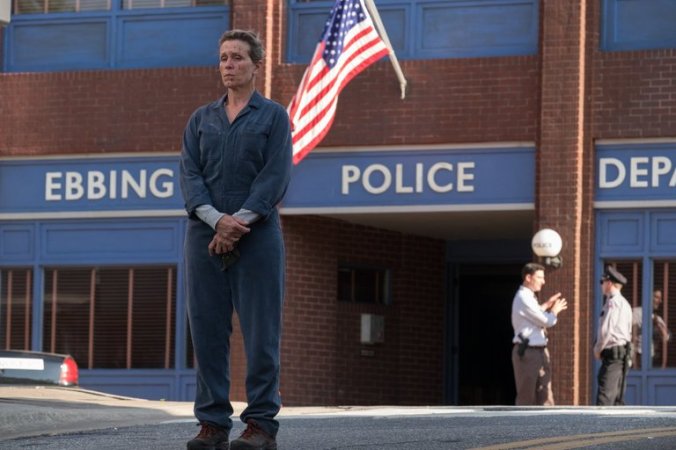
I watched last year’s “Three Billboards Outside Ebbing, Missouri,” twice, just to make sure it was the profound ethics movie I thought it was. It is. None of the reviews described it that way, of course. Here is the New York Times:
“The movie opens on low boil with Mildred behind the wheel of her station wagon near three derelict billboards…she uses the billboards to announce her crusade … a way to get things jumping (the investigators, the tale) and splash some foreboding on an outwardly pacific scene. Much of the story involves the ripples of outrage, confusion and buffoonery that the billboards inspire and that soon envelop almost everyone Mildred knows. Months after her daughter’s death, grief has walled her in; isolating and seemingly impenetrable, it is inscribed in the hardness of her gaze and in her grim new identity as a mother of a dead girl. The billboards turn that grief into a weapon, a means of taking on the law and assorted men — a threatening stranger, a vigilante dentist and an abusive ex (John Hawkes) — who collectively suggest another wall that has closed Mildred in….”
None of which addresses what is remarkable about the film, which is that it shows what causes our ethics alarms not to ring—Frances McDormand as Mildred and Sam Rockwell as Dixon, a racist and vicious deputy, in particular demonstrate what it is like to be driven by non-ethical considerations of the darkest and most passionate sort—and more important, what causes them to start ringing again. Most reviewers described this as a dark and depressing film. The ethics alarms are mostly off again as the film ends, and that is ominous, but its main ethics message is uplifting in many ways. “Three Billboards” teaches us that even broken, ignorant, alienated human beings have the capacity to access their innate instincts for compassion, justice, forgiveness, selflessness and kindness, and even when our ethical selves seem permanently overcome and decisively defeated, they can burst out again, in control, salvaging what’s best about the species.
There is a moment early in “Three Billboards” that signals that it is not only going to show us what monsters anger and grief can transform us into, but also that what George Washington’s list of 110 Rules called “that little spark of celestial fire called conscience” is remarkably resilient. A sheriff—the ethics compass of the story, played by Woody Harrelson— visits Mildred after her billboard messages embarrass him and roil the town. She is hard and cold as marble as he tries to explain his failure to find her daughter’s rapist/killer, even after he reminds her that he is dying of cancer. Suddenly the sheriff has a violent spasm: he coughs up blood on himself and Mildred. And we see her fury evaporate in an instant. The compassionate and caring mother she once was emerges, if only for a few moments. ( McDormand is such a superb actress that she pulls off the sudden transition convincingly and movingly: you believe it, though it is like watching Mr. Hyde turn into Dr. Jekyll in the snap of a finger.) Later, when again her fury has been aroused, we see the same woman firebomb the police station and watch implacably as her nemesis deputy burns. A warning: just because the ethics alarms can ring doesn’t mean they are working well enough.
Sam Rockwell’s character also reveals surprisingly that his ethics spark has not been entirely extinguished, again thanks to a catalyst supplied by the sheriff. This transformation caused considerable criticism of the film among critics and artists in Hollywood, and some attribute the film’s failure to win the Best Picture Oscar to the fact that a racist is redeemed and revealed to have an ethical core. But except for the sociopaths and psychopaths among us, admittedly a disturbingly large group, we all have that ethical core. We have the ethics alarms too, ready to be re-activated, even if they aren’t in perfect working order. Yes, this is even true of racists. So much of our current political discourse is driven by the false construct that a single belief or a single lapse of reason marks an individual as irredeemable. Its easier to marginalize and demonize them that way. But it isn’t true.
Indeed Ethics Alarms often declares certain conduct and words as signature significance, proving that an individual is unethical because such actions and thoughts are alien to ethical human beings. “Three Billboards Outside Ebbing, Missouri” reminded me that people may be unethical–Mildred and Dixon, the deputy, could never be called ethical, for ethical people don’t set police stations on fire or throw young men out of second story windows, as Dixon does—but that even unethical individuals can find their ethics if you give them a chance.
And if they can find their ethics, so can all of us, and so can society. There is hope.
________________________
Addendum: I cannot leave “Three Billboards” without a salute to one of its most powerful scenes, when Mildred tells a priest why she doesn’t care what he has to say when he comes to her home to admonish her for the messages on the billboards:
Bingo.
Once Again, This Is Why Climate Change Scolds And Activists Have Neither Credibility Nor Integrity

Blogger Ann Althouse received a trenchant comment on her post chiding New York Times columnist Nick Kristof for flying to Easter Island so he could deliver a metaphorical warning about climate change. Noting that Kristof could have leaned all he needed to learn about Easter Island’s well-documented environmental catastrophe without flying halfway around the world by jet, she wrote,
“How on earth….did Nicholas Kristof think he could get away with that sanctimony?! DO NOT LECTURE US! Let your example come first, and then you can talk. You flew to Easter Island — you led a tour, enticing others to fly to Easter Island — so obviously, you think nothing of your carbon footprint or the carbon footprint of all those other people who jetted out there with you. When your actions are so radically different from your words, I don’t believe your words. The depredations of global warming may be coming, but I don’t believe that you believe it.”
Bingo. But Althouse commenter JPS really nails it, writing [remember, AGW is Anthropogenic Global Warming), Continue reading
Morning Ethics Warm-Up, 3/20/18: Life, Death, Fairness, Dissonance And Sanity

1 Let’s see more of such Ethics Heroes, please… In Upper St. Clair, Pennsylvania, John Orsini, has gone to court to stop his ex-wife from allowing their son, 17-year-old Antonio, from playing high school football in his senior year. Antonio has already suffered at least three concussions. Antonio’s mother and John’s ex-wife, Janice, says that her son understands the risks, and that doctors have OK’d his continued play.
But he doesn’t understand the risks—apparently neither do those doctors—and he is considered a minor under the law because teenagers are prone to poor reasoning and impulsive decisions…especially when they have incipient brain damage.
CNN is eager to hear his position on gun control though. But I digress..
Says the CBS news story: “John contends that after these concussions and sub-concussive hits, medical research shows that Antonio would be in grave danger if he continues to play football.” He contends? There is no contention: that is fact.
“I’m trying to save his future. I’m trying to save his life,” he said of his son.
Janice and her attorney issued a statement, saying in part,
“The mother and her 17-year-old son have reasonably relied upon the input and opinions of his treating physicians and medical providers, and have considered the state mandated safety and concussion protocols followed by the school district, in deciding whether it was appropriate for him to continue to participate in football.”
John believes the court will side with him. “If you have a significant indication that the child is being placed in harm’s way, and it’s brought to court to protect the child, it’s the court obligation to do so,” he says. I wouldn’t be so sure. This is football country, and football fanatics are in denial. They’ll get thousands of children’s brains injured before they are through.
“I’m hopeful that my son will just go on, get a good education and lead a healthy life. That’s all I want,” said John, whose other two sons no longer speak to him over this conflict.
Good luck.
Let’s hope Anthony is given then chance to grow smarter than his mother.
2. Let’s see, which Trump Derangement news media story should I post today? Every day, every single day, I have literally dozens of biased, vicious, stupid, unprofessional and blatantly partisan mainstream media news reports and pundit excesses to flag as unethical. Here, for example, is a New York Times columnists advocating for Rex Tillerson to betray all professional ethics, confidentiality, trust and responsibility by revealing everything he heard or saw as Secretary of State that could undermine Trump’s administration. It’s called, “Burn it down, Rex.”
Let me repeat: for journalists to set out to intentionally poison public opinion against the elected President of the United States by manipulation and hostile reporting is unethical and dangerous. This conduct has been the single largest ethics breach in the culture for more than a year, and one of the worst in U.S. history. In strenuously condemning journalism’s abdication of its duty to support democratic institutions and to remain objective and responsible, I am not defending Donald Trump. I am attempting to defend the Presidency itself.
Today I pick…this: Continue reading


Here is the second of two Comments of the Day regarding the post-Parkland gun control freak-out, authored by recent addition to the commenter ranks, OhThatGuy, on the post, Unethical Website Of The Month, “March For Our Lives” Edition: Change.Org.
(The first is here.)
The real issue, at least from my perspective, isn’t guns and gun control. Yes, this is one of the big emotional triggers right now, has been for years, and will continue to be so as long as there exists a gulf between those who enjoy the rights and benefits granted by the 2nd Amendment and those who do not.
The underlying concern to me is the lack of independent thought. While this is somewhat excusable in kids, it’s not in what are supposed to be adults. Displays such as the walkouts and marches are nothing more than peer pressure or what I call the Bandwagon Principle or Bandwagon Effect– doing something simply because others (in my peer group) are doing the same thing without any actual thought put into the decision. I see this on a daily basis – I teach juniors and seniors in high school.
Growing up, my parents, especially my father, were as near as I can remember, completely objective about things. There were no passionate appeals to emotion regarding the hot topics of the day. I was encouraged to read and form my own opinions about things as none were supplied to me from Mom and Dad. We (my friends and I) read the two newspapers available each day as well as Time, Newsweek, and other publications. This was in the early to mid 80’s so we weren’t subject to the cacophony of modern media but were as well informed about current events as most teens could be. The short version is, if I was to have a publicly stated opinion about something, I’d better have some idea what I was talking about and some facts to back it up. Any discussion of an issue that started with “I feel that…” or “They need to do SOMETHING!” wouldn’t have lasted very long. I don’t remember ever being told anything about what to think on a subject or even led to a conclusion to fit what my parents thought I should think. It simply wasn’t how they operated. Continue reading →