Obesrvations on Gavin Newsom’s Unethical Quote of the Week

Listen above to Newsom, the incompetent governor of California, as he engagingly insults a roomful of African Americans. Promoting his Presidential campaign-launching memoir, “Young Man in a Hurry,” Newsom was asked about his dyslexia and his personal experiences that voters could relate to (the old “he understands people like me” trope that Bill Clinton exploited so well). He responded by describing his struggles with dyslexia and somehow managed to sound like he regarded his low SAT scores as a badge of honor, telling the almost all black audience: “I’m like you. I’m no better than you.”

Already there are many discussions of this—what was it? A gaffe? A canny bit of self-deprecation? Smoking gun patronizing?—on the web and social media. To me, and I admit I’m mired in confirmation bias when I look at anything Newsom does through the lens of his frightening EA dossier—I mean, just look at that mess!— I classify the remark as pure res ipsa loquitur: the thing speaks for itself. Newsom blundered into expressing the attitude progressives and Democrats have had toward American blacks for decades. They believe that it is a voting bloc that is easily fooled and exploited, and, as a group, gullible and not too swift on the uptake. That’s Newsom, and that’s the Democratic Party that he wants to lead.

Happy Birthday, George Washington From Ethics Alarms, And Thank Your Dad For Us Too…

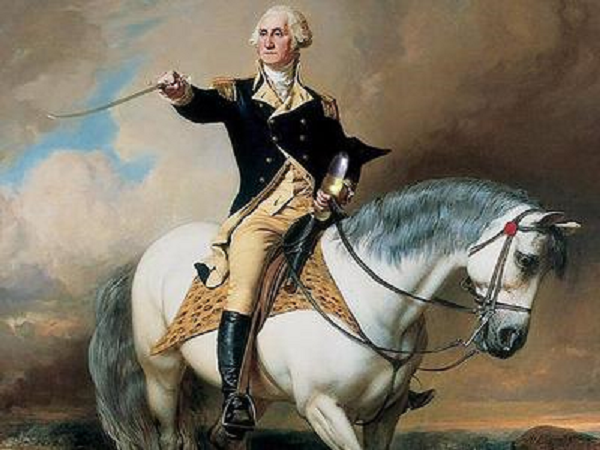
It’s George Washington’s birthday. Nine years ago I wrote, in one of my annual posts on perhaps our most important President (George Will calls him “the Indispensable Man) that something has gone seriously wrong when one’s blog has 287 posts on Donald Trump and only six about Washington. I don’t even want to think about what the count is now, but here is another one in George’s column.

George Washington’s father Augustine had at one time or another run across a list of 110 virtues that young men should adopt and practice in order to be become civil, respectful and honorable members of polite society. He made George, and presumably all his sons (he had six of them) copy them by hand to aid in memorizing the list. George, at least, dutifully committed to memory “110 Rules of Civility & Decent Behavior in Company and Conversation,”  which was  based on a document composed by French Jesuits in 1595; neither the author nor the English translator and adapter are known today. The elder Washington was following the theory of Aristotle, who held that principles and values began as being externally imposed by authority (morals) and eventually became internalized as character.

Those ethics alarms installed by his father stayed in working order throughout George’s remarkable life. It was said that Washington was known to quote the rules when appropriate, and never forgot them. They did not teach him to be the gifted leader he became, but they helped to make him a trustworthy one.

The list has been available on Ethics Alarms under Rule Book since its beginnings in 2009. By all means read the whole list; I have used it often in ethics seminars but haven’t referred to it here for too long. The 90 rules omitted in the list below contain some gems too, and many that raise curiosity about what exactly the author was thinking of. For example, I find #2. “When in company, put not your hands to any part of the body not usually discovered” and #3. “Show nothing to your friend that may affright him” intriguing.

Below are my 20 favorite entries from the list that helped make George George, therefore helped George make America America:

Friday Rainy Day Open Forum

I used to complain about how much of Northern Virginia winters were spent in the rain, but the deluge overnight here, which is going to restart any minute, could not be more welcome. My neighborhood has been iced-over for weeks, with snow on the ground longer than any time during my decades long residence. (Naturally, this is just more evidence of climate change and global warming, “experts” say, and they know best.) The warm rain is ending that, meaning that walking my over-enthusiastic dog, Spuds, will no longer be life-threatening…at least not as life threatening.

I have too many things I want to write about, and as always, I am hoping to find some guest posts (as in “you write about it so I don’t have to” posts) here today when the dust settles. Olympics ethics stories will be especially welcome, because I refuse to watch the hypocritical spectacle or read about it unless someone sends me a tip. I am very tempted, however, to write about Elaine Gu, the all-American super-star skier who competes representing China in this Winter Olympics. According to the Wall Street Journal, Gu and Zhu Yi, a fellow American-born figure skater who now competes for China, were paid a combined $6.6 million by the Beijing Municipal Sports Bureau in 2025 for “striving for excellent results in qualifying for the 2026 Milan Winter Olympics.” In all, the two were reportedly paid nearly $14 million over the past three years. The payments were revealed when the Beijing Municipal Sports Bureau budget was posted online with the names of Gu and Zhu. Their names have since been scrubbed from the public report.”

Nice. Gu is revolting, and it also proves how far the Olympic have come from their original roots of extolling amateur athletic competition. Gu still is paid by some American corporations to be their sponsors. They are also revolting. Gu’s betrayal of her own nation raises the ethical issue of dual citizenship. She’s a great walking, talking, greedy, ethically-inert example of why we shouldn’t allow it.

But don’t get me started. You get started…

Someone Is Actually Allowed On TV Who Vomits Junk Like This As “Commentary”…Wow.

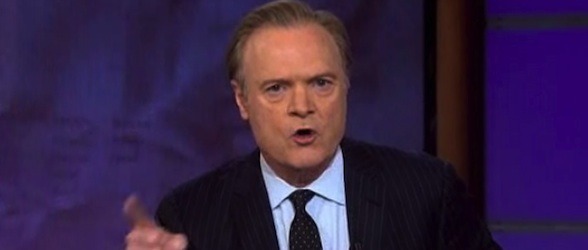
True, the junk salesman is Lawrence O’Donnell, who is not only Trump Deranged but a serial killer of facts, fairness, objectivity and responsible news coverage who been running amuck on MSNBC, aka. MSNOW, for decades. But even partisan propagandists masquerading as journalists should have some standards enforced on them by their bosses, shouldn’t they? How can the network justify keeping someone employed who offers audiences junk like O’Donnell’s rant yesterday over Stephen Colbert being told by CBS that he had to abide by the FCC’s “Equal Time” regulations?

Here’s O’Donnell, ranting…I think I’ll intersperse my comments in red this time:

Jesse Jackson (1941-2026)

I chose that memorable Saturday Night Live bit above because it shows Jesse Jackson, the civil rights leader who died today, at his best: smart, self-deprecating, charming and likeable. Jackson could slide into demagoguery (he was good at it), and he was frequently, even usually, a divisive presence on the national scene. Nonetheless, he was ultimately a catalyst for more good developments in American society, culture and politics than bad. But it’s a close call.

Civil rights was by no means achieved by the time Martin Luther King was assassinated in 1968. The stain of Jim Crow was still strong in the South, and de facto segregation was rife everywhere else, as in my hometown of Boston where it often seemed like there were more black players on the field playing for the Red Sox than in the stands at Fenway Park. The school busing controversy was six years away in 1968.

With the eloquent and charismatic King martyred, the nation needed a new leader of the civil rights movement. Malcolm X was brilliant and charismatic but radical and racist. Rev. Ralph Abernathy was boring, a pale (no pun intended) successor to King. The other leaders of the civil rights movement resonated as grifters, determined to prove Eric Hoffer right when he argued that “Every great cause begins as a movement, becomes a business, and turns into a racket.” As happens so often in American history, Jesse Jackson was the right leader to emerge when the nation needed him.

Oh, You Didn’t Think I Would Forget Presidents Day, Did You? [Embarrassing Gaffe Corrected]

Well, to be truthful, I almost did. The contrived holiday seldom occurs this early. Nevertheless, I’m going to recognize Presidents Day with re-posts of two essays about U.S. Presidents, neither of which were originally written for the holiday.

The first is one of my favorite mysterious tales about any President, in this case George Washington, and the second, from 2015 and re-posted five years ago, is my favorite story about any President ever.

Here they are:

Pssst! Bill Maher! The “Saved By God” Belief Has Inspired Some of Our Greatest Presidents. Shut Up.

Atheists and agnostics in the public sphere don’t have to be obnoxious, but an awful lot of them are. Their explanation for where the universe came from is no more persuasive that that of the faithful (The Big Bang? Come on.) but they just can’t restrain themselves. HBO’s Bill Maher is a prime example: along with mocking committed relationships (he hates the concept of marriage), extolling drugs and debauchery, and generally keeping his Axis of Unethical Conduct membership current, he ridicules Christianity at every opportunity.

The fact is, and it is a fact, that the United States of America had a much healthier and ethical culture before organized religion had discredited itself so thoroughly, driving whole generations away. Moral codes are especially essential for those who don’t have the time or ability to puzzle through ethics, and believing in God is the best catalyst for an ethical society that there is….and it has always been thus.

Heck, just look at what a jerk Maher is. That’s what atheism can do to you. But I digress.

My target here is more narrow. On last week’s “Real Time,” Maher sneered at the belief that God saved Donald Trump from being assassinated as stupid and “dangerous.” “People see signs because they want to see them. It’s why stalkers think Taylor Swift is blinking ‘marry me’ to them in Morse Code,” he explained. “It gets dangerous when the signs make someone think God is on their side,” Maher continued.  “Republican Congressman Mike Collins said after the shooting, ‘God spared Ronald Reagan for a reason. God spared Donald Trump for a reason. God doesn’t miss.’ Really? Tell that to John Lennon, Lincoln, JFK, RFK, and Martin Luther King. Look, the asshole who shot at Trump was cowardly, unpatriotic, selfish, vile, and weak, and he should rot in hell, but thinking that God protects your heroes but not mine? That isn’t cool either.”

How do you know, Bill, that God doesn’t protect your heroes for a very good reason? I can think of several good reasons for that, as well as for squashing you like a bug. Of course the certitude that God is responsible for anything is confirmation bias: my wife, the daughter of a Methodist minister, frequently expressed contempt for the faithful who simultaneously said that “God works in mysterious ways” and “there are no coincidences” while conveniently asserting that they had figured out those mysterious ways. But if Bill knew as much about American history, leadership and the Presidency as he should, he would know that the belief that God has saved them for a reason motivated many of America’s greatest leaders. It could have been dangerous, I suppose, but so far, that belief had been overwhelmingly beneficial to our nation. Perhaps even its salvation.

Leadership requires special character traits, the right formative experiences and a lot of luck. National leadership arises out of an individual’s conviction that they are uniquely qualified to do a better job than anyone else, accompanied by the passion, conviction and charisma necessary to convince others of their abilities. That’s why so many of our Presidents have been narcissists, true, but the anti-American trope that our leaders only seek power, wealth and personal benefits is, based on my lifelong study of history, garbage.
Ethics Quote of the Month: Lindsey Vonn

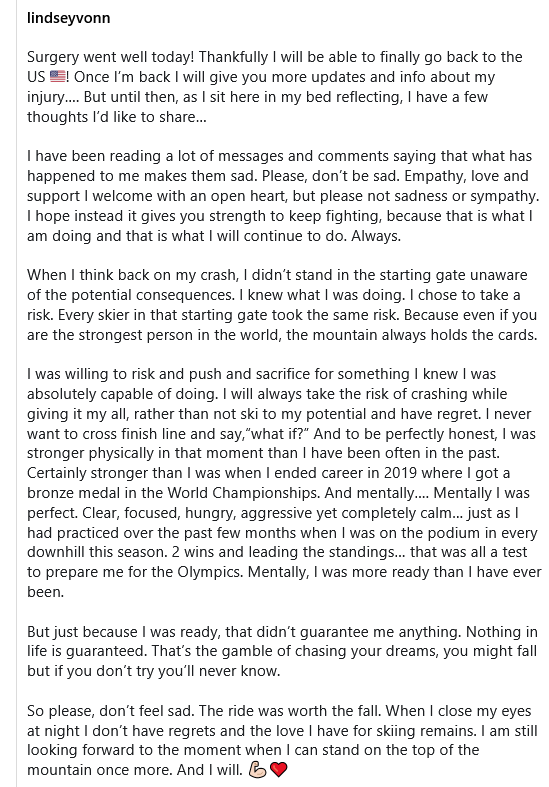
For a while it looked like star American downhill skier Lindsey Vonn would lose the leg she broke a week ago when she crashed 13 seconds into her run and was airlifted off the course by helicopter. Vonn suffered a complex tibia fracture that will require multiple surgeries to repair. Her third surgery was completed successfully.

I came across Vonn’s post about her injury and the state of mind that led to it while I was completing the last post about inspiring poems. In the last Open Forum, there was some criticism of the athlete for subjecting herself to the risk of further injury by insisting on competing despite a recent and unhealed ACL tear. Her Instagram post below persuasively addressed such critiques. It also struck me as perfectly embodying the lessons and values contained in Kipling’s “If,” my father’s favorite poem and one of the inspiring works of poetry schools no longer teach.

Lindsey wrote,

Perfect.

On Lincoln’s Favorite Poem, and the Poems’ We Memorize…

This topic is almost tangential to ethics, but not entirely. I give Althouse credit for raising it: she sometimes comments on crossword puzzles—I hate crossword puzzles and have never finished one in my life—and was set off into one of her tangents by the clue, “8 letters: “Poem so beloved by Abraham Lincoln that he carried it in his pocket and memorized it.” As it happens, I know the answer (Ann did not): it’s Poe’s “The Raven.” No surprise there: Abe was a depressive, and that dark poem about lingering suicidal thoughts fits his character and also his taste in poetry. I think “The Raven” is doggerel, and so were Lincoln’s poems: yes, he wrote poems, and was always puzzling to me that such a poetic writer would write such pedestrian poetry. He’s nt the only one who fits that description: Herman Melville’s poems, save for the one that ends “Billy Budd, ” is also shockingly bad. But I digress…

Ann guessed that the poem was “Invictus,” which would make sense if Abe favored a poem that inspired him, as, I believe, many of us do. That one ends with the famous verse,

“It matters not how strait the gate,

How charged with punishments the scroll,

I am the master of my fate,

I am the captain of my soul.”

Teddy Roosevelt loved that one, as you might guess. The topic got me thinking about how our schools used to teach ethics as well as literature, not to mention mental acuity, by requiring us to memorize poems. I’m sure they don’t do this now, and I’m also confident that the declining ethical instincts as well as literary competence of today’s youth are in part rooted in this sad development.

Poetry is becoming a dead genre. Althouse excluded songs from her musings about what favorite poems say about our values and character, and I find that strange. Song lyrics are poems, at least the best of them. No unscored poem touches me as much as Irving Kahal’s lyrics to Sammy Fain’s haunting melody, one of my late wife’s favorites….

I’ll be seeing you
In all the old familiar places
That this heart of mine embraces
All day through

In that small cafe
The park across the way
The children’s carousel
The chestnut tree, the wishing well 

I’ll be seeing you
In every lovely summer’s day
In everything that’s light and gay
I’ll always think of you that way

I’ll find you in the morning sun
And when the night is new
I’ll be looking at the moon
But I’ll be seeing you

Similarly, the touching Longfellow poem about his depression during the Civil War over the death of his wife, the wounding of his son and the conflict dividing his country was set to music, making it classic Christmas song that has endured in the culture beyond most of his poems. Putting a poem to music shouldn’t disqualify the poem as a poem, though the melody can enhance its power and popularly.

My favorite poems were narrative poems the celebrated heroism, courage, sacrifice, devotion and nobility. I have written several times about my father’s favorite poem, Rudyard Kipling’s “If” : the lines “If you can meet with Triumph and Disaster…And treat those two impostors just the same”; has become my credo over the years, and served me well. This past Halloween I posted my favorite poem, “The Highwayman,” which I memorized when I was 10 and have recited to audiences many times since. It is about a young woman who gives her life to warn her lover. I also memorized Longfellow’s “Paul Revere’s Ride,” an inspiring poem about an American patriot.

Rep. Ro Khanna (D-Cal.) Locks Up “Incompetent Elected Official of the Month” AND Chases the Leaders in the Super-Competitive 2026 “Unethical Asshole of the Year” Race!

This is so exciting!

Also depressing, of course. I believe it is fair to conclude that the U.S. Congress has never had so many unqualified, intellectually inferior, obnoxious, ethics-free jackasses staining its halls and reputation at the same time. True, it is difficult to assess the quality of our elected officials prior to, say, World War II, but my conclusion is based on the belief that if the U.S. ever had a government more dominated by knaves, villains and fools, we wouldn’t have lasted this long.

Even with such daunting competition (Marjory Taylor Green, “The Squad,” Rep. Raskin, Rep. Boebert, Senator Senator Hirono, et al.) Khanna managed to stand out yesterday. No only did he state on the floor of the House and on public media that four men were sex criminals when they were not, he followed up his indefensible gaffe by refusing to apologize and instead stooping to “Whataboutism,” Rationalization #2, the Democratic Party’s favorite after #22, “It’s not the worst thing.” Here is #2, if you haven’t reviewed the Rationalization List lately:

Ethics Observations On Atty. Gen. Bondi’s Appearance Before The House Judiciary Committee

I will stipulate here that Bondi is unethical, unprofessional, incompetent, and a hack attorney who was arguably the worst of Trump’s Cabinet appointments once Matt Gaetz withdrew. Nothing that occurred at today’s embarrassing (to everyone, including me) hearing altered any of that. Furthermore:

1. Being rude and confrontational to members of Congress is demeaning to our government, however much our terrible elected representatives deserve it. Bondi’s boss might enjoy a “fiery” hearing, but it is disgraceful and unnecessary. Being cool under fire is what Americans should expect from their top lawyer. If Democrats like Rep. Jayapal and Rep. Raskin want to act like hyper-partisan assholes as they so frequently do, the best way to expose them is by contrast.

2. Nah, there’s no mainstream media bias! CNN actually had the gall to write, “It seemed Bondi was playing to the “audience of one” — Trump. But that came potentially at the expense of appealing to an American public that really does want answers.” If the public “wants answers,” it is incumbent on Congress to run hearings that are substantive and involve genuine matters of concern, rather than throttle a contrived scandal that was supposed to embarrass President Trump but that has behaved more like a boomerang. The Democrats on the committee seemed to only be interested in “gotcha!” questions, attacking the President, and deflecting from their own President’s absolute inertia on the same matter they were criticizing Bondi for her lack of zeal regarding. Had the committee members delivered a fair and professional inquiry, or even attempted to hold one, CNN blaming Bondi for failing to sufficiently enlighten the public would be valid. But they didn’t, and it isn’t. The CNN commentary once again just proved again that the news media is interested in partisan advocacy above all else.