What Does AI Have To Do With President Trump? Oh, Just Nothing, But Don’t Ask The Trump Deranged…

I must credit Ann Althouse for pointing me to an August opinion piece by the New York Times’s NeverTrump fake conservative Bret Stephens (who wants to repeal the Second Amendment!). I guess I should check out the Times more often; it’s just that it is an enemy of the people, one of the worst, and I resent what the paper has done to American journalism and, as a consequence, our nation.

But I digress. The subject of Stephens’ August column, “I’m Begging You: Never Write With A.I.,” is that learning to write clearly and well is an essential human skill, and one that has important feedback. In addition to making communication between human beings better (more effective, more persuasive, more rational) writing also clarifies the writer’s thoughts, requires close examination of arguments, biases and assumptions, and, essentially, the more one writes, the more adept one becomes at life competence.

I agree with the theory, with a blazing caveat. Stephens is speaking from the biased perspective of one whose associates are all in the upper echelons of educated society, are well above average intelligence, and who work, play and live among the minority of Americans who read, have articulate conversations, and place a high priority on verbal interaction. My late wife and I would sometimes change our table at a restaurant because the conversation at a table next to us was so banal and inarticulate that we wanted to scream.

Military analysts have noted that one of the reason Ulysses S. Grant was such a successful general during the civil war was that his written orders were masterpieces of clarity, telling subordinate exactly what they had to do in straightforward prose. You can see that same skill in his autobiography, which Grant wrote in his final days while dying of throat cancer so his family could pay off his debts with the income from its sale. (Which it did. Mark Twain published Grant’s story.) Today, most students graduate from high school unable to write well, or even coherently. You learn to write by reading and writing; I had to compose five-page essays in the 5th grade, ten-page essays in the sixth grade, and up to 20-page compositions, (with footnotes!) in high school. I wrote a 116 page honors thesis as a senior in college. Later, when I was an administrator at Georgetown University Law Center, I was stunned to learn that GULC was admitting students who had never written a substantive paper at all.

I’m digressing again, but my point is that for, tragically, the majority of Americans, being able to let a chatbot turn their jumbled thoughts, flawed logic and infantile vocabularies into clear prose is a major boon for them and the people they are trying to communicate with. Is it likely to be great writing or even good writing? Not right now, it isn’t. I am working on a project that requires a clear web page to describe it, and the content I have seen was heavily dependent on AI. Nobody had to tell me that; it was obvious, and bot-writing usually is. And it’s bad.

However. the theme of this post is that Stephens felt that he had to somehow virtue-signal to the Trump Deranged. Here is how he ended the column:

Ethics Observations on the GOP Mid-Term Convention

I could write full posts about many of these, and if I had time, I would. The networks and the Axis want to ignore it and are trying to bury it in negatives, but the event is obviously news, and attention should be paid….

Observations:

1. Competence! If this was the President’s idea, it was a great one. The GOP has to get voters to the polls (or to mailboxes, if he can’t stem mail-in balloting). If the event picks up just one or two percentage points in Republican voter participation, it will have been a success. If Republicans hold Congress, I guarantee both parties will make this tactic a tradition.

Incidentally, adding a mid-term convention is another so-called “democratic norm” that Trump is violating. The Horror.

2. Fetterman! One of the two biggest stories to come out of last night’s opening of the convention was Senator John Fetterman’s surprise video appearance, shot in front of a steel mill. Fetterman praised and endorsed his fellow Pennsylvania Senator David McCormick, a Republican, and said that they would work together “and work with President Trump and defend the steel way of life.” This makes Fetterman the Ethics Hero of the convention thus far. It also tells Democrats that if they are going to try convict Trump after a House impeachment and try to pack the Supreme Court, they will need to flip an extra Senate seat to their side.

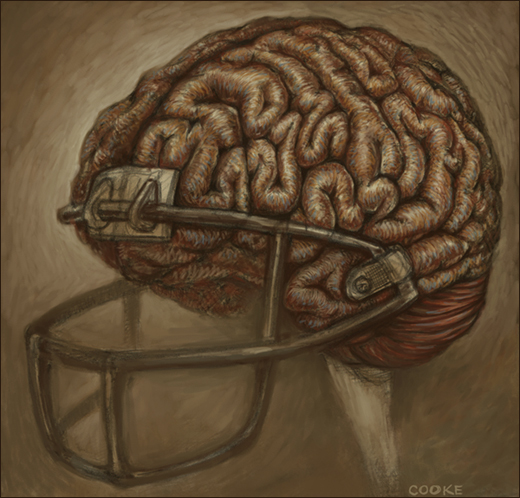
Yes, Football Is Still The Most Unethical Sport and Supporting It Is Unethical Too.

Item: From the New York Times…

New data provides a sobering indication: At least one in four of all the people who have played in the N.F.L. might expect to end up with chronic traumatic encephalopathy, according to a study of hundreds of cases over a recent six-year period.

Researchers considered every former N.F.L. player who died from 2016 to 2021. There were 878. Some died in their 20s, some in their 80s, most in between.

The study’s main finding was simple math: At least 215 of those 878 former players — 24.5 percent — had C.T.E.

The actual prevalence could be far higher. The roughly 25 percent rate does not consider the 643 brains that were not examined. Some of those, maybe many of them, likely had C.T.E. too.

C.T.E. is a progressive neurological disease caused by repeated impacts to the head. It can be definitively diagnosed only by examining the brain after death.

Studies have shown that the rate of C.T.E. in people who have not sustained repeated impacts to the head is nearly zero.

If the new study’s statistics were applied to today’s players — 1,696 on the league’s 32 regular-season rosters, not including more than 500 members of practice squads and those ineligible due to injury — at least 400 of them would be diagnosed with C.T.E.

Experts say that the rate of brain disease represents an occupational safety hazard with little comparison in the American workplace.

I have written this before, and had this story on the EA runway for a long time because it makes me angry. People who cheer on football are literally encouraging young men to cripple themselves for their entertainment. It is unethical, and indefensible.

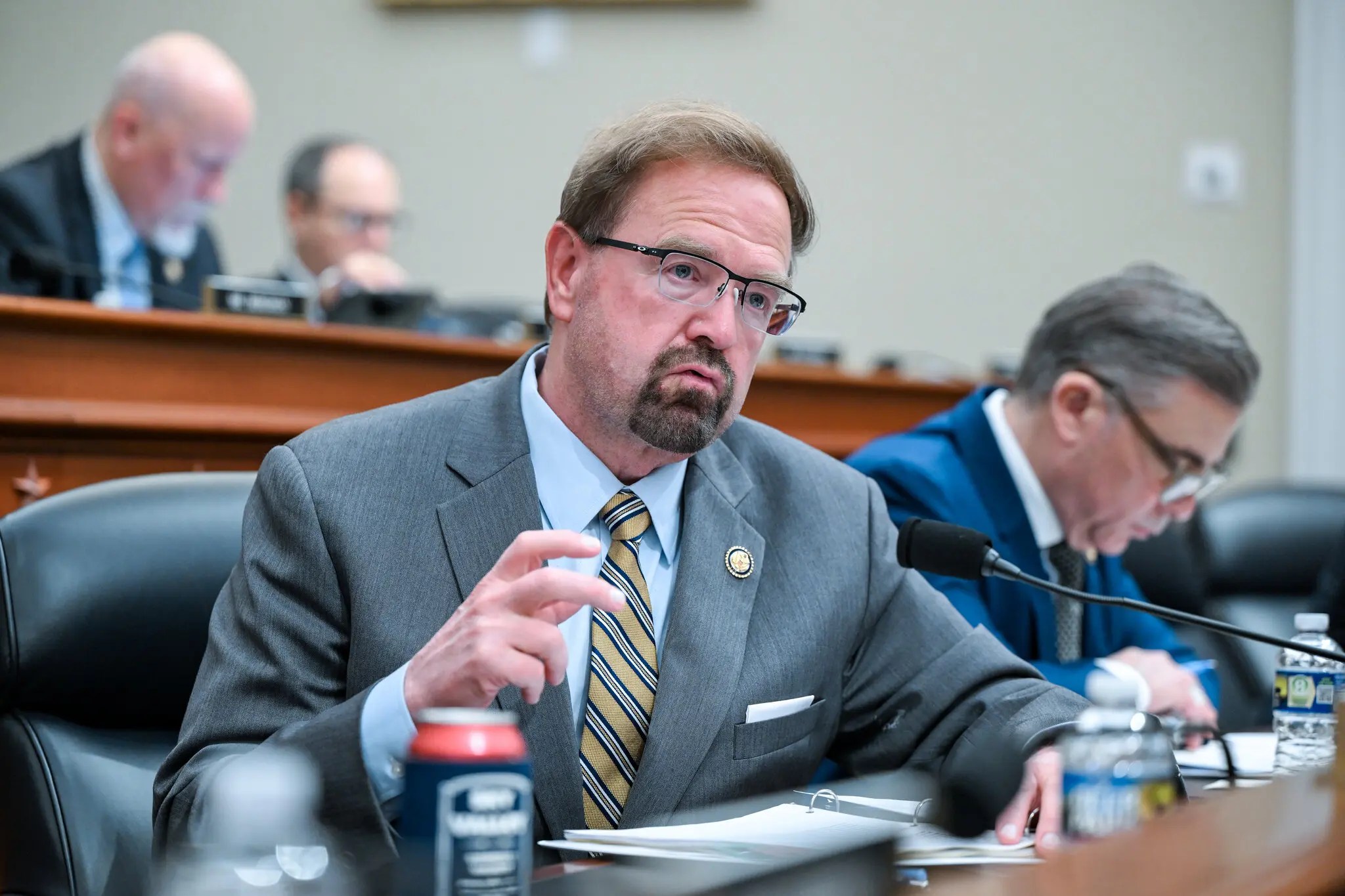
Incompetent Elected Official of the Month REDUX & Unethical Apology of the Month Too: Rep.Chuck Edwards (R-N.C.)

Wow, it takes some impressive ineptitude to get two “Incompetent Elected Official of the Month” designations in less than 30 days, but this creep was up to the challenge.

Yesterday the House voted 413-2 to censure Edwards. The House Ethics Committee recommended the action after it found last month that he had engaged in unprofessional and inappropriate behavior with two former female staffers. EA wrote about that stage of this episode here.

Edwards then stood up and sort-of-kind-of apologized, but not really, saying,

“I want to say something directly and publicly to the two women who have been at the center of all of this. I am sorry. I’m sorry that my actions, my judgement or the way that I expressed a friendship ever put either of you in an uncomfortable position. My intentions were only grounded in what I understood our friendship to be and in genuine admiration and respect that I had for each of you. Not only as professionals, but as people. I ask each of you, Republican and Democrat alike, to look beyond the headlines and examine what the committee actually found. I am not asking for special treatment, I am asking for fair treatment. I am asking you to decide if the punishment before you is supported by the evidence proportional to the conduct actually established.”

Baseball Ethics Quiz: The Hug

Peyton Tolle is a Boston Red Sox rookie and already a team mate and fan favorite for his big extrovert personality that matches his huge frame (6’6,” about 260 pounds), highlighted by Tolle’s obvious joy at playing a kid’s game for a living.

In yesterday’s Red Sox 9-8 extra-innings win over the Seattle Mariners (The Red Sox are having one of their most entertaining seasons ever), Tolle, was Boston’s starting pitcher, did something that nobody could recall any previous major league baseball player doing. As you can see above, when the hulking Tolle went to tag out Mariners player Dominic Canzone on the first base line after fielding a bouncer back to him on the mound, he preceded his tag with a smile and a hug.

Some old timers gag when they see opposing team players even chatting cordially at first base. The unwritten rule of baseball was that on the field the other team was literally a mortal foe, and its players were to be treated as such. In the 1960s a player who did what Tolle did would be excoriated, fined, exiled to the manager’s “dog house” and probably demoted to the minors.

Last night the Red Sox players seemed to get a kick out of their exuberant rookie’s latest surprise—he also likes playing tricks on team mates—saying, “That’s Tolle!” as the agreed-upon answer when questioned by reporters after the game. The sports media was all positive, with ESPN calling The Hug “The most wholesome play of the season.”

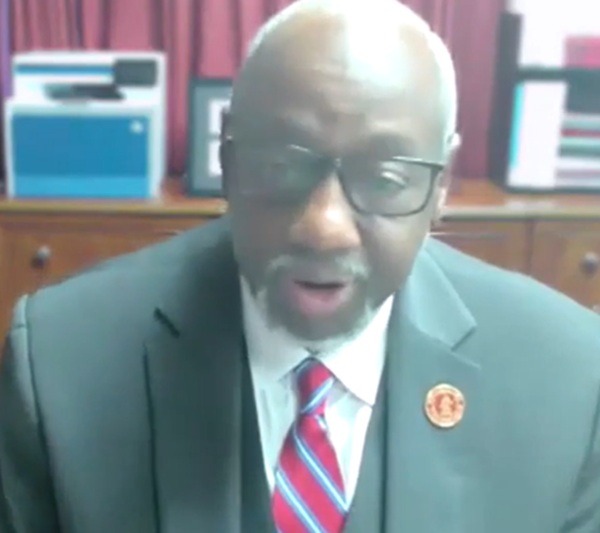
Ethics Hero: Tuskegee University President Dr. Mark Brown

Now and then there are moments when I feel that indeed I have not lived in vain.

Tuskegee University president Dr. Mark Brown (above), a retired Air Force major general, issued a memo to all students of the “traditional black institution” this academic year declaring that all students will be required to follow a dress code right out of 1962.

“The university has developed a new policy for student attire on campus, classroom attendance, and cell phone use in classrooms,” Brown wrote in a message to students. “Tuskegee students now have a dress code for public and professional places. The Student Handbook requires students to arrive on campus with a business suit and proper shoes for a business meeting. Students are prohibited from wearing revealing clothing in class, to the cafeteria or in official settings like Convocation. They are also not able to wear bedroom shoes, bonnets, or du-rags to class or the cafeteria. The goal here is not meant to restrict you from enjoying the Tuskegee Experience, but to prepare you with a solid foundation for the workforce you will enter once you leave Tuskegee. Employers are less forgiving and too often presentation may overrule stellar preparation.”

“Tuskegee University continues to prepare the best and brightest for a lifetime of success,” Brown added. “With these changes, we want to ensure every student is as prepared as they can be. I look forward to seeing you in August.”

To which I say,

Now that wasn’t so hard, was it?

The Ethical Significance of the Post-Dolly Response

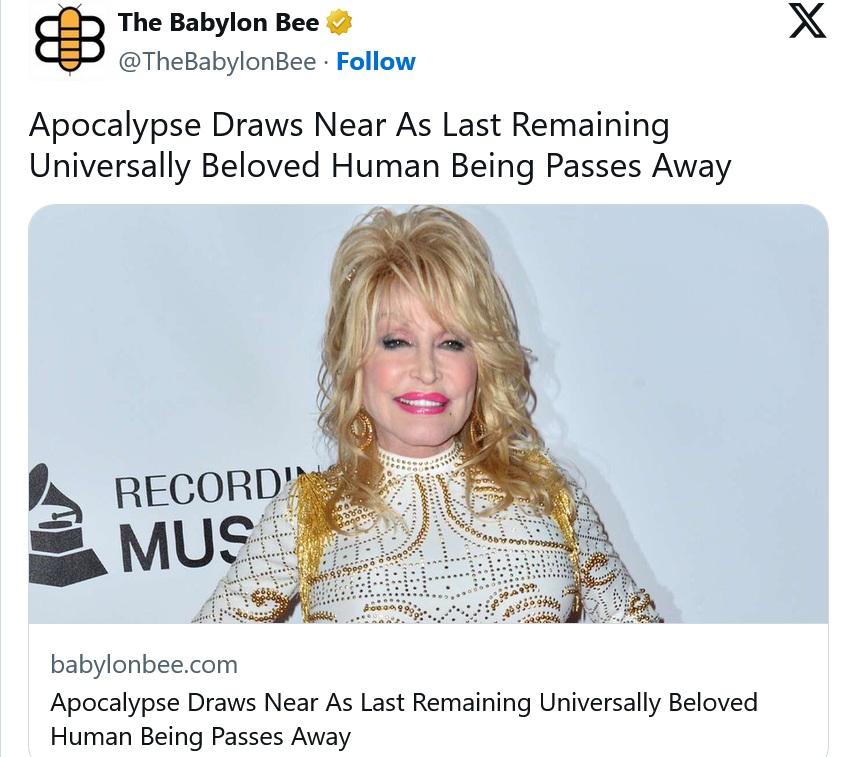
As you must know by now unless you have been in a submerged submarine with a broken communications system like the one in “Crimson Tide,” Dolly Parton died yesterday at 80. Why her death is being described as a shock is a mystery: as my father said when he hit 80, “It’s the Red Zone, son. I can kick off any second from here on!” Nonetheless, the public and official outpouring of grief, love and admiration is unlike anything we’ve seen at least since Princess Diana’s demise in 1997.

The tectonic reaction is certainly not based on Dolly’s singing, acting or song-writing. Personally, I was never a fan; Dolly’s singing voice always sounded to me like someone who has inhaled helium. Her songs were pleasant but unremarkable to my ear. As an actress, I place Dolly Parton in the large category of experienced public performers who can project their own personalities effectively into roles and stories where their personalities seem appropriate, a diverse group that ranges from the late Fred Thompson to the late Bob Newhart to the not-quite-late Ringo Starr.

Clearly, the reason Dolly is being mourned so vigorously is that her public persona was entirely benign, virtuous and lovable, even aggressively so. She literally gave nobody any reason not to like her. In 2020, as the Great Stupid was grabbing American society by the throat, Hollywood producer Rob Long wrote an appreciation of Dolly in “Commentary” exploring her universal popularity. He wrote in part,

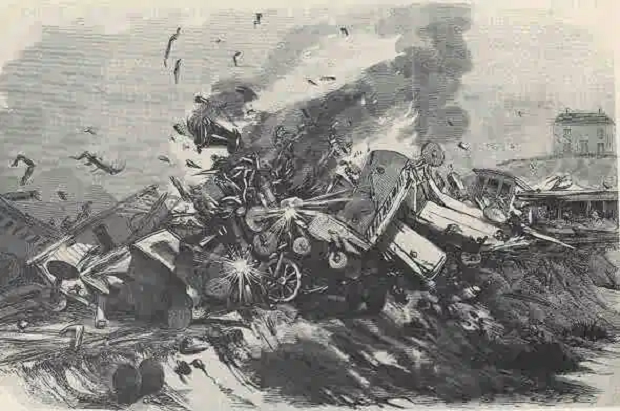
Sorry! A Jason Arday Ethics Train Wreck Update Because Attention Should Be Paid

There should be lots of topics to discuss on today the Friday Open Forum, which is going up next, but first, despite having promised to never post on the nauseating Jason Arday mess again, events dictate that I have to break that promise, because not doing my job regarding the EA mission would be more unethical than breaking a promise based on a premise that turned out to be false. It’s an ethics conflict. (I wonder why MAGA types have so much trouble with the concept. President Trump has delivered on a higher percentage of his campaign promises than any President since James K. Polk, and yet defectors like Tucker Carlson and Margery Taylor Greene—who would want to be a member of that club?— are furious because he started a necessary war that should have been started about 50 years ago. Morons.)

But I digress. Over in Europe, which stands as a frightening example of how quickly cultures can lose core values, Nathan Cofnas, who was the first to extensively expose Arday an academic fraud, announced that he has been suspended by Ghent University in Belgium and expects to be fired. His offense? “Discrimination”—-meaning that pointing out that a black academic star that Cambridge University had created out of DEI nothingness was in truth a serial plagiarist was racist. The school rector, Petra De Sutter issued a statement on l’affaire Arday asserting that freedom of speech “is not unlimited. It goes hand in hand with responsibility and may be restricted in order to protect the rights of others.”

Tell us more about the freedom to lie to the public and jump in line in front of genuine scholars because of one’s color, Petra!

Finally “The Ethicist” Has Found A Legitimate Topic Again: The Dementia Victim’s Spouse

In fact, I’ll make this one an Ethics Quiz.

I don’t need to extensively quote the letter inspiring the column. A woman whose much older husband is now consumed with dementia and unable to function or recognize her asks if it would be ethical for her to seek an intimate relationship while remaining married to her husband and serving as his caretaker. “I have a lot of working years and child-rearing years ahead of me…and I find myself desiring physical and emotional intimacy with a partner,” “Name Withheld” writes.

No, it wasn’t Jill Biden. At least, I don’t think so…

If you have been reading my periodic posts involving Kwame Anthony Appiah’s ethics advice in the Times “The Ethicist” column, I’m sure you can guess his response. Hey girl, go for it! No harm no foul! Your man is a veg, and you’re stuck with him: why not live a little in the meantime?

Ok, that framing may be a bit unfair, but it’s still where Kwame comes out. Without saying he’s necessarily wrong, I have several problems with that knee-jerk response.

If that’s the verdict with one serious debilitating illness, why not others, like cancer or ALS…or, to reference something I’m very familiar with, alcoholism? Is the distinction that the demented spouse doesn’t know his or her spouse is having affairs? Hey Ethicist Man, what happened to “Ethics is what you do when no one’s looking”?

I do know that my wife frequently said that if I cheated on her if she became seriously ill, she would come back from the grave and haunt me like Tevye’s grandmother in “Fiddler on the Roof.” And she wasn’t kidding.

Then we have the reverse situation famously experienced by former Supreme Court Justice Sandra Day O’Connor. She stepped down from SCOTUS in 2005 to care for her husband, John Jay O’Connor, after his Alzheimer’s diagnosis. His condition progressed to the point that he required full-time care and he was moved into an assisted living facility in Phoenix. There his mind deteriorated to the point where he no longer remembered or recognized his wife, and he fell in love with a fellow Alzheimer’s patient. Justice O’Connor was supportive of the relationship, saying, at least in public, that she was thrilled and relieved that her husband was relaxed, happy, and comfortable in his new reality. Later, he became engaged to an ottoman.

(Okay, I was kidding about that last part. )

Your Ethics Alarms Ethics Quiz of the Day is…

Do you agree with “The Ethicist” that stepping out on your demented spouse is ethical?

On Plagiarism…

Guest Column by Michael R.

[Introduction: This comment by Michael R, in response to the Jason Arday post, “On The Left’s Horrifying Lack Of Integrity In The Wake of The Arday Scandal: I’m Sorry I Was So Right, And How I Wish I Were Wrong. Now What?” is sufficiently extensive and covers such an umortant ethics issue that I deem it worthy of a Guest Column. He begins by referencing the “Everybody Does It” attempted exoneration of the late Cambridge fraudster Facebook post that was favored on the platform by my old friend, a history professor who should know better but who is apparently completely woke-blinded…]

To your long-time Georgetown history professor, you can reply that all he has done is demonstrate why the left has lost all credibility. He thinks he is showing how it is fine to plagiarize. All the has shown is that those institutions no longer care about academic rigor and have no credibility.

Now about the plagiarism. There are different grades of plagiarism. Let me explain why the current round of plagiarism is so devastatingly bad.

When I was in grad school, many of us were asked to carefully check the introduction chapters of foreign students’ dissertations. Because of the difficulty of writing in a foreign language and the differing intellectual property standards in different cultures, there was a lot of plagiarism and the advisors were very careful to detect it and get it corrected before the defense. This is a mockup of a typical Asian student’s introduction.

“Poorly worded original sentence. Sentence directly copied from source 1. Two sentences directly copied from source 2. Poorly worded original sentence tying the thoughts together.Four sentences from source 3. One sentence from source 1. One sentence from source 4. A poorly worded original sentence tying them together. Rinse and repeat.”

You can see what is going on. They lack the English language skills to really blend the thoughts from the different sources together, so they just copy whole sentences (occasionally paragraphs) from many sources and tie them together with some original sentences. This is plagiarism, but this is pretty easy to fix. They are writing a typical intro, they just aren’t doing the paraphrasing and integration of the ideas needed. We would work with the students to get this fixed so that there weren’t any problems. There are probably a lot of programs that didn’t do this, resulting in a massive amount of plagiarism. I am fairly sure this is pretty common in dissertations, especially the Introduction chapters (which are typically reviews of the literature and not original research).