Trump, His Critics, And The Julie Principle

We return now to “The Julie Principle,” an ethics concept I introduced three and a half  years ago. “The Julie Principle lies at the center of tolerance in its most productive sense. It also will keep you from going crazy “ was how the post was introduced. Here is the guts of it.

When a characteristic or a behavior pattern appears to be hard-wired into someone, it makes no sense to keep complaining about it. You either resolve to tolerate it ( and accept responsibility for the consequences of doing so), or decide that it is too much to endure, meaning that the relationship has to end.  “Fish gotta swim, birds gotta fly…” [ Note: this is the most famous lyric in the second most famous song in “Showboat,” “Can’t Help Lovin’ Dat Man o’ Mine,” sung by the tragic, abused mulatto Julie.]

The Julie Principle comes in handy in resolving many ethical dilemmas. In making an ethical analysis requiring balancing, the illusion, when it is an illusion, that a major part of the equation can be removed by just a little more advocacy, education or pressure permanently warps the process. We have been debating same-sex marriage here in several threads, and the illusion that gays can change their orientation, that it is a choice rather than part of their essence, is a massive impediment to reaching a rational accord. The Julie Principle applies. Do we want gay Americans to be part, and feel like a part, of the American fabric, or do we want to make what is essential to their being a deal-breaker? We’re the ones with the choice, not them.

I think the Julie Principle makes the choice obvious. It makes the choice obvious in the immigration debate as well. All those illegals are here. They have ties to family, the economy and the community: they aren’t leaving. “Fish gotta swim, birds gotta fly…” Does it make sense to keep punishing million of people for what they can’t change, or do we accept them for the good they can do from this point on? Sure, it would be preferable if we hadn’t allowed so many to walk across our boarders…But it’s too late to do anything about that. 

“Fish gotta swim, birds gotta fly…”

The challenge in executing the Julie Principle is how you accept your bird or fish without letting that act corrupt your own values, or stop you from continuing to advocate and fight for them.

The left-wing media and still-bitter Democrats and progressives really need to learn the Julie Principle regarding Donald Trump, and fast. It might be too late to stop them from going crazy, but if they don’t learn it, they will drive everyone else crazy, and still accomplish nothing. Continue reading →
Ethics Quote Of The Month: Texas Republican Elector Art Sisneros

art-sisneros

….As an Elector, I came to conclusion I have three options under our current system. I can 1) vote for the nominee of their party under which I was elected, 2) vote for someone else and be considered a faithless elector (a term I despise), or 3) I could resign my position if the candidate turns out to be someone I can not, in good conscience, vote for. I believe under the right circumstances every option is not only valid, but can be ethically the righteous thing for a Christian to do. The question that everyone wants answered is, what will I, an Elector who is under the conviction that our nominee is not a biblically qualified candidate, do? After wavering back and forth, my conscience is finally at peace with the decision I’ve made….If Trump is not qualified and my role, both morally and historically, as an elected official is to vote my conscience, then I can not and will not vote for Donald Trump for President. I believe voting for Trump would bring dishonor to God. The reality is Trump will be our President, no matter what my decision is. Many are furious that I am willing to have this discussion publicly. Personally, I wish more civil officers would be honest about their convictions. Assuming a Trump Presidency is their ultimate goal, they will get that. The problem is, that isn’t what they want. They want a democracy. They will threaten to kill anyone who challenges their power to vote for Skittles for dinner. That is evidence alone to prove that our republic is lost. The shell may remain, but in the hearts of the people and functionality of the system our republic is gone.

…I believe to resign is to honor the intent of the pledge as it relates to the people of my district. Since I can’t in good conscience vote for Donald Trump, and yet have sinfully made a pledge that I would, the best option I see at this time is to resign my position as an Elector. This will allow the remaining body of Electors to fill my vacancy when they convene on Dec 19 with someone that can vote for Trump. The people will get their vote. They will get their Skittles for dinner. I will sleep well at night knowing I neither gave in to their demands nor caved to my convictions. I will also mourn the loss of our republic.

This excerpt doesn’t do the tortured elector justice, as he expounds on his torment in detail in this remarkable blog post.

Observations:

1. His ultimate decision was the ethically correct one, the “book answer”: Resign, and let someone who can and will do what the voters expect take his place. He reached it using some unethical and crooked paths, though.

2. His post is a rationalization-fest with muddled thinking and dubious history thrown in. Sisneros inadvertently makes an ironclad case for why we don’t want electors like him to have the power to veto the electorate. This guy is too confused and emotional, not to mention biased and theocratic, to be trusted for such a job. Who knows? The other electors may be even worse. Continue reading →

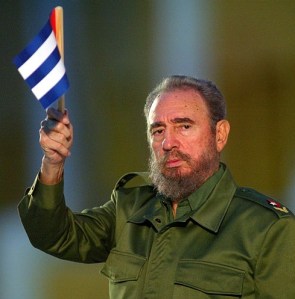
Ethics Quiz Follow-Up: Signature Significance And Kind Words For Castro

Look at the good side!

Look at the good side!

Democrats and progressives have been “otherizing” the President Elect by incessantly referring to the fear he inspires in so many, including young children. This, as I hope to explore in another post, is part of a wide ranging  and dangerous de-legitimizing strategy, as wrong as calling Barack Obama by his middle name, or claiming that he isn’t a citizen. In the weekend’s Ethics Quiz, I answered answer to the question of whether Trump’s unequivocal condemnation of Fidel Castro in response to his death was ethical in the affirmative, and I concludeed with this:

Rather than using the occasion to find another excuse to attack Trump, Democrats should think about why it is that so many Castro admirers are in their ranks.

Now let me be more pointed: everyone surveying that national political scene should be concerned and alarmed that so many Castro admirers and apologists are in the ranks or progressives and Democrats….especially progressive and Democrats.  It is signature significance. No one who is committed to liberty, the Constitution, the democratic process and basic principles of autonomy, respect, fairness and free speech can seriously praise Castro.  The ominous turn of the increasingly radicalized Left in the United States to an “ends justify the means,” totalitarian methodology-endorsing philosophy is something to watch carefully.  You want genuine fear? I am genuinely frightened of liberals who say that Castro “did some good things” on the way to shrugging off how he did those things, and how many lives it cost.

A good friend of mine and a nice, smart, man who is also an extreme liberal wrote on his Facebook page,

RIP, Fidel. A huge figure of the 20th century, one with faults and virtues. Believed his island belonged to all its people and not just the rich. A better man than the one who was just elected…

Res ipsa loquitur. Continue reading →

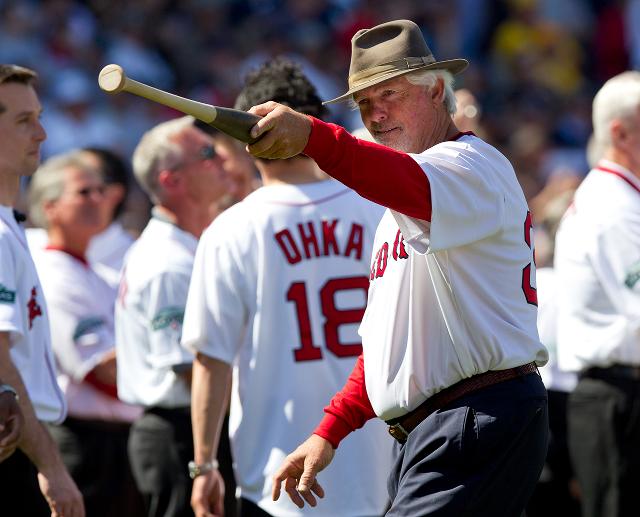
Ethics Hero: Bill Lee, “The Spaceman,” An Integrity Exemplar…And I Really Need One About Now

bill-lee

If you weren’t a baseball fan in Boston during the Sixties and Seventies you may never have heard of Bill Lee, but if you were, he was an unforgettable and unique source of pleasure. Lee joined the Red Sox in 1969 as a junk-balling left-hander with a hippie streak not previously seen in the sport.  He was prone to say things like, “I think about the cosmic snowball theory. A few million years from now the sun will burn out and lose its gravitational pull. The earth will turn into a giant snowball and be hurled through space. When that happens it won’t matter if I get this guy out.”  The college students around Boston loved him, the old school baseball management types not so much. But he was good, and in major league baseball, good will always trump weird.

Lee was an excellent a reliever for four years before becoming a Sox starter in 1973, then won 17 games that season and the next two as well. The success was secondary for his often-stoned fans than his non-conformist attitude and determination to be himself at all costs. He was well-read, well-educated, opinionated and funny, and at various points in his Red Sox career, wore a gas mask, a coonskin cap and a propeller-topped beanie onto the field. Once, when the umpires refused to halt play in a downpour, Lee came out of the dugout wearing rain gear and carried an umbrella to the mound. This and other exploits caused him to be nicknamed “The Spaceman.”

Twice, once with the Red Sox and later with the Montreal Expos, Lee went on strike, refusing to play to protest the elimination of one of his friends from his team’s roster. The last time he did it, it ended his career.

Lee made up his own rules and principles, so he’s a different kind of Ethics Hero.  Above all else, however, the Spaceman has integrity down to a life-style. When he was at his zenith with the Red Sox, he often said that baseball was a still just a game to him, that it was what he loved to do, and that he didn’t care about the money. He would play baseball for whatever was available, he said, or just for the love of it. My father, who didn’t get Bill Lee, thought he was grandstanding.

He wasn’t. Continue reading →

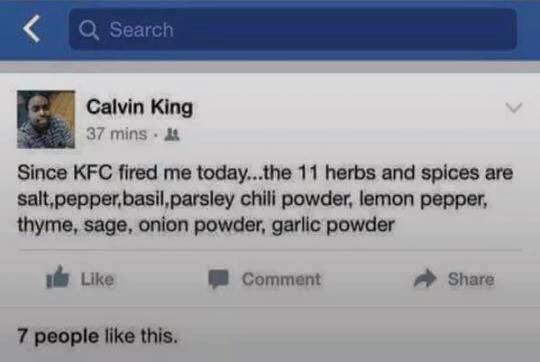
Unethical Facebook Post Of The Month: The Fired KFC Employee

unethical-tweet

We can make short work of this one. The post, which is being circulated around social media with great glee, embodies an unethical impulse, breach of confidentiality, and vengeance. It is miles away from the other end of the disgruntled ex-employee spectrum, but on the spectrum nonetheless, along with taking a shotgun to one’s former office and firing away. Trying to harm an employer because you got yourself fired simply illustrates the kind of character deficits that resulted in the termination.

As with everything else in life,there is an ethical way to get fired. That would be to shake the hand of the one who handed you the pink slip, state your appreciation for the chance to work and sincere regret that it did not work out, then to say good-bye and good luck to fellow workers, then walking out with head held high. Leaving while darkly muttering “You’ll be sorry!” under your breath, or trying to harm the company’s reputation or business though retaliation later, is both unethical and stupid. Calvin better hope his ill-considered message doesn’t get into any potential employer’s hands. You’d have to be nuts to hire someone like him.

His is the not-so-secret recipe for distrust and failure.

Comment of the Day: “Ethics Quiz: Trump’s Tweet On Fidel’s Demise”

trump-tshirtThe Democratic/progressive/news media freakout over Trump’s election has become an ethics story itself, as the foes of a man whose lack of impulse control and respect during the campaign drew deserved rebukes now emulate him. This is, Ethics Alarms will soon explore, an effort at deligitimzing Trump’s presidency before it begins, just as the Supreme Court’s ruling in Bush v Gore was employed by Democrats to legitimize Bush, and the various Muslim and birther smears were aimed at Obama by conservatives to undermine Obama. The tactic is un-American and despicable, and never has it been so thoroughly embraced by so many, with such smug self-righteousness.

My thanks to Steve-O-in-NJ for his Comment of the Day on the post, Ethics Quiz: Trump’s Tweet On Fidel’s Demise, which is timely and helpful:

I thought I was done with ranting about the election. I also thought everyone else was mostly done and the fire of outrage and self-pity that had followed had burned itself out. It probably didn’t hurt that most students had gone home for Thanksgiving.

Now Jill Stein, an extreme leftist who wasn’t even on the ballot in several states and had zero chance of winning, decides to demand a recount in not just one, but three states. Hillary pretends not to want to join in, but then says, well, ok, if we’re doing it anyway.

Keep a few things in mind: Continue reading →

More Ethics Movies For The Holidays: “Woman In Gold”

portrait-of-adele-bloch-bauer-i-by-gustav-klimt

The movie critics site “Rotten Tomatoes”calls “Woman in Gold” dull, which tells you pretty much all you need to know about “Rotten Tomatoes.” No, there are no explosions, no sex scenes, no CGI, just a well-acted, powerful story of how justice can take a long time to prevail, but given enough dedication, integrity and luck, it still does prevail with sufficient frequency to stave off despair.

“Woman in Gold” is a 2015 film starring Ryan Reynolds and Helen Mirren. It is a virtual docudrama telling the true story (mostly accurately) of Maria Altmann (Mirren), a plucky Jewish refugee in Los Angeles, who, assisted by her young lawyer, Randy Schoenberg, battled the government of Austria  to obtain the return of Gustav Klimt’s renowned portrait of her aunt, Adele Bloch-Bauer. That painting, along with more by Klimt and  other painters as well, were among the art treasures stolen by the Nazis  prior to World War II. The legal battle ended up before the Supreme Court of the United States, and the conflict was finally settled by a shocking decision by an Austrian panel of mediators. You can read about the real case here.

It may be dull to dull minds, as Red Smith famously said about baseball, but I have seen the film twice now, and it moved me to tears both times. “Woman in Gold” shows once more, as I fervently believe, that right can and often does triumph over bureaucracies, greed, power and stupidity, and that lawyers, maligned as they are, are often essential to that process. Schoenberg shows us the epitome of a zealous and courageous lawyer, making personal and professional sacrifices for a cause he comes to believe is important both to his client and to humanity. Continue reading →

The Jerk On The Plane: Boy, I Hate It When My Hypotheticals Come To Life…

It would have been OK, if he was black and his rant was scripted by a genius...

It would have been OK, if he was black and his rant was scripted by a genius…

On a recent Delta flight from Atlanta, a young man stood up before take-off and started harassing his fellow-passengers with a pro-Trump rant,  yelling “Donald Trump baby!” and “We got some Hillary bitches on here?” while pointing at individual travelers. He also said, “Donald Trump is your President. Every god damn one of you. If you don’t like it, too bad.” Delta initially removed him, but returned him to the cabin. According to one witness, upon returning the man said, “This is what you get for being a patriot.”

He’s an idiot, of course, and there’s no excuse for his conduct. And yet…

How different is what he did, and what the “Hamilton” actors did? Not much. Neither the “Hamilton” audience members nor the passengers bought tickets to be subjected to this. Both were captive audiences. The conduct in both cases constituted harassment. The clearest distinction was that the jerk on the plane wasn’t an employee; if he had been a flight attendant, the incidents would have been even more similar. The jerk on the plane didn’t single out a particular passenger by name, making his conduct better, not worse, than what the “Hamilton” cast did.  On the plane, passengers hadn’t previously jeered the Hillary Clinton voters among them, so the intimidation factor Pence experienced was absent, and it was only one passenger, not a passenger with an imposing  line of others backing him up, like the wall of actors behind Brandon Victor Dixon. Continue reading →

Ethics Quiz: Trump’s Tweet On Fidel’s Demise

castro-tweet-trump

We are taught to speak only good of the dead in the immediate aftermath of one’s demise, and especially in the world of international diplomacy, restraint, respect and the Golden Rule are the accepted standards of ethical conduct on such occasions

This being the case, what is the right ethical diagnosis of President Elect Donald Trump’s tweet above about the announcement of Fidel Castro’s death, which includes an explanation point widely interpreted to suggest “GOOD!” of “Yippee!” ? Trump’s subsequent statement removed all doubt that he was not sorry to see Fidel go to that big sugar cane plantation in the sky, or better yet, well, you know:

“Today, the world marks the passing of a brutal dictator who oppressed his own people for nearly six decades,’ Mr Trump’s statement reads. “Fidel Castro’s legacy is one of firing squads, theft, unimaginable suffering, poverty and the denial of fundamental human rights. “While Cuba remains a totalitarian island, it is my hope that today marks a move away from the horrors endured for too long, and toward a future in which the wonderful Cuban people finally live in the freedom they so richly deserve. Though the tragedies, deaths and pain caused by Fidel Castro cannot be erased, our administration will do all it can to ensure the Cuban people can finally begin their journey toward prosperity and liberty. I join the many Cuban-Americans who supported me so greatly in the presidential campaign, including the Brigade 2506 Veterans Association that endorsed me, with the hope of one day soon seeing a free Cuba.”

Contrast that with President Obama’s equivocal statement, which said in part,

“We know that this moment fills Cubans — in Cuba and in the United States — with powerful emotions, recalling the countless ways in which Fidel Castro altered the course of individual lives, families, and of the Cuban nation. History will record and judge the enormous impact of this singular figure on the people and world around him.”

Then there was former President Jimmy Carter, who said,

“Rosalynn and I share our sympathies with the Castro family and the Cuban people on the death of Fidel Castro. We remember fondly our visits with him in Cuba and his love of his country. We wish the Cuban citizens peace and prosperity in the years ahead.”

Hmmmm!

Your Ethics Alarms Ethics Quiz for this Thanksgiving Day weekend:

Were Trump’s tweet and statement about Castro responsible, prudent and ethical?

I think so, and I’m surprised at my own response. I suppose I am tired of seeing and hearing public figures lie when everyone knows they are lying, and if Carter and Obama really don’t think Castro was a brutal, murderous dictator whose departure is a blessing to all, then the Democratic Party is in even worse shape than I thought it was.

I have a hard Left friend who actually expressed praise for Castro’s legacy today on Facebook. When a figure who is objectively and factually as bad as Castro was, our leaders should not hesitate to be frank and direct. Obama’s non-commital “History will record and judge the enormous impact of this singular figure on the people and world around him” is cowardly and evasive. Yes, and if history judges that Fidel’s ends justified his means, then civilization is doomed. Carter’s statement is even worse. “His love of his country”—that’s mitigation for oppression and murder, eh, Jimmy? If love of country your standard, you and Rosalyne must love Hitler.

Trump’s excessive candor and rogue mouth obviously are going to do a lot of damage in the next four years, just as they did during the campaign. Nonetheless, I don’t see anything unethical about calling a murderous dictator when he was, whether it’s on the day of his death or ten years later. This is one time when Trump’s refusal to be politically correct cuts through crap that should be cut through. As Edgar says at the end of “King Lear,”

“We should speak what we feel, not what we ought to say,”

…at least when bastards like Castro die.

Rather than using the occasion to find another excuse to attack Trump, Democrats should think about why it is that so many Castro admirers are in their ranks.


Holiday Ethics Assigment: Quick! Watch These 25 Great Old Ethics Movies Again Before You Go Bonkers Too!

movie-theater

I am compiling a new list of great ethics movies to help those troubled by the recently completed Presidential campaign, the election and its aftermath. I haven’t decided whether to reveal it piecemeal, or collectively as I have before, but I do need to begin by presenting the previous list of 25, actually the combination of several previous posts. Ethics films I have covered individually since those lists debuted, like Spotlight and Bridge of Spies, will eventually be added.

For now, here’s the top 25. Don’t pay attention to the order.

1. Spartacus (196o)

The raw history is inspiring enough: an escaped gladiator led an army of slaves to multiple victories over the Roman legions in one of the greatest underdog triumphs ever recorded. Stanley Kubrick’s sword-and-sandal classic has many inspiring sequences, none more so than the moment when Spartacus’s defeated army chooses death rather than to allow him to identify himself to their Roman captors (“I am Spartacus!”)

Ethical issues highlighted: Liberty, slavery, sacrifice, trust, politics, courage, determination, the duty to resist abusive power, revolution, love, loyalty.

Favorite quote: “When a free man dies, he loses the pleasure of life. A slave loses his pain. Death is the only freedom a slave knows. That’s why he’s not afraid of it. That’s why we’ll win.” [Spartacus (Kirk Douglas)]

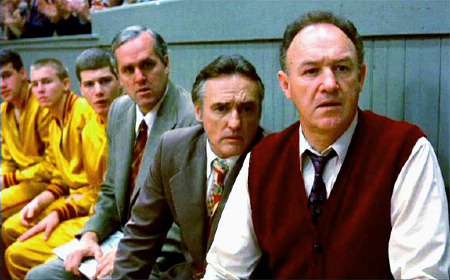
2.  Hoosiers (1986)

“Hoosiers” is loosely based on true story, but its strength is the way it combines classic sports movie clichés—the win-at-all-costs coach down on his luck, the remote superstar, over-achieving team—into a powerful lesson: it isn’t the final victory that matters most, but the journey to achieving it.

Ethical issues highlighted: Forgiveness, generosity, leadership, kindness, courage, loyalty, diligence, redemption.

Favorite quote: “If you put your effort and concentration into playing to your potential, to be the best that you can be, I don’t care what the scoreboard says at the end of the game, in my book we’re gonna be winners.” [ Coach Norman Dale (Gene Hackman)]

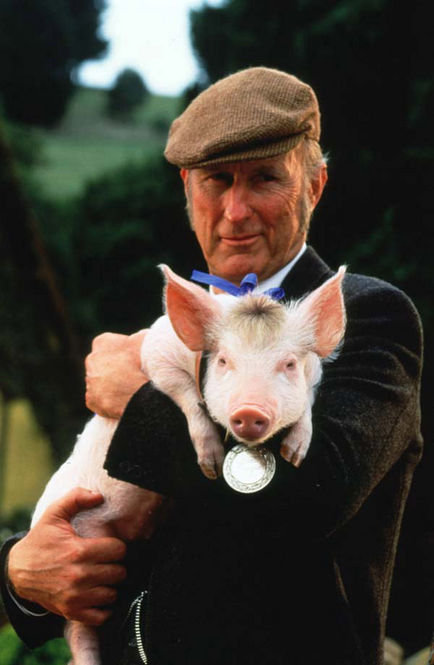
3. Babe (1995)

A wonderful movie about the virtues of being nice, the greatest civility film of all time. Second place: “Harvey.”

Ethical issues highlighted: Civility, kindness, reciprocity, loyalty, courage, love, friendship, bigotry, bias.

Favorite quote: “Fly decided to speak very slowly, for it was a cold fact of nature that sheep were stupid, and there was nothing that could convince her otherwise…The sheep decided to speak very slowly, for it was a cold fact of nature that wolves were ignorant, and there was nothing that could convince them otherwise”  The Narrator (Roscoe Lee Browne) Continue reading →