Schindler’s Tweets And The Monster In The Mirror

Shrek in the mirror

John Schindler is a former NSA officer, a professor at the Naval War College and a PhD who periodically holds forth on his various areas of expertise on the web. He also specializes in particularly obnoxious tweets in which he both insults anyone who questions or disagrees with him, and does so by referring to his own innate superiority as a scholar and an intellect. If he isn’t a complete jerk, he sure plays one convincingly.

Some wag noticed the trend, and created a website that contains nothing but Schindler’s most snotty tweets. Here is the puzzling part: Schindler, in yet another tweet, referred to it as “an ugly new defamation site against me.” Forget the complete lack of comprehension of what defamation is (Ken White at Popehat, an expert in that field of law, invoked Inigo Montoya of “The Princess Bride” in a tweet to the Professor saying “‘Defamation.’ You keep using that word. I do not think it means what you think it means.”). My question is this: if Schindler thinks the website is ugly, and it contains only what he has written to others, why doesn’t that promote self-awareness, regret, remorse, and altered conduct? That is how it is supposed to work; I would think that is how it has to work. The idea behind the Golden Rule is to look at your conduct from another’s perspective, and if it strikes you as ugly and wrong, then you have learned something. So you change. Not this guy. Continue reading →

Self-Promotion Alert: Army Magazine on Candor and Honesty

COVER_March2014Rick Maze, a reporter for Army Magazine, was kind enough to quote me extensively in his article, “Candor: Can the Army Handle the Truth?” which is available here. He also includes an extensive reference to the Rationalizations List.

Ethics Quote of the Day: Composer Mitch Leigh, 1928-2014

DQWindmill

“I think if you see that no one is going to laugh at you for it, I think the concept of living nicely will be infectious. I believe there is room for the absence of cynicism. This is my final dream before I take the last cab.”

— Mitch Leigh, Broadway composer best knows for the music of “Man of La Mancha”-–and “The Impossible Dream,” of course,  in an interview with the New York Times last year, quoted by the Washington Post in the obituary today for Leigh, who finally caught that cab.

The context of the quote was Leigh’s ad for a residential community he tried to launch on land he had bought in New Jersey. His ads seeking businesses and suburbanites requested that only nice people move in.

Leigh didn’t write the famous lyrics of “The Impossible Dream”—-Joe Darion did. He was clearly influenced by the song, however, beyond the fact that it made him rich. Maybe a society with less cynicism where people put a premium on being nice is an impossible dream; certainly the United States has been treavelling in the opposite direction. As an “unreachable star” to reach for, however, it’s not a bad one at all. In the Sixties, people were inspired by “The Impossible Dream.” Now pretty much everyone snickers at them.

You can’t convince me that’s progress.

“

Dana Milbank’s Weird and Un-American Concept of Loyalty

blind followers

This happens now and then—I consider posting on a topic, decide, “Nah, I must be the only one who sees it this way,” and then another commentator—one people actually pay attention to—flags exactly the same issue I decided nobody would notice or care about. This time it was James Taranto, one of my favorites, who saw the same disturbing sensibilities that I did in Washington Post columnist Dana Milbank’s bizarre column today.

Titled “Why millennials have abandoned Obama,” the Post’s flakiest liberal accuses young voters of disloyalty to their hero because they don’t want to sacrifice their own autonomy and well-being to help the President’s misbegotten health care bill succeed. It is well-known that a sufficient number of young Americans must sign up for health care insurance—which, for them, is over-priced under the law—to make the rest of the numbers add up. So far, they aren’t doing it. Milbank:

“The administration announced last week that only 1.08 million people ages 18 to 34 had signed up for Obamacare by the end of February, or about 25 percent of total enrollees. If the proportion doesn’t improve significantly, the result likely will be fatal for the Affordable Care Act.”

Milbank then makes the jaw-dropping argument that Obama should take this personally, that it is a betrayal by his troops in his hour of need. After all, Milbank tells us, these were the same voters who elected Obama, seeing him as a transformative candidate. Shouldn’t they be willing to sacrifice now and make their health insurance decisions according what will be best for him?

What??? Of course not! Oh, I have no question that the President thinks this way. It was Obama, after all, whose solution to the depressing unemployment numbers has been to tell business leaders to hire more people, because he said so, and because it would make his policies look more successful. Businesses would be happy to hire more employees, of course, if the stuttering administration didn’t keep changing the rules, laws and assumptions, wasn’t feeding global uncertainty by inept foreign policy, threatening to make energy costs skyrocket, and generally be the least business-friendly government in recent memory. Businesses don’t change their behavior because it helps a President politically, they do it because it will help them make money. The same is true of individuals, young and old. “This will make my life easier and more secure” is a reason to buy health care. “This will help a President I voted for rescue his grand plan that he lied about, managed incompetently and that isn’t working right” is not.

Why does Milbank think it is? Continue reading →

Ethics Hero: Dick Masten—When Ethics Trumps Law

A heroic and ethical snack...

A heroic and ethical snack…

One way I can always start an argument on Ethics Alarms is to state my position that willfully breaking the law is per se unethical as a breach of citizenship. Like all rules, however, this one has exceptions. Dick Masten, the Director of Miami-Dade Crime Stoppers, recently demonstrated one of them.

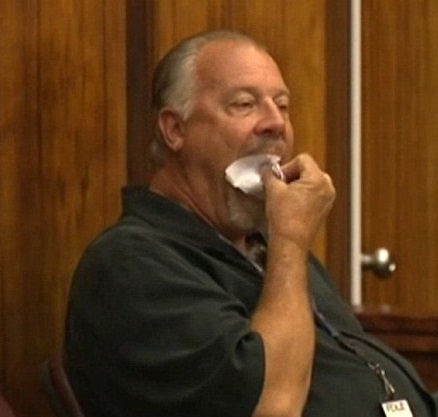
The former police chief was ordered by Judge Victoria Brennan to reveal the name of a tipster in a cocaine possession case, State vs. Lissette Alvarez. Alvarez was arrested in 2013 and charged with cocaine possession. Brennan called for Masten to come into court and confer with her in chambers regarding the case. Miami-Dade Crime Stoppers sparked the eventual arrest after getting information from a tipster who was assured anonymity. Alvarez’s attorney insists that the tipster’s information is part of the evidence against his client, saying, “Ms. Alvarez, in this case, has every right to confront her accusers. But more particularly in this case, it’s not the accuser, but the evidence that the State will use against her.”

Ordered by the judge to reveal the name of the tipster, Masten, insisted that he couldn’t divulge information to be reviewed in closed court that might be discoverable as evidence. “There is a possibility that looking at certain documents, a defendant could work that case backwards and put the tipster at peril, and I’m not gonna let that happen,” he said. In a dramatic touch, Masten swallowed  a slip of paper that held the tipster’s name. “What is personal to me, is the promise,” Masten said before his ethical snack. “Some of these tipsters could end up dead. Not on my watch.” Continue reading →

Ethics Dunce: CNN’s Chris Cuomo

Bob BarkerCNN morning anchor Chris Cuomo is a fascinating study in modern broadcast journalism. Handsome, engaging, obviously intelligent and wearing his New York liberal Democrat family’s brand for all to see, he will either become an annoying MSNBC-style left-wing media scold (like his dim predecessor Soledad O’Brien), manage to walk the perilous tightrope between fair newscaster and openly liberal commentator, or (my prediction) go into the Cuomo clan business and run for office. Lately, however, his adventures have me wondering if his ego will swallow his judgement, setting him on a trajectory for MSNBC itself.

On Wednesday’s New Day, Cuomo couldn’t hide his obvious disappointment over Florida Republican David Jolly’s victory in the much-watched Florida special Congressional election. He  noted that The Price Is Right theme music was played Jolly’s  victory rally on Tuesday, and expressed disgust: “What a metaphor for what politics has become – that they are playing the theme song of The Price Is Right when they celebrate a victory, because it’s about the money! It makes me sick.”

The impression Cuomo left was indeed disgusting, that Republicans were celebrating the triumph of their big money campaign over the Democrat’s similarly obscenely funded campaign, calling attention to their victory in what had become, due to its presumed bellweather status, a local race that had attracted support from deep-pocket king-makers from both parties. Ironically, Democrat Sink outspent the Republican Jolly, who won, making Cuomo’s indictment an example of selective prosecution. His indignation that the Republicans would be mocking the role of money in politics, however, seemed to justify his making them out to be villains. Continue reading →

“Can The Democrats Find The Right Message On Obamacare?” You Mean Other Than, “We Lied To You And Gave You A Law That Doesn’t Work Right But You Should Still Trust Us To Fix It”?

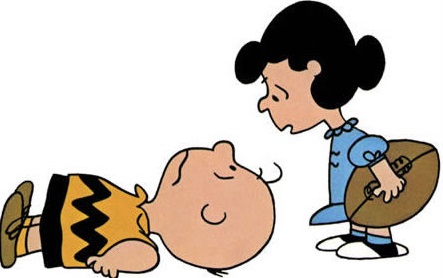
One more time....

One more time….

“Can Democrats find the right message on Obamacare?” asks the Washington Post’s “Wonkbook,” as it reviews various strategic options for threatened Democrats after the party’s “fix Obamacare” candidate lost a winnable Congressional race in Florida. The question, objectively interpreted, really means “Can Democrats fool voters into trusting them one more time?” That’s a good question, and the answer is far from certain. The use of the word “right,” however, is cynical.  The Post means “effective.” The right message, as in the ethical and honest one, would have to be based on these undeniable and unpleasant facts: Continue reading →

Ethics Hero Emeritus: Reubin Askew ( 1928-2014)

Askew

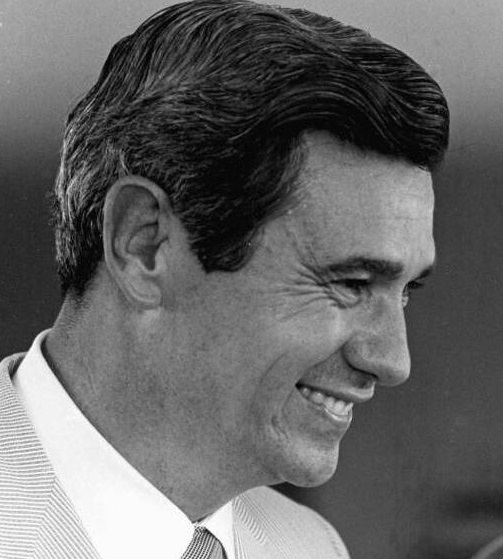
In a better United States where only character, demonstrated skill, experience and leadership ability were necessary to become President, Reubin Askew would have been one. Unfortunately looks, luck, money and timing are important too. Askew had the looks, all right; he just missed the other three.

Never mind. Reubin Askew, who died yesterday, did all right.

His father was an alcoholic, and soon his mother had divorced him and was supporting Reubin and his five siblings as a single mother in Pensacola, Florida. She worked as a waitress, seamstress and hotel maid, while Reubin shined shoes, bagged groceries, delivered newspapers and sold his mother’s homemade pies door to door to do his part to support the family. After graduating from high school in Pensacola,  Askew served two years in the Army and, thanks to the G.I. Bill, graduated from Florida State in Tallahassee, where he was elected student body president. He was an Air Force officer during the Korean War, and in 1956 graduated from the University of Florida law school. That same year he joined a Pensacola law firm, and married Donna Lou Harper, who remained his wife for 57 years, until he died.

Askew ran for Florida’s House of Representatives in 1958, and won. After four years in the House, and eight more as a state senator, he ran for governor.  He was already nicknamed  “Reubin the Good,” and his opponent, Republican Claude Kirk, ridiculed the well-publicized fact that Askew, a devout Christian, never drank, smoked or used curse words by referring to him as a “mama’s boy,” not tough enough for high office. Askew’s rebuttal: “I love my mama.”  He won easily. Continue reading →

50 Years After Kitty Genovese, Inhumans On A Bus

The title describes the public transit riders who watched this disturbing scene unfold on a Philadelphia bus, and did nothing:

2014 is the 50th anniversary of the infamous Kitty Genovese case, and dueling books on the incident either recount the accepted version that 38 people in an apartment building heard the 28 year-old woman’s screams as she was being stabbed to death but “didn’t want to be involved” and let her die, or adopt the revisionist theory that the apathy of bystanders was unfairly and inaccurately hyped by the news media. The incident on the Philadelphia bus tells me that the revisionists have a burden of proof that will be hard to meet. There was plenty of evidence already, like here, or here, or here, or here, or more recently here, that Kitty Genovese might not fare any better today. Continue reading →

Now THIS Is An Unethical Public Employee

That's Campatelli on the right,

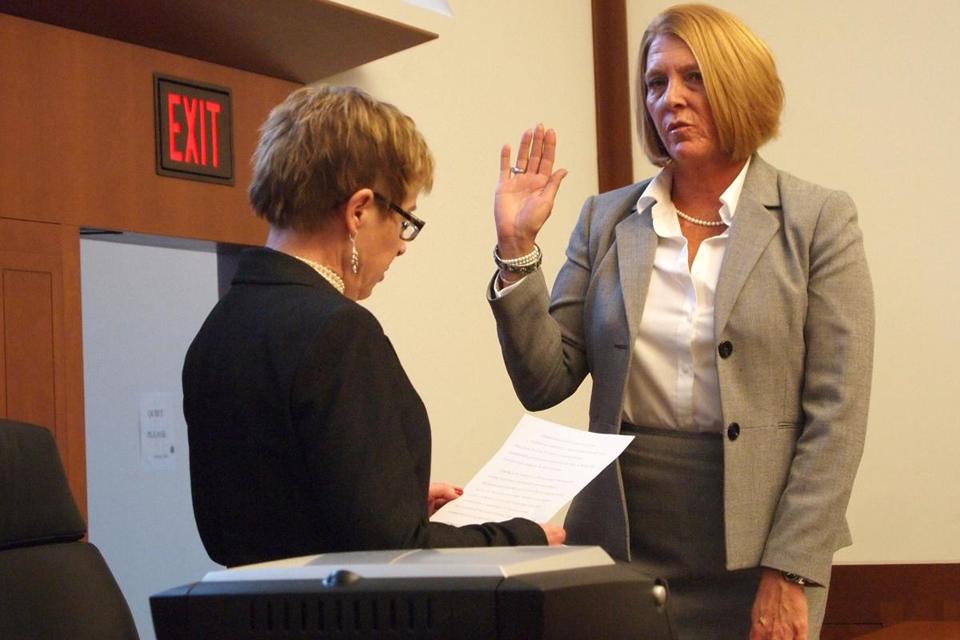
That’s Campatelli on the right,

This is the beginning of the Boston Globe’s front page story about an investigator’s report on the conduct of Patricia Campatelli, the Suffolk County (in Boston, Mass.) Register of Probate, an elected position:

“Patricia Campatelli often worked only 15 hours a week at her $122,500-a-year job as Suffolk County register of probate, and she spent much of that time taking “numerous smoking breaks, scratching lottery tickets, looking at East Boston real estate on the Internet, and filling out puzzles,” according to employees quoted in a confidential report obtained by the Globe.

Even before the embattled Campatelli was accused of punching an employee in the face…”

The rest of the story didn’t make coffee come out my nose like the last part, but it was pretty jaw-dropping nonetheless. Campatelli, who is clearly a piece of work, is currently on administrative leave and denies everything in the report, despite the statements of virtually everyone who works with her that were provided to the court-appointed investigator Ronald P. Corbett, Jr. Corbett’s report has been forwarded to a committee of the Supreme Judicial Court for possible disciplinary action. Continue reading →